 Paths & Paws
Best dog sleeping bags for backpacking (we weighed them all)
We may earn a commission if you make a purchase through links on this page. This helps support our testing methodology. Learn more.
⚡ At A Glance
Affiliate Disclosure: Paths & Paws earns commissions from qualifying purchases made through links on this page. This supports our field testing and does not affect our recommendations. We only recommend gear that passes our trail testing standards. Learn more
Most gear guides lie to you about dog sleeping bags. They dump bulky car-camping stuff right next to true backcountry gear, completely ignoring the fact that carrying extra pounds of synthetic fleece changes the entire dynamic of a tough multi-day trip. A two-pound fleece roll might look fantastic on a screen. You will regret buying it the second you try cramming it into a sixty-liter pack next to the tent and three days of food. We set a hard weight limit. We found only three options actually belong out there.
Extra weight changes a hike entirely. Jasper is a ninety-five-pound mix who burns insane calories at elevation. His kibble already eats up serious real estate in my bag — food planning for multi-day trips is its own puzzle covered in our backpacking dog food resupply guide. We simply cannot afford to haul thick sleep systems that refuse to compress.
We ran seven popular options through sixty miles of Cascades trail. The goal was dead simple. We had to find out which ones actually shrink enough for deep wilderness travel. We put every single product on a digital scale and measured the true stuffed dimensions ourselves to separate the marketing hype from what actually matters on the trail.
Our miles point to wild variations in heat retention and packability. Manufacturer sizing charts proved mostly fictional in some cases. Some gear failed outright. We tracked real temperature limits and watched how varying coat types handle synthetic fill versus down clusters.
Testing Protocol
- 1Weighed each bag and measured exact packed volume inside compression sacks against our 1.5-pound cutoff
- 2Monitored for shivering across mountain conditions ranging from 30 to 60 degrees to establish real temperature limits
- 3Cold-hand stress tested every zipper and yanked on all drawstrings searching for weak links
- 4Tracked dog acceptance and canine anxiety triggered by noisy shell fabrics
- 5Sixty miles of Cascades trail across varied terrain and weather conditions
Full Product Comparison
| Product | Name & Rating | Key Details | Link |
|---|---|---|---|
Best Overall 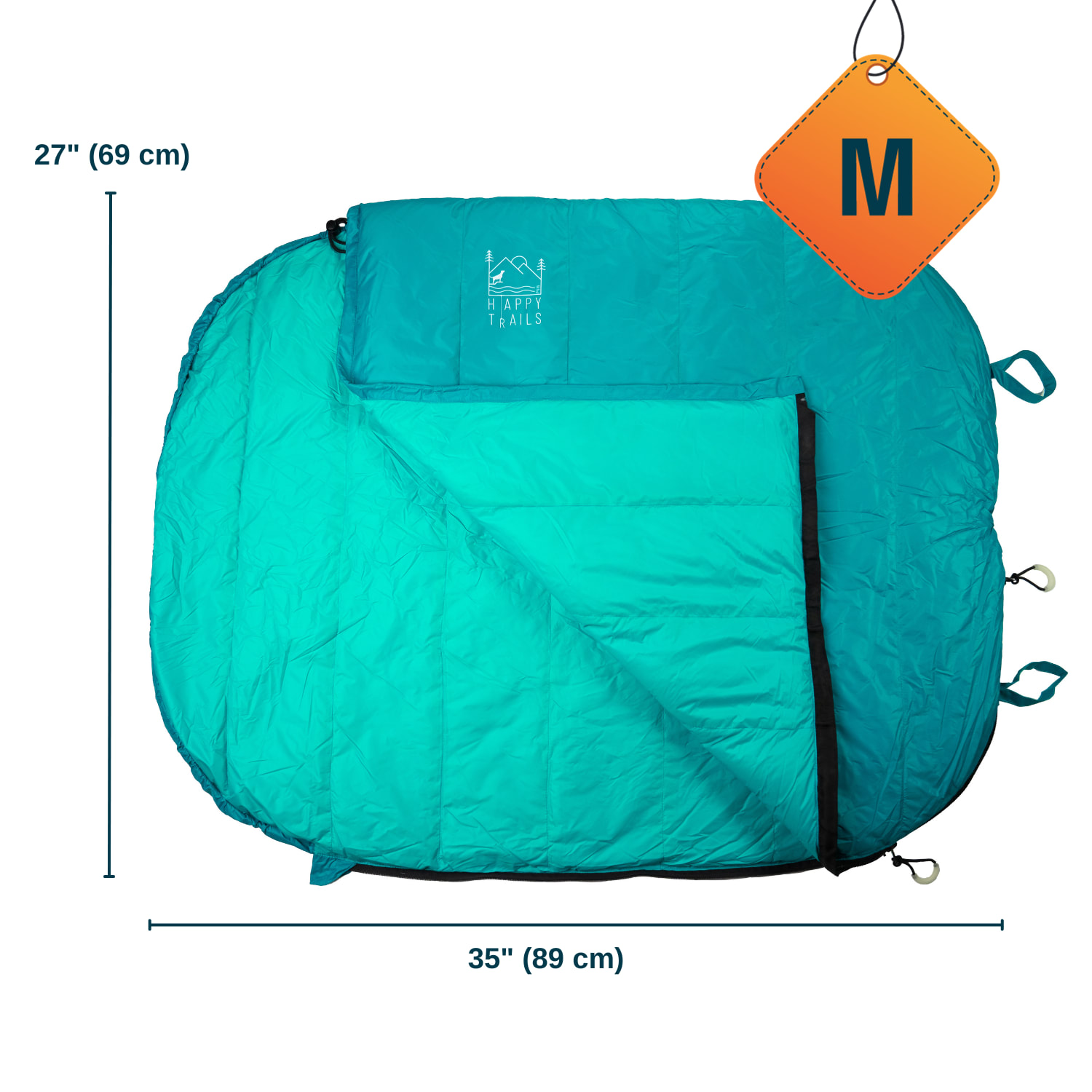 | Happy Trails PNW Ultralight Dog Sleeping Bag 4.5 | 11 oz • Duck down • Low 30s°F • $95.00 | Check Price |
Best Value  | KZ Dotnz Outdoor Travel Dog Bed 4.2 | Under 1.5 lb • Hollow fiber synthetic • Ground mat • $31.99 | Check Price |
Best for Restless Sleepers 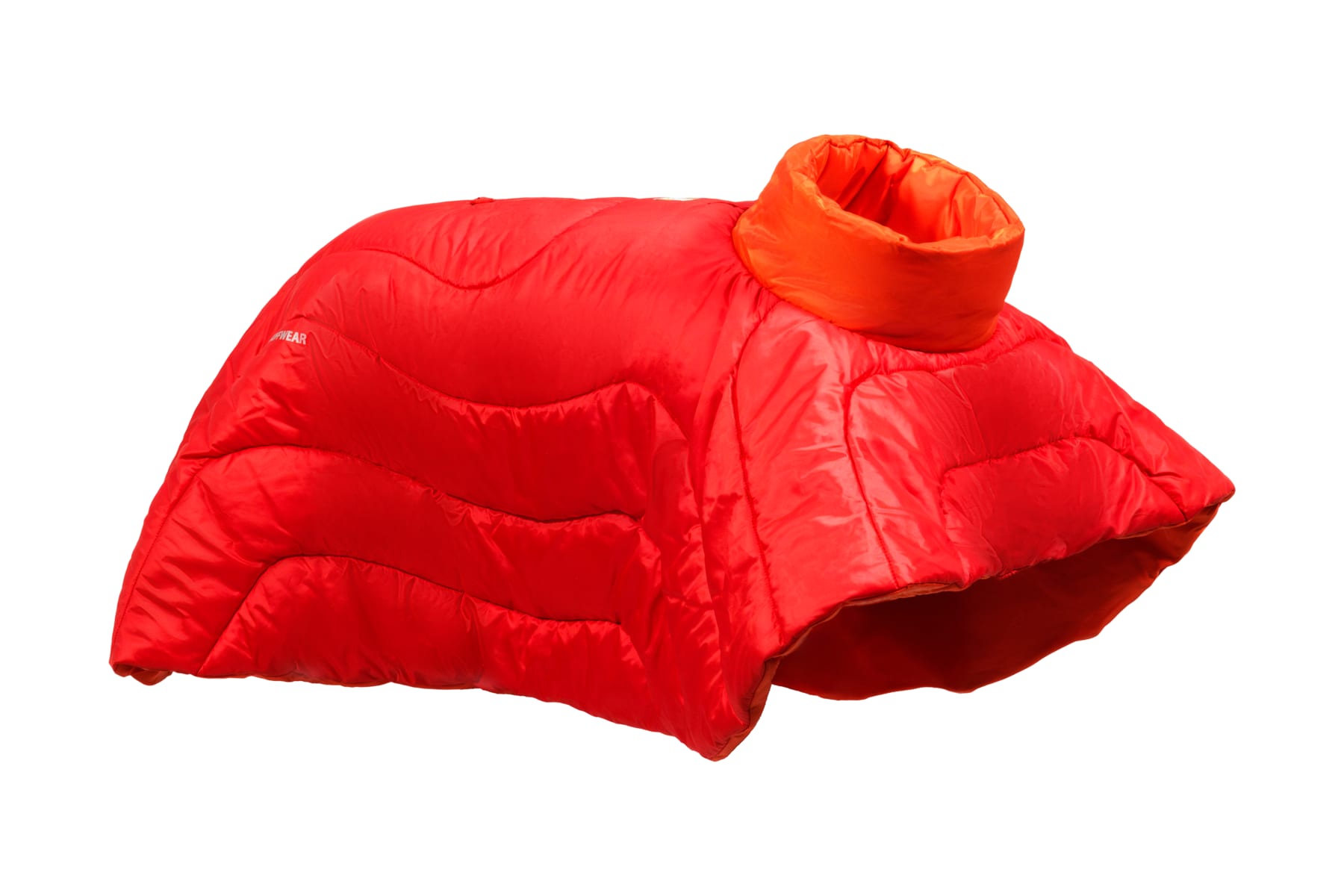 | Ruffwear Palisades Sleep Poncho 4 | Compact • Ecoloft synthetic • ~40°F • $99.99 | Check Price |
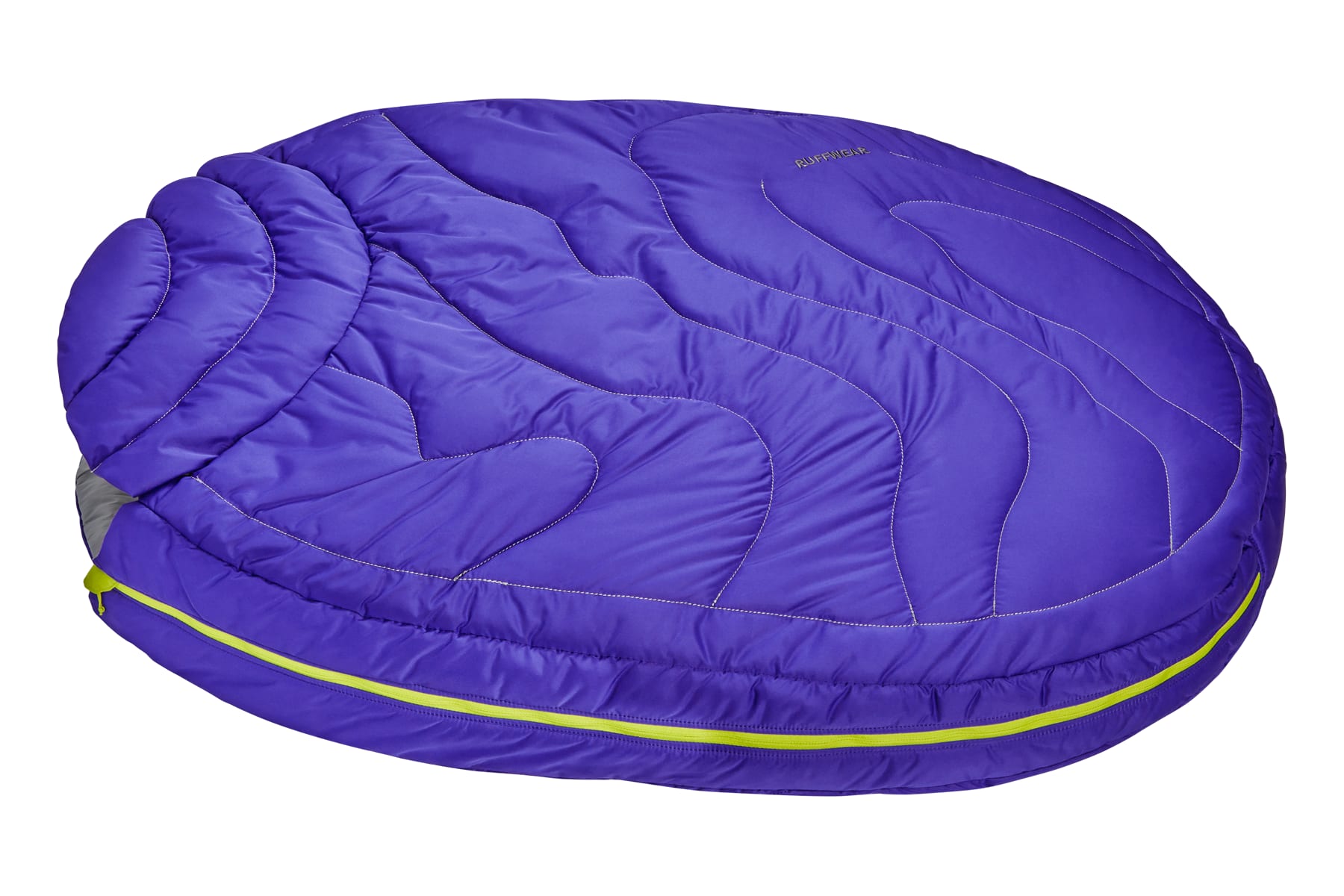 | Ruffwear Highlands Dog Sleeping Bag 3.5 | 1.6–2.3 lb • Synthetic down • 40–50°F • $99.95 | Check Price |
 | Lifeunion Dog Sleeping Bag with Storage 3 | 1.67 lb • Synthetic polyester • ~30°F tested • $32.99 | Check Price |
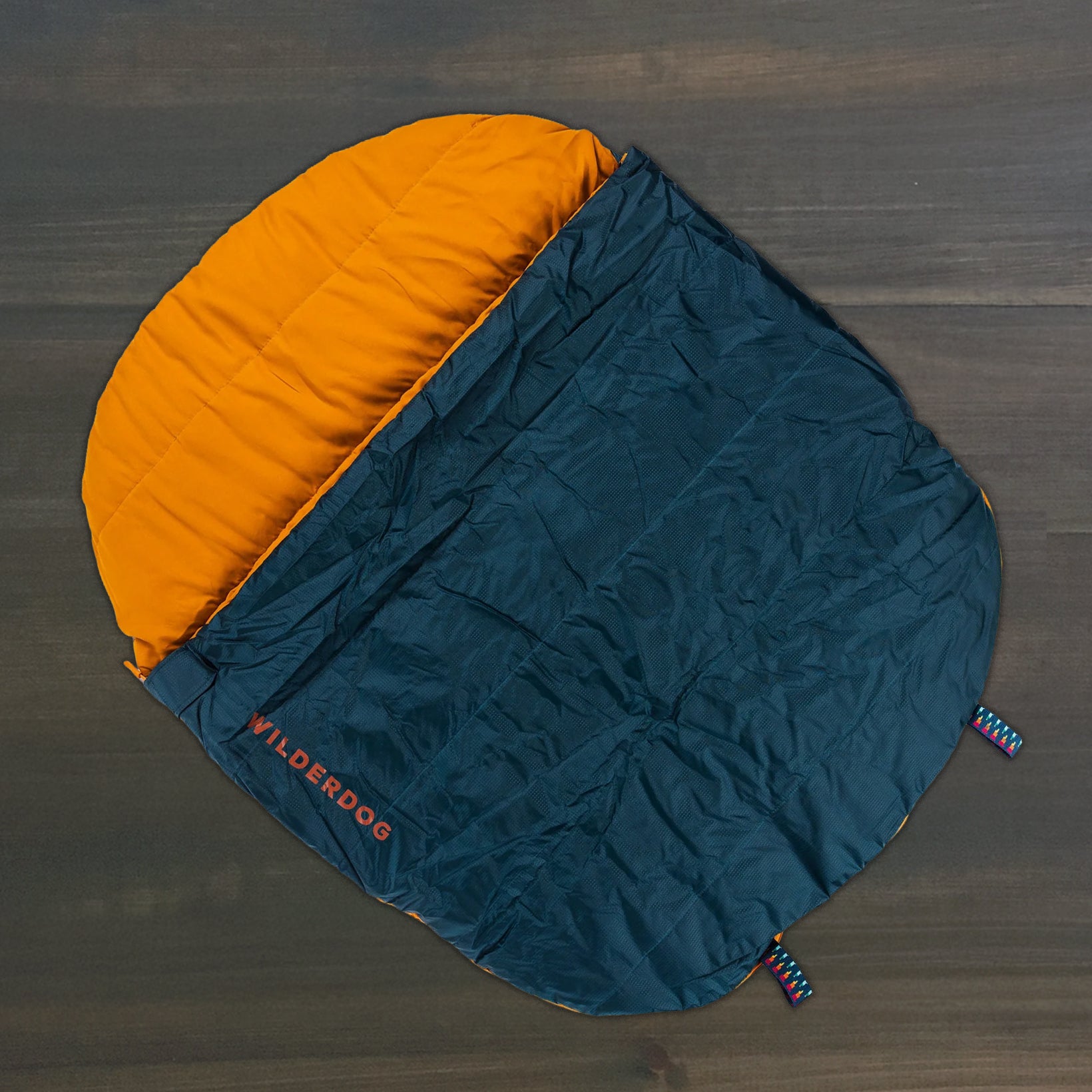 | Wilderdog Dog Sleeping Bag 2.5 | ~2 lb • Synthetic + cotton lining • Below freezing • $49.00 | Check Price |
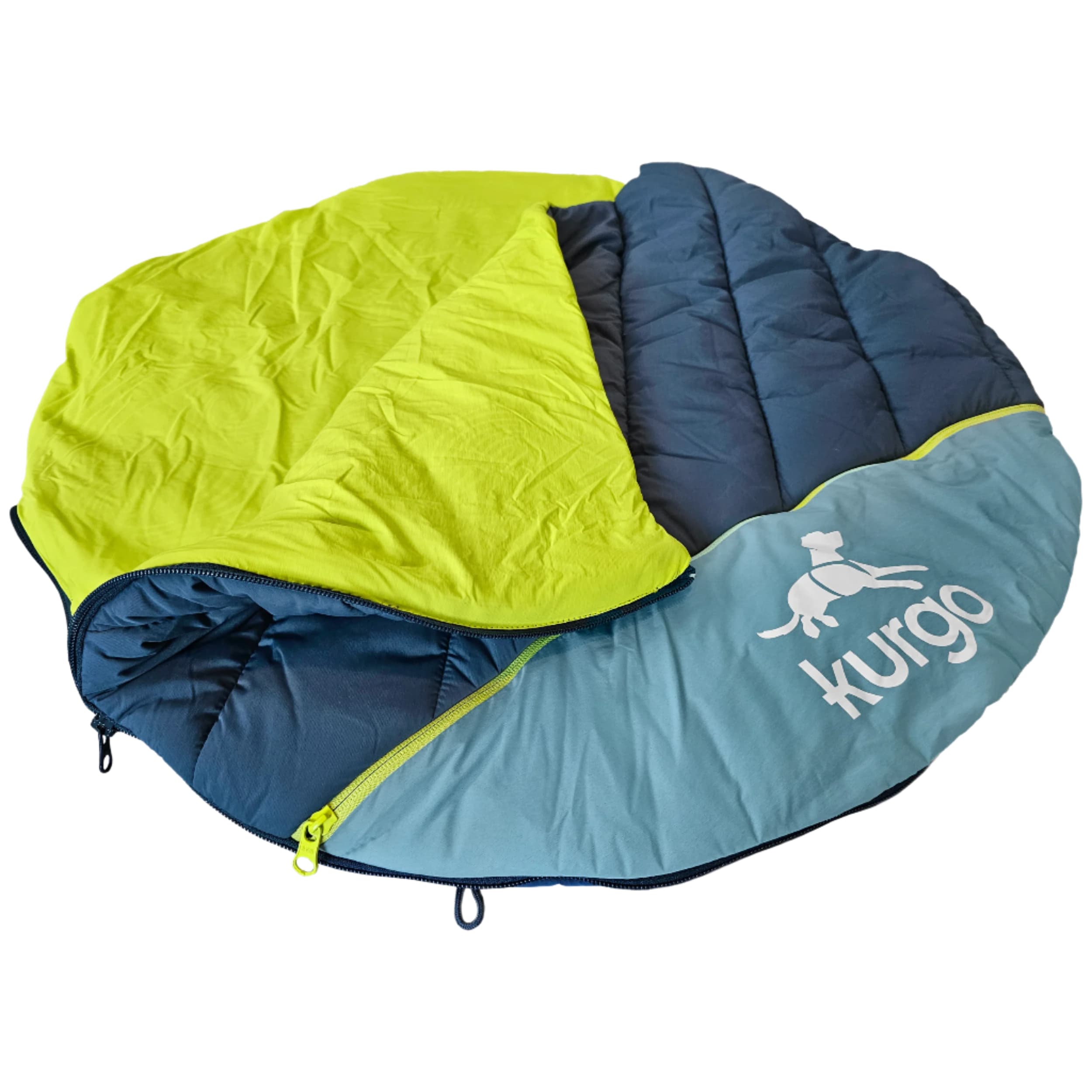 | Kurgo Puffer Pup Sack 2 | Heavy • 300g recycled polyfill • 59–77°F • $44.99 | Check Price |
Happy Trails PNW Ultralight Dog Sleeping Bag
Best OverallThe only true ultralight option in the batch. It clocks in at eleven ounces and the stuffed volume easily wrecks the competition. The large version shrinks down to fourteen by six inches, which is smaller than a standard Nalgene bottle.
The Good
- Lightest option tested at eleven ounces
- Stuffed size beats every competitor at 14 × 6 inches
- Ethically sourced duck down handles temps into the low thirties
- Survives machine washing on gentle cycle
The Bad
- Main zipper feels oversized for an ultralight piece
- Drawstring snapped on night two of testing
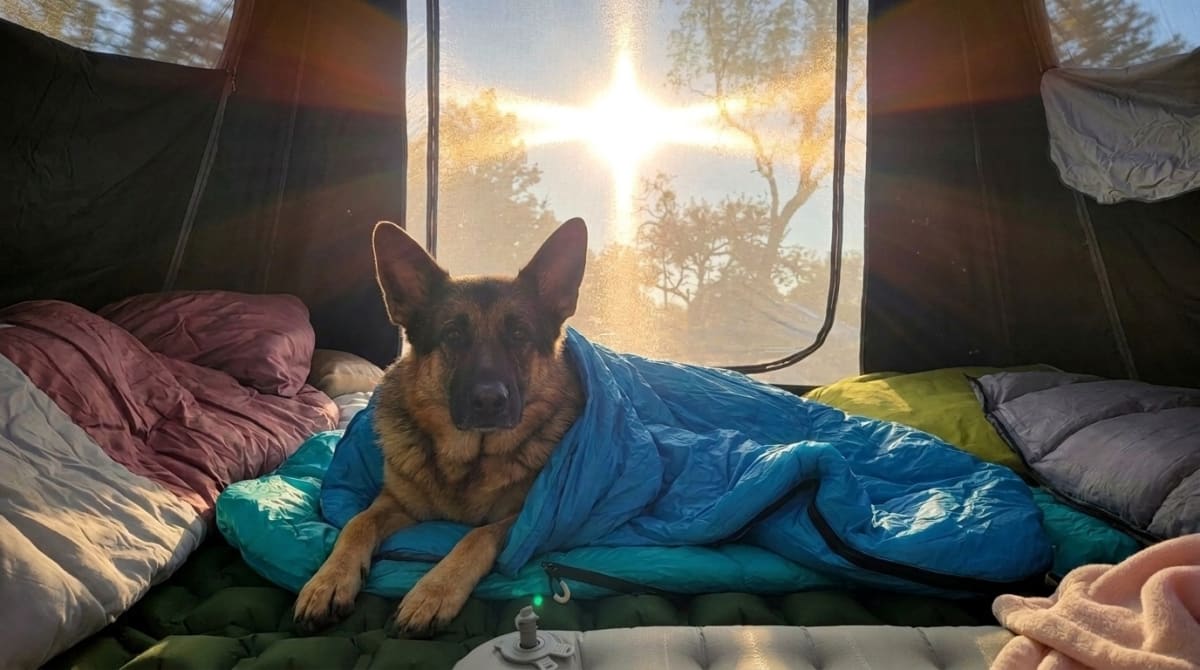
I shoved the large size into my pack for Jasper during a Rainier loop where it disappeared into the bottom compartment, leaving plenty of room for his massive bags of kibble. He usually sleeps on top of his bedding instead of burrowing in but the ethically sourced duck down still created a thick thermal wall against the frozen dirt.
Twenty-denier ripstop nylon treated with a PFAS-free water repellent forms the outer layer. The insulation handles nights down into the low thirties and it survives a standard washing machine spin on gentle. Any coat type works well with this setup.
The hardware definitely needs an overhaul. The main zipper feels bizarrely huge for an ultralight piece and one drawstring snapped clean off on night two. It runs nearly a hundred bucks. That price stings less when you realize the eleven-ounce weight makes thirty-mile stretches much more manageable.
KZ Dotnz Outdoor Travel Dog Bed
Best ValueNobody should mistake this for a traditional sleeping bag. It functions strictly as an insulated mat to block cold ground temps. The large version hits the scale just under one and a half pounds, and it compresses down with included straps to rig outside a pack.
The Good
- Under 1.5 pounds for the large size
- Perfect for dogs who run hot and dislike being covered
- Silk polyester outer shell sheds water and mud easily
- Machine washable after filthy weekends
The Bad
- Provides no top insulation, strictly a ground mat
- No zipper or envelope coverage for cold nights
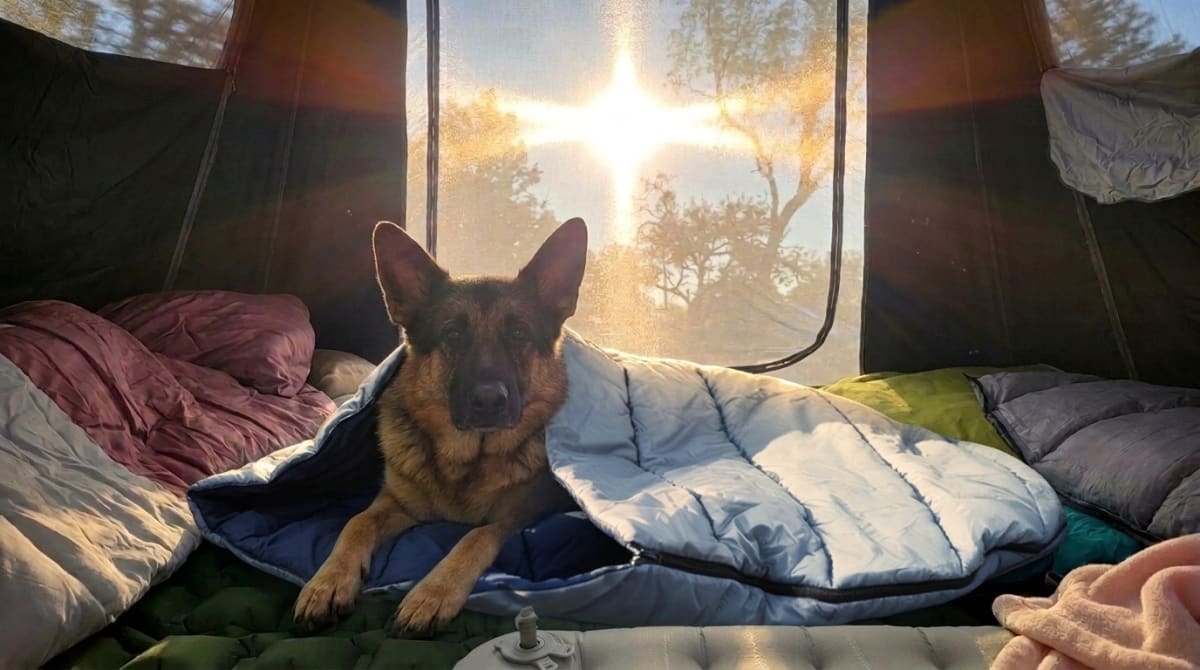
We hauled it through the damp Olympic Peninsula. Jasper absolutely loved the thing. He runs hot by nature and despises thick fabrics draped over him, so this flat mat gave him exactly the thermal break he needed from the soaked earth without causing him to overheat and pant. We cranked it down tight with the included compression straps and rigged it straight to the outside of my bag.
Synthetic hollow fiber fill delivers surprising insulation against icy surfaces. Zippers are nonexistent here. The silk polyester outer shell sheds water and mud pretty well which lets you chuck the whole mess into the wash after a filthy weekend. We found it performs brilliantly in the cold if the dog only requires a floor layer.
Do not buy this expecting trapped envelope heat. It serves exclusively as a bed. At thirty bucks it is the most honest value in this category.
Ruffwear Palisades Sleep Poncho
Best for Restless SleepersRestless pups wreck standard sleep setups by kicking covers off within twenty minutes. Then they wake up shivering. This wearable approach solves the issue entirely by letting the dog carry their insulation while wandering camp or swapping sleep positions.
The Good
- Wearable cut prevents dogs from kicking off insulation at midnight
- Rear pin-up fastener handles bathroom breaks without full removal
- Glove-friendly leg loops stay put throughout the night
- Packs down small enough for serious backcountry miles
The Bad
- Most expensive option tested at nearly a hundred dollars
- Chest girth measurement is critical to nail correct sizing
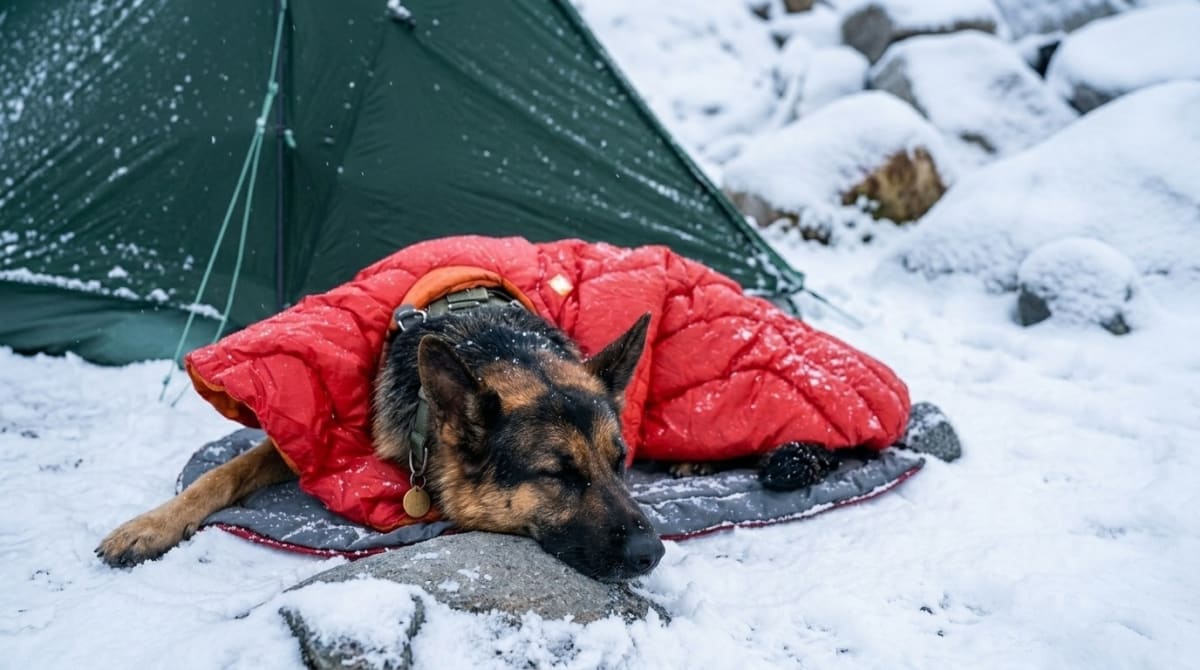
We pushed this concept on a frigid overnight near Mount Si where the cut fits the dog exactly like a jacket, allowing them to carry their insulation while wandering camp or swapping sleep positions. A rear pin-up fastener system handles bathroom breaks without forcing you to strip the whole garment off in the cold. The glove-friendly leg loops stayed put.
Synthetic Ecoloft insulation holds heat down to around forty degrees. The ripstop shell sheds morning dew beautifully and the whole thing packs up tiny for backcountry miles. Short-coated breeds who bleed body heat and require unbroken coverage all night will thrive in this.
The cost sits at the absolute peak of the market. Owners have to measure chest girth carefully to nail the sizing. That said, a dog who has never kicked off a cover mid-night in this setup is worth every cent if you hate waking up to a shivering animal at two in the morning.
Ruffwear Highlands Dog Sleeping Bag
A classic piece of gear cursed with a severe bulk problem. The medium size flirts with the absolute edge of trail viability at 1.6 pounds while the large version crosses hard into car-camping territory and eats up a massive chunk of your cargo capacity.
The Good
- Wide mouth allows easy entry without panicking dogs in tight spaces
- Half-length zipper provides decent venting for dogs who run hot
- Premium polyester shell survives machine washing without clumping
The Bad
- Large size weighs 2.3 pounds, too heavy for backcountry use
- Medium at 1.6 pounds sits right at the edge of trail viability
- Swallows ridiculous pack volume at both sizes
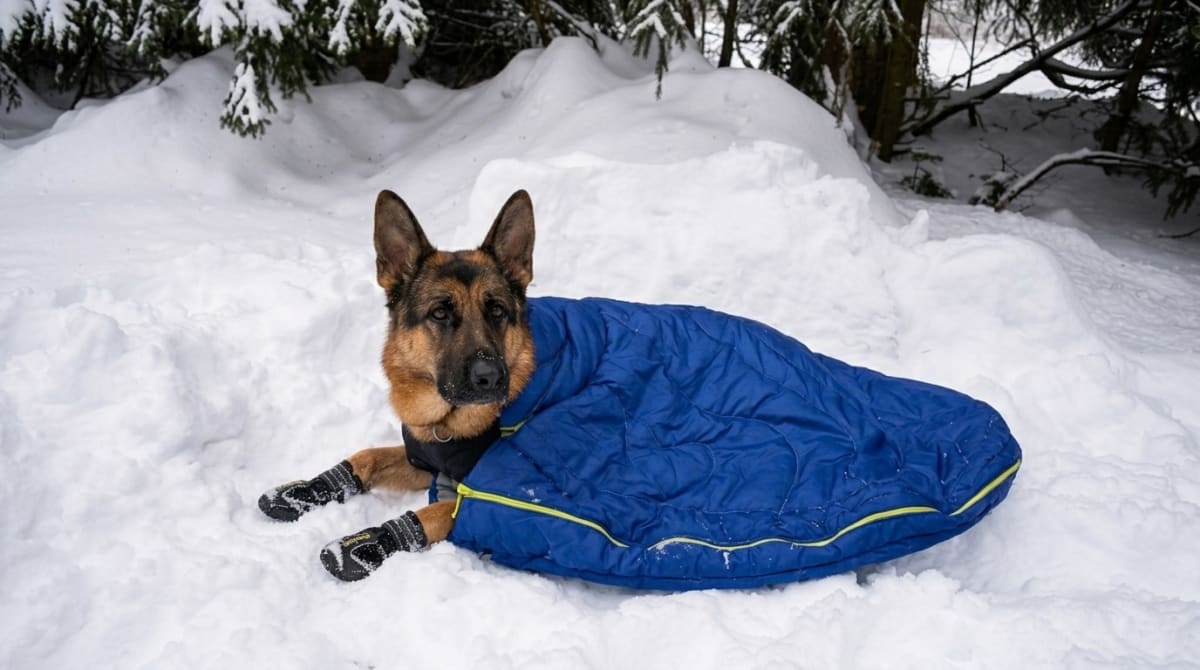
We tried cramming the large size into Jasper's saddlebags. It weighed 2.3 pounds and swallowed ridiculous volume so we eventually dumped it back in the truck. The half-length zipper does give decent venting for dogs who run hot. The wide mouth allowed easy entry once we finally set it up in the tent.
Synthetic down fill keeps dogs comfortable floating between forty and fifty degrees. That wide top lets them crawl inside without panicking about tight spaces. The polyester shell fights off light condensation and survives the washing machine without turning into clumpy golf balls.
It simply eats too much pack space. Save this strictly for tailgate adventures or maybe a flat one-mile hike-in. The tough polyester shell guarantees it will survive front-country abuse for years.
Lifeunion Dog Sleeping Bag with Storage
Cheap gear usually hides a steep penalty. This bag kicks out incredible warmth for the money but the punishment comes in a total lack of compressibility. Anyone walking further than a mile will despise the bulk.
The Good
- Outstanding warmth for under forty dollars
- Full-length zipper unfolds completely flat as a blanket
- Machine washable on gentle without fiber damage
The Bad
- Weighs 1.67 pounds with rigid, non-compressible fill
- Stiff synthetic fibers impossible to repack efficiently
- Eats half of a fifty-liter pack
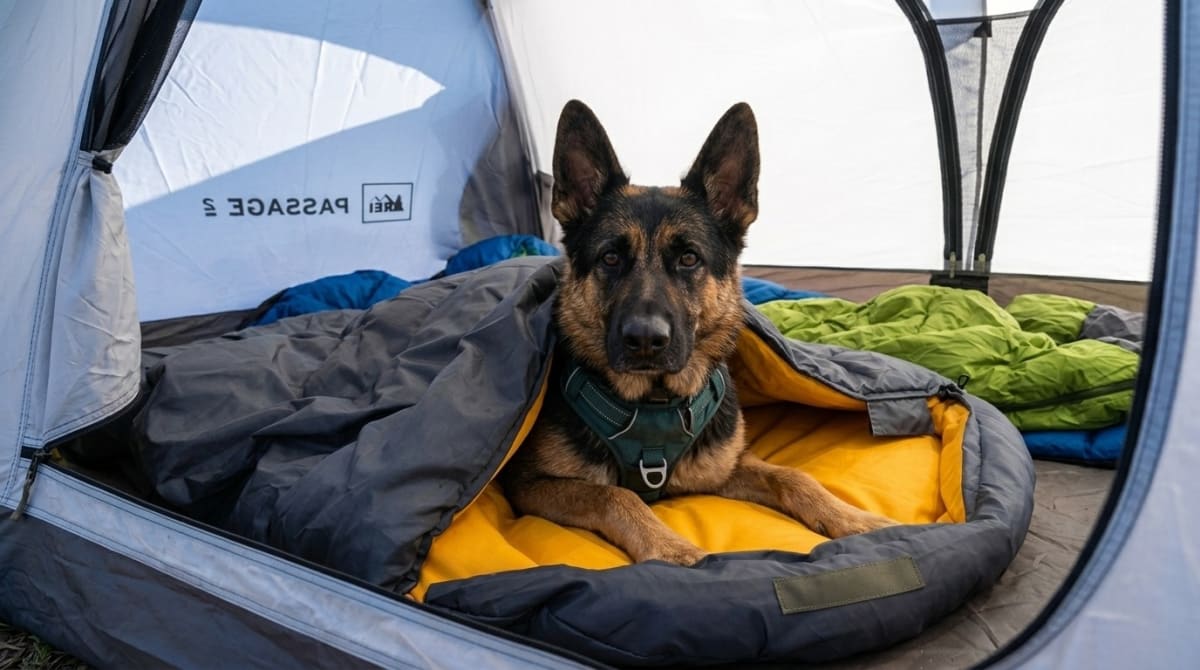
We checked its thermal limits on a bitter thirty-degree night. A short-haired test dog stayed remarkably toasty inside the fleece-lined interior. Then the sun came up. I burned ten highly frustrating minutes trying to wrestle the stiff fabric small enough to fit back into my pack, only to realize the bulky synthetic fibers were never going to cooperate.
Synthetic polyester fiber fill mimics those cheap childhood sleepover bags you remember. It blocks wind and holds heat surprisingly well. A full-length zipper lets the whole thing unfold totally flat. You can machine wash it constantly without wrecking the fibers.
It tips the scale at 1.67 pounds and the rigid materials eat up half a fifty-liter bag. Car campers score massive warmth for under forty bucks while anyone walking further than a mile will despise the bulk.
Wilderdog Dog Sleeping Bag
Heat retention means absolute zero if the hardware blows up. This bag throws down excellent insulation below freezing but a fatal flaw wrecks the entire experience. The zipper seized completely in cold temperatures, trapping the dog inside for five frustrating minutes.
The Good
- Excellent insulation for below-freezing nights
- Unzips completely to form a large camp blanket
- Soft cotton interior appeals to double-coated breeds
The Bad
- Zipper seized completely in cold temperatures during testing
- Weighs nearly two pounds, fails backcountry weight check
- Cannot trust the hardware for cold weather reliability
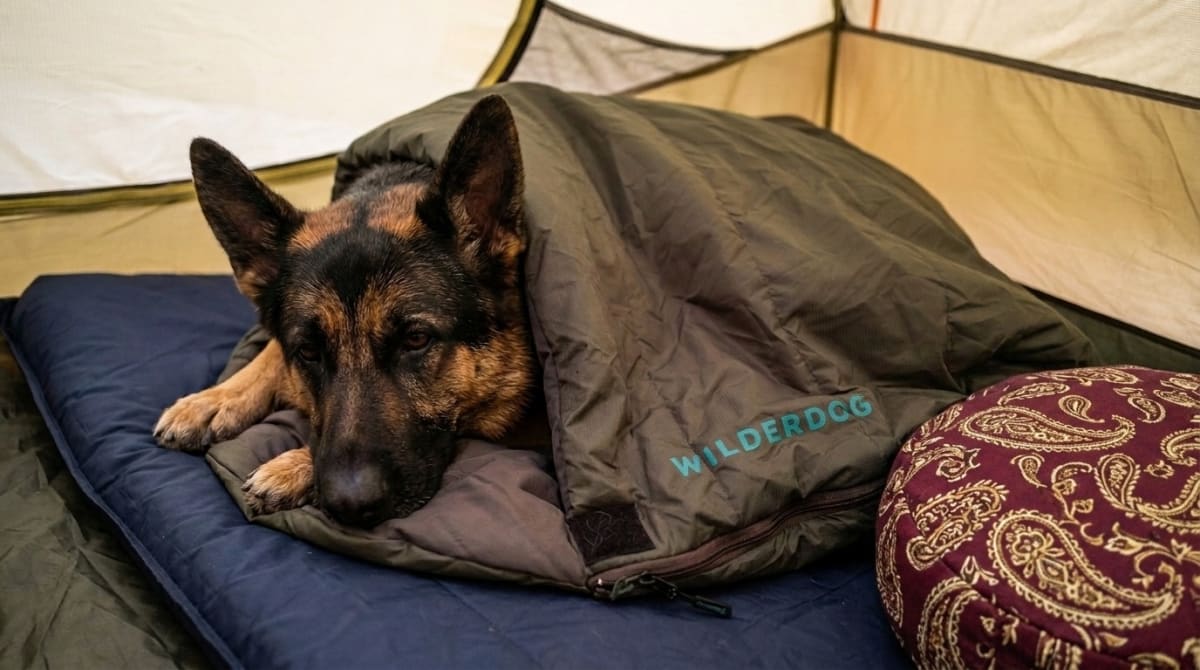
We ran this on a frosty November weekend. The synthetic fill kept a sixty-five-pound mix happy all night long. The zipper jammed the instant we tried to open it the next morning. It seized completely. We wrestled the fabric for five straight minutes just to free the dog.
The water-resistant exterior shell carries a tough coating. The interior relies on a soft cotton lining that double-coated dogs seem drawn toward. It unzips all the way to build a massive camp blanket. The bag weighs nearly two pounds which renders it totally impractical for long mileage.
It fails the backcountry check strictly on scale weight and stuffed size. Anyone needing a sleep system they can actually trust should dodge this model entirely until the company sources zipper teeth that won't lock up the second the temperature drops below freezing.
Kurgo Puffer Pup Sack
Sometimes a piece of gear just misses the mark completely. This sack runs incredibly small and utilizes a deeply flawed fabric choice. It failed almost every metric we track across the entire testing protocol.
The Good
- Made from 300g recycled polyfill (eco-friendly materials)
The Bad
- Noisy nylon shell triggers canine anxiety on contact
- Temperature rating only handles mild 59–77°F conditions
- Large size barely accommodates a medium dog
- Recycled polyfill refuses to compress for trail use
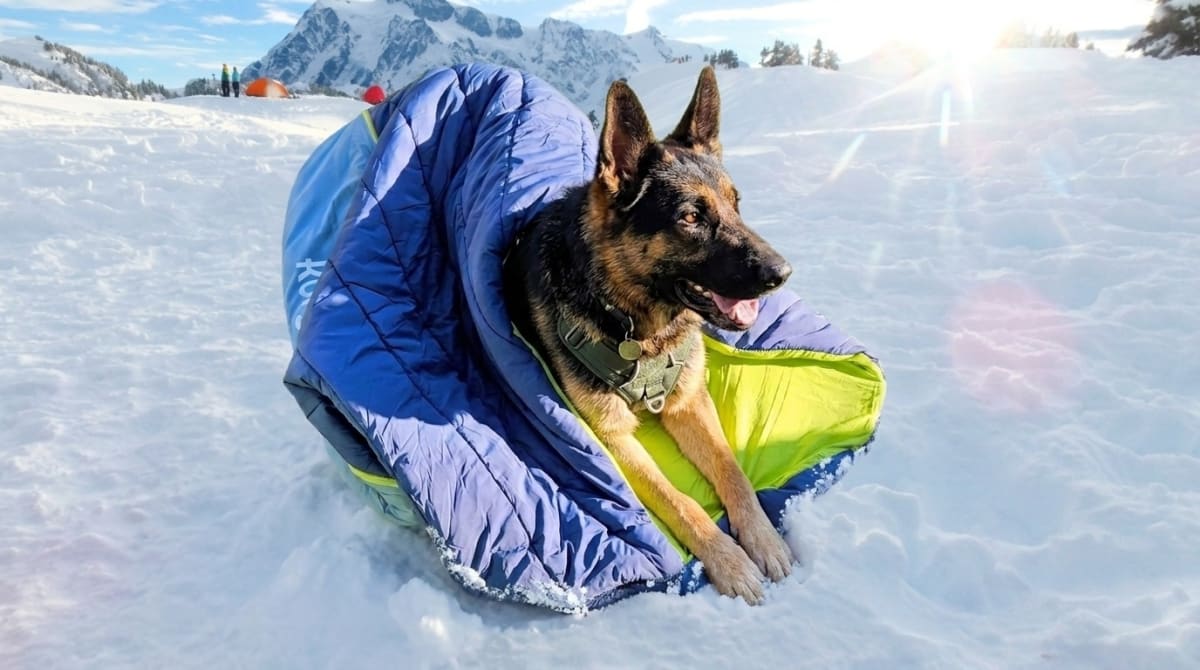
Jasper took one look at this thing and walked away. He stepped on it exactly once. The remarkably noisy nylon shell sounded exactly like a crinkling plastic tarp which triggers instant anxiety in sensitive dogs, meaning we could not bribe him to lie down on it a second time.
The temperature rating only handles mild conditions spanning fifty-nine to seventy-seven degrees. That offers zero value for actual cold weather nights. The large size measures forty inches across but barely accommodates a medium dog. The 300g recycled polyfill refuses to pack down and you have to baby it in the wash on a gentle cycle.
It weighs too much for the trail. It lacks the guts for mountain nights. The mild temperature range drops the use-case entirely out of backcountry territory.
Detailed Specs Comparison
| Product | Pack Weight | Temp Rating | Insulation | Style | Price |
|---|---|---|---|---|---|
| Happy Trails PNW Ultralight | 11 oz | Low 30s°F | Duck down | Sleeping bag | $95.00 |
| KZ Dotnz Travel Dog Bed | Under 1.5 lb | Ground only | Hollow fiber synthetic | Insulated mat | $31.99 |
| Ruffwear Palisades Poncho | Compact | ~40°F | Ecoloft synthetic | Wearable poncho | $99.99 |
| Ruffwear Highlands Bag | 1.6–2.3 lb | 40–50°F | Synthetic down | Sleeping bag | $99.95 |
| Lifeunion Sleeping Bag | 1.67 lb | ~30°F tested | Synthetic polyester | Sleeping bag | $32.99 |
| Wilderdog Sleeping Bag | ~2 lb | Below freezing | Synthetic + cotton | Sleeping bag | $49.00 |
| Kurgo Puffer Pup Sack | Heavy | 59–77°F | 300g recycled polyfill | Sleeping bag | $44.99 |
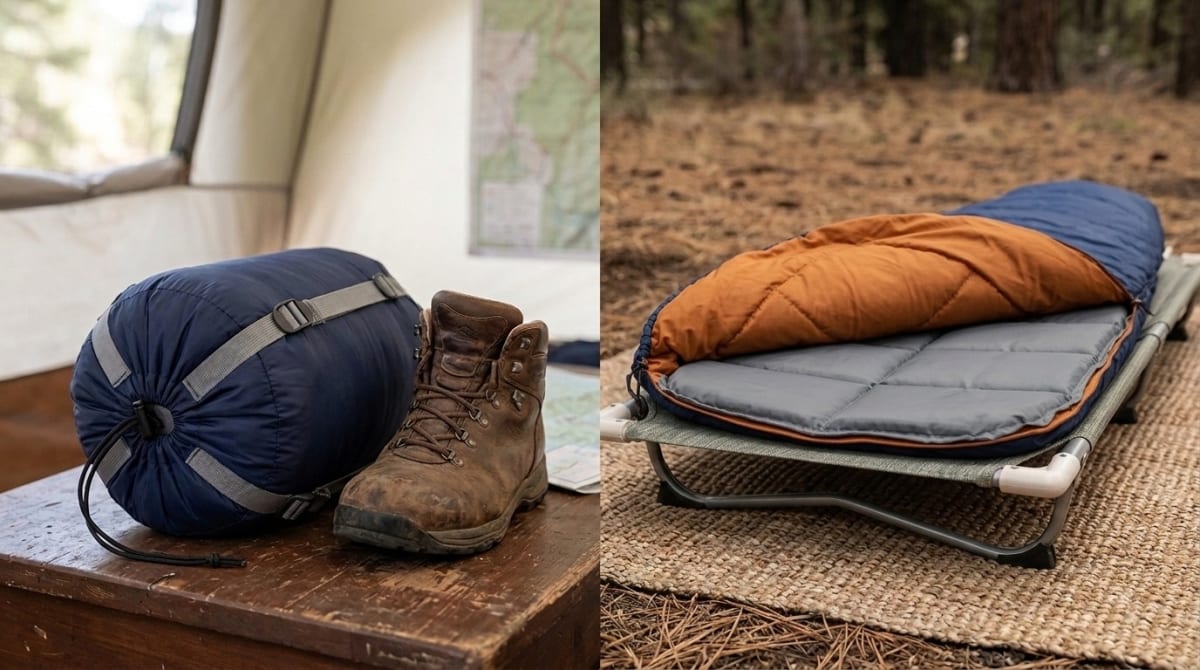
When do you actually need a sleeping bag?
Tons of people buy heavy sleeping bags when a cheap closed-cell foam pad would do the job perfectly because the ground steals body heat way faster than the ambient air ever could. If you hike in weather above forty-five degrees with a double-coated dog just skip the bag entirely. Bring a foam pad to kill the conductive heat loss. Our dog sleeping pad for backpacking guide covers which pad thicknesses and R-values actually matter once temps drop.
When ambient temps dive into the thirties short-coated breeds desperately need envelope warmth. They require insulation resting on top of them as well as underneath. Double-coated dogs normally only need envelope warmth when the mercury drops below freezing. If a dog sits shivering next to the evening campfire you need a full bag regardless of what breed they are.
How to train your dog to sleep in a bag
Dogs rarely grasp how sleeping bags work on the very first try. You cannot just order a bag, hike ten miles into the timber, and expect a dog to crawl inside at bedtime.
Start the whole acclimation process right in the living room two weeks before departure. Unzip the fabric completely flat and drop high-value treats directly on it. Let the dog use it as a standard bed for a few days. Once they actively choose the bag for naps zip it halfway and coax them to tunnel in. Never force them inside. If they decide sleeping on top of the crushed bag feels better just let them dictate that, because they still score the massive benefit of blocking the freezing cold ground.
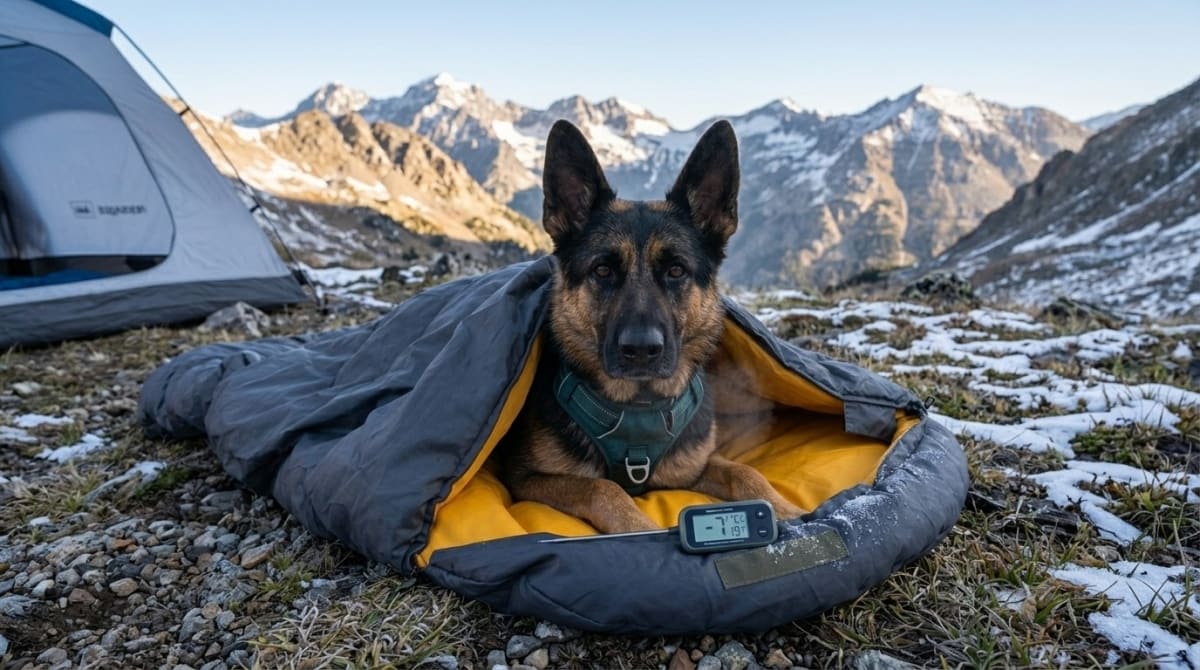
Understanding fill weight and coat types
A dog's natural coat dictates exactly what kind of fill works best. Short-haired breeds like Pointers and Pitbulls lack a thermal undercoat entirely, which means they demand high-loft down or thick synthetic fill to trap dead air space tightly against their bare skin.
Double-coated breeds like Huskies and Pyrenees already carry premium insulation. Stuffing them into dense synthetic bags usually causes them to overheat and pant heavily at two in the morning. For those dogs stick to ultralight down options like the Happy Trails bag or simple insulated floor barriers like the KZ Dotnz mat. Match the hardware to the biology. If you're backpacking with a dog who also carries gear, check our dog backpack weight limit guide before loading them up alongside their sleep system.
How We Tested This
We didn't just read the spec sheet. Kelly Lund spent hours testing this product in real-world conditions, specifically evaluating:
Best Overall Dog Sleeping Bag
The Happy Trails PNW Ultralight remains the only traditional bag we trust for serious backcountry miles, primarily because it hits the eleven-ounce weight target and packs down incredibly small. If you run a double-coated dog who only needs a thermal break from the frozen ground, buy the KZ Dotnz mat instead. Backpacking with dogs demands ruthless weight management. Leave the bulky car camping gear in the garage.
- Only bag tested to break the one-pound barrier at eleven ounces
- Packed dimensions smaller than a Nalgene bottle after stuffing
- Duck down delivers reliable warmth into the low thirties
Frequently Asked Questions
Kelly brings an engineering mindset to dog hiking gear. After thousands of miles with Jasper testing every harness, pack, and boot on the market, he knows what holds up and what fails.