 Paths & Paws
Rex Specs vs NAMSAN Goggles? The $76 Difference Explained
We may earn a commission if you make a purchase through links on this page. This helps support our testing methodology. Learn more.
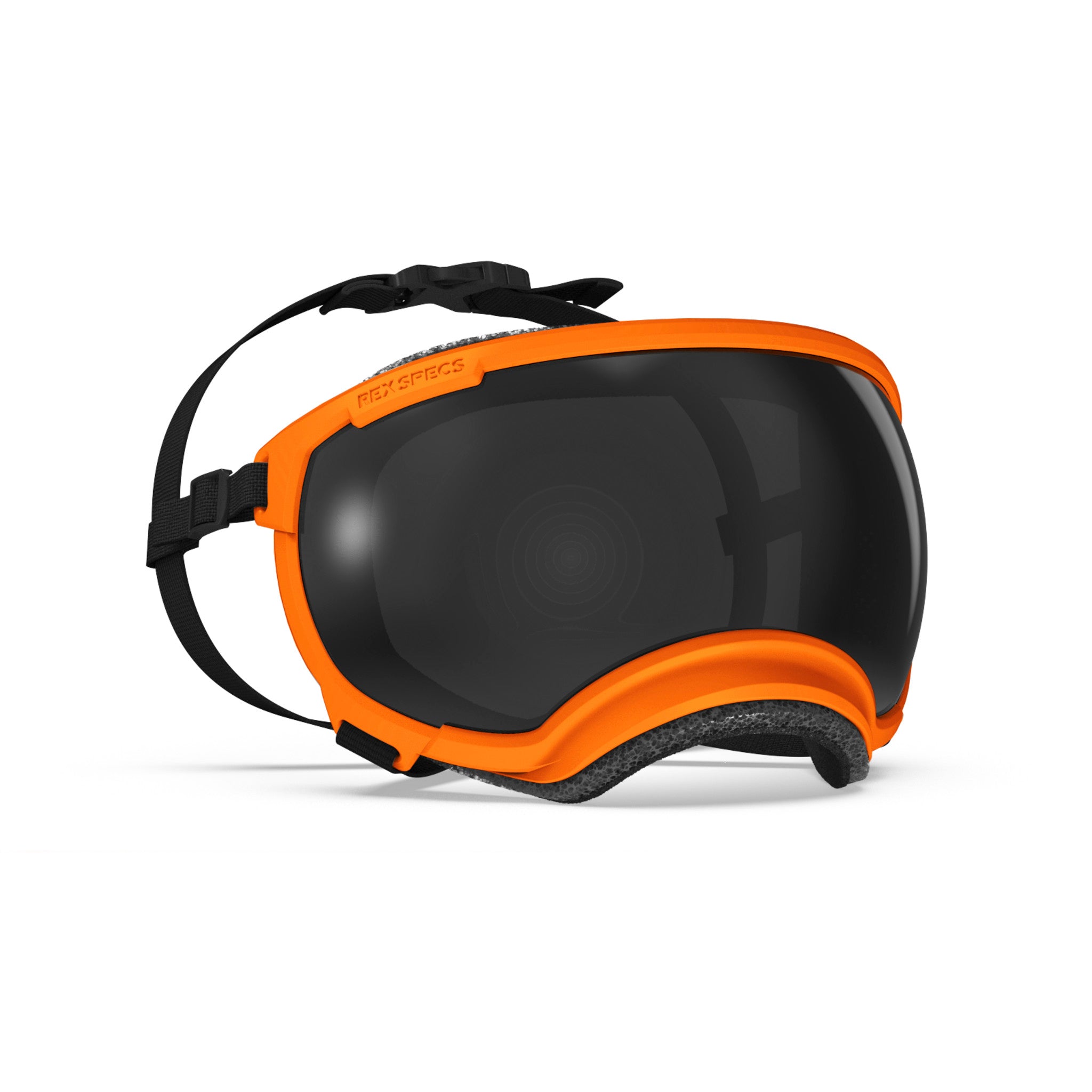

The Quick Verdict
- 1Rex Specs blocks ultraviolet light through the polycarbonate itself, so a scratch does not create an unprotected patch the way it does on a coated budget lens
- 2Buy Rex Specs for snow glare, high-altitude sun, motorcycle or ATV work, or any diagnosed eye condition
- 3Buy NAMSAN to find out whether a gear-averse dog will tolerate anything on their face before spending $100
- 4Both scratch easily, so replacement cadence drives lifetime cost far more than the sticker price does
Affiliate Disclosure: Paths & Paws earns commissions from qualifying purchases made through links on this page. This supports our field testing and does not affect our recommendations. We only recommend gear that passes our trail testing standards. Learn more
Rex Specs wins for serious outdoor use. That $99.99 price buys a locked-in dual chin strap and ultraviolet protection built into the lens material rather than sprayed onto it. NAMSAN is what you buy to find out whether a stubborn dog will tolerate anything touching their face before dropping a hundred bucks on the good pair.
Most dogs do not need goggles at all
Before spending anything, be honest about whether your dog needs eye protection. Snow glare, sustained sun above the tree line, blowing grit on open ground and diagnosed eye conditions genuinely justify goggles. A shaded forest trail does not. Neither pair below is worth buying for a dog that hikes in the trees on overcast weekends.
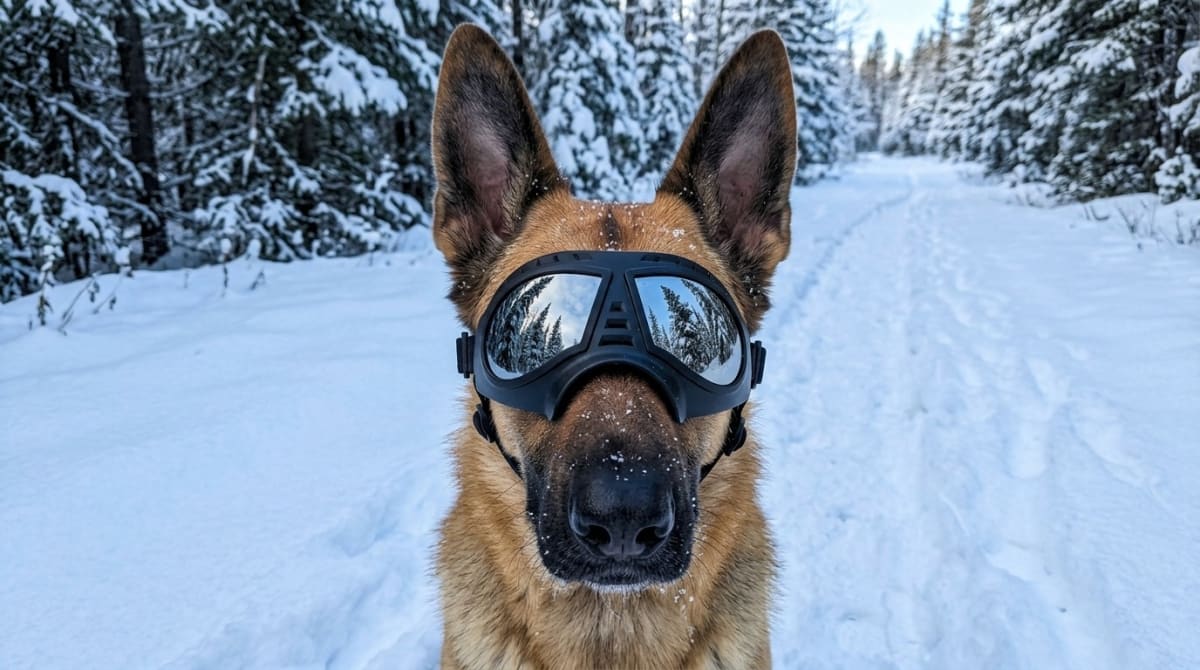
We kept seeing twenty-five dollar goggles claim identical performance to the premium brands, so we put both on Jasper and ran them over the same Colorado trails. He wore each pair on alternating days across three weeks, including repeated climbs on the steep rocky inclines of Mount Falcon at over 7,000 feet. We counted slippages during fast running, timed how long each pair took to fog during heavy panting, and tracked how many sessions it took before he stopped fighting the straps.
| Feature | Rex Specs V2Our Pick | NAMSAN |
|---|---|---|
| Price | $99.99 | $23.99(winner) |
| Lens Material | Ballistic-grade polycarbonate(winner) | Generic plastic, UV400 coated |
| How It Blocks UV | Inherent to the material(winner) | Surface coating |
| Frame Material | Not specified by brand | Soft TPE/PVC, hard nose arch |
| Strap System | Fully adjustable, dual cross-under chin(winner) | 2 elastic straps, single chin |
| Sizes | 6 including a wide fit(winner) | 2 |
| Replacement | Lenses only, ~$40(winner) | Whole unit, $23.99 |
| 5-Year Cost, Active Dog | $900 to $1,300 | $240 to $480(winner) |
| Check Price | Check Price |
How We Tested This
We didn't just read the spec sheet. Kelly Lund spent hours testing this product in real-world conditions, specifically evaluating:
Two limits worth stating plainly. We tested one head shape, a wide shepherd skull, so our fit findings do not transfer cleanly to flat-faced or narrow-snouted breeds. We also never ran a wet-weather session, so we can tell you about fogging from panting but not about water intrusion in rain or after a swim. Everything else below is ours.
UV Protection and Lens Technology
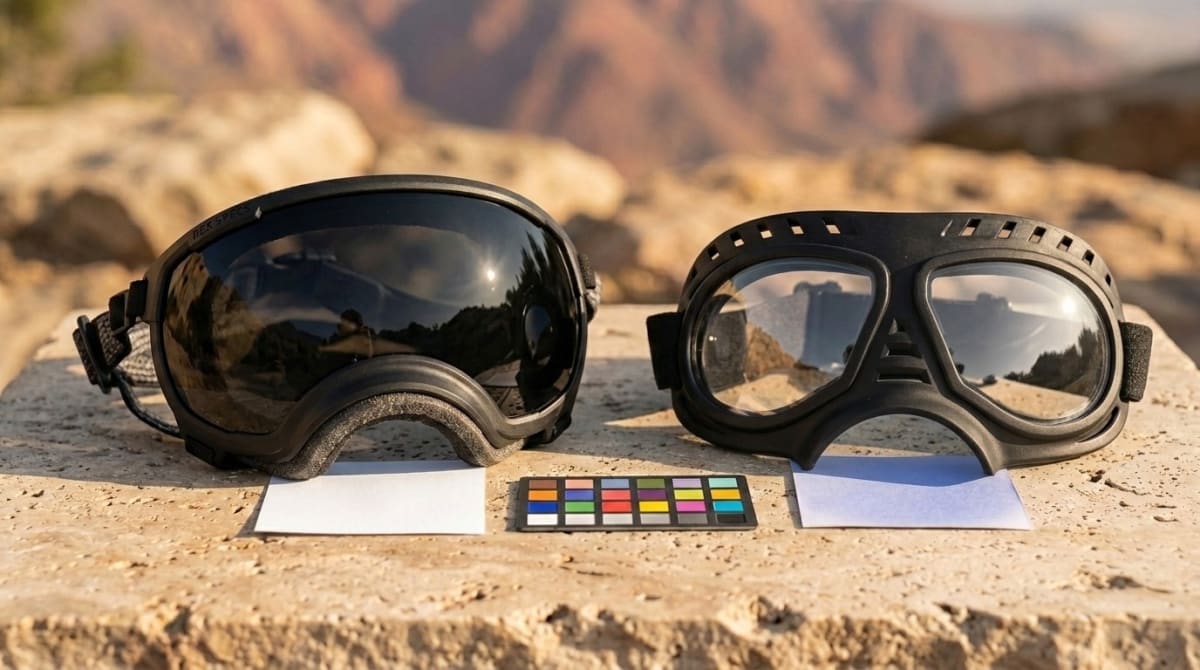
Rex Specs uses ballistic-grade polycarbonate. That material blocks ultraviolet light through the plastic itself, so protection survives whatever the dog drags their face through. NAMSAN sprays a UV400 coating onto basic plastic. The distinction sounds like marketing until you scratch one.
Think of it as dye through the fabric versus paint on a wall. Scratch the polycarbonate and you get a scratched lens that still blocks UV. Scratch the coated lens and that patch stops protecting anything, while still looking close enough to fine that you would never know. Owner reviews report NAMSAN lenses scratching early and easily. There is no way to check whether the coating under a scratch still blocks UV, and neither could you.
This matters more with altitude. Jasper hikes above the tree line in snow glare, which is the exact scenario where eye protection stops being cosmetic. The same exposure drives nose sunburn in dogs, and the two problems tend to show up on the same trips. A 2008 study in Veterinary Ophthalmology found that ultraviolet exposure increased matrix metalloproteinase expression in canine corneal cells, and that tissue from dogs with chronic superficial keratitis showed those same elevated markers. The authors describe a probable link rather than a proven cause, and the work was done in cell culture rather than on hiking dogs, so treat it as a reason for caution rather than a diagnosis.
Fit, Retention and Field of Vision
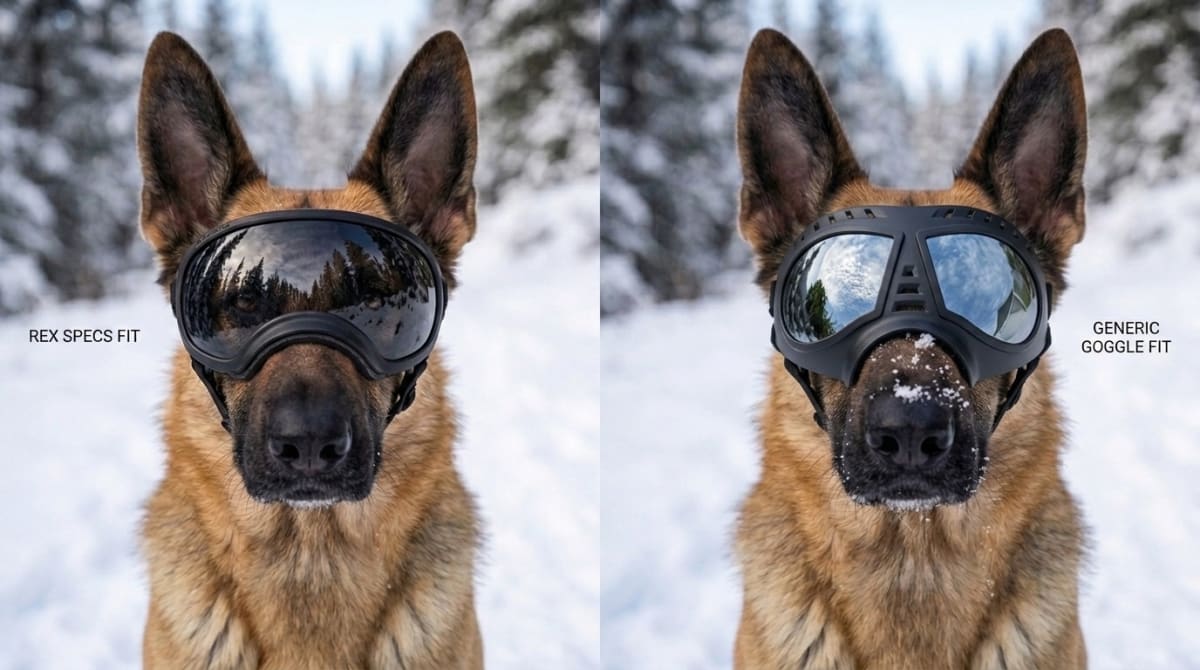
Eye protection is useless if it falls off. Rex Specs uses a fully adjustable dual cross-under chin strap. NAMSAN gives you two elastic bands and a single chin strap that you have to pull uncomfortably tight to stop the frame sliding down the snout. Jasper objected to that tightness immediately.
His 95-pound frame generates real momentum coming downhill, which made for a useful torture test. The Rex Specs never shifted. Zero slippages across roughly ten miles of trail running. Owner reports line up with that, with Rex Specs fitting successfully in five of six accounts we reviewed against three of six for NAMSAN.
Field of vision splits the two as well. The Rex Specs visor wraps far enough around the head that peripheral vision stays open, and across 439 owner reviews we found no fogging complaints. NAMSAN sits much closer to the eye. On the steep Mount Falcon climbs the lenses fogged solid under heavy panting. NAMSAN's own marketing says the frame vents disperse interior fog, which did not match what we watched happen. If you cannot see through the lens, neither can the dog.
One more thing for wide-headed breeds. That rigid plastic nose arch dug into Jasper's brow bone. NAMSAN builds two sizes. Rex Specs builds six, including a dedicated wide fit, and that range is doing a lot of the work behind the fit numbers above.
Durability and Cost of Ownership
Here is where the premium argument gets uncomfortable. Both lenses scratch badly. That is not a budget-versus-premium split, it is true of both, and it means replacement cadence rather than sticker price decides what you actually spend.
Rex Specs sells replacement lenses at roughly $40. NAMSAN has no such option, so a scratched pair goes in the bin and you buy another for $23.99. Run that forward for a genuinely hard-charging dog and Rex Specs lands somewhere around $900 to $1,300 over five years against $240 to $480 for NAMSAN. Gentle use narrows it sharply, to about $140 in year one for Rex Specs against $48 for NAMSAN.
Those ranges swing on one assumption, so be clear about it. They assume an active dog scratching lenses badly enough to replace them every few months. One shepherd owner reported buying replacements after three days. A calmer dog on softer trails may go a year on a single lens, and at that cadence the gap between the two closes to almost nothing. Work out your own cadence before treating either number as your number.
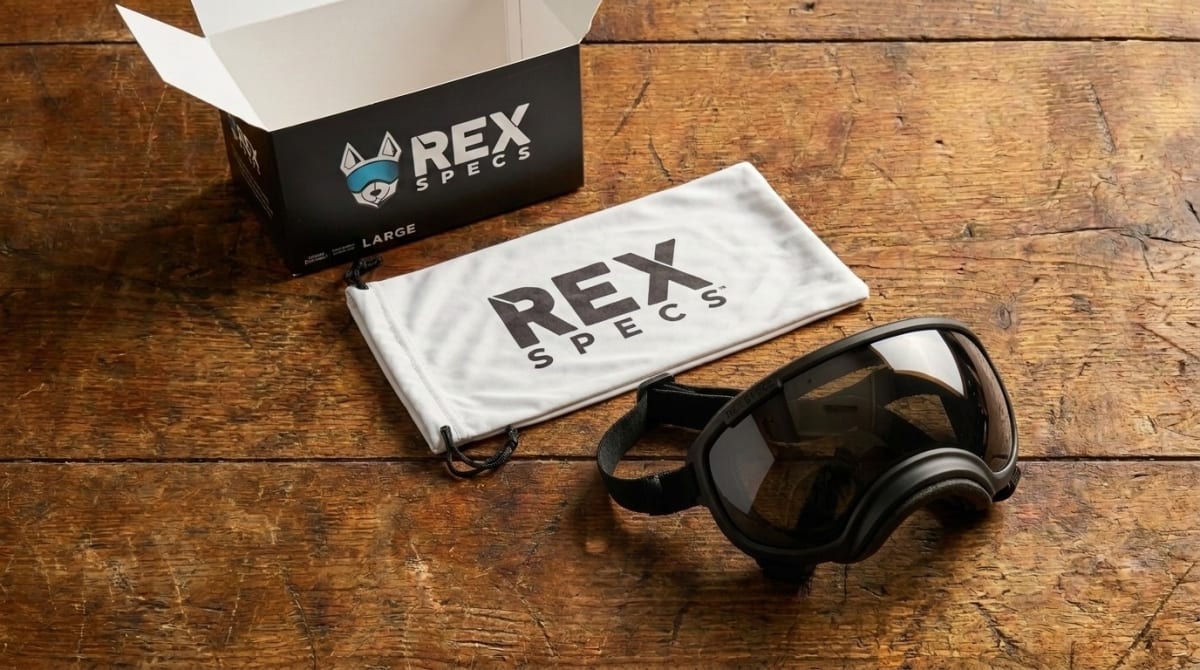
NAMSAN takes this round on math alone. Worth noting the cheap pair also ships with a rigid protective case, while Rex Specs includes a soft microfiber pouch that offers no crush protection for a $40 spare lens.
Acclimation and Comfort
Getting a dog to accept goggles takes patience, and this is the one place the cheap pair genuinely wins on merit rather than price. The NAMSAN elastic bands feel much like a normal collar. We slipped them over Jasper's head and he accepted them on the first try without a fight.
Rex Specs took two weeks. The adjustable harness is more secure and it feels more restrictive, and he fought the straps for the first several sessions before settling.
That gap points at a strategy rather than a verdict. Buy the cheap pair first and use it purely for desensitization. Let the dog get used to the sensation of plastic on their face, and let them scratch those lenses to ruin while doing it. Move to Rex Specs once they stop pawing at their eyes. Total outlay is a shade over $120, and it keeps a $40 premium lens away from the phase where it is most likely to get destroyed.
Pros & Cons Summary
Rex Specs V2
Pros
- Ultraviolet protection built into the polycarbonate, so scratches do not create unprotected patches
- Zero slippages across ten miles of downhill trail running
- Wrap-around visor leaves peripheral vision open, with no fogging reported across 439 owner reviews
- Six sizes including a dedicated wide fit, against two from NAMSAN
- Replaceable lenses at roughly $40 rather than binning the whole unit
Cons
- $99.99, more than four times the NAMSAN price
- Lenses scratch easily and replacements run to $900-$1,300 over five years for an active dog
- Took two weeks of training before Jasper stopped fighting the straps
- Soft pouch in the box offers no crush protection for a $40 spare lens
NAMSAN
Pros
- $23.99, and $240 to $480 over five years against Rex Specs at $900 to $1,300
- Jasper accepted them on the first try with no acclimation period
- Rigid protective case included, which Rex Specs does not provide
- Genuinely useful as a training pair before committing to premium goggles
Cons
- UV400 is a surface coating, so a scratch removes protection while the lens still looks fine
- Fogged solid under heavy panting on steep climbs
- Single chin strap has to be over-tightened to stay put, which Jasper disliked
- Two sizes only, and the rigid nose arch dug into a wide shepherd brow
Deciding whether your dog needs eye protection at all? Our guide to dog snow blindness symptoms covers the conditions that actually warrant it.
Who should buy what
Buy Rex Specs if your dog works in snow glare, spends real time above the tree line, rides on a motorcycle or ATV, or has an eye condition your vet is treating. The protection holds up as the lens wears, and the fit stays put when the dog is moving hard.
Buy NAMSAN if you are training a young or gear-averse dog, hiking occasional sunny trails, or simply finding out whether your dog tolerates goggles before spending real money.
Buy both, in that order, if you intend to end up with Rex Specs. It is the cheapest route to a dog that will actually wear them.
Final Verdict
Rex Specs V2 takes the win in this comparison.
Rex Specs takes the performance win. Protection built into the lens material and a fit that survived ten miles of downhill running make it the right pair for dogs working in snow glare or at altitude. The honest caveat is cost, since both brands scratch and the lenses drive spending far more than the sticker price does. NAMSAN is not a fake product. It is a legitimate training tool and the sensible first purchase for a dog that has never worn goggles.
Frequently Asked Questions
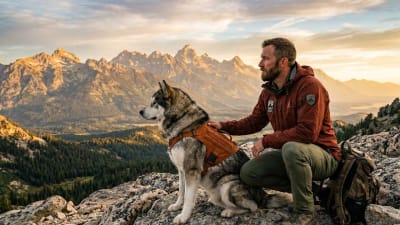
Kelly brings an engineering mindset to dog hiking gear. After thousands of miles with Jasper testing every harness, pack, and boot on the market, he knows what holds up and what fails.