 Paths & Paws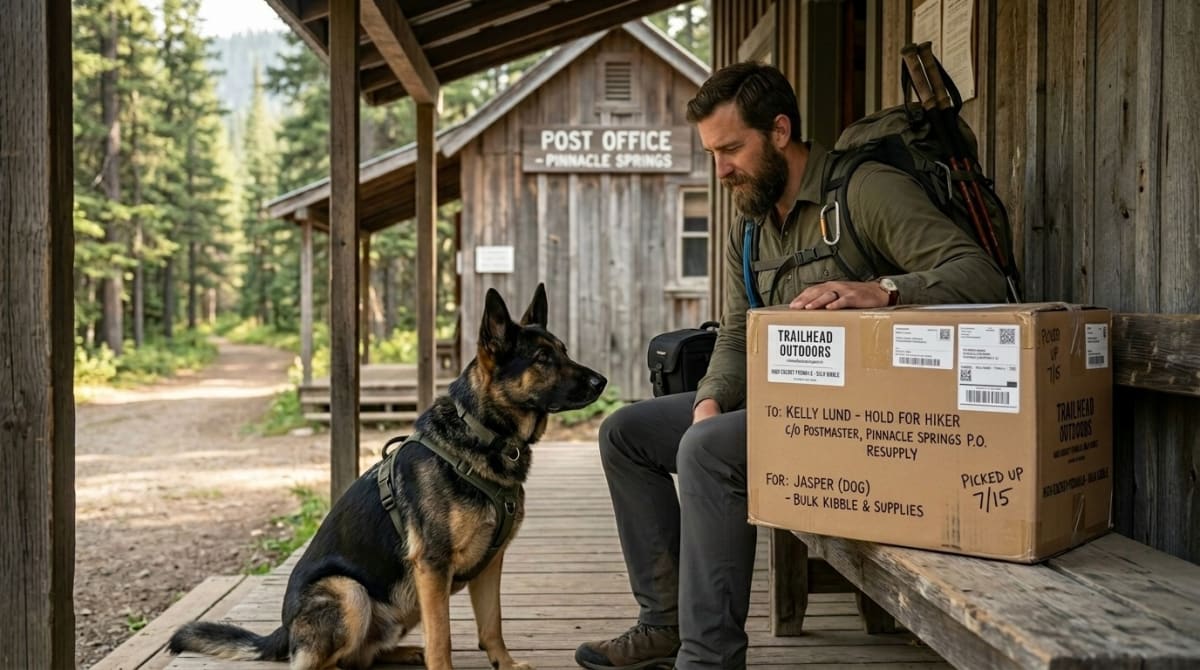
We learned about food logistics the hard way. Over five PCT and Cascades sections with Jasper, we've refined this system from scratch. Jasper is a 95-pound German Shepherd with a huge engine. He burns thousands of calories a day pushing through elevation changes. Carrying two weeks of his kibble is physically impossible. Backpackers often assume they can just grab whatever cheap dog food happens to be sitting on the shelf at the nearest trail town grocery store when hiking into civilization, but relying on that strategy will end the trip early. Please don't try it. Resupplying a dog on a long-distance trail requires strict planning and a surprisingly deep relationship with the United States Postal Service.
The reality of feeding a large dog on trail forces hikers to mail packages. Jasper eats four cups daily at home. On a thru-hike that requirement jumps to six or more cups depending on elevation gain. Six cups of dry food weighs roughly one and a half pounds. When we calculate the caloric needs for a full seven-day section through remote wilderness without any town stops we are suddenly looking at carrying over ten pounds of dense kibble in the pack. This destroys base weight calculations. Nobody can just absorb that much extra mass. For a deeper look at calorie-dense options that help offset this weight burden, see our guide to high-calorie snacks for hiking dogs.
While mailing boxes of his specific diet to post offices ahead of time solves the immediate weight problem it creates a completely new logistical puzzle. It requires tracking daily hiking pace against federal holiday schedules and local mail delivery hours. We must calculate precise caloric needs for high-elevation exertion and package the food perfectly. Time the shipments so the postmaster doesn't return them. We also need a backup strategy for when a package gets lost in transit or delayed by a freak mountain snowstorm.
Key Takeaways
- 1Keep your dog on the exact same food from home — switching brands mid-trail causes gut crashes that end trips early
- 2Ship via USPS General Delivery using your legal name and time boxes to arrive 2 weeks before your ETA
- 3Vacuum-seal every daily ration and line boxes with contractor trash bags to block rodents and moisture
- 4Always carry a 2-day emergency food buffer for closed post offices, lost packages, or unexpected delays
Why you cannot buy food in trail towns
Walking into a remote gas station and buying a random bag of kibble will ruin a hike. We tried this approach early in our backpacking career. The results were disastrous. A 2020 study in Frontiers in Veterinary Science showed that abrupt dietary transitions cause immediate gastrointestinal distress in adult dogs. At home loose stool is just an annoying cleanup task. On an exposed ridge twenty miles from the nearest road canine diarrhea becomes a life-threatening dehydration risk.
Jasper requires a high-fat salmon and sweet potato diet. When hikers cut corners by switching from a premium diet to whatever cheap corn-based kibble the local hardware store happens to carry, the dog's gut biome crashes almost immediately and ruins the week. We saw his digestive system revolt firsthand. He lost energy fast. He needed twice as much water to stay hydrated. We had to bail out of the section hike entirely.
Keeping a dog on the identical nutritional profile every single day is the only real solution here. The absolute easiest way to prevent digestive upset from varying food brands is to simply never vary the brand. We package the exact food Jasper already eats and ship it to our future selves. This consistency protects the gut biome and prevents massive calorie deficits. 75 miles into a section hike is no place for a dietary experiment.
How to package and address general delivery
Shipping dog food requires aggressive packaging. We cannot just slap a shipping label on a paper bag of kibble and hand it to the postal clerk. Dog food bags rip open during transit. If we leave the food in its original paper or flimsy plastic packaging rodents living in the back storage rooms of small-town post offices will chew right through that paper barrier to get to the thousands of calories waiting inside.
Flat rate shipping keeps costs predictable. A large flat rate box holds about twenty pounds of food. We line the inside of the cardboard box with a heavy-duty contractor trash bag. This extra layer is non-negotiable. If the box sits out on an uncovered loading dock during a severe Pacific Northwest rainstorm the inner trash bag prevents moisture from penetrating the vacuum-sealed rations and ruining the entire supply. Tape the seams shut. Standard packing tape turns brittle in freezing temperatures. We use high-adhesion reinforced shipping tape. Wrap it around the box in three different directions.
Address the box clearly. Rural postmasters handle hundreds of hiker packages during peak season. They appreciate obvious labeling. Use thick permanent markers. Write the information on all six sides of the box. When a clerk walks into a back room piled high with identical boxes they should see the name without having to rotate a single thing.
Format the shipping address like this block:
YOUR REAL NAME
GENERAL DELIVERY
CITY, STATE ZIPCODE
Please hold for PCT Hiker. ETA August 14.
Always use a legal name. The name must match a photo identification. Post offices require people to show ID to pick up general delivery packages. If someone writes their trail name on the exterior of the box because that is what everyone calls them the postal clerk will flat out refuse to hand over the package and leave them standing there with nothing.
Scent proofing and dealing with wildlife
Getting a box through the mail also means fighting off local wildlife. Trail town post offices are often poorly sealed historic buildings located right on the edge of deep woods. Because these older structures completely lack modern pest control a cardboard box holding loosely packed performance kibble is a scent beacon for every field mouse living within a one-mile radius.
Mice and rats are the primary threat. We learned this the hard way in Northern California. Rodents will smell the dense fat content straight through the cardboard walls. They will chew a hole in the corner overnight. The postmaster will discover the damage in the morning. Health regulations often require them to throw the ruined package straight into the dumpster. Arriving into town exhausted just to find a dog has zero food is gut-wrenching.
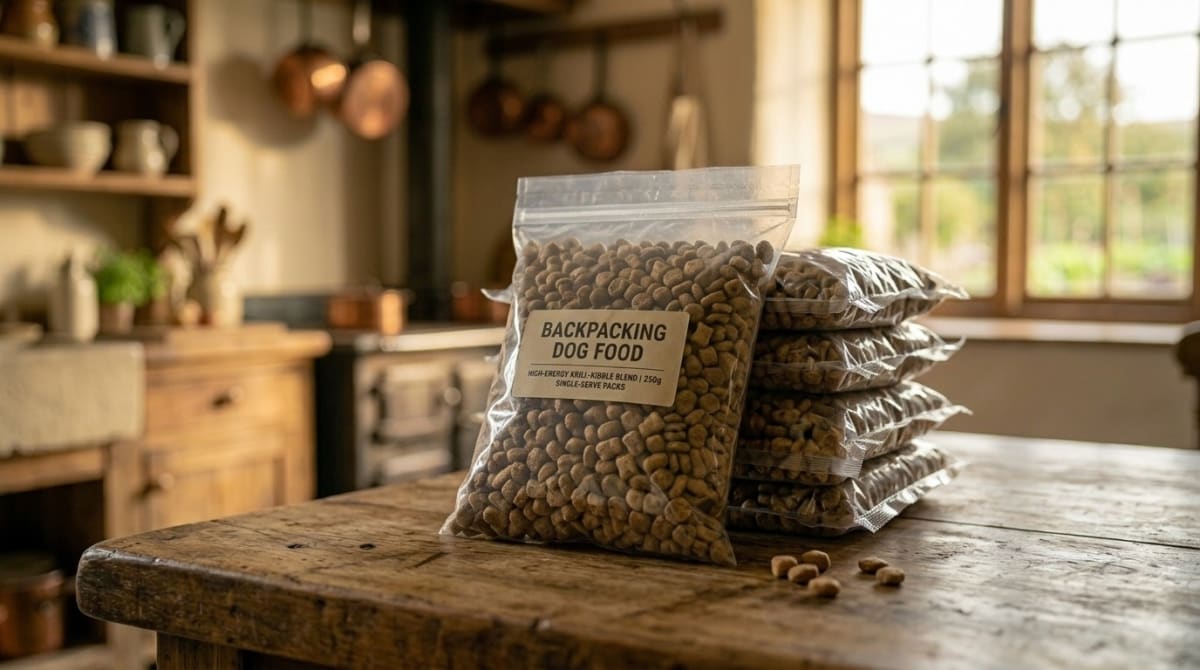
Vacuum sealing every daily ration prevents this disaster. The thick plastic traps the scent. If backpackers use standard sandwich bags the smell permeates the thin plastic within days. By the time the box sits in a post office for two weeks it smells like a buffet.
We go one step further for Jasper. We wipe the outside of the sealed plastic bags with an unscented alcohol wipe. This strips off any fat residue and trace oils transferred from our hands during the packing process. While this preparation step might sound a bit paranoid to a weekend warrior who has never dealt with remote logistics, losing a week of premium dog food to a single field mouse forces a permanent change in perspective.
Timing your shipments to post offices
Timing requires exact math. What schedule guarantees packages actually arrive before we do? USPS Priority Mail typically takes three to five business days to reach rural post offices. We want the box waiting there. We cannot ship it months in advance. If supplies arrive too early the local postmaster simply runs out of storage space in the tiny back room and returns the food to the sender long before hikers ever reach town.
Post offices hold general delivery packages for up to thirty days before returning the box. If someone mails a box to Washington State before they even start hiking in California it will be gone by the time they cross the border.
We designate a trusted friend back home to handle Jasper's resupply boxes. We leave the packed and addressed boxes stacked in their garage. Two weeks before we expect to reach a targeted trail town we send them a text message from a high elevation cell service spot. They drop the next box at their local post office the following morning. This two-week buffer works best. It provides enough time for the postal service to route the package to a remote mountain town while leaving plenty of cushion before the thirty-day hold limit expires and ruins the plan.
The bounce box strategy in practice
Sometimes relying on someone back home just isn't an option. When we hike without home support we bounce boxes. This method requires buying dog food in bulk along the trail. We buy a thirty-pound bag of his normal diet at a large pet store. After packing the upcoming section's rations into our backpacks we carry the bulk remainder straight to the local post office. We pack the extra food into two separate boxes. We mail the first package to a town one week ahead and send the second box further up the trail.
This strategy requires paying for postage on trail. It eats into the limited hiking budget. It also forces us to spend half a rest day running town logistics instead of elevating our feet and recovering from the miles. Despite the frustration bouncing boxes is the most reliable way to keep a dog on a consistent diet without a support crew sitting at home waiting for a text message from a mountain peak. We always carry our vacuum sealer right in our main bounce box. We seal the food on the floor of the motel room. This guarantees the kibble stays preserved no matter how many times we end up bouncing it forward along the route over a multi-month trip. If you're planning a first overnight trip with your dog and haven't sorted sleep gear yet, our dog sleeping pad guide for backpacking covers what works on longer sections.
Dealing with closed post offices and zero days
Post office operating hours dictate the entire hiking schedule. Many rural branches completely shut their doors on weekends. Some only open for two measly hours on a Tuesday. Relying on federal mail for a dog's survival requires memorizing the operating hours of every post office on the upcoming route. We adjust our daily mileage to arrive exactly when the doors are open. Waiting around for a package ruins morale.
Always carry an emergency buffer. We pack two extra days of food for Jasper beyond what the mileage dictates. If a post office is closed for a federal holiday we can feed him while we wait. If a river crossing washes out and delays us he still eats his full ration. When hikers are standing outside a closed brick building in a town of three hundred people with a hungry dog and thirty miles of rough terrain ahead of them, those extra two days of buffer food feel like the most valuable item in the backpack by a wide margin.
Handling lost packages on trail
Sometimes the postal service just loses a box. It happens to every thru-hiker eventually. The clerk checks the back room three times and comes up empty. The tracking number claims it arrived. The actual box vanished. When a packed resupply box disappears into the postal void the immediate priority is locating a specialty pet store that carries the right formula, even if that means hitchhiking thirty miles down the highway to a larger city.
Small trail towns almost never have dedicated pet stores. Call the distant store before sticking a thumb out. Ask the employee to physically verify they have the bag on the shelf. Do not trust online inventory systems. Once they confirm the bag is actually in their hands ask them to hold it behind the counter.
If finding the normal food fails we transition the diet slowly. We use the two-day emergency buffer of the original food to mix with the closest alternative available. Look for a brand with the same primary protein source and similar fat percentages. Mix the remaining original food with the new food over forty-eight hours. This is not ideal. It will likely still cause some mild digestive upset. It is much better than an abrupt transition though, and it keeps the dog moving until a new box of the proper food finally arrives from home.
Never compromise a dog's nutrition to save time. A dog's caloric needs vastly outpace a human's on rough terrain. Investing the time to manage shipping logistics perfectly before taking the first step on the trail ensures the bowl stays full and energy remains high through the absolute toughest miles of the journey.
Frequently Asked Questions
Filed under
Kelly brings an engineering mindset to dog hiking gear. After thousands of miles with Jasper testing every harness, pack, and boot on the market, he knows what holds up and what fails.
References & Further Reading
- Supplementation of Yeast Cell Wall Fraction Tends to Improve Intestinal Health in Adult Dogs Undergoing an Abrupt Diet Transition. Front Vet Sci 2020 — Frontiers in Veterinary Science (2020)