 Paths & Paws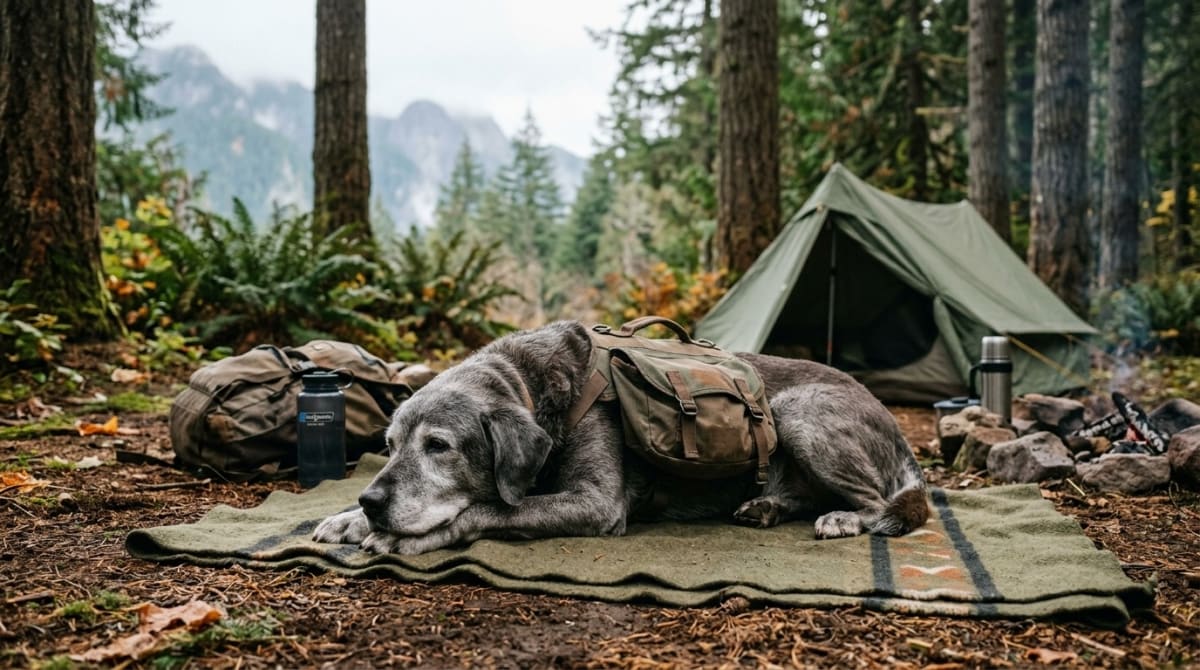
Backpacking with an old dog means forgetting about mileage records and treating the whole trip as a risk management exercise. Things break. If a senior dog pulls a muscle or abruptly shuts down from masked fatigue five miles from the trailhead, getting them out alive takes specific gear and serious human grit.
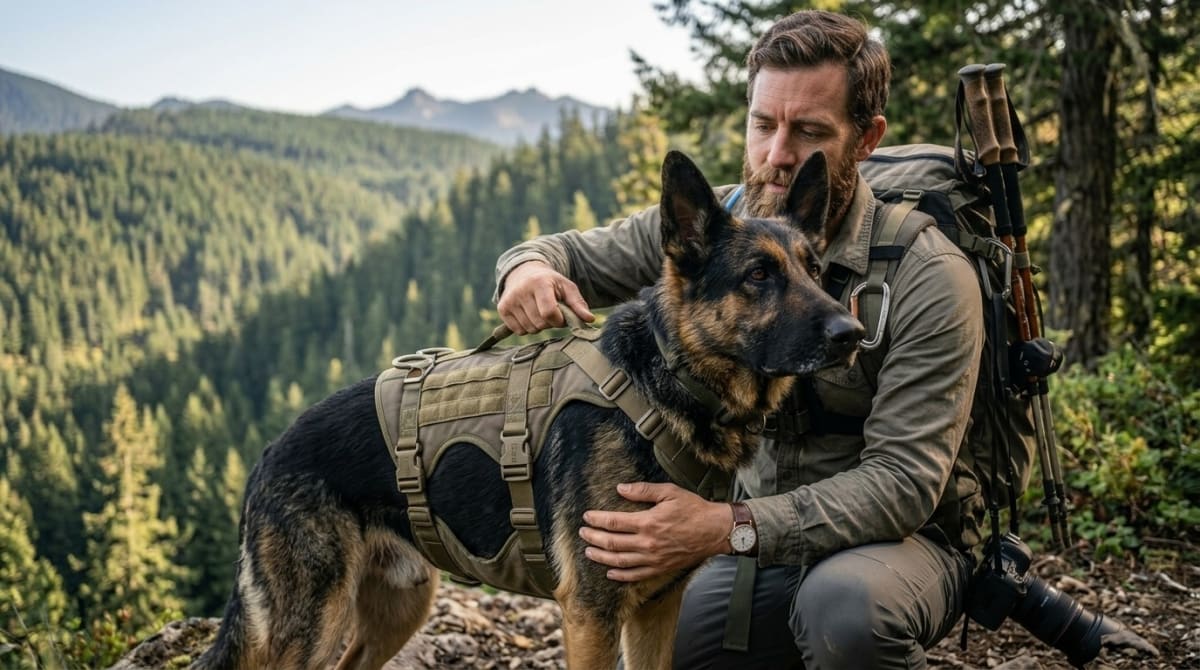
Jasper is a 95-pound German Shepherd. I can't just scoop him up if things go sideways. We took our emergency evacuation rig up Mount Si last month to see how it actually handled. Jasper is only four years old right now but hauling almost a hundred pounds of dead weight down a steep scree field gave me a very clear picture of what we will need when he gets gray. Build the setup before you need it.
Key Takeaways
- 1Take whatever their peak daily mileage used to be and cut it in half — senior joints cannot sustain what they once could
- 2Watch morning mobility, not trailhead energy: excitement masks exhaustion, but stiffness after sleep reveals the truth
- 3A real evacuation sling with independent leg holes is mandatory gear for any senior dog over 50 lbs in the backcountry
- 4Every thousand feet of elevation gain puts the equivalent stress of two flat miles on arthritic joints
How to Assess Senior Dog Trail Fitness
Guessing their fitness level usually ends badly. Get the data. A 2022 study in Frontiers in Veterinary Science outlined consensus guidelines for staging canine osteoarthritis. The researchers mapped out different stages based on how animals actually move. Stage one might just look like a half-second pause before they jump into the truck while stage three shows up as obvious limping and a total refusal to keep walking.
Catch those early signals. Watch how they stand up from the kitchen floor. Slow or staggered rising points directly to joint inflammation. We always run a local ten-mile test hike with a loaded pack before committing to anything remote. Keep a close eye on their pacing during those last two miles. Dogs hide pain out of survival instinct. If they drop behind your heels instead of pulling out front, they are probably hurting. Check their paws at the car. Uneven pad wear means the dog has been quietly shifting their weight all day to favor a bad joint.
Never trust trailhead hype. Excitement covers up exhaustion. Watch them the next morning. A healthy trail dog will stretch and move fluidly within ten minutes of waking up. If they stay stiff for over an hour, the compounding stress of a multi-day trip is going to break their body down entirely and you will be executing a wilderness rescue. We use that one-hour window as our go/no-go gate. Jasper clears it in under five minutes on good days. When he hit twelve minutes after a Mount Rainier training run, we scratched the overnight that weekend.
Realistic Mileage Expectations
Older dogs lose their bounce. A young pup can grind out twenty miles and wake up ready for more. Seniors need strict speed limits. Take whatever their peak daily mileage was back in the day and chop it in half. If they used to handle fourteen miles without complaining, your new absolute ceiling is seven.
Elevation gain wrecks old cartilage much faster than flat dirt ever will. We calculate that every thousand feet of vertical climb puts the equivalent of two miles of flat-ground stress on an arthritic frame, which means you have to study the topo maps obsessively and pick campsites well before dusk.
Jasper weighs 95 pounds. That mass means his skeleton takes a beating on every single downhill step we take. Out here in the Pacific Northwest we actually have to actively brake on descents to protect him. Constant downhill braking absolutely punishes the front shoulders and elbows.
Keep actual moving time under four hours a day. Do two hours in the cold morning air. Knock out the rest as the sun goes down. Splitting the day like this gives hot joints a chance to actually cool off. That prevents the compounding tissue damage that usually leaves senior dogs completely locked up by the third morning.
What Emergency Gear to Carry for Evacuation
You need a real evacuation harness. Standard chest rigs are completely useless for a rescue. Those thin belly straps will cut off their air supply and cause intense pain if you try to actually carry them down a mountain for more than a few minutes. We cover the full technique in detail in our guide to carrying an injured dog off the trail, but the short version is that harness fit determines everything.
A legitimate rescue sling wraps the animal completely. Look for independent leg holes and thick shoulder straps. The best designs let you wear the dog exactly like a backpack so your hands stay free to catch a fall. Measure their chest girth before ordering. Most large-breed slings are sized for 24 to 34 inch chest circumference. Jasper sits at the upper end of that range and the fit is still snug enough that he can't slip a rear leg through.
Test the setup at home. We wrestled Jasper into his sling on our living room rug. You need to figure out how to transition a stressed out dog from the dirt up onto your back while keeping your own balance on loose rock. Throwing a large dog up there yanks your center of gravity straight backward. Lean into the hill. Keep your chest aimed at the dirt. Big dogs feel incredibly heavy when they go limp. Hauling a 95-pound animal out of the woods demands flawless footwork and you absolutely need two stiff trekking poles to keep from blowing out your knees, plus you have to accept that you will be stopping every ten minutes to catch your breath.
Always pack an emergency bivy. Sometimes the terrain is just too sketchy for a carry and sheltering in place becomes the only survival option. Hurt dogs dump body heat incredibly fast. Toss them in the bivy to trap that warmth while you hit the SOS button on your satellite messenger.
Knowing When to Transition to Day Hiking
Every trail dog eventually ages out of the backcountry. You have to spot the behavioral red flags before a blown knee forces your hand five miles from cell service.
Track their recovery window closely. If they spend three days completely glued to the couch after a basic weekend overnight, their system is losing the battle to repair tissue damage. We log recovery time after every trip so we can actually see the trend. If that window stretches from one day to two, then two to three, the trajectory is telling you something clear. We also keep tabs on early signs a dog is too tired on the trail during the trips themselves.
Watch how they sleep in the tent. Old dogs with bad hips have a terrible time getting comfortable on thin foam sleeping pads and they end up pacing the tent floor all night trying to find relief. A dog that skips sleep will not recover for the next day. Listen to them.
A dog refusing to load up at the trailhead is drawing a very clear boundary. Move them over to day hikes. Four miles of low-stress sniffing around a local state park will always beat dragging an exhausted animal through a miserable alpine slog just because you wanted to hit a peak. Call it a career... they earned it.
Frequently Asked Questions
Kelly brings an engineering mindset to dog hiking gear. After thousands of miles with Jasper testing every harness, pack, and boot on the market, he knows what holds up and what fails.
References & Further Reading
- Proposed Canadian Consensus Guidelines on Osteoarthritis Treatment Based on OA-COAST Stages 1-4. Front Vet Sci 2022 — Frontiers in Veterinary Science (2022)