 Paths & Paws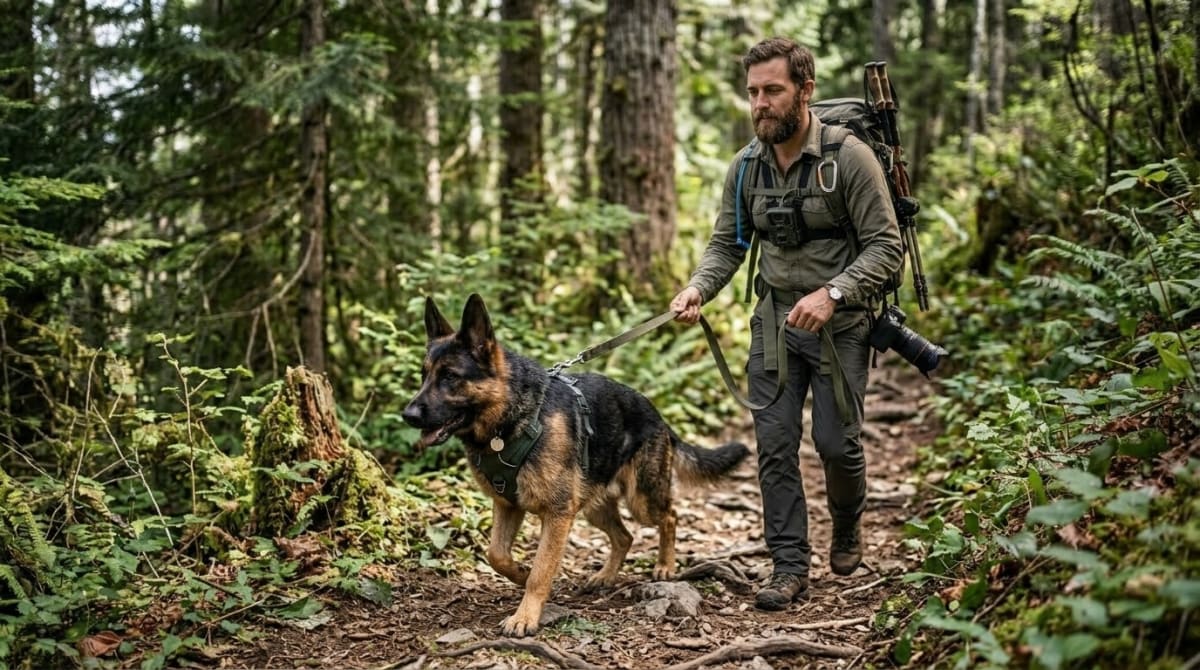
Most outdoor guides tell hikers to grab a standard six-foot leash for the trail. That advice completely ignores the geometry of the actual dirt we walk on. On an 18-inch wide single-track path, six feet of slack gives a dog over four feet of lateral freedom. They can drift into poison oak. They can slide down steep scree slopes. It happens fast. We spent the last two months tracking leash tension and tangle rates with Jasper, my 95-pound German Shepherd. We ran multiple lengths across different trail widths in the Cascades. Our measurements show that shorter setups hit the sweet spot between three and four feet for narrow paths. You need absolute control. When sharing a path barely wider than a hiking boot with oncoming mountain bikers and fast trail runners, an extended line creates a trip hazard that puts everyone at risk of a bad collision.
Key Takeaways
- 1Six-foot leashes give a dog a twelve-foot radius of movement, way too much slack for 18-inch single-track
- 2Three to four foot leashes hit the sweet spot for narrow trail control and less slack management
- 3A traffic handle sewn near the harness clip instantly cinches control to a one-foot radius when passing bikers or hikers
- 4Retractable leashes jam with trail grit and generate enough force at full extension to cause soft tissue injuries
The Reality of Single-Track Geometry
A single-track trail forces hikers to walk single file. The tread width usually measures somewhere between 12 and 24 inches across. Clipping a standard six-foot leash on these paths opens up a massive twelve-foot radius of potential movement.
If Jasper walks straight in front of me on a six-foot line he occupies the trail ahead. This seems fine initially. Then he turns sideways to catch a scent. That radius instantly lets him wander four to five feet laterally into the brush. In thick woods this means the nylon wraps around tree trunks. On exposed ridgelines it lets a dog step way too close to unstable drop-offs.
The physics of a long line work against stability here. A longer lead demands constantly gathering and releasing slack just to keep the material from dragging in the dirt. Dragging lines pick up burrs. They snag on sharp rocks. They tangle around a dog's legs during creek crossings. A shorter rig fixes the slack management problem entirely. The material stays taut enough to hover above the mud while giving the dog just enough room to maintain a normal hiking gait.
Anchoring a short leash close to the hips keeps the center of gravity locked down, which becomes absolutely critical when a large breed dog suddenly lunges at a chipmunk scrambling up a nearby pine. A dog hitting the end of a six-foot line generates massive pulling force compared to one hitting the end of a three-foot line. You have a fraction of a second to brace. On a steep decline that sharp jolt from a long line easily pulls the boots right out from under a hiker.
4ft vs 6ft vs Adjustable Leashes
We basically have three choices for fixed-length trail leashes. Each serves a very specific purpose depending on the terrain ahead.
Four-Foot Leashes
A four-foot lead is the prime choice for strict single-track. It forces the dog to stay within the immediate dirt corridor. Jasper wears a four-foot setup whenever we hike technical switchbacks with heavy foot traffic. The shorter length keeps him pinned near my knee. He stays in a heel or just slightly ahead. There is no need to bundle up excess webbing in the hand. The main drawback is dogs cannot sniff freely on wider fire roads. We prefer biothane for this length because the coated webbing glides smoothly past wet ferns without absorbing water, which keeps the whole rig light and easy to handle from trailhead to summit.
Six-Foot Leashes
The classic six-foot leash performs best on wide logging roads or paved multi-use paths. It gives the dog enough room to drift laterally. They can investigate off-trail smells without pulling the handler off balance. We only break out six-footers when the path is wide enough for two people to walk shoulder-to-shoulder. Running a six-foot line on a tight, overgrown trail means spending half the hike constantly reeling nylon in and out of the palm just to prevent a tangled mess around the boots. Leather works brilliantly for six-foot lengths. The added weight helps the slack drop straight down toward the trail rather than bowing outward into the surrounding brush.
Adjustable Leashes
Adjustable leashes offer the most versatility for unpredictable terrain. They feature multiple D-rings sewn along the webbing. Handlers can configure them to function as a tight traffic lead or a full six-foot line. We start our hikes with Jasper on the full extension while crossing open parking lots. Hitting a tight trailhead means clipping the carabiner to a middle ring. This cuts the length to four feet. This rapid adaptability makes them the superior choice for routes that bounce between wide access roads and cramped forest paths. You just change the length as the environment dictates. Because adjustable designs let handlers manually modify the control radius based on the immediate surroundings, they save people from carrying multiple leashes or constantly wrapping excess nylon around the wrist until the hand goes totally numb.
Traffic Handles and Passing Etiquette
Trail etiquette dictates that hikers yield to horses while mountain bikers yield to hikers. In reality handlers often need to yank their dog off the trail fast to let mountain bikes bomb past. A standard leash gives terrible leverage for this maneuver. When a cyclist rounds a blind corner doing fifteen miles per hour there are maybe two seconds to clear the dirt.
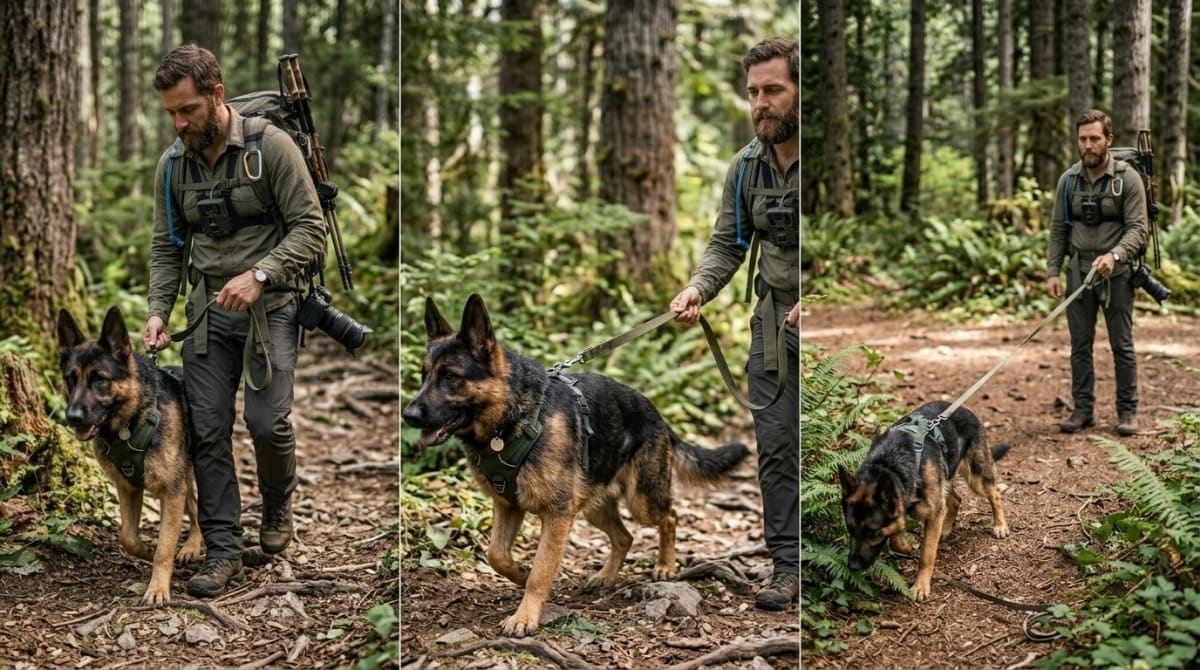
Traffic handles solve this mechanical issue. A traffic handle is just a secondary loop sewn into the webbing right down near the hardware that clips to the dog's harness. When encountering a mountain bike on a cramped trail sliding a hand down to grab that lower loop instantly restricts the dog to a one-foot radius. The dog literally has no room to step into the danger zone.
We rely on this heavily with Jasper. His 95-pound frame requires absolute restraint when passing reactive dogs on exposed ledges. Grabbing a standard leash midway down the nylon provides a painfully weak grip. The slick material easily slides through bare fingers if a dog unexpectedly lunges forward. A dedicated traffic handle provides a secure anchor point. Many owners try to just reel their dog in by wrapping the leash around the palm multiple times, but this dangerous habit creates a tourniquet effect that can easily break fingers if the dog suddenly bolts toward wildlife.
Proper passing technique on single-track requires stepping entirely off the tread. Step onto the uphill side of the slope. Command the dog to sit. Grip the traffic handle firmly while the other party passes. This stops the dog from stepping backward into the traffic lane. It also signals to approaching hikers that the animal is under total control. Once the path clears release the handle and resume the hike on the primary loop.
Why Retractable Leashes Fail on Trails
Never take a retractable leash on a hiking trail. The internal spring mechanisms routinely jam when exposed to trail dust and grit. Beyond the mechanical unreliability these devices introduce real medical risks for both human and dog.
A 2024 study published in the Journal of the American Veterinary Medical Association analyzed leash-related injuries and found a sharp increase in upper extremity trauma among dog walkers. The basic design of a retractable unit constantly encourages dogs to gain running momentum before hitting the end of the line. That momentum has to go somewhere. When a large dog hits the end of a fifteen-foot retractable cord at a full sprint, the rapid deceleration transfers immense kinetic energy straight to their neck and spine. Soft tissue injuries from that jolt can take months to heal.
The thin cords act like wire under tension. If a dog loops around a tree or a fellow hiker on a narrow path the cord causes deep friction burns and lacerations. The bulky plastic handles offer zero grip strength. Drop the device and the spring mechanism drags the clunky plastic casing straight toward the dog. They panic. They bolt. A fixed-length nylon or leather leash prevents nearly all of these accidents, which is one more reason to skip retractables entirely for dogs that already pull hard on descents.
Frequently Asked Questions

Kelly brings an engineering mindset to dog hiking gear. After thousands of miles with Jasper testing every harness, pack, and boot on the market, he knows what holds up and what fails.
References & Further Reading
- Leash-related injuries associated with dog walking - an understudied risk for dog owners? — J Am Vet Med Assoc (2024)