 Paths & Paws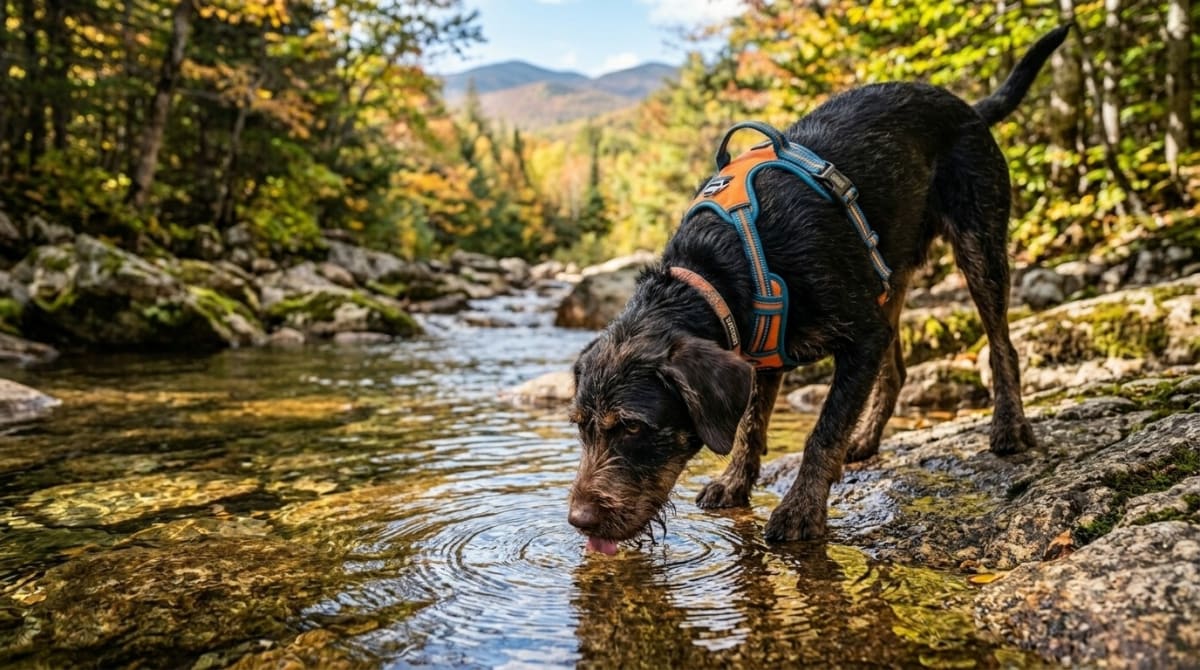
Most people assume moving water is perfectly safe for dogs. It is not. The second a dog laps up creek water, they swallow whatever just washed downstream. Can they drink from it safely? Sometimes. We accept a calculated risk of parasitic or bacterial infection every time we let them. We learned this the hard way with Scout. She's a fifty-pound Lab mix rescue who treats every alpine creek like her own personal water bowl. After one brutal bout of giardia from a clear mountain stream, we had to completely rethink our trail hydration. Instead of banning natural water entirely, we figured out exactly what lives in those streams. We dug into the veterinary data and tested out several different approaches to find the perfect balance between hauling incredibly heavy water bladders for miles and risking a seriously sick dog. Sometimes when the conditions align perfectly and snowmelt flows fast over granite, we let her drink freely. Other times we filter everything.
Key Takeaways
- 1Moving water isn't automatically safe - Scout caught giardia from a rushing Cascade creek, proving even clear alpine streams carry invisible cysts
- 2Blue-green algae is the fastest killer - pea-soup colored or foamy ponds can cause neurological collapse within hours of ingestion
- 3Annual lepto vaccination is now recommended for all dogs regardless of location - urban park outbreaks are as common as wilderness ones
- 4Dogs need roughly one ounce of water per pound of body weight per day - that doubles on hot mountain days, so pack accordingly
Common Trail Water Infections
Mountain runoff looks incredibly refreshing. But microscopic threats hide easily in clear water. Dogs face several hidden dangers when drinking from natural sources, and parasitic infections occur the most frequently.
Giardia reigns as the most common trail illness. This single-celled parasite forms tough little cysts that wash down into the trail water supply whenever heavy rain moves through an area where infected wildlife have recently been spending time. When a dog takes a drink, those cysts travel straight to the intestines. They break open. They attach to the intestinal wall. The parasites block nutrient absorption and trigger violent gastrointestinal distress. A 2024 Veterinary World study found an 18.2 percent giardia infection rate in dogs under a year old. Symptoms rarely show up right away. It takes five to twelve days for the parasite to multiply into a real problem. The warning signs are soft stools, lethargy, loss of appetite, and a truly foul fecal odor.
Scout caught giardia during her second summer with us. We were hiking a popular route in the Cascades and let her drink from a rushing creek. A week later, she just crashed. The awful diarrhea followed that evening. We spent two full weeks managing her diet and giving her prescription meds. That nightmare forced us to look at every single water source differently.
Normal stream bacteria can also cause transient stomach upset simply because a dog's digestive system isn't used to the local flora. This often leads to a mild bout of diarrhea that usually resolves on its own within a day or two. Only a vet test can tell the difference between a harmless bug and a brewing parasite.
Serious Waterborne Threats
Giardia means frustrating diarrhea and strict diet management. Other pathogens are much worse. Some require urgent veterinary intervention just to prevent catastrophic organ failure.
Leptospirosis is a massive bacterial danger out there. Wildlife shed Leptospira bacteria in their urine, and those bugs survive for months in damp soil or standing water. When dogs swallow contaminated water, the spirochetes pass right through their mucous membranes. They hit the bloodstream. They attack the kidneys and liver. Early signs look like fever, muscle weakness, vomiting, and excessive thirst. Without fast antibiotics, leptospirosis destroys those organs completely.
Cyanobacteria poses an even faster lethal risk. You probably know this as blue-green algae. These toxic blooms form in warm stagnant ponds during late summer and pump out potent neurotoxins. Those poisons absorb rapidly through the stomach lining. A dog only needs a few quick mouthfuls of tainted water to suffer acute poisoning, and rapid neurological collapse or total liver failure often follows within just a few hours. Survival rates for blue-green algae ingestion are brutally low. If a pond looks cloudy or sports a weird green film, walk the other way.
High Versus Low Risk Water Sources
Not all trail water carries the same threat level. We evaluate the flow, the temperature, the surrounding terrain, and recent weather patterns before letting Scout drink.
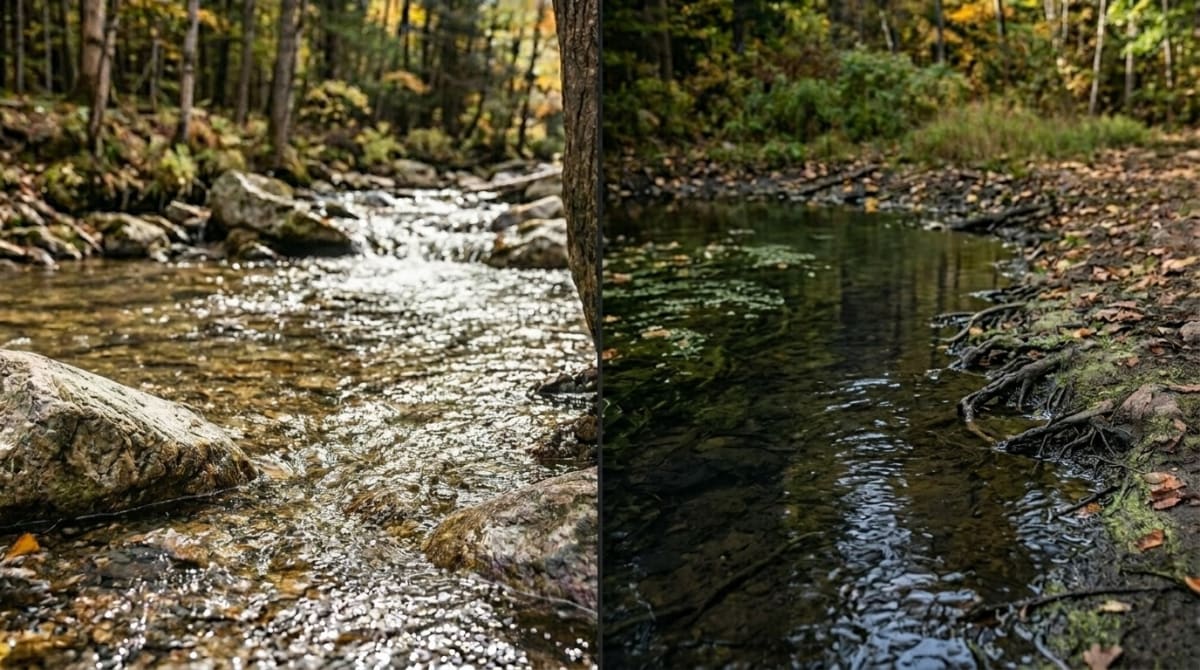
High-risk sources all share common traits. Stagnant ponds breed bacteria fast. Warm trail puddles act like little incubators for pathogens. Slow agricultural runoff usually carries incredibly concentrated pesticide loads mixed heavily with raw livestock waste, and muddy drainage ditches essentially just collect nasty urban trash that washes straight off the nearby asphalt. Never let a dog drink from those. The lack of movement lets bacteria multiply unchecked. Sunlight warms the surface to speed up that biological growth, while bottom mud traps the organic matter feeding the whole mess.
High alpine spring heads offer the cleanest natural option. Fast-moving creeks over rock beds carry fewer concentrated contaminants, and huge rivers dilute wildlife waste effectively. Snowmelt streams up high almost never harbor dangerous algae. That continuous tumbling movement keeps bacteria from settling in. Freezing temperatures suppress their reproduction.
Low risk doesn't equal zero risk though. A dead deer decaying fifty yards upstream will easily contaminate a pristine creek. Since giardia cysts survive perfectly fine in freezing water, we always check upstream conditions if we can. Cattle grazing above the trail means the water is off-limits. A beaver dam upriver makes the parasite risk skyrocket. We let Scout drink from high-elevation streams only when we know the source sits close by. We drag her away from low-elevation lakes in August. Temperature dictates everything. When the weather turns scorching, our trust in natural water drops to absolutely zero.
Prevention and Interventions
Protecting a dog on the trail requires overlapping strategies. We can't control the environment. We can control immunity, trail behavior, and how we prep our water.
Vaccination gives the strongest defense against fatal bacterial hits. A 2023 consensus statement in the Journal of Veterinary Internal Medicine shifted how vets handle leptospirosis, leading the panel to recommend annual vaccination for all dogs regardless of breed or where they happen to live. Outbreaks happen in urban parks just as often as remote wilderness. The shot covers the most common disease-causing serovars. It won't prevent every single infection. It does drastically reduce the severity of the illness and prevents fatal organ damage if they catch a breakthrough case. We keep Scout updated on her lepto shots every single spring before the busy hiking season starts.
Training solves the immediate access problem. A rock-solid leave-it command saves lives out there. Dogs naturally want to stick their noses in muddy puddles and stagnant ponds. We have to interrupt that instinct before they take a gulp. We spent months drilling this with Scout. We walked her past neighborhood drainage puddles and heavily rewarded her for ignoring them. That boring sidewalk training works wonders in the woods.
Filtering gives the ultimate peace of mind. A lot of backpackers already carry hollow fiber squeeze filters for their own hydration needs. These little devices strip out bacteria and protozoa like giardia beautifully. They won't touch viruses or agricultural chemicals. But if a stream looks mostly clean and you just suspect some wildlife contamination, running it through a filter makes it perfectly safe for dogs. We carry a dedicated dirty water bag, squeeze the filtered output straight into Scout's silicone bowl, and skip the parasite gamble entirely.
When You Must Carry Clean Water
Sometimes natural water is just too sketchy. We have to recognize those bad conditions and pack enough hydration for the whole team from home.
Late summer demands strict water discipline. Toxic algae blooms peak in August and September. Rivers slow to a crawl. Forest ponds turn into warm bacterial soup. We carry all our water during these late hot stretches. Severe rainfall events also create surprisingly hazardous conditions. Flash floods wash months of accumulated wildlife waste straight into the streams. The sediment load spikes. Bacterial counts go through the roof. We always wait a few days after heavy storms before trusting trail water again.
Highly trafficked trails present their own unique risks. Hundreds of dogs use those same creeks to cool off on summer weekends. Infected pups shed giardia cysts directly into the immediate environment, and the sheer volume of canine traffic on a busy summer weekend basically guarantees some level of microscopic contamination in the local water supply. Agricultural land always demands packed water. Farm runoff is full of fertilizer, pesticides, heavy metals, and dense livestock waste. No lightweight backpacking filter can clean agricultural drainage enough to make it safe for a dog.
Scout drinks roughly one ounce of water per pound of body weight on a normal day at home. That requirement doubles on hot mountain days. We pack a dedicated canine water bladder in our kit just for her. Hauling three extra pounds of water up a ridge takes serious effort. Nursing a dog through giardia takes a lot more.
Frequently Asked Questions
Sarah is learning to hike with dogs alongside her readers. Scout is her first trail companion, and she shares every mistake, success, and lesson learned along the way.
References & Further Reading
- Prevalence of Giardia duodenalis in dogs and cats: Age-related predisposition, symptomatic, and asymptomatic cyst shedding. Vet World 2024 — Veterinary World (2024)
- Updated ACVIM consensus statement on leptospirosis in dogs. J Vet Intern Med 2023 — Journal of Veterinary Internal Medicine (2023)