 Paths & Paws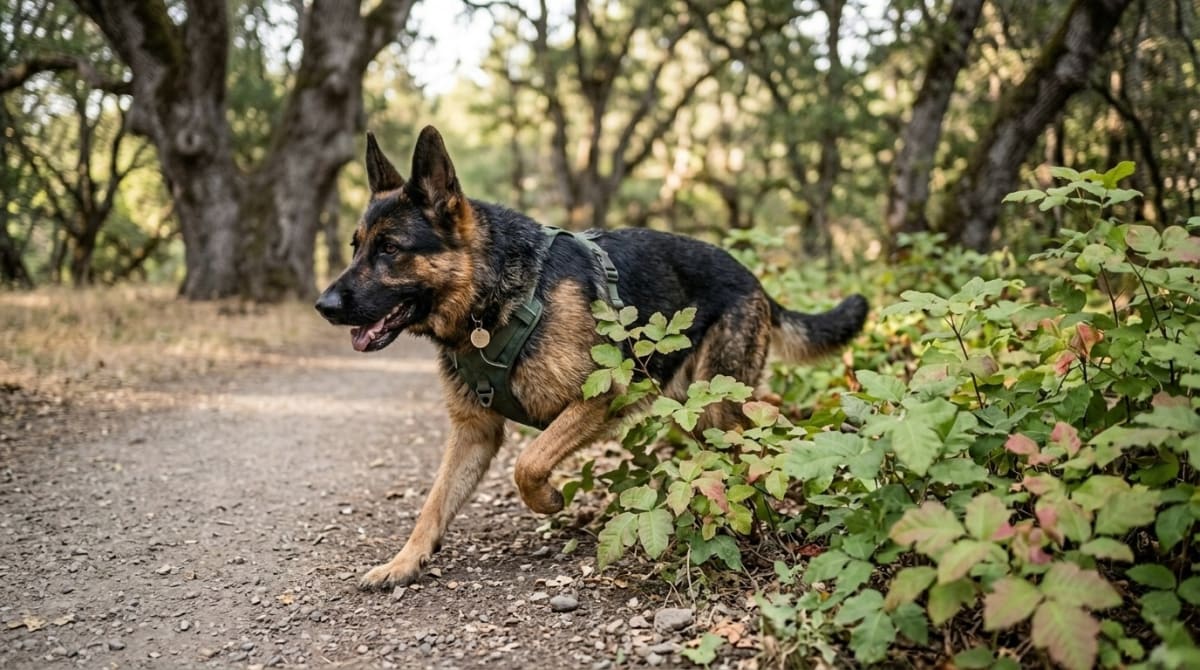
Can dogs get poison oak? The short answer is yes. But they rarely break out in the blistering rashes we do. Their coats act as a physical shield against the plant's toxic resin. That same fur creates a massive headache for the rest of us though. Dogs become four-legged sponges for urushiol oil. When Jasper barrels through brush on a tight trail, his 95-pound German Shepherd coat picks up whatever he rubs against. He hauls that invisible grease right back to the truck seat. We're going to cover how to handle urushiol on the trail and what to watch for if they chew on toxic leaves, along with the exact wash-down protocol we run to stop secondary human transmission dead in its tracks.
Key Takeaways
- 1Dogs rarely develop poison oak rashes because thick fur shields bare skin from urushiol, but smooth-coated and hairless breeds face real contact dermatitis risk
- 2Urushiol stays chemically active on dog fur for weeks or months and transfers instantly to human skin through casual contact like petting
- 3The decontamination window is roughly two hours - use cool water with grease-cutting soap and rinse twice
- 4Rubber cleaning gloves are essential when washing a contaminated dog - thin latex medical gloves let urushiol bleed right through
Dog Reactions and Side Effects
Dogs carry a high natural resistance to the volatile oils found in poison oak and poison ivy. Urushiol binds to cell membranes. It triggers a huge immune cascade in humans. Dogs dodge this fate mostly through sheer physics. Thick hair keeps the sap from ever touching bare skin.
We still have to watch their vulnerable spots carefully. The belly and inner thighs lack that protective undercoat. Pitbulls or hairless breeds face a much steeper risk of developing ugly contact dermatitis. If the resin actually sinks into the epidermis, you'll see red bumps and manic itching within about two days. Constant scratching tears open the skin barrier. That invites bacteria in and spins up localized infections that require a trip to the vet for antibiotics.
Swallowing the foliage is a whole different trail hazard. Dogs explore the world mouth-first. Snapping at an overhanging branch sends urushiol straight down the hatch. A 2026 American Kennel Club review notes this usually just sparks mild gastrointestinal distress, though our vet always tells us to call if we spot heavy drooling or relentless vomiting after a hike. Major systemic shock stays incredibly rare. Raspy breathing points toward anaphylaxis and demands an immediate emergency clinic run. We actually had a scare with Jasper out near Mount Si a couple seasons back. He gnawed on some weird vine hanging off a cedar stump. He threw up once and bounced back an hour later without us doing a thing. Keep a close eye on them after any suspected snacking.
The Transfer Risk
The real danger kicks in during the drive home. Urushiol oil does not evaporate. It sits highly stable and chemically active on surfaces for weeks or even months on end. When a dog blasts through a toxic thicket, the sap paints their guard hairs and settles into the undercoat. Give them a quick pat on the head and you've got it on your palms. Scratch your nose and you just painted your face with the allergen.
This transfer loop happens almost instantly. A single drop of urushiol holds enough potency to ruin the week of hundreds of people. We learned this the hard way during a soggy spring loop in the Pacific Northwest. Jasper dragged his flank across some low-hanging poison oak on a tight switchback. I tossed him into the truck bed without a second thought. A blistering rash lit up my forearms 48 hours later. The stubborn grease had hitched a ride from his dense coat straight onto my rain jacket sleeves, sliding right onto my bare skin when I peeled those wet layers off back at the trailhead.
Prevention Strategies
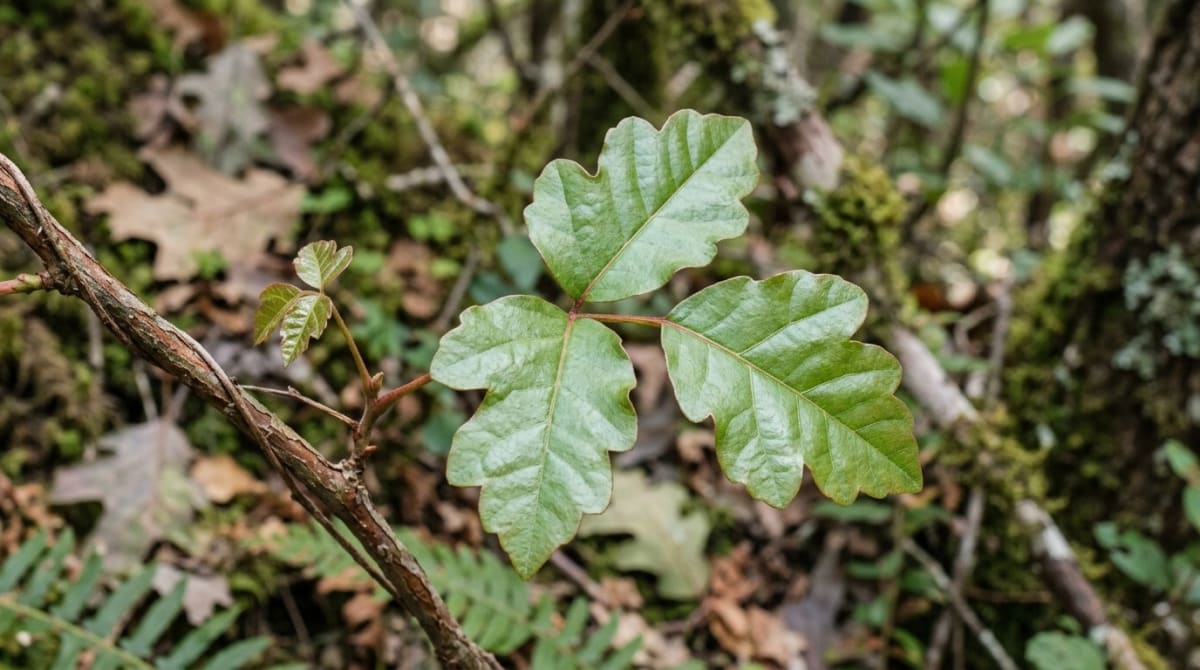
Dodging the plant entirely is your best move. We had to learn how to spot poison oak year-round. It throws leaves in clusters of three with distinct scalloped edges. It might crawl up an old oak tree as a vine or choke out a trail corner as a dense shrub depending on the soil.
Keep the leash tight in sketchy zones. Hounds roaming off-trail through dense brush are absolutely coming back contaminated. We keep Jasper strictly glued to the dirt path during those wet spring and early summer months when the sap runs thickest and the bushes crowd the edges of our local hiking routes. Physical barriers add a solid layer of armor. Dog boots stop the resin from greasing up their pads and smearing all over your car seats. Lightweight hiking shirts block the chest and shoulders from direct hits. Keep in mind those fabric layers turn radioactive the second they brush a leaf. Strip gear off carefully before popping the tailgate and dump everything into a thick garbage bag until you reach a washing machine. These same brushy zones are also prime tick habitat — our guide on removing a tick from your dog on trail covers the extraction protocol so you're not caught off guard.
Decontamination Protocol
You need to move fast if they hit a patch. The countdown clock gives you roughly two hours to strip the urushiol out before it chemically locks onto fur and nylon.
First, grab some thick rubber cleaning gloves. Skip the thin latex medical gloves because the toxic resin actually bleeds right through that porous material. Hose them down with cool water. Hot water opens up the skin pores and sucks the toxins deeper into the dermis. Squeeze out a generous handful of pet-safe oatmeal shampoo or a hardcore grease-cutting dish soap. Scrub that lather aggressively down into the undercoat while steering clear of their eyes and snout. Rinse them out entirely and run the exact same wash cycle a second time to be safe.
Toss every leash and harness into a hot water washing machine cycle with strong detergent. Scrub your car seats down with standard rubbing alcohol. That cheap solvent shatters the stubborn oil residue on contact, which permanently kills any chance of a secondary rash haunting your forearms during next weekend's drive up to the mountains. Once decontamination is done, run through our post-hike recovery checklist to make sure a long day in the brush hasn't left anything else unchecked.
Frequently Asked Questions
Kelly brings an engineering mindset to dog hiking gear. After thousands of miles with Jasper testing every harness, pack, and boot on the market, he knows what holds up and what fails.
References & Further Reading
- Dogs and Poison Ivy: Everything You Need to Know. American Kennel Club 2026 — American Kennel Club (2026)
- Can Dogs Get Poison Ivy? PetMD 2023 — PetMD (2023)