 Paths & Paws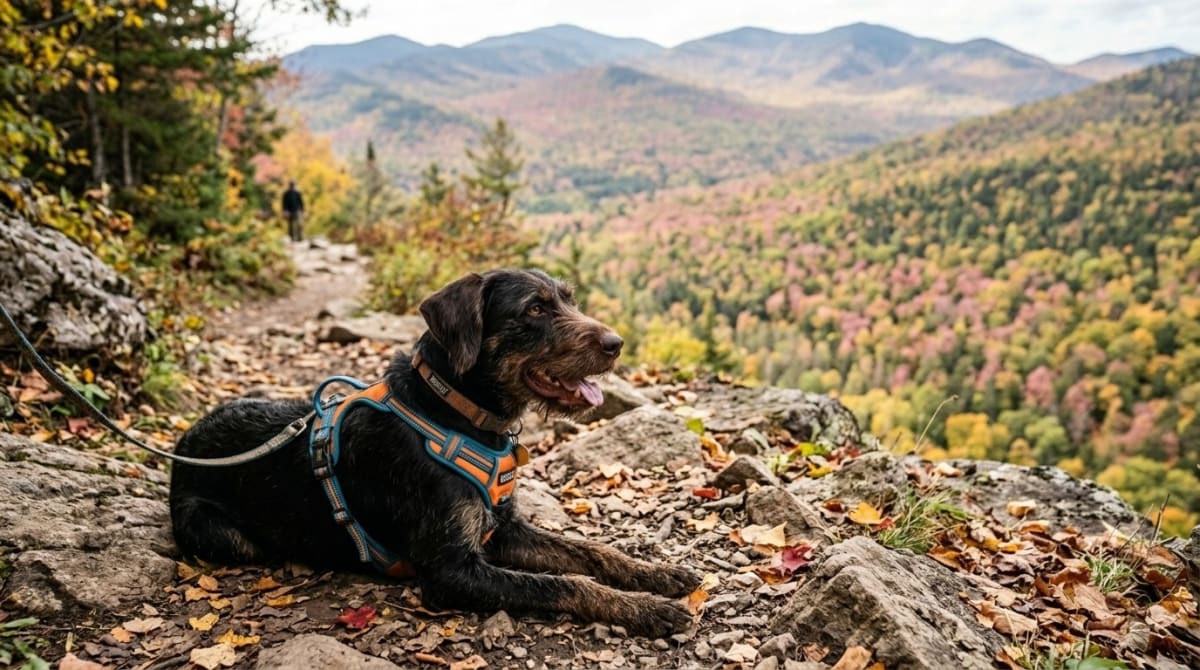
A lot of owners assume a tired dog is a happy dog. Ten miles is a massive undertaking. Pushing past that five-mile mark without a real training plan risks permanent joint damage, especially if we ignore the biological realities of how canine bodies build endurance and actually recover from sustained stress over rough terrain. Dogs can absolutely reach that distance. Getting them there safely takes roughly eight weeks of deliberate conditioning.
Key Takeaways
- 1Healthy adult dogs can build up to 10 miles with an 8-week progressive training plan
- 2Puppies must wait for growth plates to close before long hikes — most breeds by 12 months, giants by 18
- 3Senior dogs over 8 years should cap distance at 3 to 5 miles to protect aging joints
- 4Watch for the scooped tongue and lagging gait as early warning signs of dangerous exhaustion
The Biology of Canine Stamina
I brought my 50-pound Lab mix rescue, Scout, home when she was exactly one year old. I wanted to hit the Cascade trails on day one. Our vet told us to wait. Dogs do not finish skeletal development until they reach maturity and rushing the process can cause lifelong structural issues that completely ruin their mobility later down the line.
Puppy bones actually grow from soft cartilage plates located at the ends of their legs. These growth plates are highly vulnerable to repetitive impact. A 2009 review in the Compendium on Continuing Education for the Practicing Veterinarian confirms that most canine growth plates close between four and twelve months of age. Giant breeds often need up to eighteen months before their bones finally fuse and harden enough to withstand the repeated pounding of long downhill descents on rocky mountain paths without sustaining tiny stress fractures.
Taking a puppy on an endurance hike is downright dangerous. It compresses those cartilage plates. This creates angular limb deformities that demand major orthopedic surgery to fix.
Age-Specific Mileage Limits
Before sketching out a training plan we have to respect basic physical boundaries. Age dictates distance. You simply cannot train a dog out of basic biology.
Puppies under six months should stick to one mile or less. Their bones are way too soft for sustained walking. Between six and twelve months those young dogs might manage three miles. They need frequent breaks.
Adult dogs between one and seven years old sit squarely in the peak conditioning window. This is the prime time for distance. Healthy adult dogs can absolutely condition up to ten or even fifteen miles if given the right preparation. Success requires progressive overload. They need time to build muscle density and thicken up those paw pads. Tendons actually take much longer to strengthen than muscles do.
Senior dogs require different rules. A dog over eight years old might still love the outdoors but arthritis and reduced muscle mass mean they usually max out around three to five miles depending on the weather and trail grade. We always check older dogs for stiffness the morning after a hike to gauge if the previous day was too demanding. We double the recovery time for seniors.
The Eight-Week Progression to Ten Miles
Jumping straight from a daily neighborhood loop to a ten-mile mountain route is a guaranteed recipe for injury. Muscles adapt faster than tendons. Paws need time to build thick calluses. We followed a strict eight-week schedule when prepping Scout for her first big trek in the Pacific Northwest, adding mileage deliberately to prevent soft tissue injuries that would ground us for the entire hiking season.
Start the first two weeks on flat dirt. Three miles per outing. We used the Iron Horse Trail outside North Bend for Scout's baseline work — old railroad grade with zero elevation change, which lets a dog build an hour of sustained focus without adding joint stress from hills.
Elevation enters at weeks three and four. Bump up to five miles and find rolling terrain. Downhill sections put serious braking force on the front shoulders. Scout stumbled badly on her first loose gravel descent. That stumble is normal. These weeks build the stabilizing muscles that protect tendons on steep ground later.
Weeks five and six are when problems surface. Seven miles is far enough to stress-test both gear and feet. We found harness rub spots under Scout's front legs around day thirty-two of the program. Check bare skin after every single walk. Small rubs turn into open sores overnight.
The final two weeks push to nine then ten miles. Speed is irrelevant now. Scout would sprint the first three miles then drag through mile eight, so we enforced a strict pace rule. Her nose stayed level with our knee the entire time. No surging ahead. Skipping a single weekend resets the dog back to the previous week's baseline, so we kept the schedule without exception.
Recognizing the Signs of Exhaustion
Dogs rarely pace themselves. They will often run until they drop just to stay with their pack. We learned this the hard way with Scout on a hot summer afternoon near Snoqualmie Pass when we totally missed the early warning signs of fatigue and she just sat down in the dirt refusing to move or drink. Recognizing those limits is a non-negotiable trail skill.
Watch the tongue. A relaxed dog pants with a tongue that hangs straight down. An exhausted dog pulls their tongue back and widens the bottom into a shape resembling a spoon. This scooped tongue points to dangerous heat stress.
Notice their trail position. A fresh dog usually walks ahead or right beside us. If a dog starts lagging behind on flat sections they are hitting their absolute limit.
Look at their gait. Stumbling over tree roots or dragging the back toes means the core and leg muscles are actively failing. When muscles fail the joints end up taking all the impact. That causes acute injuries like torn cruciate ligaments, which require wildly expensive surgery and many long months of brutal rehabilitation to correct before the dog can ever walk properly again. Stop and rest the second a dog loses coordination. What happens in the hours after a hard push matters as much as the hike itself — our guide on dog recovery after a long hike covers what to watch for overnight.
Common Training Mistakes
Skipping rest days ruins progress. Muscle fibers tear during a ten-mile hike. They need at least forty-eight hours to rebuild. Walking a tired dog the very next day only compounds that muscle damage. This leads to chronic soreness. A stiff dog cannot safely navigate trail obstacles.
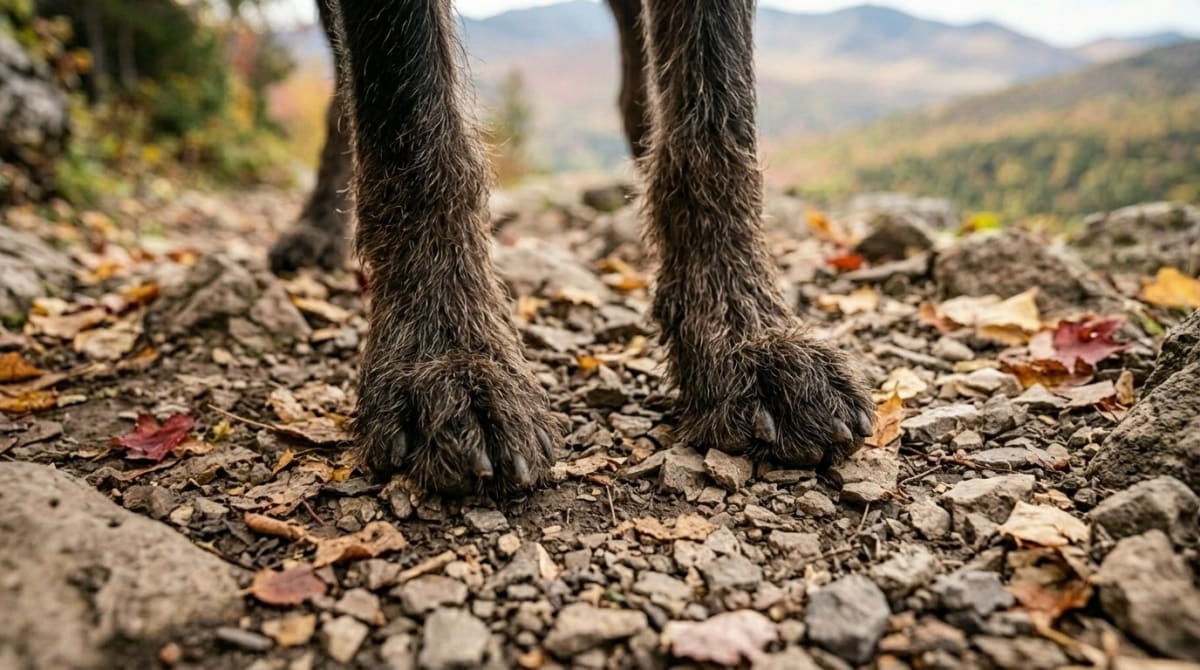
Ignoring paw pad health causes major problems out in the backcountry. Pounding asphalt and concrete does not prepare a dog for jagged granite. We inspect Scout's paws after every single outing. Small abrasions might look harmless but they quickly turn into deep cracks that bleed on the next hike. Rub on a wax-based paw balm before hitting the dirt. This forms a solid barrier against sharp rocks. Pack dog boots in the bag just in case a pad tears during the steep descent — we tested both wax and boots extensively on Scout before settling on boots for technical terrain.
Carrying insufficient water is the most frequent error we see. Dogs cool themselves through panting and paw pad sweating. This biological process drains their water reserves incredibly fast on exposed trails. Our trail water guide covers the math in detail, but the short version for a ten-mile hike is at least one full liter per dog on a cool day, doubled above seventy degrees. Do not rely on finding wild water sources. Creeks dry up. Toxic algae blooms make lakes deadly.
Frequently Asked Questions
Sarah is learning to hike with dogs alongside her readers. Scout is her first trail companion, and she shares every mistake, success, and lesson learned along the way.
References & Further Reading
- The Epiphyseal Plate - Physiology, Anatomy, and Trauma. Compendium on Continuing Education for the Practicing Veterinarian — Compend Contin Educ Vet (2009)