 Paths & Paws
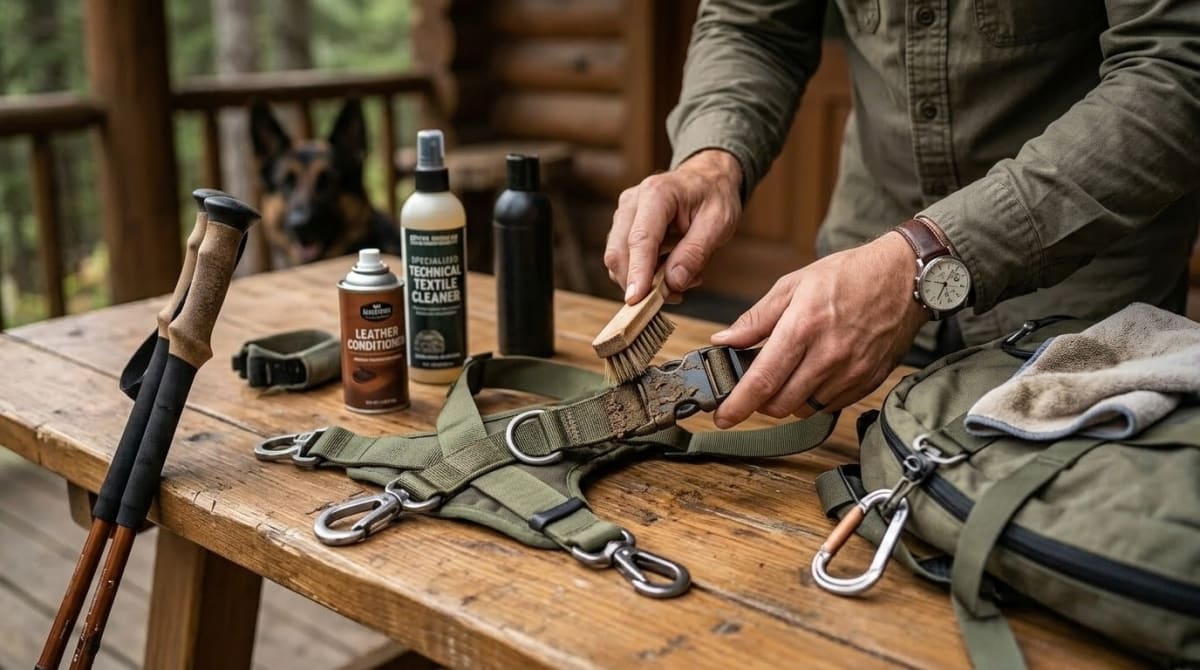
When you hike with a 95-pound German Shepherd, gear takes a beating. Jasper blasts through mud pits and river crossings like they aren't even there. We track our equipment durability closely. After logging 400 miles last season, our pack lost its waterproofing and Jasper's harness developed a sickening swamp odor. We took a microscope to the webbing. Dirt particles act like tiny razor blades trapped inside nylon fibers. When a dog lunges forward, those embedded grains of sand shear the threads from the inside out. Washing the kit prevents catastrophic failure. Hand wash everything in a bucket with technical cleaner. Washing machines destroy hardware. High heat melts synthetic webbing. Bucket maintenance preserves the tensile strength required to keep a large dog secure on steep terrain, stopping abrasive grit from chewing straight through those critical load-bearing seams before they snap on a ridgeline.
Key Takeaways
- 1Washing machines crack buckles and melt webbing - hand wash in a bucket with technical cleaner instead
- 2Standard detergents leave residue that irritates dog skin under a loaded pack over long distances
- 3Reapply DWR spray-on waterproofing after every deep wash or your pack will soak through in rain
- 4Replace gear when webbing frays past 10% of strap width or buckles develop micro-cracks at the housing corners
What You Need
Most dog owners just grab liquid laundry detergent and a cheap scrub brush. Please stop doing this. Standard household detergents are loaded with optical brighteners and harsh surfactants. Those household chemicals leave behind an invisible residue that will seriously irritate canine skin once dogs start sweating under a loaded pack over long trail distances, turning a pleasant weekend hike into a painful chafing nightmare. Specialized supplies matter. Never reach for the dish soap.
- Technical wash fluid - pulls oils out without degrading synthetic fabrics
- Enzyme cleaner - breaks down biological oils and bacteria embedded deep in harness foam
- Old toothbrush or stiff nylon brush - for digging dried clay out of buckle housings and boot treads
- Large plastic tub - controlled soaking environment without metal hardware banging against a drum
Step-by-Step Washing Harnesses and Dog Packs
Cleaning heavy-duty outdoor gear takes patience. We learned this the hard way when Jasper's loaded pack started chafing his shoulders during a four-day trip in the Cascades. Compressed, grit-filled foam against a dog's skin is one of the leading causes of pack chafing on trail - and washing fixes it before it starts. Mud and natural oils had practically cemented into a rigid layer across his chest plate.
-
Dry brush the hardware and webbing before adding any water. Mud turns into a destructive paste the second it gets wet. Brush the dry fabric vigorously to knock loose surface dirt. Sand gets trapped deep inside release mechanisms and creates micro-abrasions that slowly weaken the plastic over time. Pay special attention to those strap junctions. Dirt piles up there.
-
Fill a tub with lukewarm water. Hot water dissolves the glue holding foam padding together. Add the technical wash fluid according to the bottle directions. Submerge the rig entirely. Squeeze the padded sections repeatedly. The goal is to physically force the soapy water through all those dense foam layers. Repeat this squeezing motion for five minutes straight. The water will turn black almost instantly.
-
If the gear smells like a swamp, a secondary soak is required. Drain the tub. Refill it with cool water and an enzyme cleaner. Dog skin produces stubborn natural oils. Technical wash fails here. Enzymes consume organic matter. We let Jasper's rig soak for exactly 45 minutes to guarantee the biological compounds inside the chest plate were totally neutralized before moving on to the final rinse.
-
Rinse the gear under cold running water until no soap bubbles appear. Squeeze the padding flat. Do not wring the straps out. Twisting creates invisible stress fractures. Hang the gear in a shaded area with decent airflow. Direct sunlight aggressively degrades nylon through ultraviolet exposure, which steadily weakens the entire load-bearing integrity of the rig.
Step-by-Step Maintaining Dog Boots
Booties present a totally different engineering challenge. Jasper wears boots on jagged volcanic rock and hot granite. The rubber outsoles take massive friction damage. The upper mesh swallows grit. Clean them out properly. Neglected boots will cause painful paw blisters within a single mile of hiking.
-
Grit loves hiding in the toe box. Turn the boots inside out if the design allows it. Flush the interior with high-pressure cold water. This blasts away every grain of abrasive granite trapped against the fabric, preventing deep abrasions that could sideline a dog for weeks. Use a finger to sweep the very front tip. Sand packs incredibly tight into that front corner.
-
Take a stiff nylon brush to the bottom treads. Packed mud smooths out the traction lugs. Jasper slipped on wet logs twice before we realized his boot treads were packed with dried clay. Clear every single channel. Scrub the rubber hard. That rubber needs clean, sharp edges to grip slick rocks.
-
Most hiking boots use hook-and-loop straps. Pine needles and dog hair destroy the holding power of these fasteners over time. Pick out the debris with a safety pin or tweezers. A failed strap means a lost boot. Check them before every hike.
-
Never put dog boots on a radiator. Do not use a hair dryer. Heat causes rubber outsoles to warp out of shape. Heat ruins the factory glue. It shrinks the synthetics. Stuff the boots with newspaper and let them dry overnight at room temperature to preserve the flexibility of the sole. Change the damp newspaper after two hours to speed up the process. For dogs prone to paw sensitivity, paw wax can supplement boot protection on shorter trips while the boots are drying.
When to Repair Versus Replace Gear
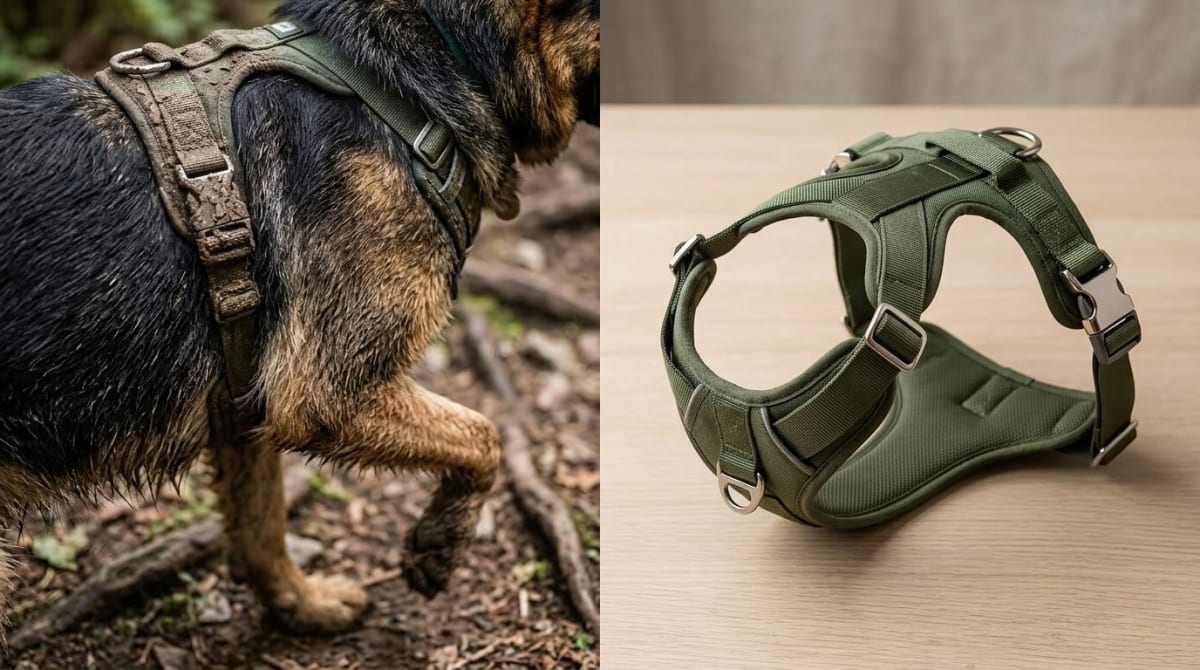
Maintenance only goes so far. Owners need to know exactly when gear becomes a safety hazard. We track the material degradation of Jasper's equipment closely. A 95-pound dog generates incredible kinetic energy during a sudden lunge. The hardware absolutely must hold.
Look for fuzzy edges on the main straps. Nylon webbing derives its strength from continuous fibers woven tightly together. Once the edge frays past 10 percent of the total strap width, the tensile strength drops exponentially. Do not try melting the edges. Replace the rig entirely. Melting frayed nylon creates a hard plastic bead that will aggressively chafe a dog raw.
Bar tacks are those thick reinforced stitching patterns where straps connect to the main rig body. Inspect these connection points under a bright light. Broken threads or stretched elongation in the stitch holes mean the bond is failing. Repairing this requires industrial equipment. Most outdoor gear repair shops maintain industrial sewing machines capable of punching through multiple layers of dense nylon and foam to reconstruct a failing bar tack. If the rig is beyond repair, our breakdown of the best hiking harnesses for dogs covers the models with the strongest bar tack construction we've found.
Side-release buckles degrade rapidly from ultraviolet exposure and cold weather impacts. Look closely at the female end of the buckle. Micro-cracks usually appear right at the corners of the housing. The plastic prongs lose their stiffness. If a buckle feels softer than usual, replace it. Listen for the click. A healthy buckle produces a loud, definitive snapping sound upon closure.
Boot soles wear down exactly like human trail running shoes. Once the lug depth drops below two millimeters, the boots lose all their grip on loose dirt. Once the inner fabric layer shows through the rubber outsole, the boots are dead. Throw the boots away. Patching a blown-out rubber sole for rugged trail use never works because the repair will peel right off the moment a dog scrambles up wet granite.
Common Mistakes That Destroy Gear
Hikers ruin expensive gear trying to save time. We have made some of these errors ourselves. We ruined a perfectly good set of panniers by rushing. Shortcuts destroy outdoor equipment. We carelessly threw Jasper's muddy pack into a hot dryer on a Sunday night, severely warping the internal plastic frame sheet and melting the edge binding around the saddlebags, turning a $150 piece of technical gear into garbage in about forty minutes.
The clothes dryer is the fastest way to destroy technical fabrics. The tumbling action violently beats metal hardware against the steel drum. This cracks plastic buckles and bends attachment points. The high heat melts nylon fibers. It permanently warps the foam padding. Always air dry everything.
Most high-end dog packs have a chemical coating that forces water to bead up and roll off. Washing with standard detergents completely strips this coating. The pack starts absorbing rain. The fabric gains weight. Reapplying a spray-on water repellent immediately after a deep clean restores that hydrophobic barrier and prevents the fabric from soaking through during sustained downpours.
Throwing a slightly damp rig into a plastic storage bin practically guarantees a mold infestation. Mildew destroys the polyurethane coating on fabrics. It creates an odor that never fully leaves. Dry the gear fully. Check the foam twice. Hang the equipment in a well-ventilated room for an additional 24 hours after it feels dry to the touch.
Fabric softeners leave a waxy residue behind. This residue clogs the microscopic pores of breathable mesh linings. It traps heat against a dog's skin. Those chemicals ruin the gear. Never use these liquids. Wash the equipment with clean water and technical soap only.
Frequently Asked Questions
Kelly brings an engineering mindset to dog hiking gear. After thousands of miles with Jasper testing every harness, pack, and boot on the market, he knows what holds up and what fails.