 Paths & Paws
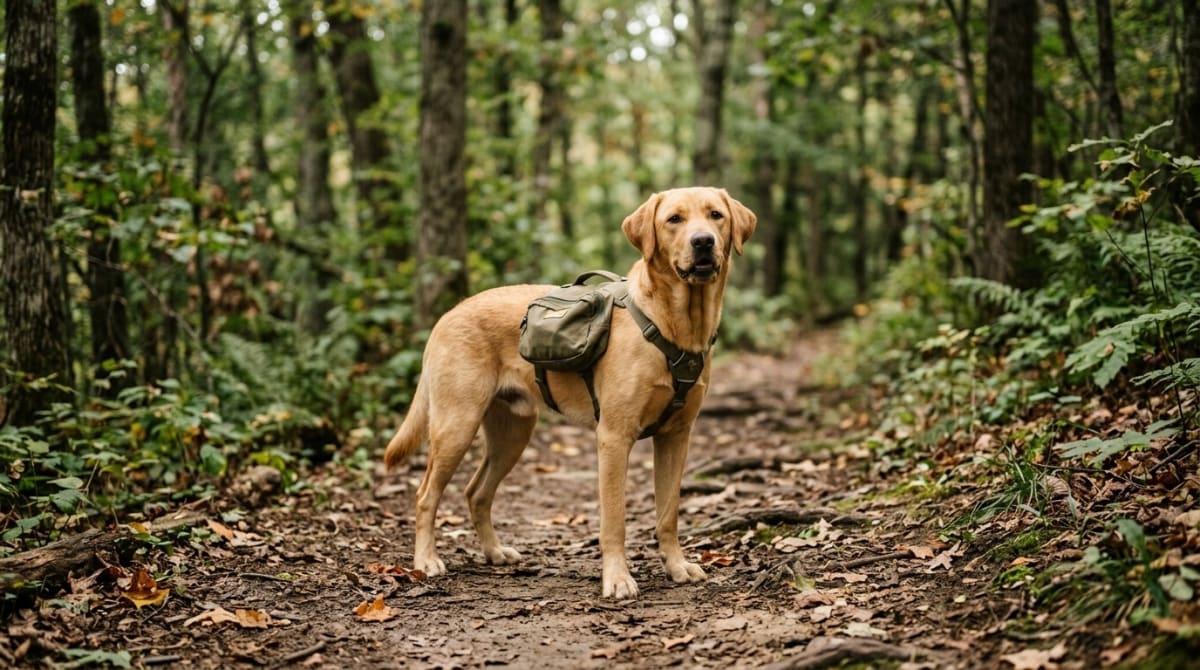
Most hikers want their dog hauling gear immediately. Please wait. Strapping water and supplies onto a developing skeleton forces those young joints into angles that can trigger lifelong mobility issues. A dog has to reach skeletal maturity before taking on trail weight, a biological process that usually wraps up somewhere between 12 and 18 months depending on the breed. We see people making this mistake every single weekend. They strap loaded saddlebags onto six-month-old dogs without understanding the damage compounding with every step up the mountain. The issue comes down to basic biology. A puppy's bones simply cannot handle vertical compression. Their body must finish building its foundation before adding a second story.
Key Takeaways
- 1Never put weight on a puppy before growth plates close — typically 12 to 18 months depending on breed size
- 2Growth plates are soft cartilage that compression can permanently damage, causing bowed legs and early arthritis
- 3Early spay or neuter can delay skeletal maturity by 3 to 4 months — generic breed charts will underestimate the timeline
- 4Start empty pack training at 10 months so the dog is spatially ready for weight once their skeleton matures
Growth Plates Explained
Puppy legs grow from soft discs of cartilage located near the joints. Veterinarians call these areas epiphyseal plates. These zones add length to the legs during those early months before eventually calcifying into hard bone as the animal reaches adulthood.
Think of them like wet cement. A boot pressed into fresh concrete leaves a permanent dent. Weight applied to open growth plates causes the exact same kind of structural damage because the downward pressure from a loaded backpack physically squishes those soft cartilage zones, and that constant grinding can trigger the plate to close prematurely. If one side of a bone stops growing while the other keeps going, the leg eventually bows outward.
The damage is permanent. Hip dysplasia and elbow arthritis frequently trace back to early joint trauma. Scout is a 50-pound Lab mix. Her vet told us to hold off until her 18-month checkup before adding a single ounce of gear. We took that advice seriously. Joint health dictates how many seasons a dog gets to hike alongside you. Risking a decade of future trail adventures just to make a puppy carry two water bottles makes absolutely zero sense.
Timelines by Breed Size
Skeletal maturity runs on different clocks for different dogs. Physical size tells you nothing about internal readiness. A puppy might hit their full adult height and fill out their chest months before those leg bones actually finish hardening into a solid structure that can safely bear a load.
Small breeds finish fastest. Dogs under 20 pounds usually close their growth plates between 10 and 12 months. Medium pups up to 40 pounds need 12 to 14 months. Large breeds demand a minimum of 18 months. You have to wait a full two years before strapping gear onto giant breeds like Great Danes or Mastiffs.
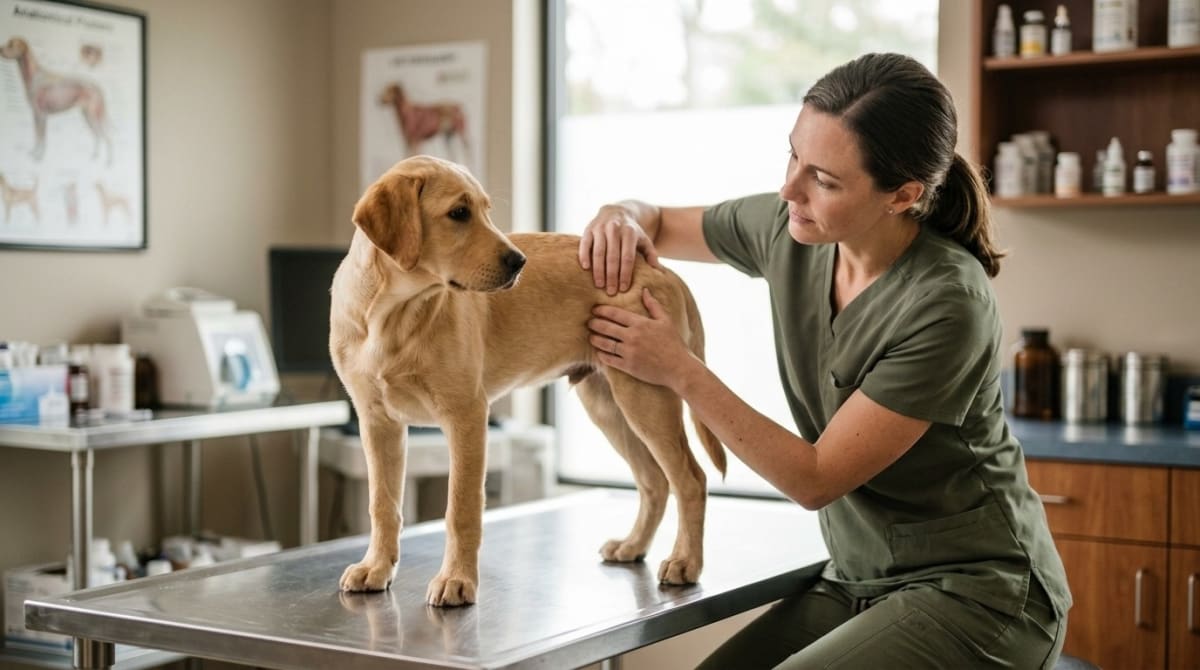
Always book a vet exam before testing a pack. A 1997 study in the Journal of the American Veterinary Medical Association tracked bone development in Labrador Retrievers and found massive variations in growth plate closure times even among dogs of the exact same breed and litter. A quick set of radiographs confirms the plates have calcified. X-rays completely remove the guesswork.
The Impact of Spay and Neuter Timing
Surgery changes the whole hiking timeline. Taking out a dog's reproductive organs alters hormone levels. Those specific hormones are what tell the skeletal system to stop growing.
A 1991 study in the Journal of the American Veterinary Medical Association tracked skeletal development in dogs altered at various ages. Researchers found that early neutering delayed growth plate closure by three to four months, which means the leg bones kept stretching out longer than they would have in intact dogs.
Hikers have to adjust their expectations based on this. A large dog altered at four months old might not safely handle pack weight until they hit 20 or even 22 months. Factor this medical history into the gear plan. Do not rely on generic breed charts if the dog had an early surgery.
Empty Pack Training
You don't have to hold off on buying gear for a year and a half. Empty pack training needs to start early. We picked up Scout's pack when she hit 10 months old. She wore it completely empty on our local dirt paths for five solid months.
Start by letting the dog wander around the house wearing the harness. Pay them with high-value treats. The only goal right now is building a positive association with the rustling fabric. The next step is short neighborhood walks with the unloaded bags, paying close attention to how the straps sit against their chest and belly skin as they move across different terrain.
A dog has to learn how wide they are with saddlebags strapped on. They will smack into trees. They'll scrape against rocks. Spatial awareness takes weeks of practice to dial in. This empty phase teaches a clumsy pup how to navigate tight trail corridors without getting snagged. Once they hit that 18-month mark, rolled-up towels can add some safe bulk. Actual heavy gear comes only after they figure out how to maneuver that bulky profile around downed logs.
Signs a Dog Is Not Ready
Age isn't the only factor. Even after hitting the right milestones, a dog might still fight a loaded pack. Watch their body language closely. Dogs almost never whine when they feel uncomfortable under a load, choosing instead to show stress through subtle mechanical shifts in how they walk.
Look at their gait on a flat stretch of dirt. A dog carrying too much mass will chop their stride short. Their head will sag lower than their shoulder blades. If the dog paces nervously during rest breaks instead of flopping down to recover, or if they suddenly refuse to hop over small logs they normally clear without thinking, that pack is probably causing real discomfort.
Check for friction points every single hour. Lift the straps. Look for raw redness hiding in the armpits. Check the chest plate for trapped pine needles. If the dog just sits down and refuses to take another step, pull the gear off immediately. Carrying capacity has to build up slowly over a season. Start with just a few ounces of water and see how stiff they act the following morning.
Frequently Asked Questions
Sarah is learning to hike with dogs alongside her readers. Scout is her first trail companion, and she shares every mistake, success, and lesson learned along the way.
References & Further Reading
- Onset of epiphyseal mineralization and growth plate closure in radiographically normal and dysplastic Labrador Retrievers. J Am Vet Med Assoc 1997 — Journal of the American Veterinary Medical Association (1997)
- Gonadectomy in immature dogs: Effects on skeletal, physical, and behavioral development. J Am Vet Med Assoc 1991 — Journal of the American Veterinary Medical Association (1991)