 Paths & Paws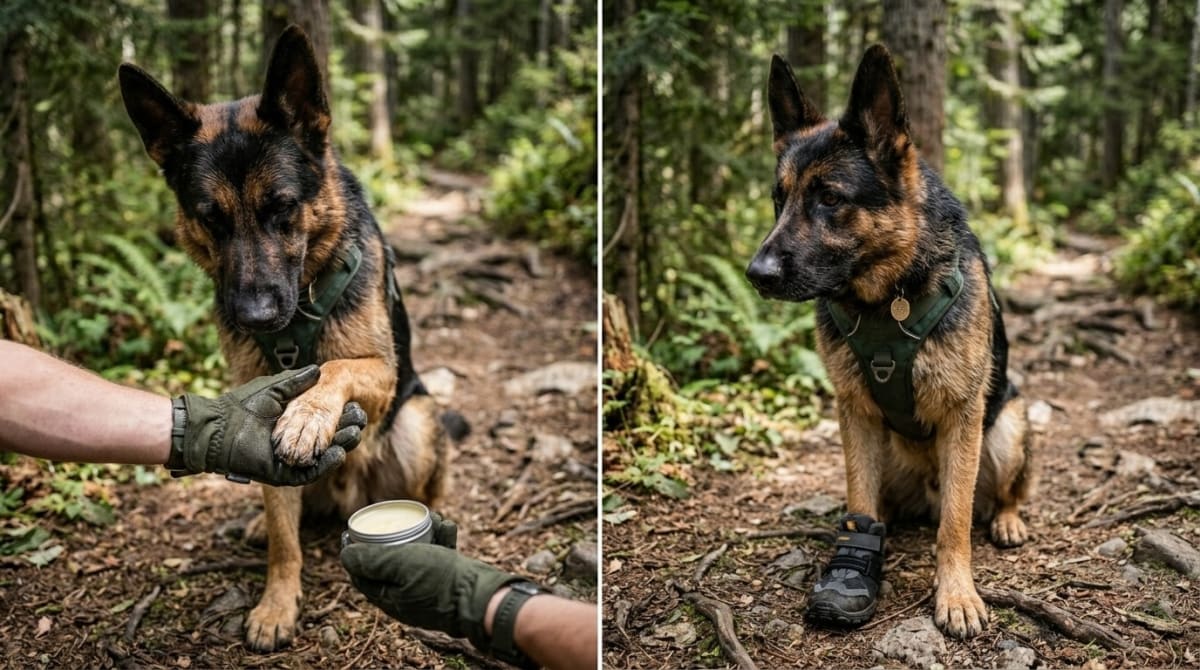
Does wax actually protect paws on jagged granite? Our miles point to a hard no. Wax lubricates against sand and snow buildup but it completely fails to stop a 95-pound dog from slicing a pad open on a sharp alpine ridge when gravity multiplies their weight against quartz. Boots are the only real mechanical armor for abrasive scrambles. Both tools serve entirely different functions.
Most owners assume a heavy smear of Musher's Secret handles rocky trails perfectly. We pushed through this assumption with Jasper. My German Shepherd weighs ninety-five pounds. That means every jump creates massive impact force. On the brutal routes of the Cascades the friction of coarse stone strips away protective pastes in under two miles. We need to understand how feet actually absorb kinetic energy to choose the right gear. Leaving paw health to chance ruins hikes and guarantees some very expensive veterinary bills.
Key Takeaways
- 1Paw wax fails on granite in under 30 minutes - it lubricates against sand and snow but has zero mechanical shear resistance
- 2Hot rock above body temperature melts wax into an abrasive paste that speeds up pad wear instead of preventing it
- 3Boots require mandatory 15-minute air-dry breaks every 2 hours to prevent maceration from trapped sweat
- 4Measure front and rear paws separately under weight-bearing load - front paws are almost always wider than rear
The Physiology of a Dog's Paw
A 2017 study in Biology Open mapped out how paws handle ground impacts. Researchers identified a highly specialized multi-layer cushion system. The outermost layer is a thick keratinized epithelium. That tough exterior handles daily friction. Below this hard shell sits the dermis, packed with dermal papillae and adipose tissue. These internal structures act as hydrostatic shock absorbers. They capture the kinetic energy of a footfall and disperse it outward to protect the skeletal structure of the leg from stress fractures.
Granite trails wreck this biological system. When a heavy dog lands on an uneven rock edge the impact forces multiply. Jasper hits the ground hard. When he jumps down from a boulder, gravity pulls his mass downward with intense force and all that energy concentrates onto a single paw. If that foot lands on a sharp quartz formation, the concentrated point load completely overwhelms the tensile strength of the outer skin, allowing the rock to slice right through the keratin layer and damage the sensitive dermis below.
Dry alpine rock has an incredibly high friction coefficient. Granite functions like coarse sandpaper against biological tissue. Every step grinds away microscopic amounts of the pad. The damage builds up slowly over the first few miles. Dogs hide pain well. We rarely notice the wear until the pad is completely raw. Once the protective epithelium is gone the dog walks on exposed nerves and bleeding tissue. That kind of injury takes weeks to heal.
The Mechanics of Paw Wax
Paw balms rely on a blend of hydrophobic compounds. Most commercial tins mix yellow beeswax with carnauba wax, candelilla wax and carrier oils. These ingredients create a heavy paste that melts right at body temperature. When you massage the stuff into a dog's foot the oils penetrate the porous surface of the keratinized tissue.
The main job here is moisture management and basic lubrication. The wax fills microscopic fissures in the pad. This builds a semi-permeable shield that repels water and prevents ice from accumulating between the toes. A slight lubricating effect lets sand and small pebbles slide harmlessly off the skin. That stops those abrasive materials from grinding into the delicate epidermal layers during long walks.
This chemical barrier completely fails against mechanical shear. Wax does not change the structural integrity of the paw. It cannot harden the skin. It won't prevent a cutting edge from slicing through the tissue. If a rock is sharp enough to cut human skin it easily cuts a waxed dog foot.
Temperature dynamics also wreck the protective properties of the barrier. Dark granite absorbs extreme solar heat. Rock temperatures quickly exceed the ambient air temperature. When a waxed foot touches stone heated to one hundred degrees the barrier melts into a liquid oil that actively attracts loose dirt and silica dust, turning the resulting gritty paste into an abrasive compound. It speeds up pad wear instead of preventing it. For a close look at how to gauge whether rock and pavement temperatures are already in the danger zone before a hike, our hot ground guide covers the 5-second test in detail.
The Mechanics of Dog Boots
Structural footwear provides the only reliable mechanical isolation from rough terrain. Quality dog boots use tightly woven nylon uppers and molded rubber outsoles. That rubber compound physically separates the dog's anatomy from the abrasive environment.
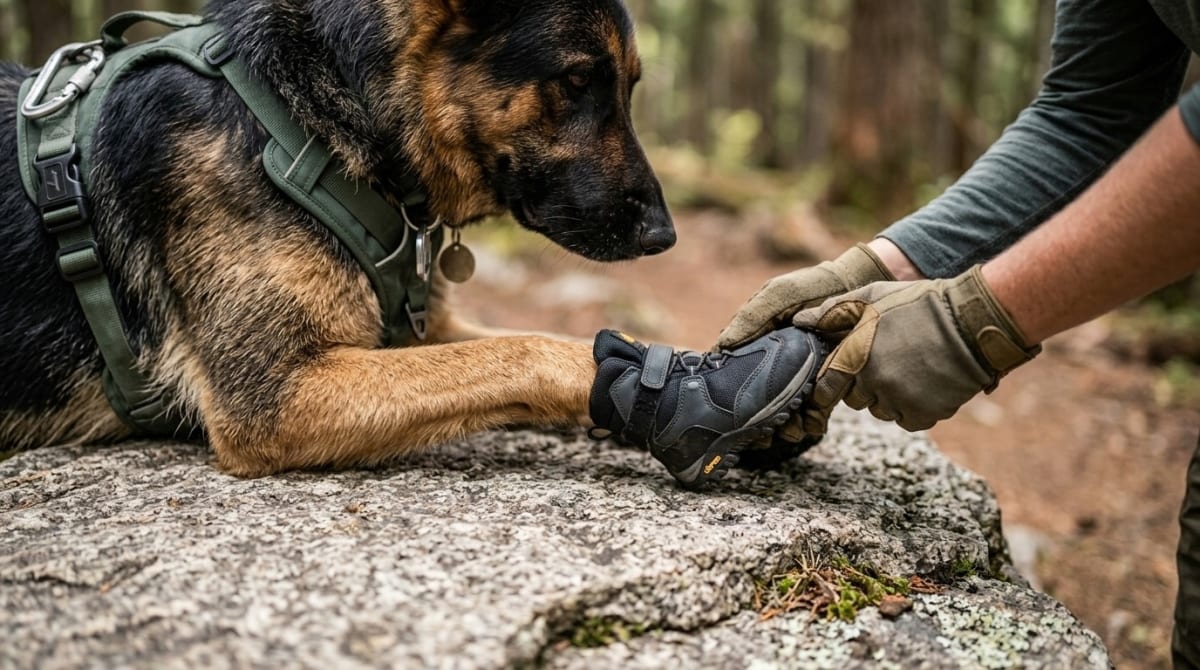
A rigid outsole completely alters the physics of a footstep. If Jasper steps on an angled rock the rubber spreads that concentrated point load across the entire width of the boot bed so the sharp edge never penetrates the material. Under extreme pressure the rubber deforms around uneven surfaces to create grip. This mechanical deformation improves traction on dry rock faces and prevents dangerous slips during steep and technical scrambles. A sharp quartz edge will cut through bare pads on the first day.
Boots do introduce new complications for us to manage on the trail. Dogs regulate a portion of their body temperature through sweat glands located in their feet. A stiff boot traps this moisture against the skin. Over several hours the trapped sweat causes maceration. The pad tissue softens and turns white. Soft tissue tears easily under lateral stress.
Friction from the boot itself causes severe injuries if the fit is wrong. A loose boot rotates around the ankle joint during movement. The stiff upper material rubs aggressively against the dewclaw and the carpal pad. We have to measure the front paws and rear paws separately while the dog actually bears weight. Front paws are almost always wider than rear feet. Buying a single set of four identical boots usually guarantees a sloppy fit on either the front or the back legs.
The Conditioning vs Protection Debate
A loud segment of the hiking community insists on natural conditioning over artificial protection. The idea relies on the biological process of hyperkeratosis. Continuous friction triggers the body to produce extra keratin. This creates a thick hardened callus over the pressure points of the foot. People argue that properly conditioned feet handle any terrain without failing.
Building these calluses requires daily dedication. Walking on neighborhood sidewalks won't prep a foot for alpine granite. Creating rock-ready calluses demands hiking on rough surfaces multiple times a week for several months, which is a rigorous schedule that most recreational hikers simply fail to maintain when their dogs spend weekdays resting on soft backyard grass. A sudden weekend trip to the mountains exposes these unconditioned feet to massive trauma.
Conditioning has strict biological limits regardless of preparation. A large dog scrambling up a steep rock face generates immense torque. The rear legs drive the body upward while twisting against the stone. This rotational friction tears even the deepest calluses right off the foot.
Successful conditioning actually requires the consistent use of paw balms. A thick callus is inherently dry. Dry tissue becomes brittle under stress. A brittle pad cracks deep into the sensitive dermis layers. Applying a wax blend keeps the thickened tissue pliable. Pliable pads stretch around sharp obstacles and return to their original shape without fracturing.
Field Testing on Granite Scrambles
We tracked Jasper's foot health across a grueling summer season on Mount Si and surrounding Cascade routes. We ran two different variables. The selected paths had packed dirt, loose scree, wet roots and sprawling granite boulder fields. To gather accurate data on mechanical wear and temperature dynamics across these varied environments we used wax exclusively on the first major ascent and then switched to structural boots for the second trip up the mountain.
During the wax trial I applied a generous layer of protection at the trailhead. The first two miles were packed dirt and smooth stones. The barrier held up well and kept the pads free of dust. Then we hit the main scramble section. The coarse rock stripped the wax away in under thirty minutes. By mile four Jasper showed clear signs of tenderness. He hesitated before jumping down from small ledges. We found distinct pink wear patterns on the outer edges of his metacarpal pads. The stone was actively sanding away his natural armor.
We swapped to thick rubber boots for the next ascent. Jasper moved over the sharp sections with total confidence. His heavy frame landed hard on sharp edges without any signs of discomfort. The rubber soles absorbed the impact and prevented all surface abrasion.
The heat buildup inside the boots required constant management. We stopped every two hours to pull the gear off. His feet were completely soaked with sweat. We let the pads air-dry in the breeze for fifteen minutes before putting the boots back on. This mandatory drying protocol prevented maceration and kept the skin firm enough to handle the internal friction of the nylon uppers.
Application and Maintenance Strategies
Affiliate Disclosure: Paths & Paws earns commissions from qualifying purchases made through links on this page. This supports our field testing and does not affect our recommendations. We only recommend gear that passes our trail testing standards. Learn more
Proper wax application runs on a strict timeline. Do not wait until you reach the trailhead to start treatment. Rub the paste in two times a week throughout the active hiking season. Scoop a small amount out of the tin. Massage the compound deep into the crevices between the toes and across the main and digital pads. The ambient heat from your hands helps the oils penetrate the rough keratin layer. Give the product five minutes to absorb. Do not let the dog walk on slick floors during this resting period.
Dogs need time to adjust to stiff footwear. Never force boots onto a dog for the first time at the base of a mountain since the sudden loss of tactile sensory input causes immediate panic. Dogs will freeze in place or kick their legs wildly. Introduce the boots inside the house. Put them on for exactly two minutes. Offer high-value meat rewards immediately. Remove the boots and end the session.
Gradually extend the time and transition to short walks down the driveway, making sure to check the anatomical friction points after every single practice session by inspecting the dewclaw, the carpal pad, the upper ankle joint and the sensitive webbing between the toes. If you spot any red patches or missing hair the sizing is wrong. We have to purchase a different size or invest in friction-reducing sock liners when that happens.
Frequently Asked Questions
Kelly brings an engineering mindset to dog hiking gear. After thousands of miles with Jasper testing every harness, pack, and boot on the market, he knows what holds up and what fails.