 Paths & Paws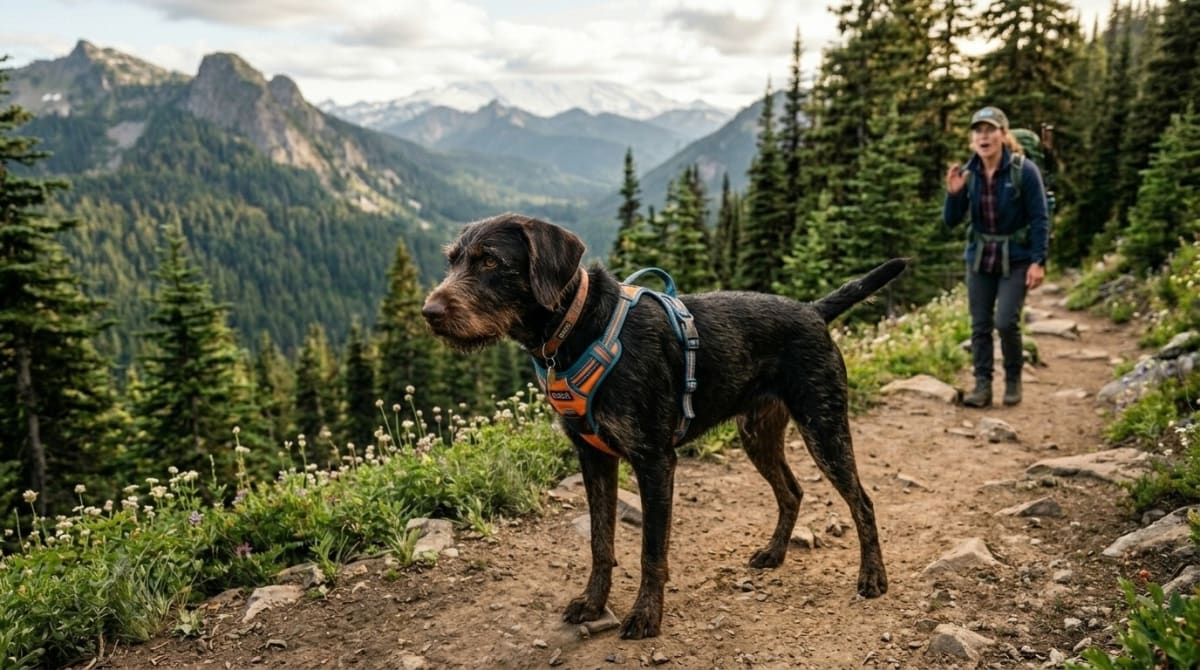
Most hikers treat a blown recall like a temporary training glitch. But when a dog vanishes into the brush after a deer, you're instantly dealing with a severe medical and legal crisis that demands an immediate response rather than just standing around hoping the animal wanders back.
We learned this the hard way with Scout. She's a fifty-pound Lab mix rescue with a huge prey drive, and she absolutely blew past us on the Mount Washington trails last spring after spotting a whitetail doe. The sheer panic of hearing branches snap while your dog actively ignores you is something no owner forgets. Adrenaline floods the brain and makes standard commands completely useless.
You need a fast response plan right then and there. Later on, a long-term strategy becomes mandatory to rebuild that broken trust. A 2017 review in the Journal of Veterinary Behavior showed that managing physiological arousal is the baseline requirement for any successful retraining. We spent six grueling months retraining Scout after her bolting incident. Here are the precise steps to take the second a dog bolts, plus the permanent fixes we eventually locked in.
Key Takeaways
- 1Stand still when your dog bolts. Don't chase. Mark your GPS coordinates, blow one sharp whistle blast, and wait at the exact spot where they left
- 2Never scold a dog that returns after a chase. Clip the leash calmly, give a high-value treat, and check the body for deer kick injuries
- 3Rebuild recall with a dedicated nuclear command starting indoors with shredded chicken before returning to any wildlife habitat
- 4Interrupt prey drive during the eye or orient phase. Once a dog enters the stalk, recall commands are useless
The Immediate Response Protocol
The dog is gone. Stop moving right now. Your gut instinct screams at you to sprint after them. Ignore it. Running pushes a panicked or hunting dog further into unfamiliar territory because they often interpret a human running behind them as joining the hunt. They outpace us easily. Mark the precise coordinates on a GPS app or burn a distinct landmark into your memory. Listen hard to the direction of the snapping branches. Tracking their trajectory helps establish a search grid without muddying the scent trail they just laid down.
Shout the emergency recall command loudly and clearly one single time. Repeated screaming just turns into white noise for a highly aroused animal. A chasing dog's brain is flooded with cortisol and adrenaline, and this chemical spike means they literally cannot process complex obedience commands when predatory instincts take the wheel and block out external reality.
Blow a safety whistle instead. A sharp blast cuts through ambient forest noise far better than a panicked human voice. Plant your boots in that exact spot for at least fifteen minutes. Dogs typically give up the chase once a deer outruns them, then rely on their nose to find you. Walking away erases their anchor point. We waited twenty agonizing minutes for Scout during her Mount Washington disaster. She finally trotted back to the exact cedar stump where she originally took off.
When the runaway finally reappears, swallow your frustration. Do not scold. Punishing a dog after they finally come back proves to them that returning to you is dangerous. Clip the leash on calmly. Shove a premium treat in their mouth if they'll take it. Then run your hands over their whole body. Scout came back panting hard with a small scratch near her left eye. Deer kick violently when cornered. Porcupines and skunks hunker down in that same thick brush. Feel their ribs for normal breathing and check the paw pads for fresh tears, then take a full minute to carefully examine the chest cavity for puncture wounds since a terrified deer will absolutely strike out with razor-sharp hooves to defend itself.
Legal and Safety Consequences
Almost every trail jurisdiction outlaws off-leash wildlife harassment. We constantly see folks laugh off "Fido chasing a squirrel" on local hiking forums. That attitude gets dogs killed. State laws protect deer and grazing livestock aggressively. Fish and game officers hold the authority to shoot dogs caught actively pursuing game animals in dozens of states. Ranchers hold identical rights over their private acreage. Heavy fines drop even if the dog never actually catches what they chased.
A forced sprint causes extreme stress to wintering deer. That panic depletes their winter fat reserves and often leads to starvation months later during deep freezes when foraging is impossible and energy conservation dictates whether the herd survives the season.
The physical hazards for the dog are just as brutal. A high-speed chase literally blinds a dog to the terrain right in front of them. They launch off blind drops, plunge into freezing rapids, impale chests on deadfall, and shred paw pads on jagged scree. We log miles in zones with heavy predator populations. A dog locked onto a fleeing deer could easily sprint straight into a black bear or cougar bedding down for the afternoon. And the financial liability lands squarely on the owner's shoulders. If a loose dog forces a panicked buck to bolt across a state highway and trigger a multi-car pileup, the handler gets handed the final bill for totaled vehicles, guardrail repairs, and human hospital stays.
How to Rebuild Recall Reliability
Letting a dog successfully run down a deer reinforces the habit permanently. The pure adrenaline of the hunt acts as a massive biological payout. Stripping away their trail freedom is the absolute first step to breaking the cycle. We threw Scout on a thirty-foot biothane long line for four solid months after her Mount Washington screw-up. Off-leash privileges vanished overnight.
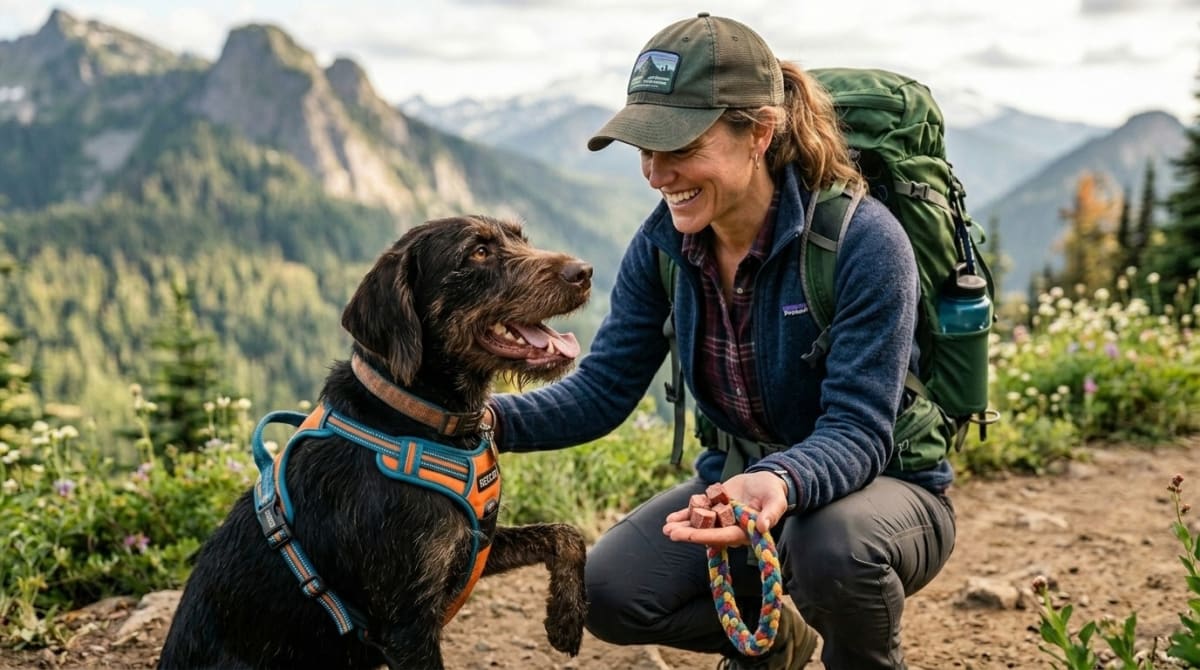
Building a dedicated emergency recall word comes next. We kept "here" for casual trail check-ins and hard-wired "touch" as the nuclear option. We started drilling this in the living room with the blinds closed. The payout for hitting the emergency word has to be mind-blowing. Dry kibble will fail. We used shredded boiled chicken or greasy hot dog chunks.
The 2017 veterinary review confirmed that positive reinforcement creates significantly better long-term recall than harsh corrections. An e-collar might temporarily freeze a dog. But punishment routinely fails to drop a high-drive animal because their hunt adrenaline completely overrides physical pain. Positive reinforcement offers a much safer and structurally sound method for laying down a permanent behavioral foundation. We made it our job to become vastly more exciting than the local squirrel population. Bump the difficulty up over a few weeks. Take it from the couch to a secure fenced yard. Push out to a boring paved park before even thinking about stepping onto dirt again. That emergency word needs to trigger pure muscle memory.
When we finally hauled Scout back to the woods, we clipped her long line straight to a reinforced chest harness. We tested the nuclear word near a busy squirrel tree first. We yelled it, dumped a massive handful of chicken into her mouth, and instantly released her to go back to sniffing. For more on managing a dog that pulls and lunges on the leash, see our guide to hiking with a reactive dog.
Managing High Prey Drive on Trails
Bloodlines dictate a lot of this. Certain dogs carry a hardwired prey drive that no amount of chicken or hot dogs will ever fully overwrite. Look at the animal actually standing in front of you. Scout will never be trustworthy off-leash in heavy deer country. We changed how we hike.
Keep your head on a swivel. Tall humans can visually spot a grazing doe well before a dog catches the scent on the wind. We drilled a rapid "watch me" command into Scout for exactly these encounters. We drag her off the dirt, choke up on the webbing, force a sit, and shovel snacks into her mouth until the deer clears the area. A smart handler breaks the predatory sequence by shattering that intense visual stare and forcing the dog's brain to process a premium food reward before the hunting instinct fully engages and launches them into the brush.
Hardware prevents the worst accidents. A thick padded chest rig with a reinforced back ring stops tracheal collapse if they randomly launch at a chipmunk. We run a hands-free waist belt to keep our footing on technical climbs. A sixty-pound dog hitting the end of a leash at a full sprint will easily drag you down a wet scree slope. Securing the leash to your waist anchors that kinetic energy directly to your center of mass.
Pick your trailheads defensively around dawn and dusk. Critters move constantly during the twilight shift. We stick to wide gravel logging roads with massive sightlines for those early morning miles. The tight, winding singletrack out in the Cascades gets saved for the blazing midday heat when the local deer are safely bedded down in the shade.
Understanding the Predatory Sequence
Dogs don't bolt after a rabbit to be jerks or because they forgot their manners. They hunt because their DNA screams at them to do it. The predatory sequence is a literal biological flowchart inherited straight from wolves. Learning how this sequence works lets you step in before the powder keg actually explodes.
The whole thing breaks down into specific steps. First is the eye phase where the dog freezes solid and laser-focuses on the movement. Next hits the orient phase where the ears rotate forward and the spine locks up. Then comes the stalk, followed by the high-speed chase, the grab, and finally the kill bite. You have to break this chain during the eye or orient phase. Stepping in becomes a lost cause once a dog actually starts stalking because their central nervous system has already routed all available bandwidth toward executing the hunt and completely muted everything else in the environment.
Once Scout drops into that slow stalk, our recall commands are totally useless. Her universe shrinks to a single moving dot. If your dog freezes hard with one front paw hovering in the air, do something immediately. Yell their name, clap your hands violently, blow a whistle, or bounce a high-value treat off their nose to snap the trance. Different breed groups emphasize different slices of this sequence. Border Collies and heelers obsess over the eye and stalk phases. Terriers live to execute the grab and the bite. Our weird Lab mutt just wants the dopamine hit of the chase itself.
Figuring out which part of the sequence lights your dog's brain on fire lets you predict their trail blowups. We learned to watch the base of Scout's ears. The millisecond they twitch toward a rustling bush, we lock down the slack. For a broader look at what to do when you encounter dangerous wildlife, our dog rattlesnake encounter guide covers a lot of the same split-second decision-making.
Affiliate Disclosure: Paths & Paws earns commissions from qualifying purchases made through links on this page. This supports our field testing and does not affect our recommendations. We only recommend gear that passes our trail testing standards. Learn more
Emergency Gear Kit for High Drive Dogs
Standard outfitter gear falls short when you're managing a dog that wants to chase. We haul a dedicated hunting-response kit on every single hike. It stops blowups before they happen and gives us actual recovery tools if things go south.
Start by overhauling the trail treats. We ran through a dozen stinky rewards before finding what works. Dry biscuits and jerky are useless here. You need absolute stench. We shove a plastic tube of anchovy paste or a foil pouch of wet cat food into our hip belts. Since a dog's visual processing entirely hijacks their brain the second they spot a deer, you have to weaponize a truly foul smell to bypass that visual lock and drag their focus back to you.
Next, get a legitimate safety whistle. Ours stays clipped to the left shoulder strap for split-second access. A hard plastic whistle cuts through thick timber for miles and saves your vocal cords.
Third, strap a GPS tracker to the dog's collar. We run a satellite-based collar unit on Scout. Cellular tags die instantly in deep river canyons. Satellite units ping off orbiters and maintain a lock almost anywhere on earth. If the nightmare scenario happens and a dog spends the night lost in the woods, that ping gives the search party a tight grid to work with.
Finally, throw a climbing-rated carabiner in your pocket. If a dog shatters a cheap metal leash clasp during an explosive lunge, you need an immediate backup. We clip the carabiner from the leash's hand loop straight to the harness ring to create a bomb-proof secondary connection.
High-Drive Dog Trail Kit
- Anchovy paste or wet cat food tubes — stench-based treat that cuts through arousal
- Hard plastic safety whistle clipped to shoulder strap
- Satellite GPS tracker collar for deep-canyon reliability
- Climbing-rated carabiner as backup leash connection
- Thirty-foot biothane long line for recall rebuilding phases
Frequently Asked Questions
Sarah is learning to hike with dogs alongside her readers. Scout is her first trail companion, and she shares every mistake, success, and lesson learned along the way.
References & Further Reading
- The effects of using aversive training methods in dogs - A review. Journal of Veterinary Behavior 2017 — Journal of Veterinary Behavior (2017)