 Paths & Paws
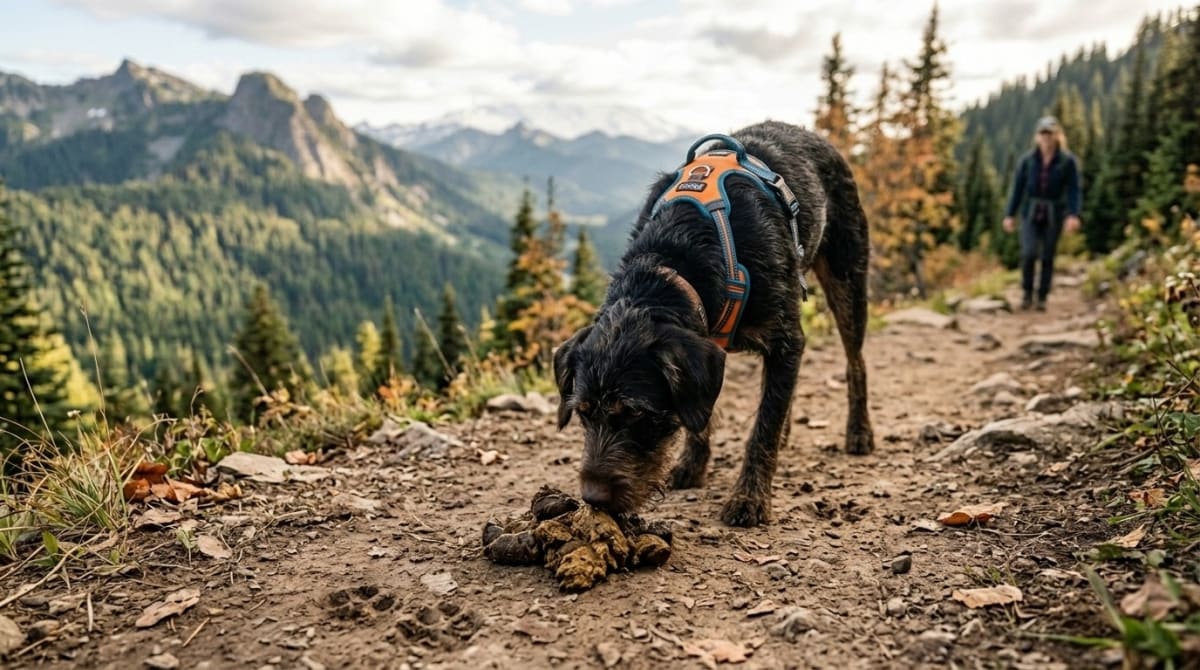
Most people assume dogs eat wildlife poop because they lack nutrients. That is rarely true. Herbivore scat from deer and horses comes packed with partially digested plant matter, and to a hungry canine nose it smells like an absolute buffet. Scout is a 50-pound Lab mix rescue. When we first started hiking the Cascade foothills, she viewed every pile of deer droppings as free trail mix. We had to fix this fast. Wildlife scat carries microscopic parasites. These bugs trigger explosive diarrhea, vomiting, dehydration, and some fairly brutal veterinary bills. You need a solid management plan out there. I remember the pure horror of watching Scout munch on fresh rabbit pellets and then immediately trying to lick my face at the summit. It is beyond disgusting. It is dangerous. This guide covers the exact training sequence we used to stop Scout from scavenging, the real health risks of coprophagia, and why standard obedience commands almost always fail on the trail when competing against fresh horse manure.
Key Takeaways
- 1Dogs eat herbivore scat because it smells like partially digested plant matter, not because of a nutrient deficiency
- 2Wildlife droppings carry Coccidia and Giardia parasites, and horse manure can hold active ivermectin dewormer that is dangerous for herding breeds with the MDR1 gene mutation
- 3"Leave it" only works if you say it before the dog makes contact, since "Drop it" comes too late once scat is already breaking apart in the mouth
- 4A tired, mentally engaged dog scavenges less, so working in trail obstacles like log jumps cuts the habit faster than a tight leash ever will
Why Dogs Eat Wildlife Scat (And The Health Risks)
Dogs hunt for trail snacks for a very simple reason. It tastes good. Deer and horses eat grass and vegetation, and their digestive systems leave behind broken-down organic matter that dogs find completely irresistible. To a hungry pup, horse manure is essentially a warm grassy salad. You cannot reason with this instinct. But letting them indulge carries serious risks. Wildlife feces hide invisible threats. The Cornell University College of Veterinary Medicine notes that dogs routinely test positive for Coccidia species picked up from predation or from eating the waste of rabbits, rodents, and ruminants. Coccidiosis leads to severe intestinal distress because the parasite physically damages the fragile intestinal lining, making it incredibly hard for the body to absorb the water and nutrients required for tough hikes.
Giardia is another major threat lurking in animal droppings. These microscopic cysts survive for months in damp soil and waste, just waiting for a host. When a dog eats infected scat the cysts hatch in their gut, leading to a miserable week of liquid stools and lethargy that can quickly cause dangerous dehydration on long summer hikes. Symptoms might not show up for two whole weeks. By then, the backyard is already contaminated.
Horse manure presents an entirely different hazard. Many equestrians treat their animals with ivermectin dewormers, and the drug passes straight through the horse to remain active in the manure for days. If a dog eats that pile, they ingest the medication. Herding breeds carrying the MDR1 gene mutation can suffer severe neurological toxicity from even small amounts of this leftover dewormer, which makes shared equestrian trails hazardous for dogs lacking impulse control. Stop the snacking entirely. A single parasite infection sidelined a friend's dog for a month. Wildlife scat is not the only thing worth scanning for on a shared trail. We treat suspicious mushrooms sprouting near the same manure piles with the exact same zero-tolerance rule.
What You Need for the Trail
You cannot beat the smell of fresh deer poop with dry kibble. Do not even try. We found that we had to bring high-value currency to set ourselves up for success, because we were competing against thousands of years of canine scavenging instincts every single time we stepped foot on the dirt.
Scavenging Prevention Kit
- Extra-stinky treats like freeze-dried tripe, hot dogs, cheese sticks, or salmon jerky
- A four-foot fixed leash, ideally biothane so it resists mud and water
- A quick-access treat pouch worn right on the hip for fast timing
- Pet-safe wet wipes to clean the mouth after an accidental mouthful
Wear the treat pouch on the hip itself. Timing is absolutely everything in redirecting behavior. If you have to dig into a backpack for a reward, the dog will have already swallowed the droppings.
When Scout was at her worst with rabbit pellets, we resorted to actual grilled chicken. We carried it in a greasy plastic baggie. If you want to change this scavenging habit, you literally have to out-bribe the forest. That requires bringing the best snacks they have ever tasted. We went through bags of chicken in those early weeks.
Stopping the Scavenging Step-by-Step
Do not wait for the dog to start chewing. Once the poop hits their tongue, the battle is already lost. Prevention beats reaction every single time out there. We follow a strict process to keep Scout safe. We practiced these steps on dozens of hikes before the behavior finally became automatic and she stopped diving for every single pile of deer droppings we passed.
Step 1. Scan the trail ahead. You have to see the mess before the dog does. Keep the eyes scanning ten feet down the path. When you spot a pile of horse manure or deer pellets, shorten the leash immediately. Prepare the treats. You want to hold the reward ready in the hand before the dog even registers the scent, because fumbling with a pocket zipper gives them all the time they need to swallow the hazard.
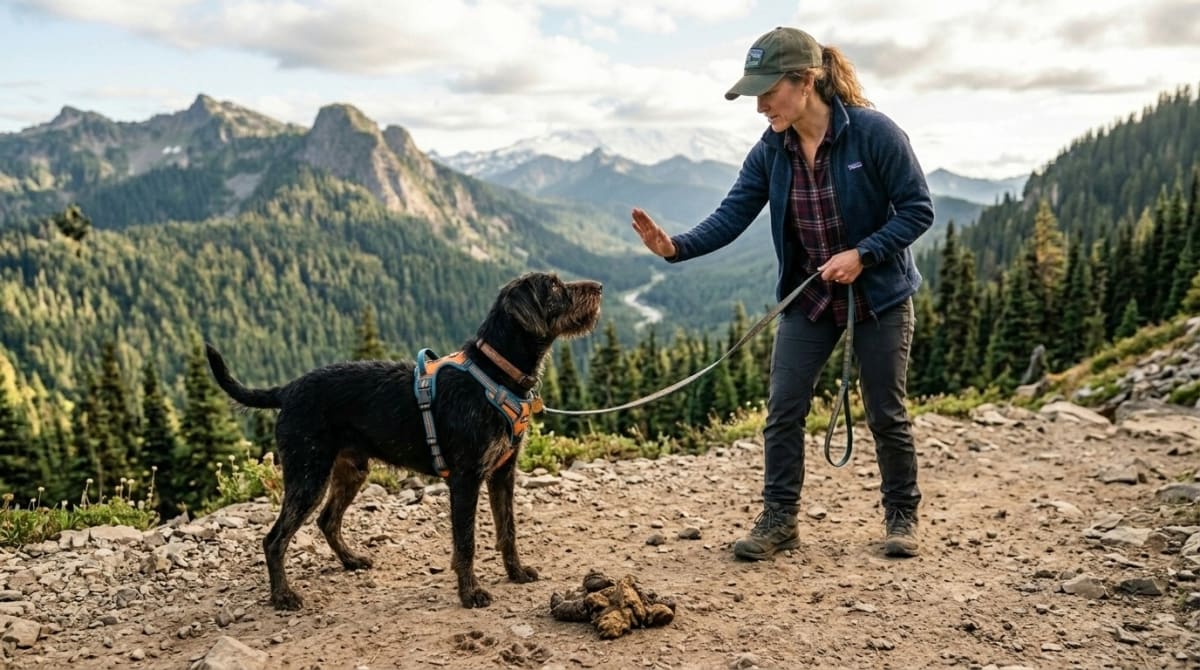
Step 2. Issue the pre-emptive "Leave it." Timing matters most right in this split second. The moment the dog notices the scat and points their nose toward it, say "Leave it" in a firm, upbeat tone. Do not yell. Just interrupt the thought process before they commit to diving in. If you wait until they are actively sniffing the pile, the temptation is simply too strong for most dogs to resist, and you end up physically dragging them away by the collar.
Step 3. Lure and reward heavily. Place a high-value treat right in front of the nose to pull attention away from the hazard. When they look up instead of at the droppings, dispense the treat. Walk past the pile. Give them three or four pieces in rapid succession. The goal is teaching them that ignoring wildlife scat results in a massive payday that far exceeds the value of whatever gross parasite-filled thing they wanted to eat off the dirt.
Step 4. Practice the "Let's go" pivot. Sometimes they lock onto the scent and absolutely refuse to break eye contact. When this happens, do not yank the leash. Say "Let's go" and briskly turn 180 degrees to walk in the opposite direction. The physical movement forces the dog to follow along. Reward them the second they catch up. Once they successfully refocus, you can turn back around and proceed down the trail without worrying about another sudden lunge for the scat. This same pattern of pre-emptive interruption is exactly what we use to build a reliable wait command at trail junctions, so the two behaviors reinforce each other on every hike.
Common Mistakes on the Trail
Most hikers fail because they throw out the wrong commands at the wrong times. Using "Drop it" for poop almost always fails. By the time the command registers, the soft scat is already breaking apart in the dog's mouth. Even if they spit some out, the parasites are already swallowed. You must use "Leave it" before they ever make contact. This proactive approach prevents the dog from tasting the reward, which we found is the only true way to eventually extinguish the scavenging habit over months of consistent trail training.
Another major error is using a tight leash as a substitute for actual training. Stop pulling. Train the behavior instead. If you constantly drag a dog past droppings without offering a high-value reward, they just learn to snatch the poop faster next time since they know the window of opportunity is closing fast. This creates a frantic and stressful hiking experience. The dog will start diving into the bushes the exact moment they smell something interesting.
Finally, do not underestimate the sheer destructive power of a bored dog. Scout used to eat way more trail trash when we walked at a slow, monotonous pace. When we started incorporating trail parkour like having her jump on logs or balance on boulders, her scavenging dropped off a cliff. A mentally engaged dog is far less likely to hunt for deer droppings because they are fully focused on the next task rather than mindlessly scanning the dirt for snacks. Give them a job. We saw a 50 percent reduction in scavenging on our very first active hike.
Frequently Asked Questions
Sarah is learning to hike with dogs alongside her readers. Scout is her first trail companion, and she shares every mistake, success, and lesson learned along the way.
References & Further Reading
- Coccidia in dogs — Cornell University College of Veterinary Medicine (2023)