 Paths & Paws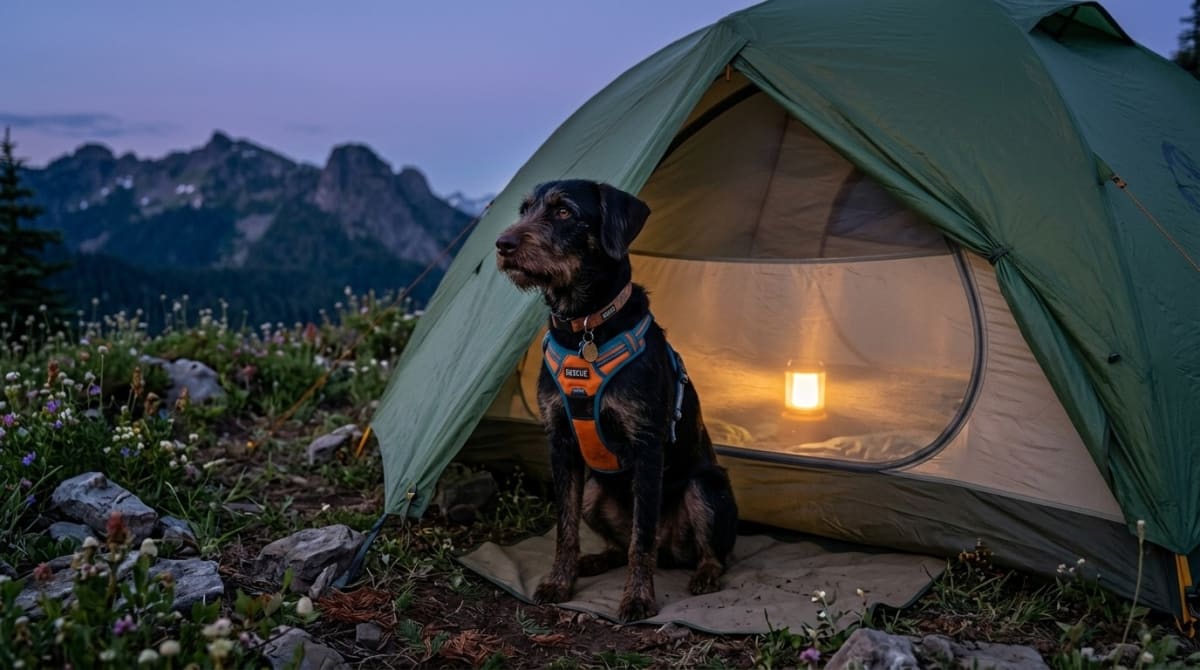
People usually think their dog is bravely protecting them when they growl at the tent door. They are usually just terrified. We learned this the hard way with Scout on a backpacking trip near Mount Si where our fifty-pound Lab mix rescue spent the entire night turning every snapping twig into an excuse for explosive barking. We barely slept.
Shushing a dog or getting angry just makes it worse. Acting upset only confirms to the animal that there is indeed a threat lurking out there in the dark. You have to address the sensory confusion driving the panic. We tested different management strategies over twenty nights in the backcountry to find out what actually fixes the problem, tracking everything from white noise frequencies to exactly where the dog sleeps within the shelter. A tired dog isn't enough. They need noise masking.
Key Takeaways
- 1Tent walls block visual threat verification while sound and smell still get through, which creates the panic that drives alert barking
- 2Backyard desensitization with the rainfly on and unpredictable noise training changes a dog's emotional response before the trip starts
- 3Where a dog sleeps inside the tent and a dedicated white noise machine both cut nighttime reactivity
- 4Staying calm and using slow physical touch when a dog growls does more to settle them than shushing or scolding ever will
The sensory trap
A modern backpacking tent is a bizarre environment for canine senses. Dogs evaluate threats using a combination of hearing and smell, but the thin nylon walls of a shelter scramble that natural warning system.
Sound bleeds right through the fabric. Your dog can hear mice scratching in the brush and smell damp earth or distant wildlife. But their primary tool for verifying threats is blocked completely. They cannot see the threat.
This sensory imbalance creates extreme vulnerability. A 2021 study in Frontiers in Veterinary Science tracked how companion dogs react to common unpredictable noises and found that sudden acoustic triggers cause intense stress behaviors that multiply rapidly when visual investigation is impossible. A pacing, growling dog is experiencing acute stress. They feel trapped.
The confined space amplifies the panic since a tent restricts movement and prevents any chance of retreating. Tucked into a small bubble with their humans, a dog feels a biological need to alert the pack. They bark to wake you up so you can handle the invisible monster.
Scout struggled hard with this limitation. She would sit rigid by the door zipper and just stare at the opaque fabric until we figured out how to change the way her brain processed those forest sounds.
Pre-trip conditioning
Building a foundation of calm behavior has to happen long before you pack a backpack. If your dog has never spent a night in a shelter, start with our guide on getting a dog used to sleeping in a tent for the first time. It starts with simple target training. Teach the dog to settle on a particular foam pad in the living room. The goal is total relaxation. Send them to the pad while watching television or reading a book and reward them the second they drop their chin to the floor.
We started by setting up our shelter in the backyard to strip away the overwhelming sights and smells of the wilderness while leaving the rainfly off so Scout could still see through the mesh. We tossed high-value treats onto the floor and hung out inside for short periods. Do not force them. Let the dog wander in and out to build positive associations with the space.
Once they relax in the open tent, snap the rainfly on to create the exact visual barrier that causes so much trouble outdoors. Sit inside and wait for them to settle. Reward calm behavior.
Next comes the unpredictable noise. Have a friend walk around outside while you sit inside with the dog and immediately hand over a treat the moment those ears perk at the footsteps. You are trying to change their emotional response to outside sounds. The noise must predict a reward.
We pushed through this routine with Scout for three weeks before our next trip. We started with faint tapping on the tent poles and eventually progressed to heavy rustling in the nearby bushes until her default reaction shifted from barking to looking at us for a snack.
Tent setup and acoustic gear
Campsite organization heavily impacts anxiety levels. Pitching a tent near busy game trails or loud rushing streams provides constant stimulation that keeps a reactive dog on high alert all night.
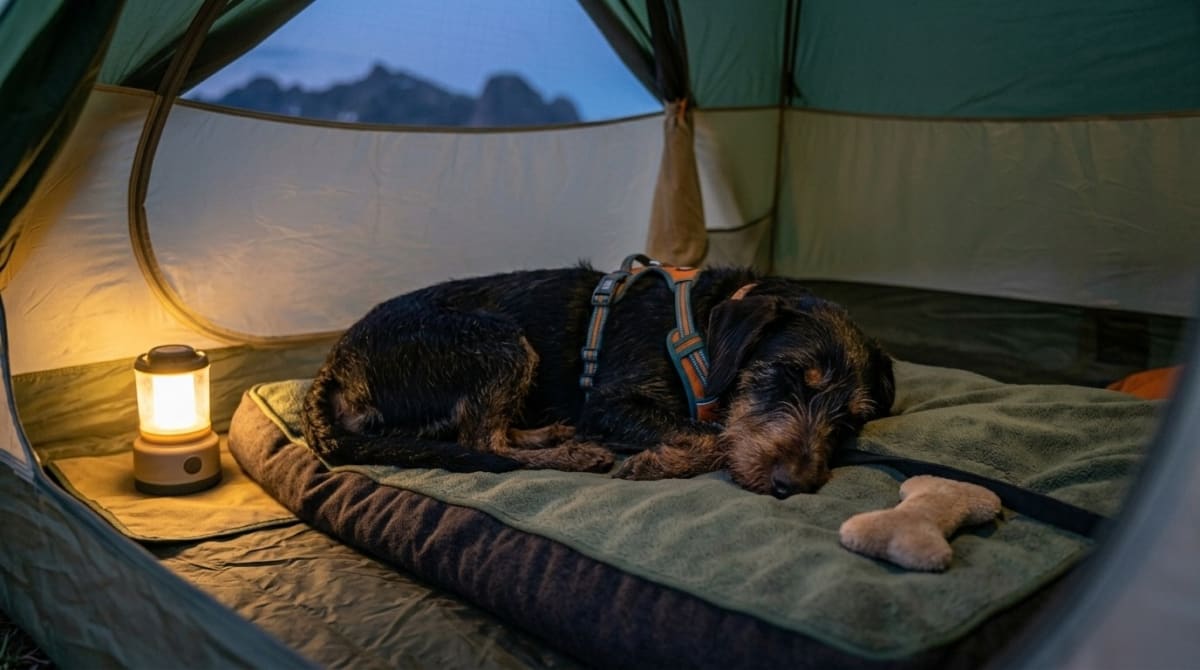
Placement inside the tent matters. Do not let a dog sleep blocking the door. Leaving them at the exit puts them in the primary guard position where they feel personally responsible for pack security. We force Scout to sleep between us at the very back of the tent because this physical sandwiching provides a type of deep pressure therapy while completely removing her from the main entry point.
You have to manage the acoustic environment too. Total silence in the woods makes every single snapping twig sound like a gunshot. A portable white noise machine masks those micro-noises perfectly. Do not rely on a smartphone for this task since playing audio files all night drains the battery you desperately need for backcountry navigation the next morning. Buy a dedicated sound machine instead. We clip a tiny rechargeable unit to the tent ceiling to generate a constant hum that washes out the rustling of falling leaves and small rodents.
Temperature regulation plays a massive role in sleep quality as well. A cold dog stays awake. They will lie there shivering and fixating on external sounds unless you provide thick insulation to block the ground chill. We run a closed-cell foam sleeping pad underneath a synthetic dog sleeping bag so Scout stays warm on a clear physical boundary.
Managing the midnight growl
Even with flawless preparation a dog might still let out a low growl at a strange noise at two in the morning. How you handle that first rumble dictates the rest of the night.
Do not yell. Do not hiss angry commands in the dark. If a human sounds tense the dog interprets that reaction as mutual alarm. They assume everyone is upset about the bear outside and they will escalate their barking to match your frantic energy.
Project absolute boredom. When Scout growls in the dark I sit up slowly, look toward the door, and say a quiet phrase like "Thank you, I hear it." Then I dramatically drop back down onto my pad and let out a long heavy sigh. This mimics the natural canine behavior of checking a potential threat and dismissing it. It proves you control the environment.
If the dog continues to fixate, use physical touch to drop their heart rate. Long slow strokes along the spine help release tension. Steady pressure on their chest works too. Old-school trainers used to claim that comforting a frightened dog reinforces the fear, but modern veterinary behaviorists reject that idea entirely because no one can reinforce an involuntary emotional response. Comforting a panicked dog actually helps them regulate their nervous system since deep pressure signals the brain to dial back the adrenaline.
Keep dry kibble nearby. If the dog cannot break their fixation on the door just scatter some food on their sleeping mat. Sniffing and licking activates the parasympathetic nervous system, forcing their brain to immediately switch from a highly alert defensive state into a calm foraging mode.
Common trail mistakes
The biggest error hikers make is relying entirely on physical exhaustion. Walking ten miles will definitely make a dog tired. It will not cure anxiety. An overtired dog actually has far less emotional regulation and startles much easier in the dark. Physical exercise has to be combined with mental conditioning, the same layered approach we cover in our guide to hiking with a reactive dog.
Leaving the tent flaps open is another frequent mistake. People sometimes roll back the rainfly so the dog can peek outside, which occasionally works in an open alpine meadow but usually backfires in a dense forest where moonlight creates moving shadows that look exactly like predators. The visual barrier of a closed rainfly is much safer once you properly desensitize the dog to the ambient sounds.
Hikers also ruin the mood by flashing lights around. Grabbing a headlamp to scan the treeline creates sweeping beams that cast terrifying shadows against the trunks, turning ordinary bushes into immediate threats that the dog now feels obligated to bark at. It also signals to the animal that the humans are frantically searching for a monster. Keep the lights off. Trust your ears.
Finally, never use a corrective collar to stop tent barking. Hitting a dog with a shock or spray correction for growling just teaches them that the scary noise outside directly causes pain inside the shelter. Their anxiety will skyrocket the next time a twig snaps.
Frequently Asked Questions
Filed under
Sarah is learning to hike with dogs alongside her readers. Scout is her first trail companion, and she shares every mistake, success, and lesson learned along the way.
References & Further Reading
- Stress-Related Behaviors in Companion Dogs Exposed to Common Household Noises, and Owners' Interpretations of Their Dogs' Behaviors — Frontiers in Veterinary Science (2021)