 Paths & Paws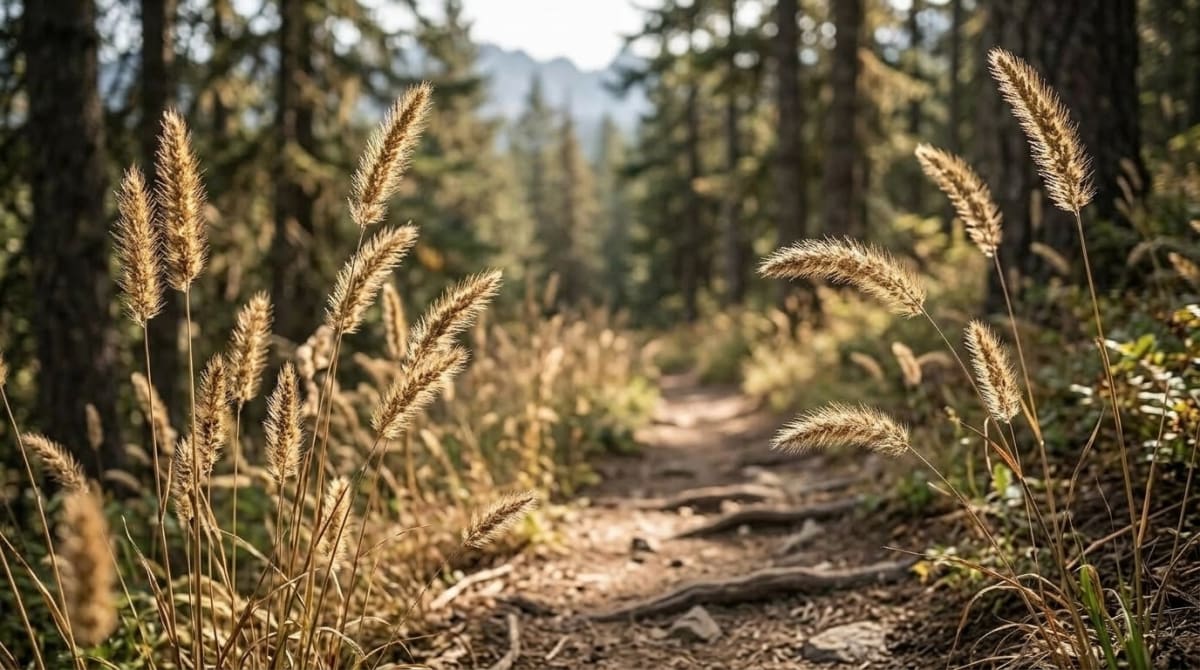
Most owners wait until a dog limps to check for foxtails. We tracked post-hike vet visits among our trail group over three summers in the Pacific Northwest. Finding a seed head within the first hour takes tweezers. Finding one three days later often takes ultrasound tracking and surgery. Jasper is a 95-pound German Shepherd. His thick double coat hides these intruders perfectly. We learned quickly that passive observation fails. We have to hunt.
Foxtail grasses are invasive weeds scattering barbed seed heads across dry summer trails. These seeds do not degrade inside a dog's body. They are biological arrowheads. They burrow through skin and muscle with every step. Our inspection routine catches them at the tailgate before they breach the skin. We dig between the toes. We check the ears. Catching them early changes the math entirely. Understanding how the microscopic barbs on these seeds force them to travel in only one direction through tissue reveals that leaving a foxtail attached to a dog's fur is essentially setting a timer on a brutal infection requiring professional extraction.
Key Takeaways
- 1Foxtails don't dissolve inside a dog's body. Backward-facing barbs force them to travel deeper with every muscle contraction.
- 2Check between every toe, inside both ear flaps, and against the grain of the coat within the first hour after every summer hike.
- 3A 2016 JAVMA study documented seeds migrating into the pleural space and lung tissue - a paw foxtail can become a chest surgery.
- 4High-top booties covering the ankle joint block the most common entry point on foxtail-heavy trails.
Identifying the Threat
You cannot avoid what you cannot see. Foxtail is a catch-all term for several species of wild grasses bearing bristly seed heads that resemble the tail of a fox. During the spring these grasses look harmless and green. The danger spikes once the weather bakes the dirt and the stalks dry out. They turn pale yellow. The seed heads grow brittle and shatter upon contact. This shedding process scatters the seeds everywhere and turns the trail margins into an absolute minefield for dogs.
We plan our summer miles around these seasonal risks. Up here in the Pacific Northwest and Northern California the threat peaks from late May through September. Drier climates like Southern California and the desert Southwest see foxtails basically year-round. Watch the trail edges. If we spot tall stalks with wheat-like tops swaying in the breeze we shorten the leash. Because these weeds thrive in disturbed soil alongside trails and roadsides a dog will almost certainly encounter them exactly where hikers prefer to walk, which makes early visual identification your primary defense against a costly veterinary crisis.
Jasper loves to barrel through tall brush. His 95-pound momentum means he hits these plants with serious force. The impact drives the seeds deep into his undercoat. A single brush against a dry stalk can transfer twenty individual awns onto him and each one packs a sharp tip alongside backward-facing barbs. Testing this mechanical design takes two seconds. Put a foxtail on a shirt and rub it. The seed glides forward but snags instantly if pulled backward. This one-way travel mechanism is exactly how they behave when they hit a dog, catching on fur and beginning a relentless inward journey toward the flesh.
Symptoms of Embedded Foxtails
Catching a foxtail fast stops it from becoming an embedded foreign body. We watch for abrupt behavioral shifts on the trail. A dog picking up a foxtail immediately alters their pace. Jasper once stopped dead on the Mount Si trail and began frantically licking his front left paw. We dropped our packs right away. We found a dry seed head wedged deep between his toes.
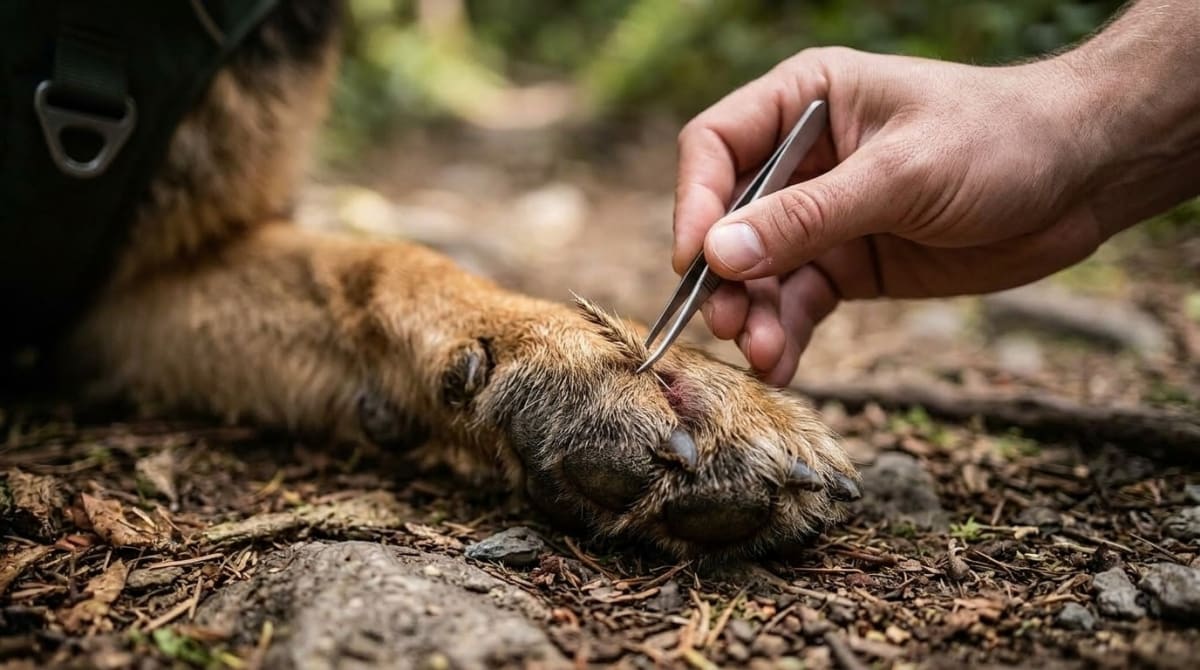
Paw infections are the most common presentation. The dog might suddenly limp. They might obsessively chew at one foot. The entry wound is usually tiny, often looking like a small red bump or a weeping blister tucked into the toe webbing. The paw swells fast. A hard lump often forms under the skin. While minor trail scrapes and cuts heal naturally over time a punctured paw pad harboring a migrating plant seed will only grow increasingly inflamed and painful until a vet extracts the physical object from the swollen tissue.
Ear invasions happen fast and violently. If a seed enters the canal the dog will shake their head aggressively. They might tilt their head sideways or paw relentlessly at the flap. We have seen dogs scratch their own ears until they bleed just trying to relieve the maddening discomfort. This requires immediate emergency veterinary attention. Never probe blindly into the ear canal with tweezers. You will likely just push the seed further toward the eardrum.
Dogs inhaling seeds through the nose will sneeze non-stop for several minutes. They often produce a bloody discharge from one nostril while pawing wildly at their face. Seeds penetrating the chest or belly create painful lumps with a pinpoint entry hole discharging fluid. The surrounding tissue feels hot. The dog flinches when touched.
The Danger of Internal Migration
We treat these encounters as medical emergencies because the seeds never stay put. The backward-pointing barbs compel the awn to keep moving forward with every single muscle contraction the dog makes. They travel through subcutaneous tissue and follow fascial planes deep into the torso.
Research on grass awn migration is grim. A 2016 study in the Journal of the American Veterinary Medical Association tracked 43 dogs with migrating intrathoracic grass awns. Researchers documented seeds moving into the pleural space and the pulmonary parenchyma. This means plant material literally penetrated the chest cavity and the lungs. Many of the dogs developed draining fistulas. The veterinarians had to rely on intraoperative ultrasonography just to locate the migrating foreign bodies hidden deep within the chest.
That clinical data stays in our minds whenever we hike near dry grass. An untreated foxtail in the paw can migrate all the way up the leg. An inhaled seed can travel from the respiratory tract straight into the lungs. Once inside the body the seed carries trail dirt and bacteria along its entire path, creating massive abscesses and life-threatening infections. Finding a migrating foxtail inside a dog is tough. They do not show up on standard x-rays. The surgical procedure to find and remove a roaming grass awn often requires extensive tissue exploration. Because these organic objects evade standard radiographic detection and carry aggressive bacteria deep into internal cavities the ensuing infection often causes vastly more structural damage than the initial puncture wound itself.
Affiliate Disclosure: Paths & Paws earns commissions from qualifying purchases made through links on this page. This supports our field testing and does not affect our recommendations. We only recommend gear that passes our trail testing standards. Learn more
Prevention Strategies on the Trail
Prevention demands proactive trail management. Hiking habits have to shift based on the season and the surrounding terrain. When the grasses turn brown and brittle we stick to wide trails with clear paths. Overgrown meadows are completely off-limits. Scanning the trail ahead for those distinctive bristly stalks becomes a constant mental background task, and turning back makes total sense if the path becomes heavily choked with dry weeds constantly brushing against our legs.
Jasper wears trail gear during peak season. We ran through several types of boots and found that high-top booties block paw pad penetrations extremely well. The boots absolutely must cover the ankle joint to keep seeds from dropping in from above. Our full breakdown of dog boots versus paw wax covers fit and coverage specifics worth knowing before foxtail season hits. For dogs that insist on plunging their heads into tall brush owners often run mesh hoods fitting over the head and ears. They block seeds from entering the eyes and ear canals while allowing the dog to pant and see normally.
A short leash keeps Jasper safe navigating narrow trail sections bordered by dry grass. We never let him sniff the base of foxtail stalks. If we hit a high-risk area we carry smaller dogs if possible. Since Jasper tips the scales at ninety-five pounds carrying him is not happening. We just move through the area fast. We conduct an immediate inspection on the other side. The handler acts as the primary shield.
Post-Hike Inspection Protocol
Our teardown routine takes place at the tailgate before driving home. This protocol takes three minutes. It saves thousands of dollars in vet bills. Good lighting and a fine-toothed comb are mandatory. A headlamp and long tweezers stay in our trail first aid kit strictly for this purpose. Running bare hands firmly against the grain of a dog's coat will usually reveal any hidden barbs resting near the skin long before a visual inspection ever catches them in thick fur.
Separate every single toe first. Looking deep into the webbing is crucial because the seeds bury themselves in the fur tufts between the pads. Trace the top and bottom of each foot with your fingers. If we feel a hard burr we isolate the snag and extract it with tweezers. We check the front and back legs thoroughly.
Lift the ear flaps to check the entry canal. Do not dig into the canal. Just look for any loose seeds clinging to the surrounding fuzz. The gums and lips require a quick look too. Jasper gets annoyed when we inspect his face so we break out high-value treats to keep him still.
Brushing the tail completes the process. We run our hands against the grain of the fur along the belly and the chest. The groin area takes a lot of hits. If a seed has partially punctured the skin gently pull it straight out with tweezers. If the seed breaks or resists removal go to the veterinarian immediately.
Frequently Asked Questions
Filed under
Kelly brings an engineering mindset to dog hiking gear. After thousands of miles with Jasper testing every harness, pack, and boot on the market, he knows what holds up and what fails.
References & Further Reading
- Ultrasonographic findings and outcomes of dogs with suspected migrating intrathoracic grass awns: 43 cases (2010-2013). J Am Vet Med Assoc 2016 — Journal of the American Veterinary Medical Association (2016)