 Paths & Paws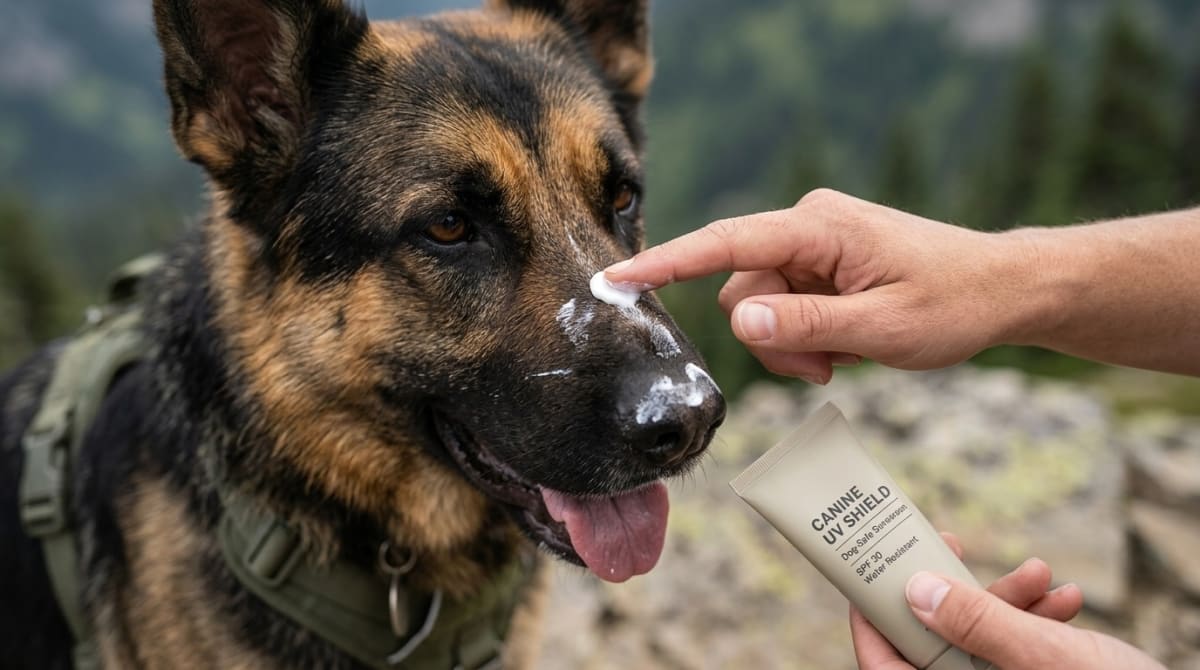
Most people ignore dog sunburns until they spot the bright red skin at the summit. We learned this the hard way with Jasper on Mount Si after a five-hour exposed ridge traverse where his nose went from pale pink to angry red in under ninety minutes. The damage took three weeks to heal fully. Rub a dog-safe sunscreen onto the nose and ear tips twenty minutes before leaving the truck.
Ultraviolet radiation intensifies rapidly as you climb. Atmospheric data shows it increases by four to five percent for every thousand feet of elevation gained. This means that by the time you reach an altitude of ten thousand feet your dog is taking on fifty percent more ultraviolet exposure than they would be if they were just sleeping on your couch down at sea level. The air feels cooler. Hikers skip the lotion. But those rays blast right through the thin mountain atmosphere. We track these burns developing fastest on exposed ridges.
Key Takeaways
- 1UV radiation increases 4-5% per 1,000 feet of elevation, reaching 50% higher exposure at 10,000 feet
- 2Dog noses and ear tips lack protective fur and burn in under an hour on alpine trails
- 3Human sunscreen contains zinc oxide and salicylates that are highly toxic when dogs lick them off
- 4Apply dog-safe sunscreen 20 minutes before leaving the trailhead and reapply every 2 hours above tree line
How High Altitude Targets Vulnerable Skin
Jasper is a 95-pound German Shepherd. His dense double coat blocks almost all ultraviolet light from reaching his core. But the snout and inner ears lack that heavy armor.
Canine sunburn looks different than the human version we are used to spotting. The burn usually shows up first right on the bridge of the nose. A distinct pink flush spreads across the unpigmented skin. Without intervention the skin cracks and flakes off in painful dry patches. Severe cases trigger actual blisters. We saw this progression with Jasper over a three-day window after Mount Si. Repeated burns create cumulative trauma that goes far beyond a temporary sting. Chronic exposure leads to actinic dermatitis. This condition causes the skin to become permanently thickened and scaly over time. Veterinarians warn that this localized cell trauma frequently progresses into aggressive squamous cell carcinoma if owners continue to push their dogs on high-elevation routes without addressing the underlying radiation threat.
Snow and granite reflect ultraviolet light directly upward onto the dog. The harsh glare off early summer snowfields actually doubles the burning effect. This upward bounce targets the bare skin on the belly and inner thighs. It happens fast. Altitude thins the atmosphere. Less atmosphere means fewer filters exist to block the radiation before it hits the ground. Sunburn develops in under an hour on a bright alpine trail. We start monitoring these areas the second Jasper breaks the tree line into exposed terrain. If the snout turns pink we just drop our packs and immediately construct some artificial shade behind a boulder.
How to Apply Sunscreen on the Trail
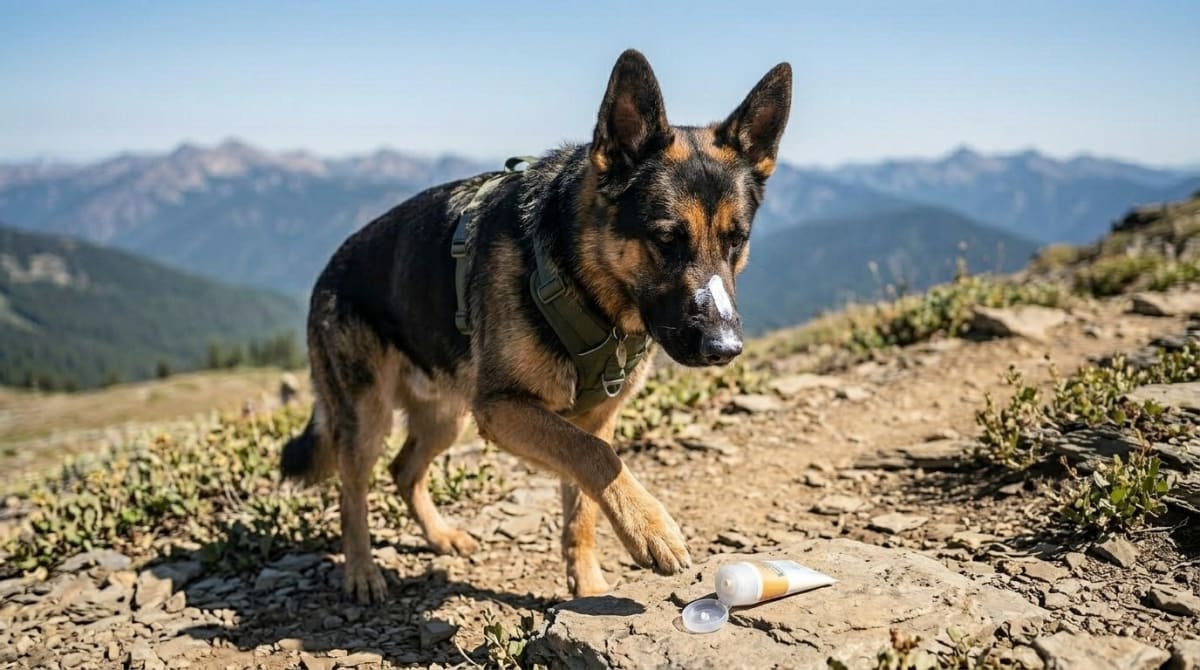
Trail application requires a deliberate routine. Smearing it on at the trailhead will not last all day. Look for SPF 30 minimum with titanium dioxide as the active blocker.
Rub a heavy layer onto the snout twenty minutes before leaving the canopy. The product needs time to absorb fully. Distract the dog so they keep their tongue off it. We usually run Jasper through a quick obedience routine while the lotion sets into his pores.
High elevation demands frequent reapplication. Every two hours. Stop and reapply the lotion immediately if the dog swims in a lake or rubs their face in the snowpack. We set timer alerts on every alpine push above eight thousand feet.
Physical barriers offer the most reliable defense out there. Cooling shirts with built-in ultraviolet protection shield the chest and back. Canine goggles protect the thin skin around the eyes. We found that finding shade behind large boulders or dense tree clusters is absolutely the safest option during the peak midday burning hours, especially when you are navigating an exposed ridge where the sun hits the dog from every possible angle at once. You can't rely on lotions alone when the UV index spikes above eight.
Toxic Ingredients in Human Sunscreens
Never use human sunscreen on a dog. This is the biggest mistake hikers make. Standard pharmacy formulas contain active compounds that are highly toxic to canines when swallowed.
Zinc oxide is the primary threat. Dogs instinctively lick strange creams off their nose. When they swallow zinc oxide it destroys red blood cells and triggers severe gastrointestinal distress. ASPCA data shows this specific toxicity causes bloody vomiting and critical dehydration. The internal damage escalates quickly while you are still miles away from the nearest emergency clinic.
Salicylates are another major chemical hazard we watch out for. These compounds show up in countless popular chemical sunscreens and act very similarly to aspirin. Dogs licking salicylates off their skin can develop gastric ulcers and acute liver damage within hours.
Read every ingredient label carefully. Buy only canine formulations. The bottle absolutely must exclude zinc oxide and para-aminobenzoic acid (PABA). Safe alternatives rely entirely on titanium dioxide or natural physical blockers to deflect the light. We use formulas with at least 10% titanium dioxide concentration after testing lower percentages that allowed breakthrough burning on Jasper's bridge area. These physical barriers give adequate sun protection without the looming risk of systemic poisoning, granting you a bit of peace of mind while you are navigating through remote backcountry zones where a veterinary emergency would mean calling in a search and rescue evacuation team.
Identifying High-Risk Dogs
Some dogs handle ultraviolet light better than others. Jasper relies on his thick coat for primary defense. Hairless breeds need full-body coverage before they even step outside.
Dogs with white or light-colored fur carry the absolute highest risk for blistering on the trail. Their skin lacks the melanin required to deflect those harsh rays. Pink-nosed dogs burn fastest. Dogs with autoimmune conditions or recent surgeries need immediate intervention.
Never use spray sunscreens around a dog's face. The aerosolized particles can slip right into the lungs and cause respiratory irritation. Stick to thick lotions or heavy balms. You can control exactly where a thick balm goes. This precision keeps the irritating chemicals out of the eyes during the initial application process. That baseline comfort makes the dog far more willing to sit still and accept a fresh protective layer later in the afternoon when everyone is tired and just wants to keep moving toward the summit.
Frequently Asked Questions
Kelly brings an engineering mindset to dog hiking gear. After thousands of miles with Jasper testing every harness, pack, and boot on the market, he knows what holds up and what fails.
References & Further Reading
- Sunscreen and Zinc Oxide Ingestion in Pets — ASPCApro (2016)
- Pets and Sunscreen: Don't Get Burned by the Myths! — ASPCA (2019)