 Paths & Paws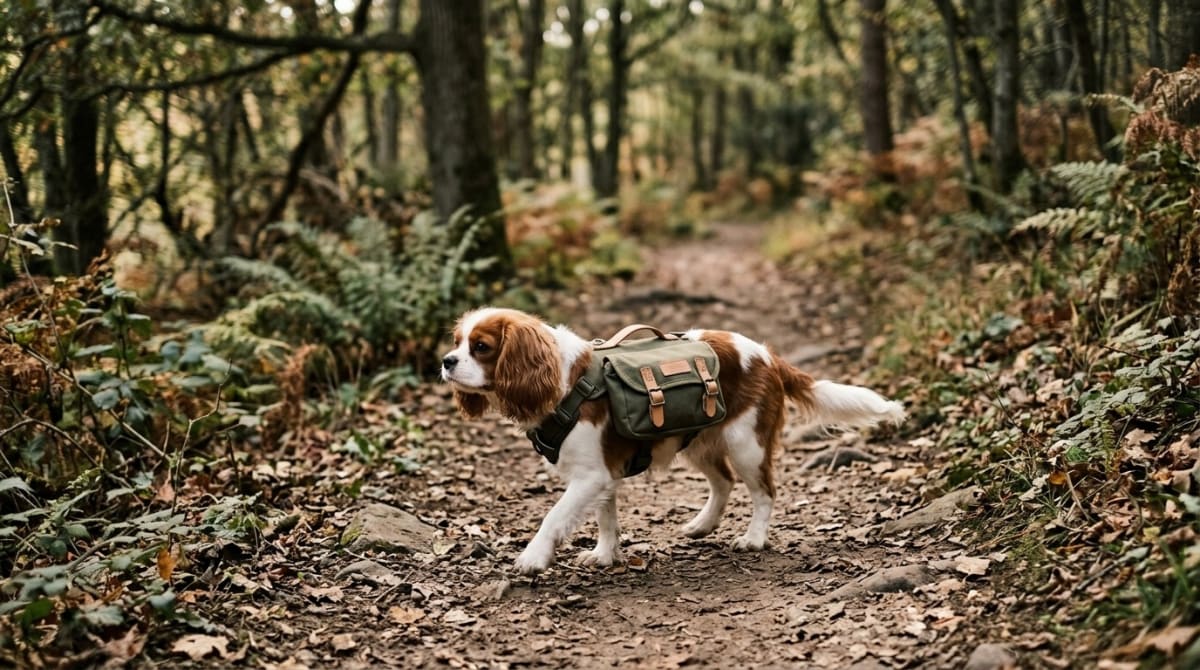
Most dogs under 20 pounds shouldn't wear hiking backpacks. The math simply refuses to work. A safe carrying limit caps at 10 percent of body weight. That means a 12-pound terrier maxes out at 1.2 pounds of total load. Factor in the mass of an empty commercial dog pack, which usually hovers around eight to ten ounces for extra-small sizes, and the fabric alone eats up half their allowance before a single drop of water goes inside.
My dog Scout hauls her own gear. She is a 50-pound Lab mix rescue. Her structural limit sits near five pounds, so buckling an empty eight-ounce rig on her changes nothing about her gait. Tiny breeds face a totally different physical reality. Handlers end up straining the animal's spine just for the novelty of watching a pug lug two poop bags and a handful of kibble up a dirt grade.
Key Takeaways
- 1A safe pack load caps at 10 percent of a dog's body weight, and empty extra-small packs alone can eat up half that allowance
- 2Water weighs roughly one pound per pint, meaning most dogs under 15 pounds cannot carry even a single bottle without exceeding their limit
- 3A 2025 study in the Journal of Experimental Biology found loaded trotting shortens stride and increases peak vertical forces on the front legs
- 4Horizontal-loading carriers work far better than vertical carriers, which compress the spine and put dangerous pressure on internal organs
The Hardware Penalty on Small Breeds
Just because outdoor brands sell extra-small saddlebags doesn't mean they belong on a trail. Companies aggressively market these miniature rigs toward Chihuahua and toy poodle owners. Stop buying them. Toy breeds aren't working dogs.
Veterinarians agree that a conditioned hiking companion should haul no more than 10 percent of their body weight. A 14-pound dog has an absolute maximum ceiling of 1.4 pounds. You have to weigh the empty backpack first. High-quality extra-small rigs with metal buckles and padded straps usually hit the scale around 0.6 pounds. That leaves 0.8 pounds for actual supplies. Water weighs 1.04 pounds per pint. A tiny dog cannot carry a single 16-ounce bottle of water without exceeding their structural limit.
The arithmetic gets downright depressing for dogs under 10 pounds. A seven-pound dog gets a 0.7-pound allowance. The unloaded harness consumes 85 percent of that capacity right out of the box. Adding anything at all pushes the animal into the danger zone of joint stress and premature fatigue.
When we hit the Cascades with Scout, her empty rig takes up a fractional slice of her allowance. We easily slide in two liters of water alongside a trauma kit and her lunch. For small dogs, saddlebags are entirely cosmetic. You pay for a heavy garment that traps heat and forces exhaustion.
Compare this to a 60-pound dog. Their 10 percent limit gives them six pounds of capacity, which lines up with the general dog backpack weight limits we use for Scout on longer trips. A medium pack weighs about one pound. They have five pounds left over for actual liquid weight. The scale of canine gear refuses to shrink perfectly. Metal hardware and thick nylon webbing weigh the exact same whether they get sewn onto a large mastiff harness or a toy breed shell. This hardware penalty disproportionately punishes smaller frames.
People also forget to factor in the shifting momentum of water, which becomes a serious problem when a half-empty hydration bladder sloshes back and forth with every step along a rugged trail. For a 50-pound dog that minor shift means absolutely nothing. For a 10-pound dog, a sloshing liquid bladder acts like a swinging pendulum. The momentum rips them sideways. They have to constantly brace their core muscles just to walk straight, leading to extreme soreness by Tuesday morning.
Biomechanics and Spinal Strain
Ounces on the scale only tell half the story. The physical position of the load matters just as much.
A 2025 study in the Journal of Experimental Biology tracked how loaded trotting altered the gait of working dogs. Researchers observed changes in joint kinematics and spatiotemporal parameters the moment dogs carried extra mass. The animals shortened their stride and altered their limb loading. They increased the peak vertical forces on their front legs while adopting weird asymmetric gait patterns to compensate for a shifted center of gravity.
When a dog wears a backpack, gravity presses down directly on the thoracolumbar region. This is exactly where the chest meets the lower back. Small dogs already take thousands of extra steps to match a human hiking pace. Forcing them to absorb extra vertical force with every single footfall drastically speeds up muscle fatigue.
Certain breeds face severe structural risks. Dachshunds and Corgis have elongated spines paired with stubby legs. Slapping saddlebags on a long-backed dog creates a nasty bridge-loading effect where the center of their back sags under the pressure. This posture compression shoots up the risk of intervertebral disc disease.
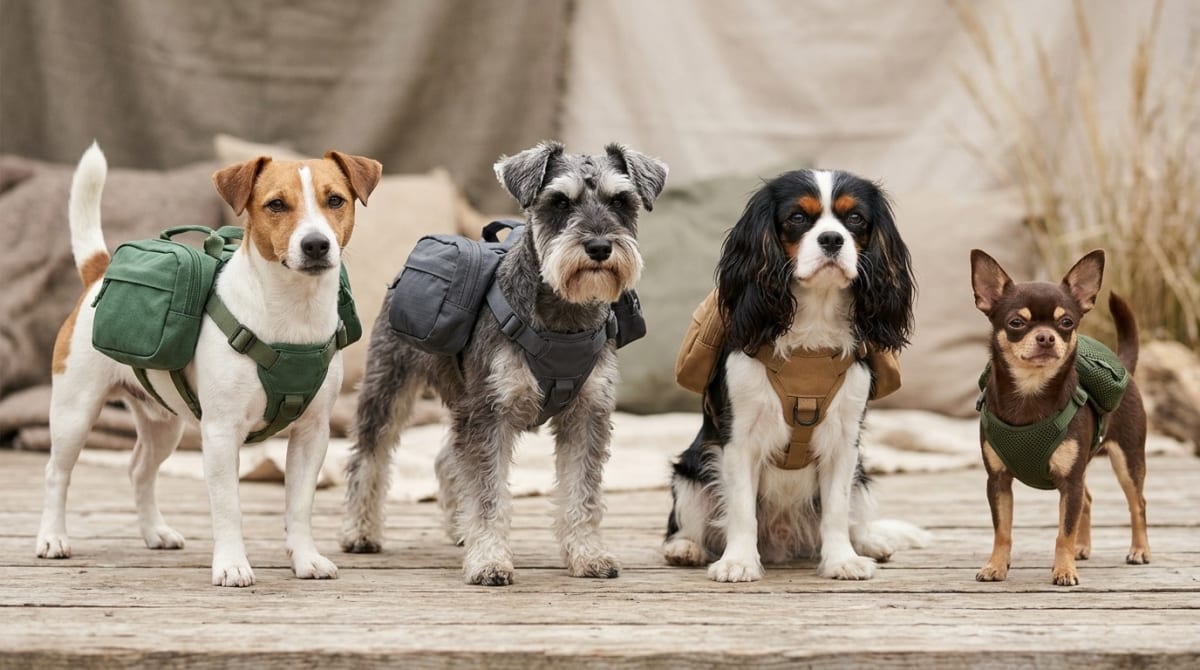
Even short-backed toy breeds struggle out there. Their joints simply lack the physical mass to absorb repeated shock on rocky descents. When scrambling down a steep rock face, a dog uses their front shoulders as brakes, and a backpack shoves all that extra momentum straight forward. Small dogs already have tiny impact zones on their front paws, meaning the added cargo drastically increases the peak vertical forces on their forelimbs with every single downward jump off a rock. Over time this repetitive stress causes shoulder inflammation and early joint wear.
The trail surface dictates the exact level of stress. Flat gravel paths allow a dog to settle into a steady rhythm. Technical routes covered in slick roots and large boulders force the animal to jump and twist constantly. Every lateral movement causes the backpack hardware to slide around. Even a perfectly fitted extra-small pack shifts violently when a 15-pound dog leaps off a rotten log, and the resulting friction from that shifting nylon creates painful raw hot spots under the armpits. This is exactly the kind of terrain covered in our guide to small dog trail obstacles, where knowing when to lift a dog over a log matters as much as what they're wearing.
Better Ways to Manage Toy Breed Gear
When a small dog can't haul their own supplies, you absorb the load. This requires smart packing strategies so you don't end up lugging a disorganized nightmare of tangled leashes and loose kibble up the mountain.
Ultralight canine gear solves part of the equation. A 12-pound dog doesn't need a thick insulated water bowl when a collapsible silicone cup weighs under an ounce. Swap traditional leather leashes for a thin climbing rope option. Every ounce shaved off the equipment is one less ounce dragging down your shoulders during a long ascent.
Dedicate one specific pocket in your daypack for canine supplies. We stash Scout's emergency gear in a waterproof stuff sack at the bottom of my bag. This same approach works flawlessly for small dogs. Keep the water accessible in an external side pocket. Shove high-calorie treats into the hip belt for rapid trail rewards.
Look into hydration reservoir sharing. Plenty of hikers carry a three-liter bladder for themselves. Instead of lugging separate plastic water bottles for the dog, teach them to drink straight from a squirt attachment on the hydration hose. This kills the need for extra plastic containers entirely.
Some outdoor companies actually manufacture human backpacks with built-in dog gear dividers. These bags feature separate lined compartments meant for used waste bags and muddy toys. Managing a trail kit becomes exponentially easier when the smelly items stay completely isolated from your lunch sandwich.
Another strategy involves dividing the first aid requirements by building a combined human-canine trauma kit that includes versatile items like self-adhering bandage wrap and standard tweezers that work for both species. Consolidating these overlapping items drops the total weight in the main pack.
Some minimalist harnesses include a tiny Velcro pocket sewn right onto the back. It holds two emergency poop bags and a flat identification tag. This whole setup weighs less than three ounces. The dog gets to contribute to the hike without experiencing the restrictive bulk of full saddlebags.
Lots of folks put backpacks on small dogs just to give them a job. Scent work or trail navigation provides a much safer mental outlet. Working breeds definitely thrive on intense physical labor, but a small companion dog finds their purpose through direct engagement and environmental awareness. Let the little dog lead the way up the dirt path and praise them for navigating tricky root systems. Mental stimulation exhausts the brain long before their joints take any real damage.
Safe Methods for Carrying Small Dogs
Small dogs eventually run out of steam. When their legs quit, you need a safe way to ferry them back to the trailhead.
Avoid the viral trend of vertical dog backpacks. These bags force the animal to sit upright with their front paws sticking out like a human toddler. Dogs are anatomically built for horizontal movement. Forcing them into an upright sitting posture compresses the spine and puts highly dangerous pressure on their internal organs.
Choose a horizontal-loading carrier instead. Sling carriers work wonderfully for dogs under 10 pounds on relatively flat trails. The dog rests in a natural curled position against your chest. For rugged hikes, hunt down human backpacks designed with a flat structured base for the dog to stand or lie down on.
The carrier must have mesh ventilation panels on at least two sides. A short internal tether is absolutely mandatory. The tether clip attaches directly to the dog's main harness to prevent them from bailing out and injuring themselves if a squirrel happens to dart across the trail right in front of you. Never clip that tether to a neck collar.
If a small dog goes fully limp with exhaustion instead of just slowing down, a sling carrier alone won't cut it. Our guide on carrying an injured or exhausted dog off the trail covers the body mechanics of hauling out a dog that can no longer support its own weight.
Frequently Asked Questions
Sarah is learning to hike with dogs alongside her readers. Scout is her first trail companion, and she shares every mistake, success, and lesson learned along the way.
References & Further Reading
- The biomechanics of working dog locomotion II: Loaded trotting — J Exp Biol (2025)