 Paths & Paws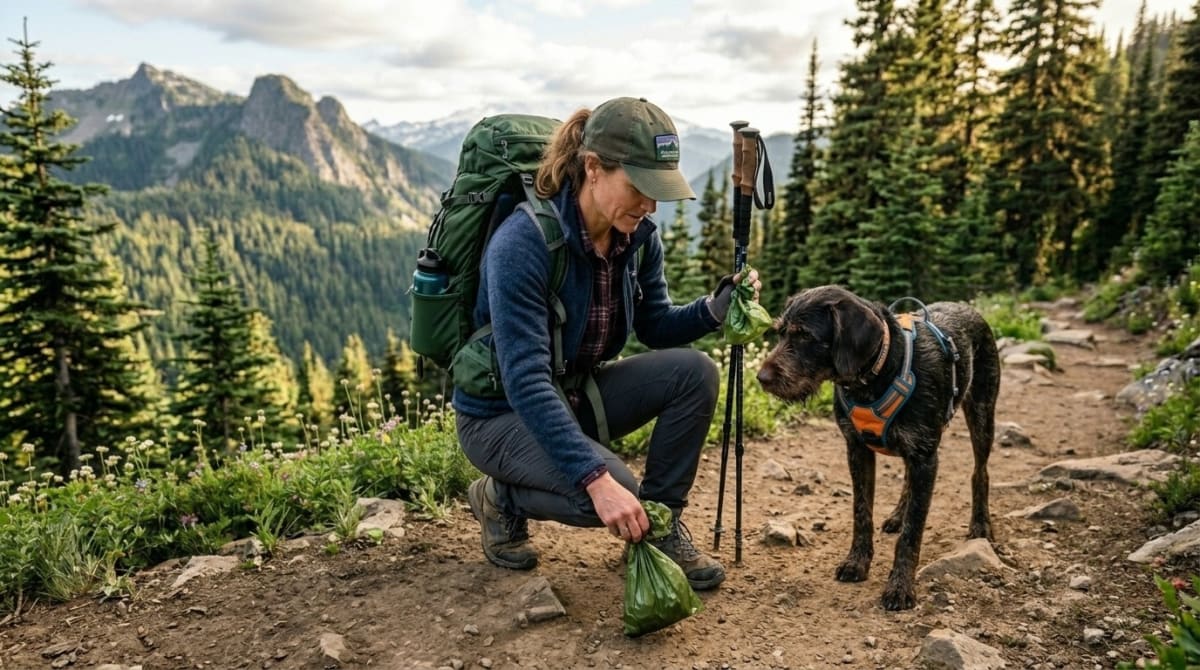
Most hikers think tossing dog feces into the brush is harmless since wild animals do the same thing. They are wrong. This habit wrecks native plants. Leave No Trace guidelines mandate packing out all dog waste in almost every backcountry environment.
When we first started taking Scout, our 50-pound rescue Lab mix, into the Cascades, I figured the old stick-flick method was fine. I was wrong. A 2022 study in the journal Ecological Solutions and Evidence found that dogs drop up to 11 kilograms of nitrogen per hectare each year, a staggering load that permanently alters native soil chemistry and ultimately drives out the plant species local wildlife actually depend on to survive. Backpacking with a dog means handling their mess responsibly. We dug into how this waste changes soil chemistry and why the wild animal defense falls flat. We also tested how to carry out a weekend's worth of poop without ruining our camping gear.
Key Takeaways
- 1Flicking dog poop off trail dumps foreign nutrients into native soil and permanently alters plant communities
- 2Dogs deposit up to 11 kg of nitrogen per hectare annually - far beyond what native ecosystems can absorb
- 3Pack out all waste on backcountry trips using a poop tube, dedicated dry bag, or odor-proof barrier bags
- 4Biodegradable bags still require commercial composting to break down and cannot be left in the woods
The Stick Flick vs Bagging Debate
Some backpackers still swear by the stick flick. They find a sturdy branch, scoop the mess, and launch it thirty feet off the trail into the brush. This habit started decades ago. Back then trail traffic was sparse and people just assumed those hidden piles would naturally decompose.
Trail usage is massive now. That hidden waste sits on the surface for months. It washes into the local watershed during heavy summer rainstorms, and it introduces dangerous biological pathogens straight into the groundwater.
Honestly, the only thing worse than flicking poop is bagging it and abandoning the plastic on a rock. You end up combining biological waste with non-biodegradable trash. People always claim they will grab that bag on their way back down the mountain. They rarely do. We hike Mount Si frequently. On a typical Saturday morning I will count at least ten abandoned green bags sitting on tree stumps along the lower switchbacks because hikers convince themselves they will remember to grab the trash on the descent. Scout always tries to sniff them as we walk past. Other local dogs urinate on them, creating a concentrated biohazard zone right next to the footpath.
Do not leave bags on the dirt. You brought the dog. Carry the bag.
The Environmental Science of Dog Waste
Why is this such a huge problem? Commercial dog food is packed with heavy minerals. When Scout eats her high-protein salmon kibble, her digestive system absorbs the calories while her body passes the excess nutrients straight out as waste. Dogs only metabolize a fraction of those concentrated ingredients. The rest exits right onto the trail.
Her feces acts as raw agricultural fertilizer. Wild environments survive on incredibly poor soil. Native wildflowers and ferns adapted to low nutrient levels over thousands of years, meaning they thrive precisely because the dirt lacks heavy nitrogen loads. When you introduce dog waste into these areas, you dump pure fertilizer into the dirt. This triggers an unnatural nutrient spike. Aggressive weeds like nettles and hogweed feed on this spike until they grow massive enough to block out the sunlight and kill the native plants struggling below them.
Researchers at Ghent University actually tracked this impact. They found that picking up the feces removes 97 percent of the phosphorus from the environment. Bagging the waste also pulls 56 percent of the nitrogen out of the woods. The remaining nitrogen comes from dog urine, which you obviously cannot pack out. This makes removing the solid waste an absolute requirement to protect the ecosystem from permanent botanical shifts.
Beyond the fertilizer effect, dog waste carries bad pathogens. Domestic pets harbor giardia and e. coli in their guts. When rain hits an abandoned pile of dog poop, the runoff washes those microscopic threats into nearby streams. Wild animals drink that contaminated water. Other backpackers filter that water a mile downstream.
The Wild Animal Argument Busted
The most common excuse for leaving pet waste behind is that bears and coyotes poop in the woods. Hikers love to argue that a dog pile is no different than bear scat. The math and the biology both fail here. You have to look at how nutrient cycling works in a closed natural system.
Bears eat berries and fish from the forest. When a bear defecates, it returns those exact same foraged nutrients back into the dirt, meaning the net ecosystem change is zero. Dogs eat commercial food manufactured in a facility hundreds of miles away. When a dog poops in the woods, it deposits foreign calories and minerals that did not exist in that environment yesterday. This constant addition permanently alters the native soil chemistry.
You also have to weigh the sheer volume. A single square mile of wilderness might host two resident coyotes spreading scat over a wide territory. But that exact same square mile on a popular trail might see two hundred domestic dogs dropping heavy nutrient-dense waste every single weekend, creating a biological bottleneck that the surrounding dirt simply cannot process before the next wave of weekend hikers arrives. The bacteria load totally exceeds natural filtration limits.
Leave No Trace and Land Manager Rules
Leave No Trace guidelines state clearly that pet owners must pack out all dog waste. Land managers enforce this strict policy because high-traffic recreational areas suffer immediate ecological damage from the localized water pollution those feces create.
On frontcountry trails you usually find trash cans right at the trailhead. You carry the bag for two miles and drop it in the bin. In the backcountry you might hike for four days without seeing a garbage can. The rule remains exactly the same.
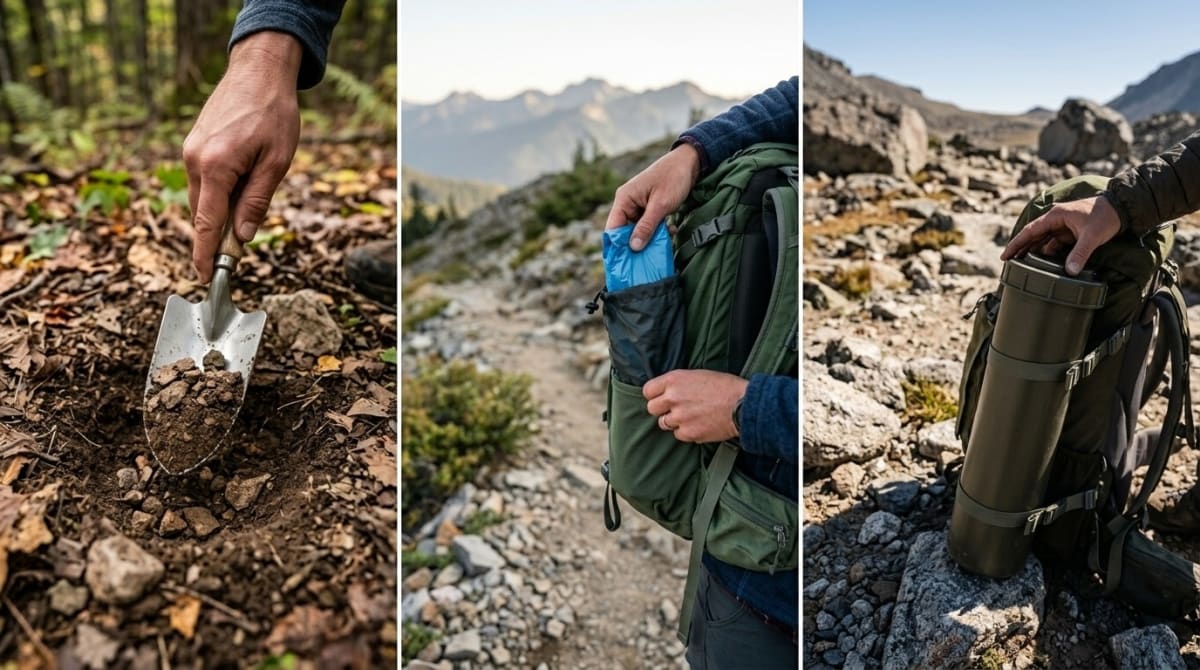
Are there any exceptions? If you hike deep into a remote wilderness area where human waste burial is explicitly allowed, you can sometimes bury dog waste. You dig a cathole six to eight inches into the mineral soil using a camping trowel. You drop the waste inside. You mix it with dirt and disguise the surface with natural debris like pine needles. You have to do this at least 200 feet from trails and water sources to prevent contamination.
Land managers are increasingly banning burying outright. Cold mountain soils just do not break down waste fast enough to handle current visitation numbers.
Practical Solutions for Multi-Day Trips
Affiliate Disclosure: Paths & Paws earns commissions from qualifying purchases made through links on this page. This supports our field testing and does not affect our recommendations. We only recommend gear that passes our trail testing standards. Learn more
Carrying a flimsy plastic bag in your hand for three days is a recipe for disaster. It will break. You need a dedicated system. We run four different methods depending on the trip length and the terrain.
The Poop Tube
A poop tube is a custom container built from a piece of rigid PVC pipe. We glue a sealed screw cap to one end. This creates an impenetrable fortress that keeps the smell inside while protecting the bags from getting crushed when you drop the pack on sharp rocks. You just drop the tied waste bags inside and twist the lid shut. The rigid plastic tube attaches easily to the outside of the backpack. This is our gold standard for desert hiking.
Dedicated Dry Bags
A dedicated trash dry bag works perfectly for Scout on typical weekend trips. We line a small nylon roll-top bag with a standard garbage bag. Every time the dog goes, tie off the individual plastic bag and drop it inside the liner. Rolling the top down tightly traps the odor. You just strap the dry bag to the bottom of the pack. It weighs almost nothing and cleans out easily at home.
Dog Backpacks
Scout wears a dog backpack on our multi-day routes. She carries her own kibble. She also carries her own waste. We put her tied poop bags into a thick ziplock and slide it into her saddlebag so she hauls the extra weight herself. This fair trade keeps the dirty biohazard materials separated from our human food and clean camping gear.
Odor-Proof Barrier Bags
Standard sandwich bags let smells escape over time through the thin plastic. Odor-proof barrier bags actually trap scent molecules. These are the same thick bags backpackers use to store food in bear country. You place the individual dog bags inside the barrier bag before packing it into the main compartment. This prevents the sleeping bag from smelling like a toilet on day three.
You absolutely must carry hand sanitizer too. Handling waste bags for multiple days increases the risk of cross-contamination. We keep a small bottle of liquid sanitizer clipped to the outside of the pack so we never dig through gear with dirty hands. Clean hands immediately after sealing the dog bag.
For more on overall post-hike hygiene and gear decontamination, our complete guide to cleaning your dog after a hike covers the full routine from parking lot to home.
Frequently Asked Questions
Sarah is learning to hike with dogs alongside her readers. Scout is her first trail companion, and she shares every mistake, success, and lesson learned along the way.
References & Further Reading
- Nutrient fertilization by dogs in peri-urban ecosystems. Ecological Solutions and Evidence 2022 — Ecological Solutions and Evidence (2022)