 Paths & Paws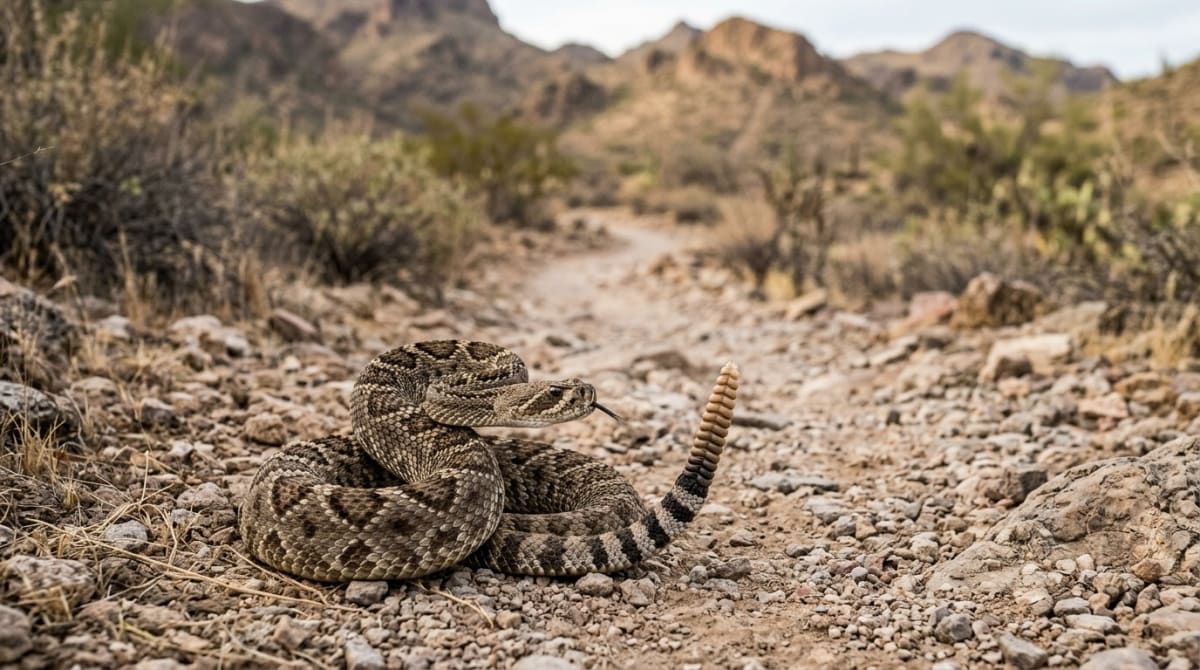
A tourniquet practically guarantees dead tissue. Don't use one. Restrict the dog's movement instead and get them to a clinic with antivenom immediately. When we dug into clinical outcomes from 272 canine envenomation cases published in the journal Toxicon we found some brutal truths. Tissue damage starts the second the fangs retract. Every single step a dog takes pumps venom faster through the lymphatic system, which dictates that a fast, calculated evacuation determines their survival odds. Jasper is a 95-pound German Shepherd so I cannot sling him over my shoulder for three miles down a steep rocky descent. We had to build our emergency plan around biological reality.
Key Takeaways
- 1A tourniquet concentrates hemotoxic venom in one isolated limb. Never use one.
- 2Rattlesnake venom travels through the lymphatic system; every step your dog takes accelerates the spread
- 3Call ahead to confirm the vet has antivenom before driving. Small rural clinics often don't stock it.
- 4Snake aversion training offers real prevention; the rattlesnake vaccine showed no measurable difference in survival rates in an 82-dog study
Immediate First Aid
Yank the dog back the second you hear that rattle or see the strike. Create distance. Rattlesnakes can launch themselves up to two-thirds of their body length. A second bite doubles the injected venom load. Clip on a short leash. Stop looking for fang marks. The only priority right now is halting the venom's spread. Pit viper venom moves exclusively through the lymphatic network rather than the bloodstream, and since that system lacks its own pump it relies entirely on the dog's muscle movement to push fluid toward the heart. This contraction acts like a pump. It accelerates the toxin spread long before you hit the trailhead. Keep the animal still. Never use a tourniquet. Restricting blood flow just concentrates that hemotoxic venom into one isolated limb. That localized concentration destroys the surrounding tissue so aggressively that amputation often becomes the only viable medical option left for the vet. Skip the ice packs and leave those cheap plastic venom extractor kits in the trash. Rattlesnake fangs operate like curved hypodermic needles. They inject the venom deep into muscle tissue where surface suction literally cannot reach it. Assess the dog's face. Swelling begins within minutes if the bite hit the snout, which easily compresses the airway. Strip the collar off. Use a loosely draped slip lead over the shoulders to keep control. Pick up a small dog and carry them the entire distance if possible. If you are dealing with a heavy breed like Jasper, you have to force them into a slow, painfully controlled walk. Never let them trot. Our guide on carrying an injured dog off trail covers technique for rough terrain descents with a large dog.
Trail Evacuation and Vet Transport
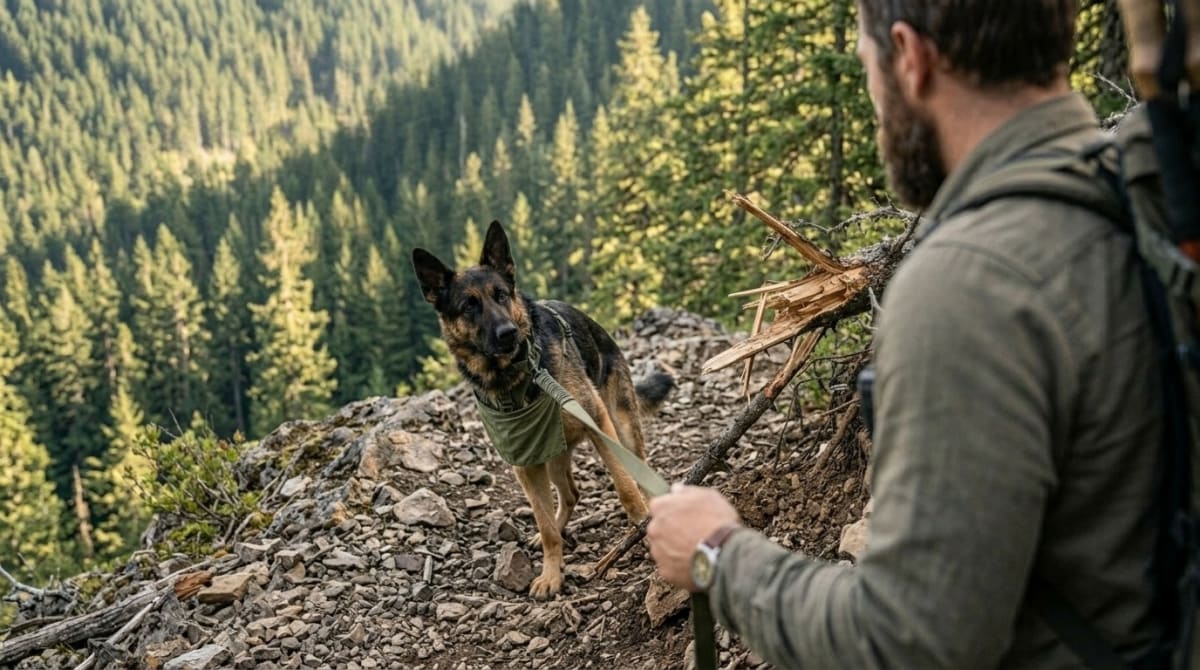
You have roughly two hours for the best medical outcome. Get antivenom fast. Because Jasper sits at 95 pounds, a fireman's carry down the mountain is impossible. We rely on a strict heel to walk him out without spiking his heart rate. Walk them slow. Stop every five minutes for a thirty-second rest. Keep that heart rate low. Don't just blindly drive to the nearest rural clinic once you finally get cell service. Call ahead first. Antivenom is highly perishable and carries a steep price tag. Because of this, a lot of those small-town veterinary offices near the trailheads simply do not keep the vials sitting on the shelf for a rainy day. You need a 24-hour emergency hospital with a confirmed supply. Tell the front desk you are inbound with a rattlesnake bite so the techs can start thawing the antivenom before you even pull into the parking lot. Watch closely for systemic shock. You might notice excessive drooling, pale gums, sudden weakness or dangerously shallow breathing. These symptoms can look like severe exhaustion at first, and knowing the signs a dog is too tired to continue hiking helps you distinguish between the two quickly. Crank the air conditioning on high once you reach the truck. Cold air helps keep the dog calm. A suppressed heart rate buys you a few extra minutes on the highway.
The Rattlesnake Vaccine and Aversion Training
We see plenty of hunters and hikers relying on the canine rattlesnake vaccine. They expect it to function like some invisible forcefield. The biological reality is grim. A 2014 study in Veterinary Medicine Research and Reports tracked 82 envenomated dogs and the researchers found absolutely no measurable difference in survival rates or tissue damage between vaccinated and unvaccinated animals. The shot might buy you a few extra minutes to reach a clinic but the dog still requires the exact same clinical antivenom. It isn't a free pass. True prevention happens in the brain through behavior modification. Snake aversion training utilizes electronic collars to teach a dog that the sight, sound, smell, or movement of a rattlesnake means immediate discomfort. This training creates a deep negative association that overrides their natural prey drive. A solid trainer uses defanged live snakes to teach the dog the distinct musky scent of pit vipers. Scent recognition works perfectly even when the snake decides not to rattle. We put Jasper through this protocol when he was two years old. The results are undeniable on the trail. When he catches a snake's scent in the brush he immediately hooks a wide circle away from it and glues himself to my side. He leaves the area without a second sniff. 82 envenomated dogs proved the vaccine won't save them, but trained avoidance actually keeps fangs out of their skin. Dogs who already struggle with prey drive on trail will get the most out of this work — see how reactive dogs on trail respond to the same kind of behavior modification framework.
Assessing Trail Risks by Season and Time
You can drastically cut canine exposure just by timing your miles correctly. Rattlesnakes are ectothermic. They cannot regulate their own body heat. They rely entirely on ambient air to survive. Stay away from baked rocky exposures during the heat of the afternoon. In early spring and late fall these snakes love sunning themselves right in the middle of the dirt trail to absorb warmth, but during the brutal peak summer months they shift into crepuscular hunters that hide under logs during the afternoon and only emerge at dawn and dusk. Keep the leash short when pushing through tall grass or scrambling over rocky outcroppings. Letting a dog take unseeable steps into blind brush creates an unnecessary risk. Stick to wide fire roads and cleared paths when the temperatures peak.
Frequently Asked Questions
Filed under
Kelly brings an engineering mindset to dog hiking gear. After thousands of miles with Jasper testing every harness, pack, and boot on the market, he knows what holds up and what fails.
References & Further Reading
- 272 cases of rattlesnake envenomation in dogs: Demographics and treatment including safety of F(ab')2 antivenom use in 236 patients. Toxicon 2015 — Toxicon (2015)
- Effects of the canine rattlesnake vaccine in moderate to severe cases of canine crotalid envenomation. Vet Med Res Rep 2014 — Vet Med Res Rep (2014)