 Paths & Paws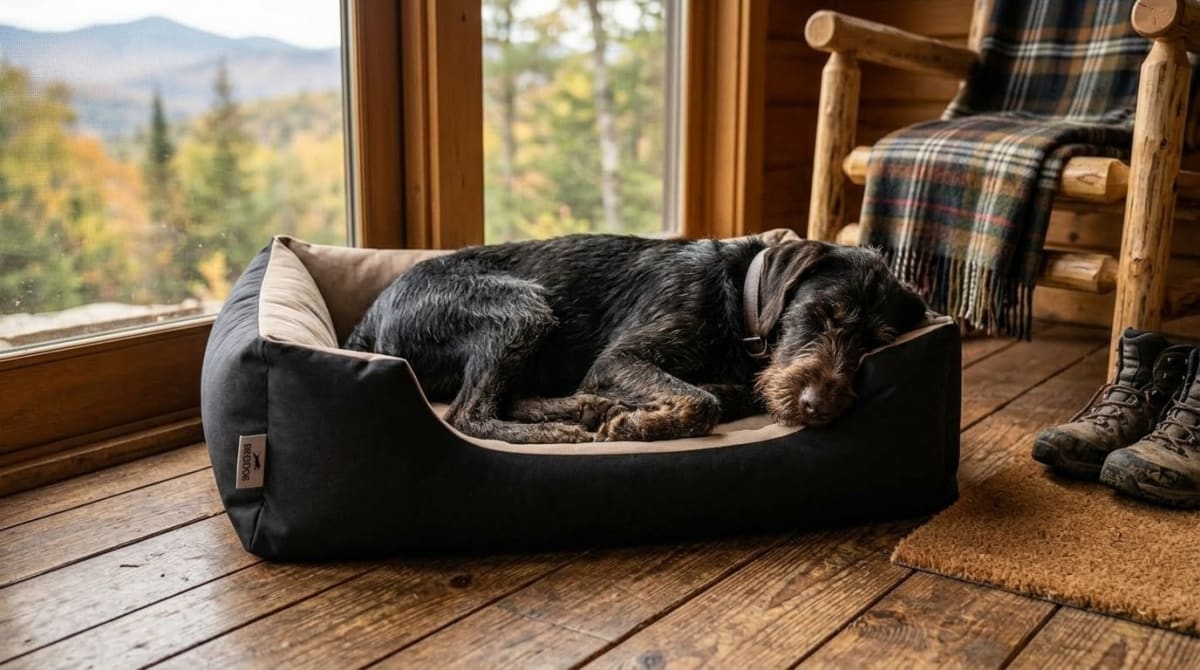
Most owners think a sleeping dog is a recovering dog. They aren't. We tracked muscle stiffness in working dogs and learned that passive rest actually prolongs soreness. A double-digit trail day takes 48 hours to recover from properly. The first 60 minutes dictate how a dog feels two days later.
When we first pushed Scout through a 10-mile loop near Mount Si, I just let her collapse on her bed afterward. Huge mistake. She woke up so stiff she outright refused to cross the kitchen floor. Scout is a 50-pound Lab mix rescue whose body handles distance well, but her muscles still sustain tiny tears during those brutal rocky descents that define our Pacific Northwest trails. We dug into canine sports medicine guidelines to fix our post-hike routine.
The protocol is surprisingly simple. We manage the cool-down period and apply targeted massage. We also schedule her meals carefully. Unmanaged fatigue compounds over the season. A structured recovery plan builds endurance because it intercepts inflammation during that critical 48-hour window.
Key Takeaways
- 1A sleeping dog is not a recovering dog - passive rest lets inflammation stagnate and prolongs soreness for days
- 2The first 60 minutes post-hike are critical - keep the dog moving to prevent blood from pooling in the legs
- 3Delayed onset muscle soreness peaks at 24-48 hours after the hike, not immediately - that is when active recovery matters most
- 4Wait at least 60 minutes before feeding after hard miles to reduce the risk of gastric dilatation volvulus
The Biological Recovery Window
A dog's body takes a beating during a sustained 10-mile push. Their muscles burn through glycogen reserves to maintain output over difficult terrain. Microscopic tears form in the muscle fibers as they navigate uneven ground and drop down steep, rocky embankments. The rebuilding process requires serious blood flow and cellular repair.
Heat management comes first. A 2020 Penn Vet Working Dog Center study shows a dog's core temperature and pulse rate need a full 60 minutes to hit baseline after a hard run. This transition requires hands-on support. If a panting dog drops onto cold dirt, those muscles just lock up. Keep them moving. A slow ten-minute walk before getting into the car stops blood from pooling in their legs.
Lactic acid clears out relatively fast. The real enemy is delayed onset muscle soreness. This stiffness peaks between 24 and 48 hours after the hike. Inflammation settles into the joints and fascia. If the dog simply sleeps for two days straight, that inflammation stagnates and prevents the cellular repair mechanisms from properly doing their job.
Water changes the math. Synovial fluid requires adequate hydration to keep the joints lubricated. Dehydrated dogs deal with far more joint friction. Movement lubricates the joints and flushes metabolic waste from the tissues. We use a concept called progressive recovery to manage this window. The goal is to push blood around without adding new stress to the skeletal system, which allows those torn fibers to knit back together much faster than they would if the dog just slept.
Post-Hike Care and Massage Techniques
Rubbing them down actually speeds up tissue repair. A 2022 study in Veterinary Sciences confirmed that classical massage improves muscular tension and circumarticular blood circulation in dogs. The mechanical pressure forces stagnant fluid out of the tissues. It also triggers a parasympathetic nervous system response to dial back stress.
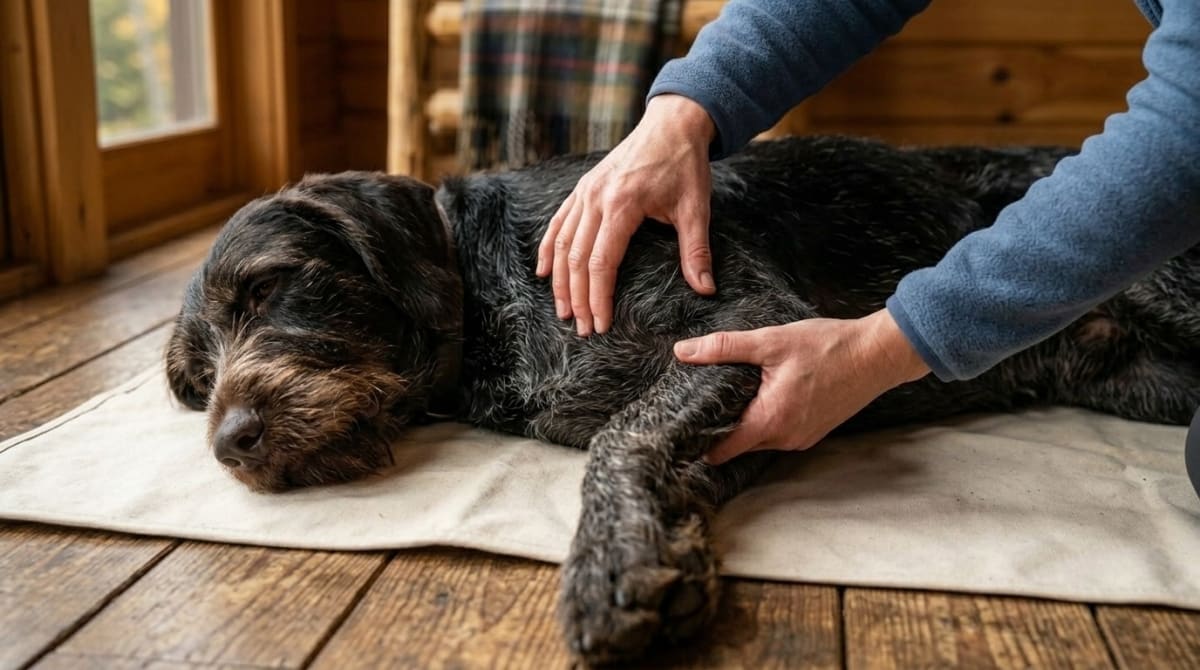
You don't need a physical therapy degree for this. Four fundamental moves cover the basics. We apply these steps to Scout the morning after a big hike. Always perform this routine in a quiet room on a soft rug or dog bed.
First comes effleurage. These are long sweeping strokes that warm up the tissue and calm the nervous system. Use the flat palm of a hand. Start at the dog's toes and glide upward toward the heart. This directional pressure assists lymphatic drainage. Apply light but firm contact. Do not press directly down on the bones or the spine.
Next, isolate the big muscle groups using a kneading motion. Focus on the shoulders and the hindquarters. Carefully lift and roll the muscle tissue between the fingers and thumbs. Avoid pinching the skin. Scout takes most of her braking force in her shoulders during steep descents down the mountain, so we spend extra time working that dense muscle until we feel the knots finally give way under our hands. Watch the dog's reaction closely. Pulling away or licking lips means the pressure is too hard.
Then try the Paws-up stretch. The Penn Vet Working Dog Center uses this foundational movement to increase tissue mobility and decrease future injury risk. Lure the dog to place their front paws on a couch. Hold a treat near their nose to stretch the neck upward. This naturally elongates the spine and opens the chest. Hold this position for ten seconds.
Finally, do some passive range of motion work. Have the dog lie on their side. Carefully support one limb and move it through a natural walking motion. Flex and extend the joints slowly. Never force a joint past its comfortable limit. This motion pushes synovial fluid through the joint capsules to prevent stiffness. Perform five repetitions on each leg.
Rest Duration and Feeding Timing
Double-digit mileage demands a strict 48-hour turnaround protocol. Day one is pure rest. Do not take the dog on another hike. Stick to short leash walks around the neighborhood. These controlled walks keep the muscles moving without loading the joints. Day two transitions into active recovery. Introduce a slightly longer walk over flat ground. If they look fluid and energetic, they are ready for regular activity on day three.
Food timing matters just as much. Never dump a full bowl of food in front of a dog right after hard miles. Their digestive system shuts down during exercise to redirect blood to the muscles. Feeding them too soon increases the risk of gastric dilatation volvulus. This is a life-threatening emergency.
Wait at least 60 minutes before offering dinner. Their muscles need protein to rebuild those micro-tears, but their stomach needs time to wake back up. We feed Scout her standard high-protein kibble, but we split the post-hike meal into two smaller portions fed an hour apart.
Water is a different story. Provide water immediately, but limit the volume. Let them drink a few ounces at a time every ten minutes. Gulping a giant bowl of water leads to vomiting. We usually mix a little extra water into Scout's evening kibble to guarantee she rehydrates fully overnight, which helps her body process that protein for cellular reconstruction without pulling extra moisture from a depleted system.
Checking the Paws and Identifying Overexertion
Muscles are only half the battle. Inspecting their foundation is just as important. A 10-mile hike over rough terrain acts like sandpaper on a dog's paw pads.
Check the pads for micro-abrasions or torn flaps of skin. Run a finger between their toes to check for embedded debris or ticks. If the pads look raw or feel unusually hot, they need complete rest until the skin toughens back up. We apply a wax-based paw balm to Scout's feet after distance hikes to speed up the healing process.
Preventing serious injury means distinguishing between standard fatigue and dangerous overexertion. Normal soreness looks like temporary stiffness when standing up after a nap. They might walk slowly for the first few steps before loosening up. This is a natural response to breaking down muscle fibers.
True overexertion looks completely different. Look for clear physical markers. Refusing to navigate stairs is a major warning sign. An asymmetrical gait or a noticeable limp means the dog is protecting a vulnerable joint or a torn ligament. Rapid panting while resting in a cool room indicates ongoing physiological distress. If the dog exhibits a complete loss of appetite 24 hours later, they require immediate veterinary attention.
If those signs persist into Tuesday after a Saturday hike, the training plan needs an adjustment. The distance was too far for their current fitness level. Endurance requires progressive building. Drop the next outing back to six miles. See how they handle that before bumping the distance back up. Pushing a tired dog through another long trail forces their secondary muscles to take the load, which often leads to ugly ligament tears that require months of confined crate rest to heal properly.
Frequently Asked Questions
Sarah is learning to hike with dogs alongside her readers. Scout is her first trail companion, and she shares every mistake, success, and lesson learned along the way.