 Paths & Paws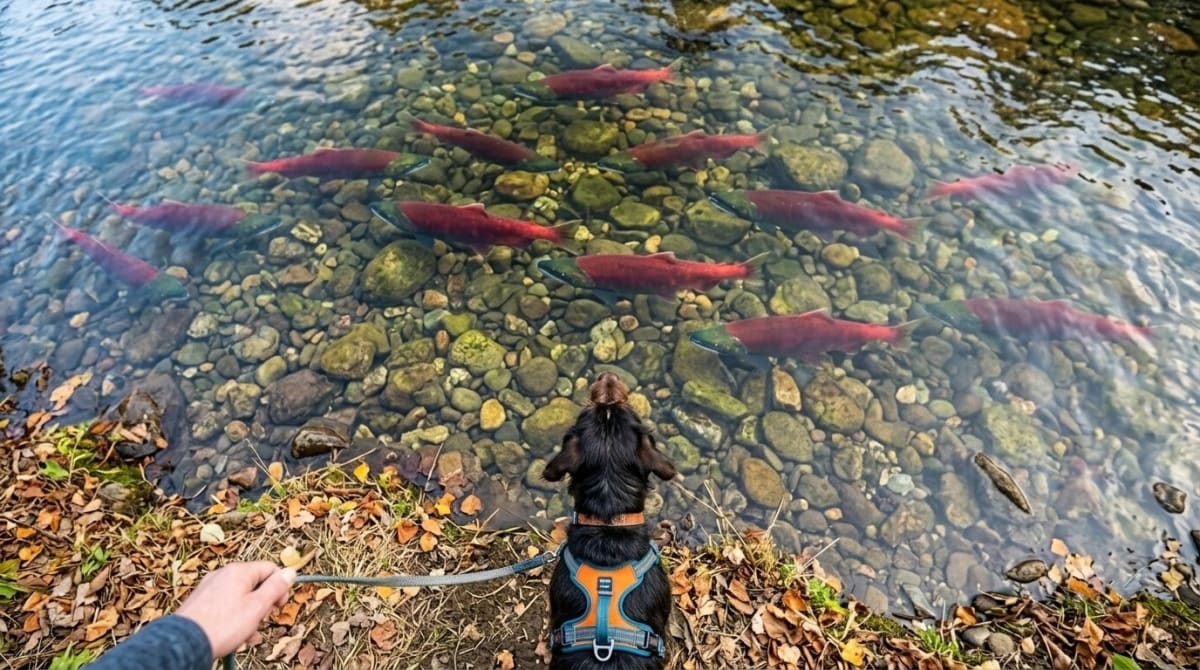
You spot a dead fish on the riverbank. Your dog licks it. Six days later they are fighting to survive. Salmon poisoning disease carries a 90 percent fatality rate if left untreated. We log miles in the Columbia River Gorge frequently with Jasper, our 95-pound German Shepherd. Keeping his snout out of spawning streams during fall runs is a non-negotiable rule for us. It is how we avoid catastrophic vet bills. The sickness stems from a distinct bacteria riding inside parasitic flukes that infect anadromous fish along the Pacific coast. Even brief contact with a washed-up carcass triggers a massive internal infection risk. We will map out the symptom timeline and the biological mechanism at work. Emergency veterinary intervention is the only option here.
Key Takeaways
- 1Clinical signs typically surface around day six, but the window can stretch from five days to a full month after exposure
- 2A parasitic fluke called Nanophyetus salmincola carries the actual killer, a rickettsial bacteria that invades the bloodstream and organs
- 3The risk zone runs west of the Cascades from Northern California through British Columbia, covering the Olympic Peninsula and the Oregon Coast
- 4Untreated dogs face a 90 percent mortality rate within fourteen days, but antibiotics and a dewormer bring most dogs back within two days
The Day-Six Symptom Timeline
Clinical signs rarely show up the moment a dog swallows infected fish. The incubation window lasts about six days. Problems can surface anywhere from one week to a full month post exposure. An abrupt spike in body temperature is usually the initial clue. Normal dogs run between 101 and 102.5 degrees Fahrenheit. Salmon poisoning routinely shoves that core temp past 104 degrees within hours.
Fever brings heavy lethargy. They stop eating. Jasper's baseline energy means a sudden refusal to touch kibble is a giant red flag. We saw exactly this after a Wind River trip where he had nosed a carcass on day one. He skipped dinner on day six. We were in the emergency vet's parking lot forty minutes later. We never wait to see if his hunger returns the next morning. Persistent vomiting and violent diarrhea typically follow the fever. The stool often holds blood. It might look dark and tarry or bright red depending on where the internal bleeding starts.
You might feel swollen lymph nodes. Check under the jaw or behind the knees for small hard lumps. This swelling happens as the immune system scrambles to fight off rapid bacterial replication pushing through the lymphatic pathways, an assault that eventually destroys the internal organs if the infection runs unchecked.
Dehydration hits hard at this stage. Gums turn pale and tacky. You cannot manage this decline at home. Nine out of ten dogs showing these indicators will die within two weeks without prescription pharmaceutical treatment.
The Fluke and the Bacteria
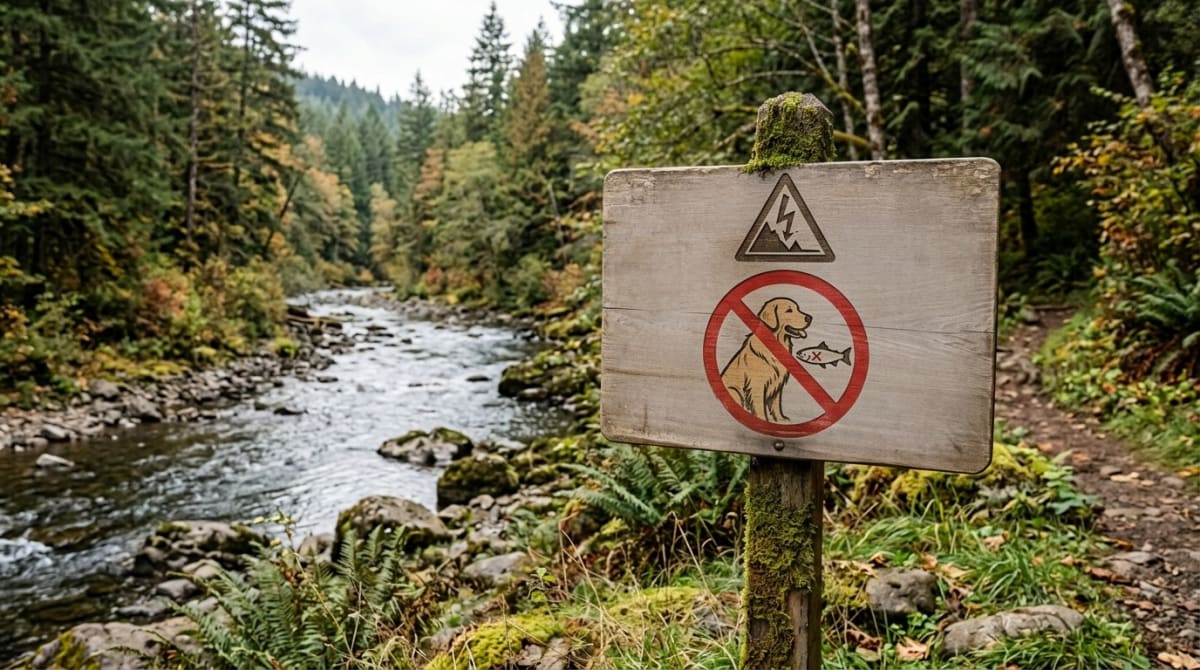
The name of this sickness is a lie. The salmon itself does nothing. Real danger arrives via a biological nesting doll situation. Anadromous fish pushing upstream to spawn often carry a parasitic fluke known as Nanophyetus salmincola. This fluke is mostly benign by itself. The actual killer is a rickettsial bacteria hiding inside that fluke, acting as a microscopic trojan horse built to slip past initial digestive defenses.
Eating raw infected meat prompts the fluke to dump this bacteria directly into the intestinal tract. It invades the bloodstream. It attacks the organs. Dogs do not need to swallow a whole trout to contract this bug. Licking a rotting carcass on a muddy riverbank transfers enough flukes to trigger a fatal infection. Scavenging discarded guts at boat ramps carries the exact same hazard. We keep Jasper strictly leashed around Washington coastal rivers during fall chum runs to manage this, because even ten seconds of unattended sniffing in the brush could force a huge bacterial load into his system. One bite holds thousands of microscopic flukes. The same stretch of river poses a second, unrelated risk worth knowing before you fill a collapsible bowl, since drinking from moving water carries its own parasite exposure.
Diagnosis and Emergency Treatment
Veterinarians usually spot this condition fast. They check a fecal sample or pull fluid from a swollen lymph node. The target is microscopic fluke eggs. Clinics rely on a two-part pharmaceutical punch. A vet will prescribe an antibiotic like a tetracycline drug to wipe out the bacterial infection hammering the immune system. They also hand over a dewormer to kill the parasitic flukes ferrying that bacteria around. You must finish both rounds.
Most dogs bounce back visibly within two days. Advanced cases often force a few days of intensive hospitalization. Clinics pump in intravenous fluids to fight off the critical dehydration. This answers the constant vomiting and diarrhea. Catching things early keeps the fix simple and cheap. It certainly costs less than managing late stage organ failure. Jasper's thick double coat hides weight loss incredibly well. That reality makes early behavioral shifts our best detection tool before dangerous dehydration sets in during a multi-day backpacking trip deep in the Cascades where emergency veterinary access simply does not exist.
Geographic Risk Zones
This pathogen demands a highly specific environment. It leans on a particular river snail named Oxytrema silicula to survive. The main danger zone sits west of the Cascade Mountain range, stretching from the damp rainforests of Northern California all the way up through the rugged coastal waterways of British Columbia. This blanket covers major hiking destinations like the Olympic Peninsula and the Oregon Coast. Inland lakes stocked with coastal trout present the exact same hidden hazard.
The threat covers all anadromous fish. This includes salmon, steelhead, cutthroat trout, and char. Any raw fish pulled from these watersheds is dangerous. The parasite actually survives freezing temperatures. Do not assume a frozen raw fillet is safe. Cooking the meat completely kills both the fluke and the bacteria. Never share a raw trail catch with a dog. Keep them off fishing docks. Watch them like a hawk near fish cleaning stations at coastal campgrounds.
Salmon poisoning is not the only riverbank hazard we watch for on fall trips through the Gorge. Damp streambanks in the same shaded forests also grow the toxic mushrooms that send dogs into organ failure, so we treat the whole understory as off limits during peak spawning season, not just the water's edge.
Frequently Asked Questions
Filed under

Kelly brings an engineering mindset to dog hiking gear. After thousands of miles with Jasper testing every harness, pack, and boot on the market, he knows what holds up and what fails.
References & Further Reading
- Salmon Poisoning — Washington State University Veterinary Teaching Hospital (2021)