 Paths & Paws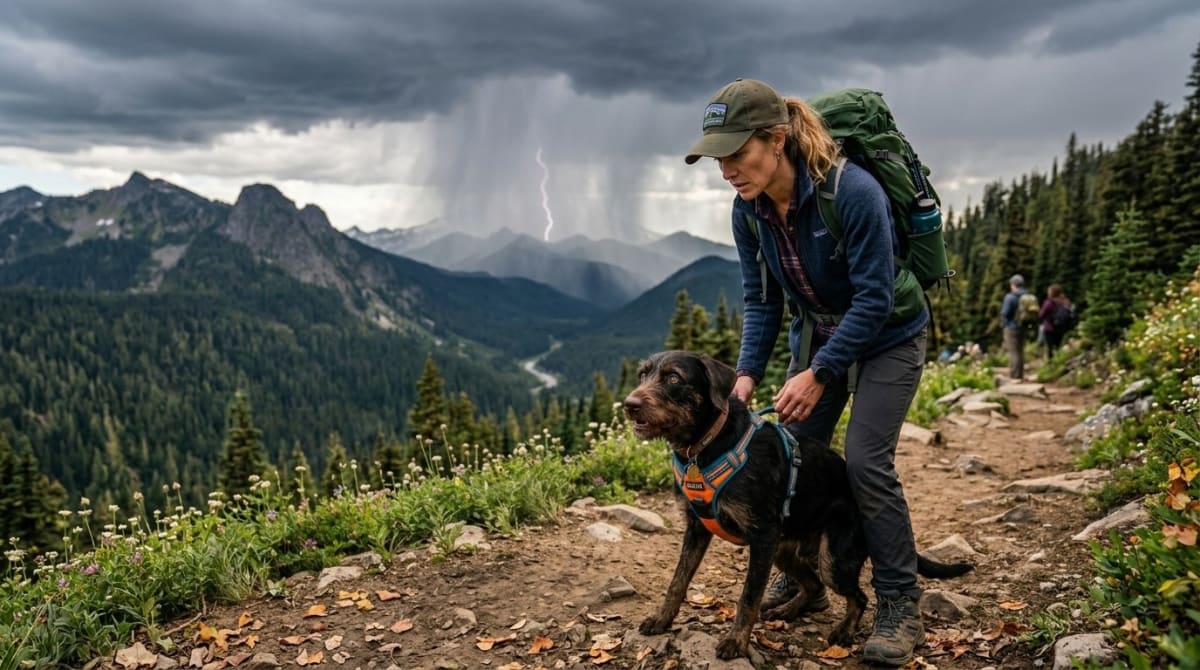
Weather turns fast on an exposed ridge. Add a panicked dog on the end of a leash and a terrifying situation becomes an absolute nightmare. If you want to keep a dog scared of thunder safe on the trail, you need to clip a secondary leash connection immediately and drop down into low-elevation tree cover. Grab them. Apply deep pressure with your chest and arms once you're on the ground.
We track behavior patterns in rescue dogs exposed to unexpected loud noises miles from the trailhead, and the data paints a pretty grim picture if you aren't prepared for the worst. A 2023 review in the journal Animals found nearly half of all pet dogs experience noise phobia. The backcountry strips away all their normal hiding spots. A dog can't retreat to a bathtub. They can't wedge themselves under a sofa. So they often just bolt blindly into the woods. We figured out how to manage this trail anxiety the hard way with our own rescue mix Scout, who used to shake violently the second she heard distant rumbling echoing off the mountainsides miles away. Applying evidence-based protocols to outdoor emergencies actually stops a panic attack before it triggers a dangerous flight response on a cliff edge.
Key Takeaways
- 1Clip a secondary leash and get to low tree cover immediately - a panicked dog on an exposed ridge is a runaway risk.
- 2Body pressure beats compression shirts on trail, which soak through in rain and lose all tension.
- 3Never chase a bolted dog. Stay put. They circle back to where they last saw you once the adrenaline drops.
- 4Cut the trip if the forecast shows 20 percent lightning chance or higher - one bad storm erases months of desensitization work.
The Backcountry Reality of Noise Phobia
Dogs don't rationalize noise. A loud thunderclap echoing off a canyon wall sounds like it's coming from everywhere at once. Their brain processes this acoustic bombardment as a real attack. Heart rates spike. Pupils blow wide open. They instantly enter a pure survival state, which perfectly explains why shouting commands at a frightened animal never actually works out there. They literally cannot hear spoken words over the deafening roar of their own nervous system. Drop the leash during that initial thrashing and you're suddenly looking for a terrified animal in a dark forest during a torrential downpour.
Never hike a skittish dog on a flat collar. If they panic and throw their weight backward during a thunderclap, they can slip a standard neck collar in a fraction of a second and disappear into the underbrush. We hike Scout in an escape-resistant harness. Managing a dog that reacts unpredictably to sudden stimuli shares a lot of overlap with hiking with a reactive dog — the leash and harness setup is nearly identical. That third strap sitting just behind the rib cage makes all the difference here. The structural design makes backing out physically impossible, giving us a baseline of mechanical security before the first raindrop even hits the dirt.
Immediate Management When the Sky Cracks
Lock down the leash connection first. Grab that leash tightly with both hands. Clip a backup carabiner from the handle directly to your backpack waist belt because a wet nylon strap slipping through freezing fingers when lightning strikes is a disaster waiting to happen. A panicked fifty-pound animal generates terrifying force. You need that mechanical backup to keep them from disappearing into thick brush.
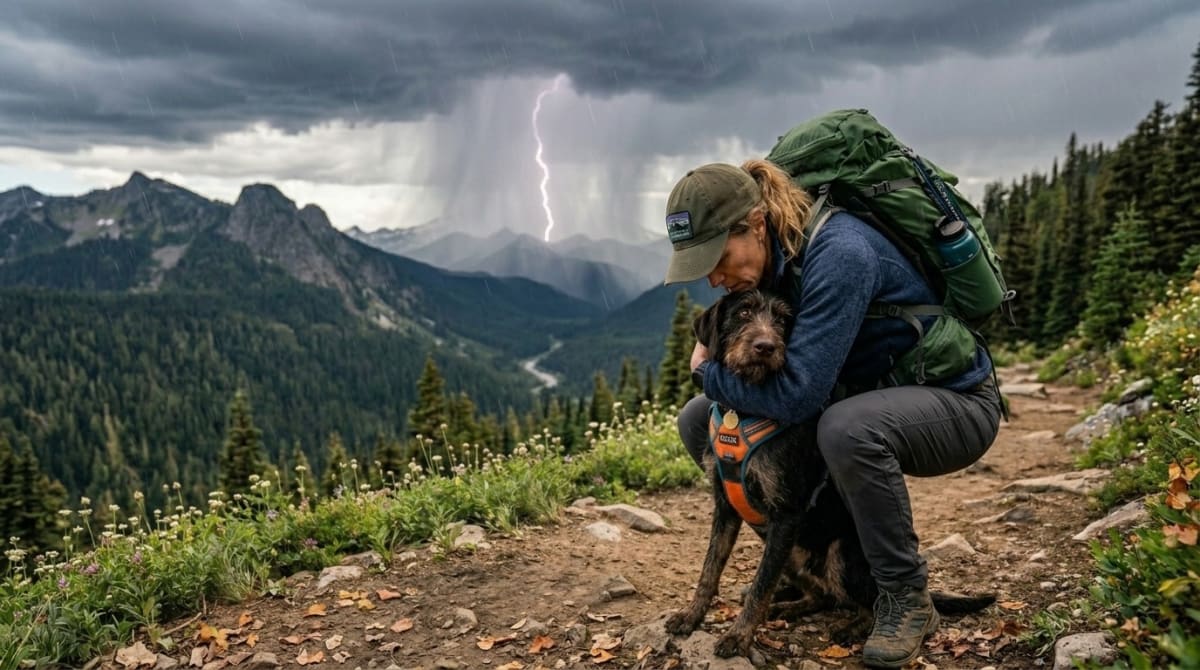
Get to cover fast. Don't sit under isolated tall pines. Drop into lower elevations and hunt for dense groves of smaller uniform saplings. Once you find a decent spot just sit in the mud and pull the dog hard against your chest. Apply steady pressure along their ribs. This deep pressure therapy mimics the cramped sensation of a secure den, and holding them like this consistently throughout the whole weather event actually helps drag their baseline heart rate down until the thunder finally passes. Stop the rapid petting. Dogs absorb our panic instantly. Take exaggerated slow breaths so they feel a steady heartbeat through the close contact.
Covering their eyes and ears cuts the sensory overload. We sometimes drape a dry rain jacket completely over Scout's head. Let them bury their face in an armpit if that works better for them.
The Truth About Compression Gear on the Trail
Lots of owners lean on compression wraps to calm their dogs in a dry living room. Take them into the backcountry and things get messy. A thick fabric shirt turns into a cold sponge during a heavy downpour, trapping freezing water right against the skin and creating a severe hypothermia risk when the temperature inevitably tanks. You really don't want to add a layer of soaking wet spandex to a shivering animal when you're stuck miles from the truck.
Gear isn't magic. We pushed several anxiety garments through wet trails and they basically all failed. Soaking wet elasticity just gives out. The fabric sags and drops all the deep pressure benefits you brought it for. Leave the thundershirts at home.
Use your body weight instead. When Scout starts shaking we just crouch in the dirt and wrap both arms tight around her chest. The mechanical compression keeps her warmer and gives us total control over the actual squeeze. You can adjust the grip minute by minute based on how hard they pant. We find this hands-on approach works better than a forty-dollar piece of wet fabric.
Desensitization Training for Future Hikes
You can't wait until lightning strikes the ridge to start training. The absolute best time to fix noise phobia is a boring Tuesday afternoon in a quiet bedroom. Systematic desensitization physically changes how the brain wires frightening sounds, and the 2023 Animals review strongly backs this slow exposure approach for permanent behavioral shifts if you have the patience to see it through. If you introduce the scary stimulus at a volume so quiet it barely registers in the room, the dog gets a chance to process the noise without dumping adrenaline into their bloodstream.
Start by getting a baseline. Play a thunder track on a phone at volume level one. Watch them closely. Kill the sound immediately if their ears pin back.
Then bring in the high-value rewards. Drop a lick mat covered in peanut butter and wait for them to engage before hitting play. Licking dumps endorphins into the canine brain to chemically fight the stress response. Build the duration up from two minutes to five without touching the volume button. Only dial it up a notch when they literally fall asleep or totally ignore the track.
Take it outside eventually. Run some obedience drills in the yard while the storm track plays in a pocket, teaching them to focus on the work rather than the background noise. Once they handle the artificial stuff, go hike in a light drizzle. Let them smell the ozone. Let them feel the barometric pressure drop without the deafening cracks overhead. Stacking these minor stressors slowly builds up real trail resilience until their nervous system recognizes the weather pattern without hitting the panic button.
Medical Interventions for Extreme Cases
Some dogs battle phobias so severe that endless training still fails. Talk to a vet about pharmaceutical help if your dog actively hurts themselves trying to escape storms. Most of us hate the idea of drugging a trail dog. We picture a sedated mess. Total sedation is incredibly dangerous on technical rock. A groggy animal can't navigate scree fields safely and runs a huge risk of blowing out a knee from a clumsy stumble.
But modern anxiolytics don't turn them into zombies. A 2024 Imepitoin trial in Animals showed that dialing in the right dose drops the fear response without destroying their coordination. You work with a vet to find the absolute minimum effective milligram count to stop the panic while keeping them sharp enough to hike safely back down the mountain to the car.
These drugs hit the anxiety receptors directly. The panic cycle gets cut off at the root. We keep a dose shoved in our wilderness first aid kit and give it to Scout if dark clouds pop up out of nowhere. It shaves the sharp edges off her terror so she can walk out under her own power. Test any new prescription at home first to see how much it messes with their balance.
What To Do If the Dog Bolts During a Storm
Equipment fails even when you do everything right. A leash clip snaps or a carabiner gate sticks and suddenly a terrified animal vanishes into the timber. It is the absolute worst case scenario. What you do in the next sixty seconds dictates whether you ever see them again.
Do not run after them. A panicked dog sees a chasing human as just another predator and they will push deeper into the brush to get away. Plant your feet. Stay right there. When dogs bolt from pure terror they run blind until the adrenaline burns off, and then they usually circle back to the exact spot they last saw you. Wandering off the trail while screaming their name just destroys that rally point.
Sit on your pack. Wait out the rain right there. Try calling them in an upbeat tone once the thunder finally rolls past. A terrified dog won't come out of hiding for an owner who sounds angry. Forcing yourself to sit perfectly still while your best friend is missing takes brutal mental discipline, but it stops you from getting lost and gives them a stationary target to sniff out.
Drop a heavy scent item if you absolutely have to hike out for search and rescue. We stash an unwashed sleeping shirt in a dry bag for exactly this reason. If Scout ever vanished into the dark, that dirty shirt stays right where she bolted with a bowl of water next to it. Since dogs navigate the landscape primarily through their nose, a lost pup wandering back down the trail hours later will usually anchor themselves right next to an object that reeks strongly of their handler.
Knowing When to Postpone the Trip
The only foolproof way to handle a terrified dog in a storm is staying out of the weather entirely. We aggressively check the radar before touching the trailhead. Mountain weather flips fast. A perfectly blue morning routinely mutates into a violent electrical cell by early afternoon. Reading the radar gives you a chance to pull the plug before things get ugly.
We run a hard cutoff rule. Scout stays home if the app shows a twenty percent lightning chance. We might still go grind out the miles ourselves and hike the loop, but putting her in a dangerous situation that risks a major behavioral setback just isn't worth the brief satisfaction of bagging a single peak. One terrible afternoon pinned down on an exposed ridge easily erases six months of slow living room desensitization work.
Count the seconds when you see a flash. Under thirty seconds means the cell is inside six miles. You are in the strike zone. Seek shelter immediately.
Keep your head up on the trail. Watch for that abrupt icy temperature drop. Wind snapping backward is a classic tell for an approaching squall. Turn around the second you hear that low rumble in the distance. A summit photo is never worth traumatizing your dog.
Frequently Asked Questions
Sarah is learning to hike with dogs alongside her readers. Scout is her first trail companion, and she shares every mistake, success, and lesson learned along the way.
References & Further Reading
- Therapy and Prevention of Noise Fears in Dogs - A Review of the Current Evidence for Practitioners. Animals 2023 — Animals (2023)
- Pilot Study on the Efficacy and Safety of Long-Term Oral Imepitoin Treatment for Control of (Thunder)Storm-Associated Noise Phobia/Noise Aversion in Dogs Using an Individualized-Dose Titration Approach. Animals 2024 — Animals (2024)