 Paths & Paws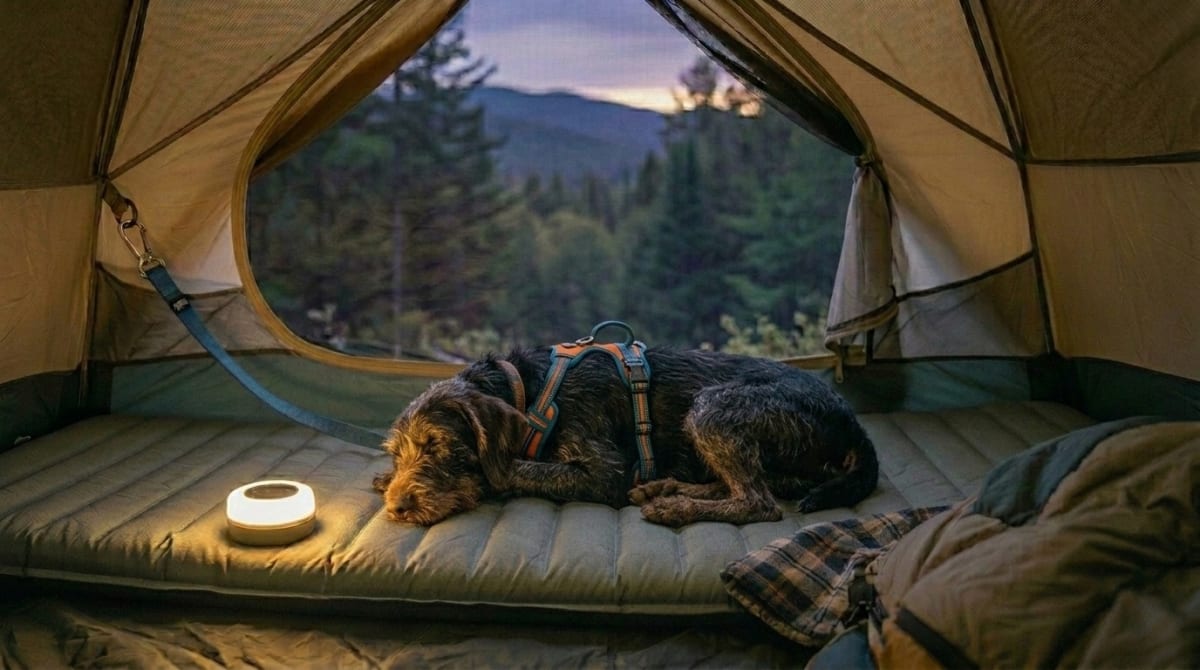
Most folks assume a dog will just settle down once inside a tent. They toss a favorite bed on the floor and zip the door shut. Bad idea. Two hours later a raccoon snaps a twig in the brush. The startled dog panics and blasts right through the expensive bug netting because nylon walls simply do not compute for animals. We learned this the hard way on our first trip with Scout, an energetic 50-pound rescue who practically dismantled our shelter in the Cascades after hearing a deer forage near camp. Surviving that first night requires strict management. Secure the dog using a tether attached to a vest. Lock the zippers. Create a sleep spot far away from the doors. A 2020 study in Scientific Reports tracking over 13,700 dogs found that fear of novel situations is one of the most common anxiety triggers, with 12 percent of dogs showing severe neophobia. A structured introduction prevents the panic entirely.
Key Takeaways
- 1Never tether a dog by their collar overnight - use a padded escape-proof vest with a back attachment to prevent neck injury if they bolt at a sudden noise
- 2Scout dismantled our Cascades shelter before we learned to use screw-gate carabiners on zipper pulls - standard clips are too easy for smart dogs to nose open
- 3Start tent acclimation at home a week before the trip - once curiosity replaces fear, dogs will bring their own toys inside on their own
- 4A foam pad under the dog bed is non-negotiable - dogs lose body heat to cold ground fast, and a freezing dog is a whining-all-night dog
What You Need to Secure the Dog
Proper gear manages their movement and protects the flimsy shelter walls.
Their Regular Sleeping Mat
Bring a bed they already sleep on at home. The recognizable scent gives them an anchor when the woods get weird. We slide a closed-cell foam pad underneath the bed to block the chilled earth. Dogs will flat out refuse to sleep if the floor pulls heat away from their bodies. Cut down a cheap foam sleeping pad so it fits the bed dimensions exactly. 40 degrees feels like freezing on bare nylon.
Interior Tether
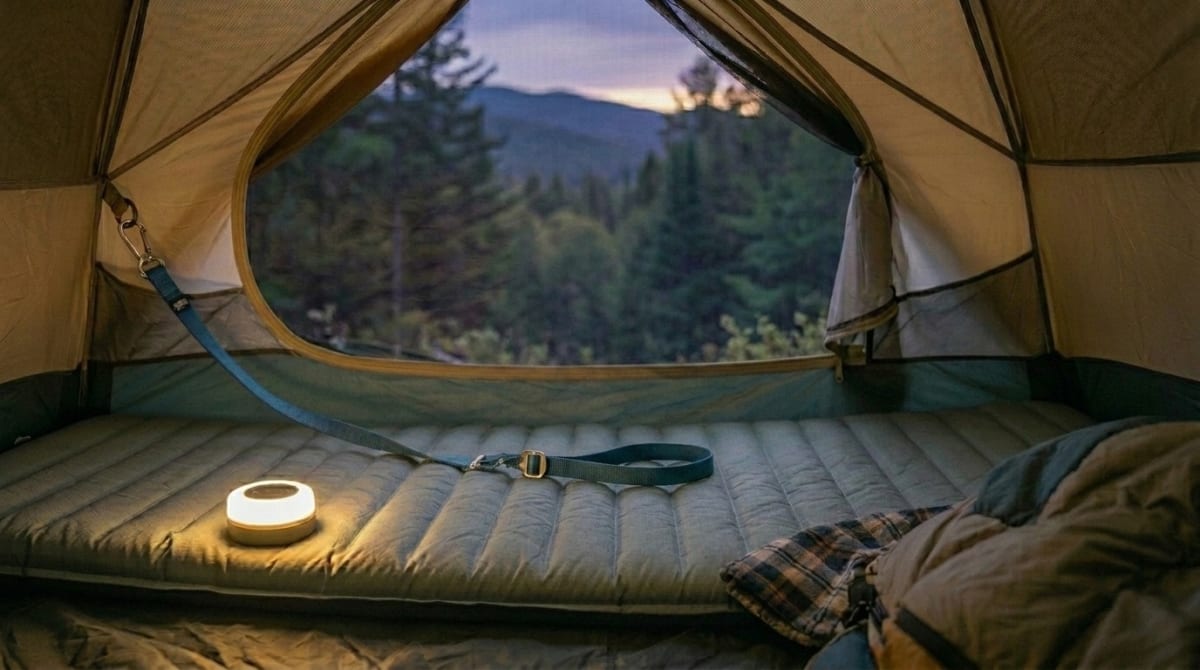
A standard leash is way too long for cramped tent use. We run a two-foot section of static climbing cord or a chew-proof line. This setup keeps the dog confined to the sleeping spot without allowing enough slack to reach the fragile netting and claw their way out while panicking at a sudden noise. Three feet of line defeats the entire purpose.
Locking Carabiners
Smart dogs figure out zippers alarmingly fast. We use two secure clips to lock the door zippers together. A standard clip is not enough security. Choose the screw-gate style so a curious nose cannot bump the mechanism open in the dark. Compact aluminum climbing carabiners add barely any weight to the pack while providing absolute security against escape artists.
Sleep Vest
Never tether a dog by their collar overnight. If they bolt toward a sound they could suffer severe neck injuries before the line stops them. Bring a padded escape-proof vest designed for sleeping. Back attachment points are what make the difference here. A front clip just tangles the line around their legs while they turn in circles trying to lie down. 500-denier nylon holds up best.
Step-by-Step Acclimation and Setup
We never introduce the tent at the actual campsite. The dog absolutely needs to understand the space before traveling miles from home.
Step 1 - The Living Room Introduction
Set the shelter up inside the house a week before the trip and leave the doors wide open. Toss high-value treats inside. Let the animal explore the space freely. We ran this drill with Scout for three solid days until she started bringing her chew toys inside on her own. Curiosity works faster than any command.
Step 2 - The Backyard Dry Run
Move the setup to the backyard. Zip the doors shut while sitting inside together. Practice the tethering mechanics. Clip the line to the vest and attach the other end to a reinforced gear loop near the floor. Read a book for thirty minutes while enforcing the stay command so the dog understands they must remain calm while confined, even when they hear everyday neighborhood noises outside.
Step 3 - Exhaustion on Arrival
Take a punishingly long hike upon arrival at the campsite before setting up the sleep area. In our experience Scout needs at least four miles of hiking before she will even consider settling down in a strange environment. Burn off that anxious energy before the sun drops. An exhausted dog has way less energy to fixate on snapping twigs. If you're not sure how far is enough, our guide on signs your dog is getting too tired on trail helps you read the signals before you pitch camp.
Step 4 - Final Nighttime Securing
Move the dog into the tent right before sleep. Clip in. Zip the doors shut and drag the zipper pulls to the top corner. Attach the screw-gate carabiners through both zipper pulls and screw them closed tightly. We position ourselves between the dog and the door to act as a physical buffer. Scout sleeps two feet from my head.
Common Mistakes to Avoid
Letting a dog free-roam inside the tent causes the vast majority of ruined nights. A loose dog will pace and stomp all over sleeping pads. The delicate netting is virtually invisible to them in the pitch dark. If they see a shadow move outside they will try to walk right through the wall to get to it. The short tether kills this pacing behavior entirely. Restrict their movement. Stop the panic before it starts.
Leaving the zipper pulls at the bottom of the door is a massive beginner error. Dogs will sniff the gap where the zippers meet. Their wet noses easily push standard zippers apart in seconds. We always zip the doors so the pulls meet at the absolute highest point of the tent arch. This keeps the mechanism entirely out of reach. Dogs just lack the dexterity to pull zippers down from above their heads.
Failure to set up a physical barrier destroys sleep. Do not put the dog bed right next to the wall. We set up the sleeping pad in the middle or back of the tent so humans sleep closer to the vulnerable doors. The dog will feel significantly safer knowing people are sleeping between them and the bizarre forest noises outside, which drastically reduces their primal urge to guard the unfamiliar environment.
Temperature drops lead to relentless whining. Dogs lose massive amounts of body heat to the cold ground. If a dog starts whining at three in the morning they are almost certainly freezing. Always place a thermal barrier between the bed and the tent floor. A thick fleece blanket piled on top of a foam pad creates a reliable heat trap. We use a pad with an R-value of 4.0. Dogs that struggle most with tent anxiety often show the same leash reactivity patterns on trail - the hiking with a reactive dog framework for managing environmental triggers transfers directly to the tent environment.
Frequently Asked Questions
Filed under
Sarah is learning to hike with dogs alongside her readers. Scout is her first trail companion, and she shares every mistake, success, and lesson learned along the way.