 Paths & Paws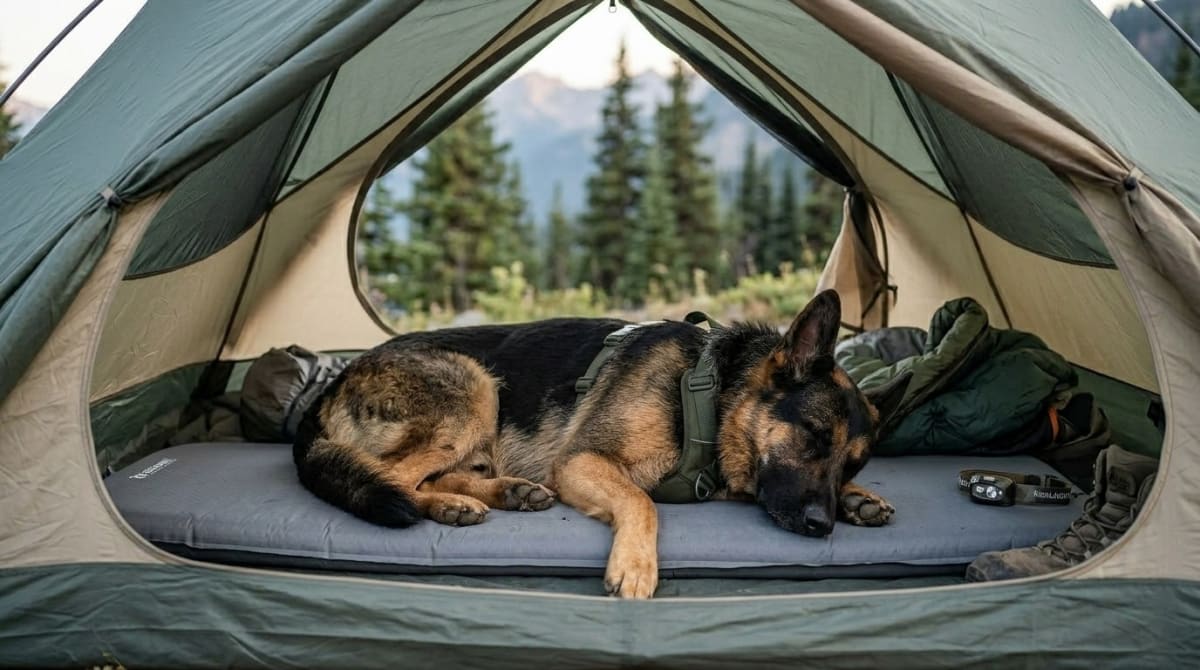
A lot of backpackers assume a thick fur coat replaces the need for sleeping gear. We tracked ground temperatures and shivering rates in our own dogs over three hiking seasons to figure out overnight heat loss. The results surprised us. The dirt steals heat fast. When a tired dog lies directly on cold ground after a twenty-mile day on the trail, their core temperature plummets rapidly and leaves them exhausted and stiff before the next morning's miles even get a chance to begin.
Key Takeaways
- 1Ground conduction pulls warmth from a resting dog much faster than cold air alone.
- 2Short-haired breeds start losing core heat on bare ground when overnight temperatures dip below 50 degrees Fahrenheit.
- 3A cut-down closed-cell foam pad weighs less than five ounces and provides enough insulation for three-season trips.
- 4Senior dogs and puppies need extra insulation - poor circulation and underdeveloped thermoregulation make them vulnerable on ground temperatures that healthy adult dogs handle without issue.
The Science of Ground Chill
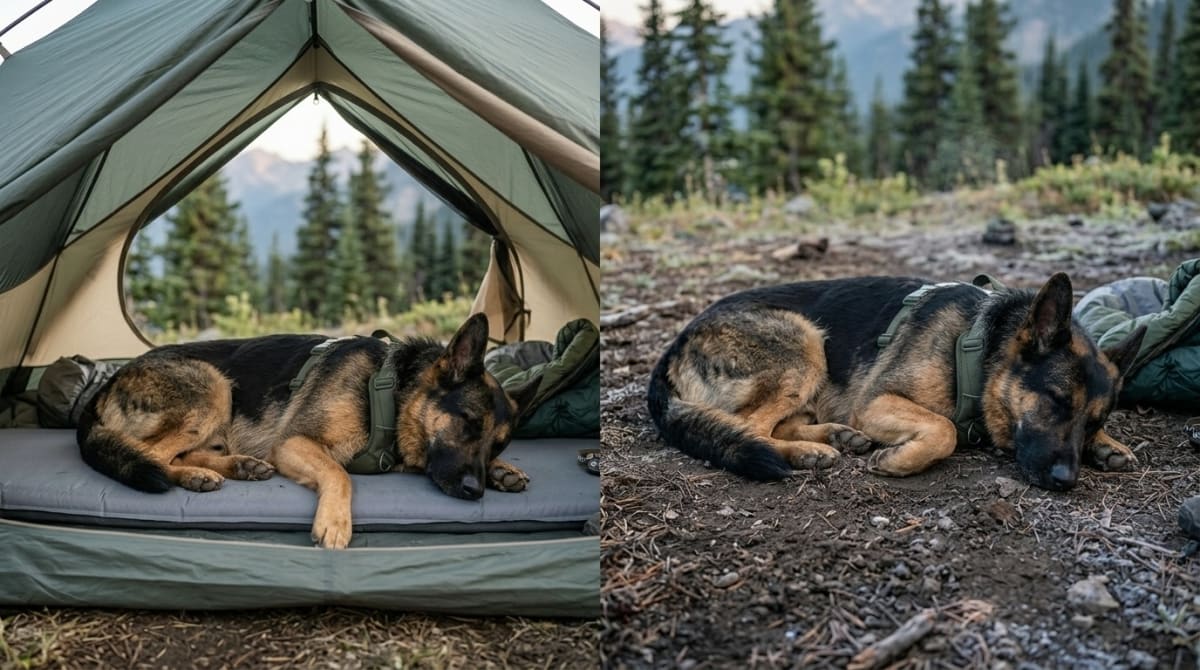
Ground conduction is relentless. Convection happens when cold wind blows across the body, while conduction happens through direct contact. Dirt and rock act like giant heat sinks. They pull thermal energy out of a resting animal much faster than cold air does. When dogs curl into a tight ball, they reduce their surface area to fight off convective heat loss. This instinct works beautifully against cold breezes. But curling up does absolutely nothing to stop conductive heat loss into the earth below them. The ground just keeps drinking their body heat.
Place a bare hand on a shaded boulder. The sudden chill you feel is thermal energy leaving the skin, and dogs experience that exact drain across their entire underbelly. A 2023 study in Veterinary Research Communications found that small dogs burn a significant portion of their daily calorie intake just to generate enough heat to offset this constant thermal drain into the dirt. If a dog spends the entire night burning calories just to stay warm, they wake up already depleted for whatever difficult trail miles await them the following day. Our guide to high-calorie snacks for hiking dogs covers how to offset that energy deficit, but the better fix is stopping the heat loss in the first place.
Coat Types and Temperature Thresholds
Dog fur works by trapping air. The undercoat creates a microscopic grid that holds body heat close to the skin. You have to look at the specific dog. Double-coated breeds possess a dense undercoat that actually resists compression under their own body weight. Huskies, Malamutes, Pyrenees, and Golden Retrievers can comfortably sleep on bare ground well down toward freezing. Their fur is a natural foam pad. When they lie down the coarse outer guard hairs protect the soft undercoat from totally flattening out.
Single-coated dogs face a much harsher reality on the trail. Breeds like Pointers, Boxers, Pitbulls, and Vizslas have exposed bellies that press right into the dirt. They lack that structural undercoat layer completely. For these dogs, ground insulation becomes mandatory the moment overnight temperatures dip below 50 degrees Fahrenheit. Because small dogs drop heat much faster due to their high surface area to mass ratio, our trail time found our thirty-pound terrier shivering at 55 degrees without a pad, while our sixty-pound retriever slept perfectly fine right on the bare tent floor at freezing. For a broader look at how temperature shapes the go or no-go decision, our breakdown of how cold is too cold to hike with a dog covers the thresholds by coat type.
How Age and Size Alter Insulation Needs
Puppies and senior dogs face an entirely different set of thermal challenges in the backcountry. A young puppy lacks a fully developed ability to regulate core temperature, meaning they lose heat incredibly fast and struggle to warm themselves back up once that deep chill finally sets in. Their nervous system is still figuring out how to manage shivering responses. Senior dogs deal with poor circulation and declining muscle mass. Muscle generates heat. Without it, an older dog will shiver on a cool surface that a younger dog would happily snooze on.
These changes matter. Because small dogs have a much higher surface area compared to their total body mass, they dump warmth into the dirt at an alarming rate and require thicker sleeping pads than the bigger breeds. We always add extra foam layers for our senior dogs to protect their arthritic joints from the unforgiving ground. The padding provides orthopedic relief right alongside the thermal benefits. Joint pain makes cold nights feel much worse. Our full guide to backpacking with a senior dog covers the complete system for managing aging joints on multi-day trips.
Affiliate Disclosure: Paths & Paws earns commissions from qualifying purchases made through links on this page. This supports our field testing and does not affect our recommendations. We only recommend gear that passes our trail testing standards. Learn more
The Lightest Backpacking Options
Pack weight dictates every gear choice we make. A massive pet bed is dead weight. The most popular ultralight option out there is closed-cell foam. A standard accordion-style foam sleeping pad sliced right down the middle gives a dog a dedicated sleeping spot while adding less than five ounces to the overall weight of the pack. Foam takes constant abuse from sharp claws and jagged rock without failing. It cannot pop.
Sharing an expensive inflatable backpacking pad with a dog introduces a massive puncture risk that could leave everyone sleeping on the freezing ground twenty miles away from the nearest trailhead. Some hikers try covering their inflatables with fitted sheets or tough blankets. We found carrying a separate foam section is just far more practical for everyone involved.
Another solid option is Evazote foam. This material comes in thin sheets that weigh next to nothing. You can buy a thin sheet of Evazote and fold it over twice to dial in a custom fit. The R-value measures how well a pad resists heat flow. A standard foam pad sits at an R-value of around two. This rating keeps them safe during typical summer and fall trips in the mountains.
DIY and Budget Solutions
Hiking gear burns through cash fast. We often build DIY dog insulation instead. Hardware stores sell rolls of reflective bubble insulation that work surprisingly well for trail dogs. This stuff weighs practically nothing and reflects radiant body heat right back up into the animal. Tape two layers together with strong duct tape. Cut the rectangle to fit the dog perfectly. This creates a custom footprint that matches whatever corner of the tent they claim.
Another dirt-cheap alternative involves grabbing a used foam yoga mat from a local thrift store. While a yoga mat will not offer anywhere near the thermal resistance of a dedicated camping pad, folding it over on itself creates a sufficient thermal break between a single-coated dog and the damp dirt during mild summer nights. You can also hack up old foam egg-crate mattress toppers. Just cut a section out and stuff it inside a tough nylon stuff sack. The sack acts as a protective shell against tearing while the dog scratches in circles trying to get comfortable.
Keeping the Dog on the Pad
Buying the pad is just step one. Getting a dog to stay on it all night requires strategy. Dogs naturally seek out the coolest or warmest pocket of air inside the tent depending on what their body needs right then. If a dog wanders off their foam pad at 2 AM, they might simply be too hot. Let them regulate their own temperature. But if they are shivering on the nylon floor, we intervene.
We train our dogs to recognize their trail bed by leaving the foam pad in the living room and tossing their favorite fleece blanket over it for a few weeks before the first camping trip. This simple association builds a surprisingly strong habit. When they see that specific pad in the tent, they know exactly what to do. Getting a dog fully comfortable inside a tent before the first overnight is worth doing in advance - our guide to getting a dog to sleep in a tent covers that foundation training. Out on the trail we place their pad down near our feet to create a natural physical boundary. Sometimes we use our own empty backpacks to build a small retaining wall around their sleeping area. This barrier keeps them from slowly sliding off the foam while they dream.
Balancing Pack Weight Against Warmth Benefits
Every ounce matters when loading a backpack. You have to weigh the penalty of carrying a dog pad against the massive performance loss of a cold dog. A freezing dog simply will not sleep. They will pace around the tight confines of the tent, wake the camp repeatedly, whine at the mesh door, and drag their paws on the trail the next morning. Sleep deprivation ruins backpacking trips fast. Hauling a four-ounce section of foam padding is a ridiculously low price to pay for making sure a dog wakes up rested and ready to crush miles instead of shivering in a corner until sunrise.
Look at the rest of the gear load. We see hikers hauling dense canvas dog toys or massive steel food bowls deep into the backcountry. You can easily save weight by ditching those luxury items at home and prioritizing thermal protection instead. We consider a basic sleeping pad mandatory gear for three-season trips. The warmth benefits heavily outweigh the minor pack weight bump. For single-coated dogs, trading four ounces of pack weight for eight hours of uninterrupted sleep is the easiest gear decision you can make.
Season-by-Season Guide to Dog Sleeping Pads
Spring and fall trips introduce wildly unpredictable ground temperatures. The afternoon air might feel warm, but the earth itself often holds onto that deep winter chill. During these shoulder seasons, our packs always include a closed-cell foam pad for the single-coated dogs.
Summer backpacking changes the rules completely. The ground absorbs solar heat during July and August. A pad might actually make a dog too hot. Watch their behavior closely. If a dog moves off the padding to sprawl out on the bare tent floor during a mid-summer trip, they are just using the dirt as a natural cooling system and do not need the extra insulation.
Winter camping demands an entirely different strategy. Foam alone will not keep a dog safe on snow. We combine an insulated inflatable pad with a foam top layer and a wearable dog sleeping bag to stave off hypothermia. The snow pulls heat away with terrifying speed.
Frequently Asked Questions
Kelly brings an engineering mindset to dog hiking gear. After thousands of miles with Jasper testing every harness, pack, and boot on the market, he knows what holds up and what fails.
References & Further Reading
- Effect of different masses, ages, and coats on the thermoregulation of dogs before and after exercise across different seasons. Vet Res Commun 2023 — Veterinary Research Communications (2023)