 Paths & Paws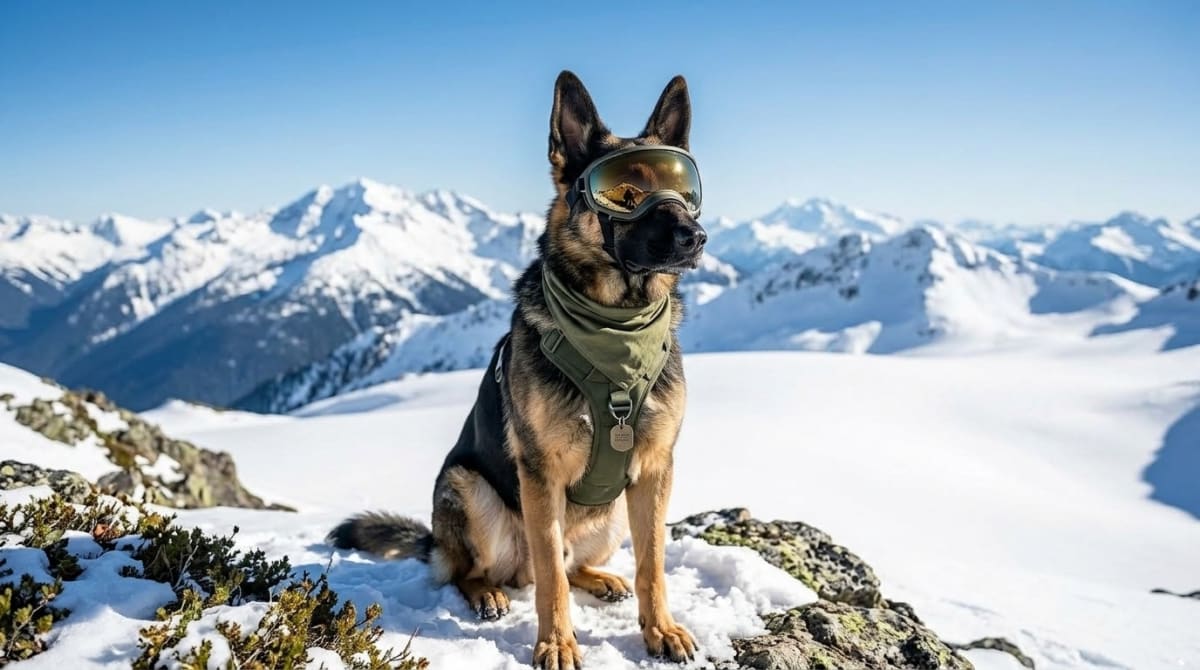
Reflected sunlight off winter snowpack doubles the UV dose a dog takes on the trail. It burns cells fast. Acute snow blindness is basically a painful corneal sunburn developing within hours of high-altitude exposure, leaving the dog squinting in agony while the top protective layer of their eye literally peels away. We tracked ultraviolet indexes across winter routes above 5,000 feet to measure the real-world risk. A baseline reading of four at the trailhead spikes to an effective rating of eight the second you hit an open snowfield. Jasper is a 95-pound German Shepherd. His breed carries a genetic predisposition for chronic eye disease triggered by sunlight. We had to figure out this environmental math before ever taking him into the alpine zone.
The veterinary data points to two distinct problems. First is acute photokeratitis. The second is chronic superficial keratitis. Hikers crossing the snowline need to grasp both. We broke down the high-altitude triggers below, along with the exact training protocol we used to get a large working dog to actually tolerate wearing goggles. Eye protection demands patience. Rush the introduction and you fail.
Key Takeaways
- 1UV radiation increases 10% per 1,000 meters of elevation, then fresh snowpack doubles the dose again by reflecting it upward at low angles the brow bone cannot shade.
- 2Acute photokeratitis symptoms appear 4-12 hours after the hike - check your dog that evening, not just on the trail.
- 3German Shepherds and other breeds prone to pannus need goggles any time the UV index hits 3 or higher over open snow.
- 4Spend four full weeks acclimating to goggles before the alpine season - rushing the introduction causes panic and frame rejection.
Acute Snow Blindness vs. Chronic Disease
Photokeratitis operates on a delay. The damage happens during the climb but the symptoms erupt long after you drive home. We learned to watch for specific signs when checking Jasper that evening.
Acute snow blindness strikes when UV light kills the outermost cells of the cornea. Those dead cells slough off. That leaves the sensitive nerve endings fully exposed to the air. Dogs cannot tell us their eyes are burning. We have to read their behavior on the trail and back in the living room since the worst symptoms usually appear four to twelve hours after the initial sun exposure.
The earliest warning sign is light sensitivity. An affected dog will avoid lamps in the house and bury their face deep in their bed. If you lift their chin they squeeze their eyelids shut. The white part of the eye turns dark red. The clear surface of the cornea gets cloudy and loses its normal reflective shine. Watch the third eyelid closely. It often protrudes across the inner corner.
The pain is intense. Humans who get snow blindness describe the sensation as having a handful of crushed glass rubbed directly into their corneas, and a dog feels that exact same mechanical friction every single time they try to blink. They rub their face along the carpet. They whimper constantly. Acute cases usually heal within a few days with veterinary care. The vet prescribes antibiotic drops to stop infection in the damaged tissue and they offer strong pain management medication. Never use human eye drops on a dog.
The long-term threat is chronic superficial keratitis. Vets call this immune-mediated disease pannus. The body essentially attacks its own cornea. Ultraviolet light acts as the primary trigger pushing this condition forward, speeding up the growth of abnormal blood vessels and dark pigment across the surface of the eye until it blocks vision entirely. A 2011 study in Veterinary Ophthalmology evaluated UV-blocking contact lenses to manage the progression of this disease in affected dogs. We use goggles instead. Jasper's breed makes up the vast majority of pannus cases so prevention is non-negotiable for us. We monitor his eyes constantly for any grayish-pink film forming at the outer edges. The pigment starts as a slight discoloration looking like a shadow spreading across the cornea. Left untreated the surface turns dark brown and the dog goes blind.
The Physics of Altitude and Snow Reflection
UV radiation increases by roughly ten percent for every thousand meters of elevation gain. The atmosphere gets thinner up high and filters out fewer harmful rays before they hit the dirt. That handles the light coming down from the sky. The bigger issue is the light bouncing back up from the ground.
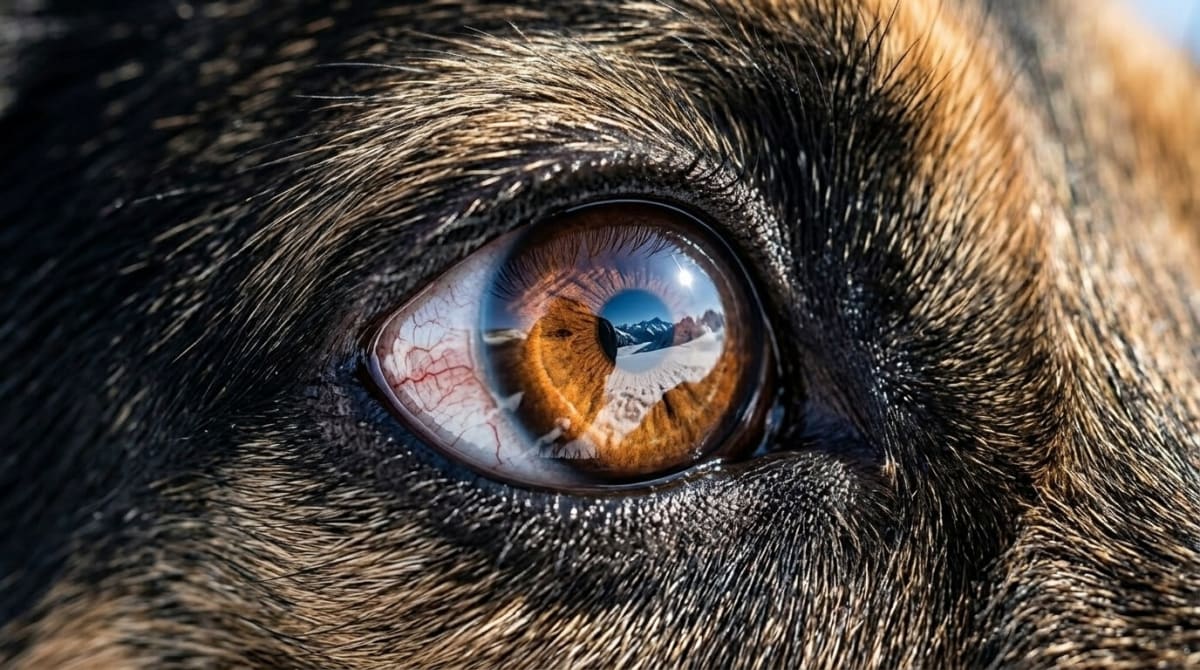
Fresh snow is highly reflective. Water reflects a fraction of the sunlight, and dry sand bounces back slightly more, but fresh winter snow is a near-perfect mirror that fires raw ultraviolet radiation straight upward into the ocular cavity. It multiplies the threat. When we hike the Cascade volcanoes with Jasper the numbers become threatening fast. At six thousand feet the baseline radiation is already cranked up. The snowpack then bounces those intensified rays upward. These rays hit the eye from low angles that the brow bone simply cannot shade. This upward bounce circumvents the natural structural protection of the canine skull.
Dogs with light-colored eyes lack the melanin required to filter this incoming energy. Eyelash protection is also missing in many short-haired breeds. They take the full hit of the radiation. UV damage is not the only alpine risk - our guide to dog altitude sickness covers the respiratory and cardiovascular threats that compound the same high-elevation conditions.
When Do You Actually Need Goggles
Not every winter walk requires gear. You do not need to strap goggles on a dog for a quick lap around a snowy neighborhood block. If you are still figuring out whether the day is safe to hike at all, our cold weather hiking guide covers the temperature and wind chill thresholds to use before you even leave the driveway. The exposure time is too short and the altitude is too low.
The risk profile shifts heavily when you combine time, elevation, snow conditions, and open terrain. We follow a strict operational threshold with Jasper. If we are hiking above the timberline on a bright day the goggles go on. Trees provide natural shade and break up the incoming rays. Once you climb out of the trees that canopy vanishes. The sky opens up and the snowfield stretches out in all directions. A dog has nowhere to hide from the glare.
Overcast days are dangerous too. Clouds filter visible light but let plenty of UV radiation punch right through. We measure the UV index before leaving the truck. If the index reads three or higher over snow Jasper wears his gear.
You also have to factor in the physical height of the animal. Jasper stands tall at his shoulders. A smaller dog sits much closer to the ground, which puts their sensitive eyes mere inches from the reflective snow surface and drastically increases the intensity of the bounced radiation hitting their face.
Affiliate Disclosure: Paths & Paws earns commissions from qualifying purchases made through links on this page. This supports our field testing and does not affect our recommendations. We only recommend gear that passes our trail testing standards. Learn more
Selecting the Right Eye Protection
You have to buy gear built for canine anatomy. Human ski goggles will never fit a dog's skull. They gap at the sides and let stray light leak through the edges.
We run Rex Specs for Jasper. The spherical lens shape gives him a huge field of view so he looks around freely. The frame rests firmly on the solid bone structure of his face. This rigid placement stops painful pressure from mashing into the soft tissue around his eyes while he runs. You need to check the seal around the muzzle carefully. The goggles should sit flush against the fur. If a finger slides easily between the foam and the cheek the fit is too loose. Snow and ice will kick up inside the lens.
The strap system makes or breaks the setup. A proper set of goggles will have a dual-strap design where one strap wraps around the back of the head while the second strap anchors securely under the jaw, preventing the entire frame from shifting sideways every time the dog shakes off loose snow.
Ventilation matters heavily on long climbs. Dogs pant to dump body heat. That moisture rises right from their mouth and fogs up the lenses. Look for frames with wide mesh venting along the top and bottom edges. The airflow clears the condensation. Replace the lenses the second they get scratched. Scratched plastic scatters incoming light and forces the eye to work far harder. We keep a spare lens in our pack just in case Jasper drags his face through a dense pine branch.
How We Trained Jasper to Wear Goggles
You cannot just strap goggles onto a dog at the trailhead. They will panic and paw at the straps until the frames snap. We spent four weeks acclimating Jasper to his eyewear before we ever took him near the snow.
Frame Introduction
Start without the lenses. Buy frames with interchangeable plastic lenses and pop them out. Let the dog sniff the empty frame then hand over a high-value treat. Slip the frame over their head for two seconds. Reward them again and pull the gear off immediately.
Building Positive Association
The dog needs positive associations. We fed Jasper his dinner while he wore the empty frames and we played fetch in the backyard to keep his mind locked on a task. He learned the goggles meant good things. Do not force it. If the dog freezes and refuses to walk just take the goggles off and try again tomorrow.
Adding the Clear Lenses
Once he ignored the frames entirely we snapped the clear lenses into place. The weird reflection off the plastic will confuse them at first. Keep them distracted with steady movement by walking around the block at a fast pace.
Switching to Tinted Lenses
The tinted lenses always come last. We waited two full weeks before swapping to the dark UV-blocking inserts, and we made sure to put them on right before leaving the house so Jasper associated the dark lenses with hitting the trail. If he pawed at the goggles the walk stopped dead. When he left them alone we moved forward. He figured out the rules within a few days. Now he rests his chin on my knee when I pull the goggles out of my pack.
Frequently Asked Questions
Kelly brings an engineering mindset to dog hiking gear. After thousands of miles with Jasper testing every harness, pack, and boot on the market, he knows what holds up and what fails.