 Paths & Paws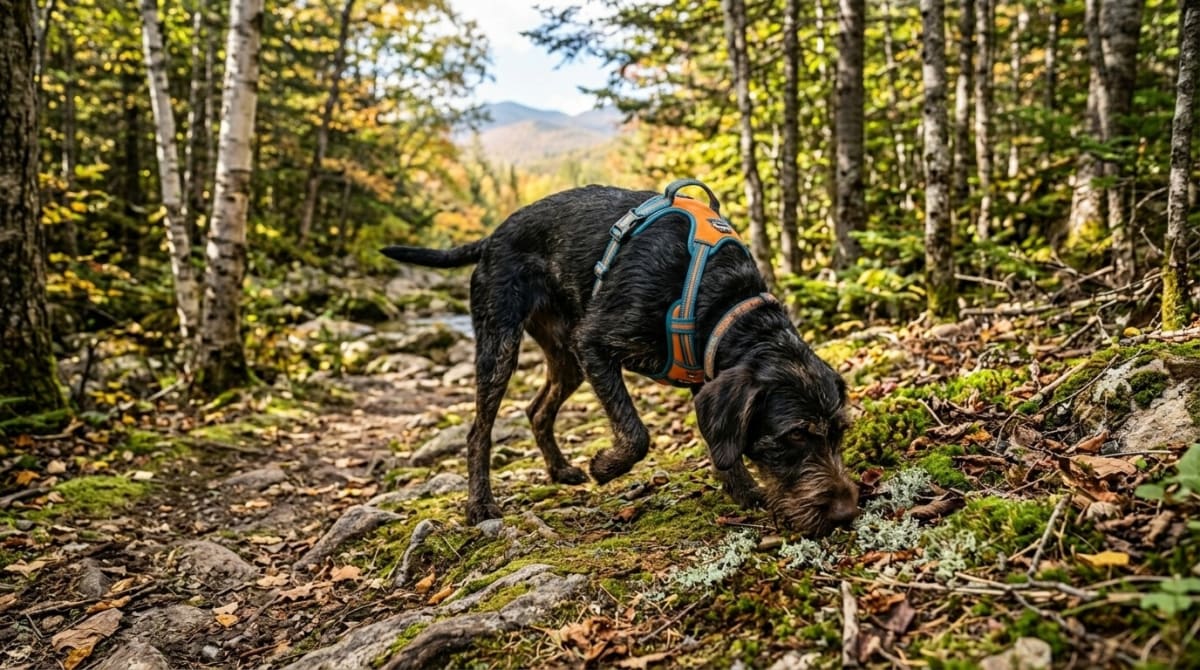
Dogs stop to sniff on trails to process dense environmental data. A canine nose holds hundreds of millions of sensory receptors. This intense mental load actually drops their pulse. It drains their brain. Scheduled sniff breaks prevent physical exhaustion while providing necessary mental enrichment during outdoor activities.
Most hikers treat a dirt path like a treadmill. They drag their dog along at a strict pace. We learned the hard way with Scout that this approach wrecks the experience. Scout is a three-year-old, fifty-pound Lab mix rescue. She used to plant her feet every five steps to investigate a fern. I used to yank her forward. Then we started tracking her behavior.
When we let Scout sniff freely, she slept for hours after a short two-mile loop through the Cascade foothills, but when we forced a fast pace over five miles she came home restless and paced around the living room all evening. A 2019 study in Applied Animal Behaviour Science found that scent work makes dogs more optimistic. Sniffing drops a dog's pulse. It exhausts them mentally in the best possible way. Hikers still want to reach the summit before sunset, so you just need a workable system to balance forward momentum with canine mental health.
Key Takeaways
- 1Mental exhaustion from 30 minutes of scent work tires a dog faster than an hour of running on a trail
- 2Split trail time into transit walk (tight leash, forward) and hybrid hike (long line, scheduled sniff breaks)
- 3Train two cues - a release word like 'go sniff' and a cheerful continuation signal like 'let's go' - never yank away from a scent
- 4A 10-foot biothane line lets dogs track scent plumes naturally without hitting the end of the leash mid-investigation
The Biology of Canine Olfaction
Dogs map the forest through their noses. We dedicate a tiny fraction of human brain power to smells, but a canine brain reserves a huge lobe entirely for decoding scent molecules. Every rotting log holds a history.
When a dog inhales, a tissue fold splits the air into two streams. One goes to the lungs for oxygen. The other hits the olfactory recess. This pocket houses hundreds of millions of scent receptors. As the dog exhales, air pushes out through the side slits of the nose. This continuous loop lets dogs smell in stereo and pinpoint exactly where an odor originated, a mechanism requiring such high neurological effort that it explains why search dogs can track a missing hiker through dense underbrush hours after they walked by.
We spotted this cognitive drain during our early mileage in the Pacific Northwest. Scout would spend ten minutes decoding a single cedar stump near Mount Si. I thought she was just being stubborn. She was actually running complex data analysis. French researchers tracking canine heart rates discovered that deep sniffing correlates strongly with a lower pulse. Processing scent engages the parasympathetic nervous system. It forces the dog to downshift.
Mental miles matter way more than physical ones. Thirty minutes of focused foraging tires out a high-energy rescue dog faster than an hour of forced jogging on asphalt. The brain burns large amounts of glucose during olfactory processing. This explains why working breeds crash so hard after a brief search drill.
Types of Trail Walks
Most people default to a single gear on the trail. They clip a standard leash to the collar and march straight ahead. This guarantees friction the moment a dog wants to explore. You fix this conflict by splitting trail time into two distinct modes.
The first is the transit walk. This is pure forward momentum. The dog stays close to the handler. The line stays tight. We run this structure when crossing narrow footbridges or navigating past heavy crowds at busy summer trailheads. Safety demands close control in those bottlenecks. Scout knows a tight leash means we are working. She ignores the brush and matches my stride.
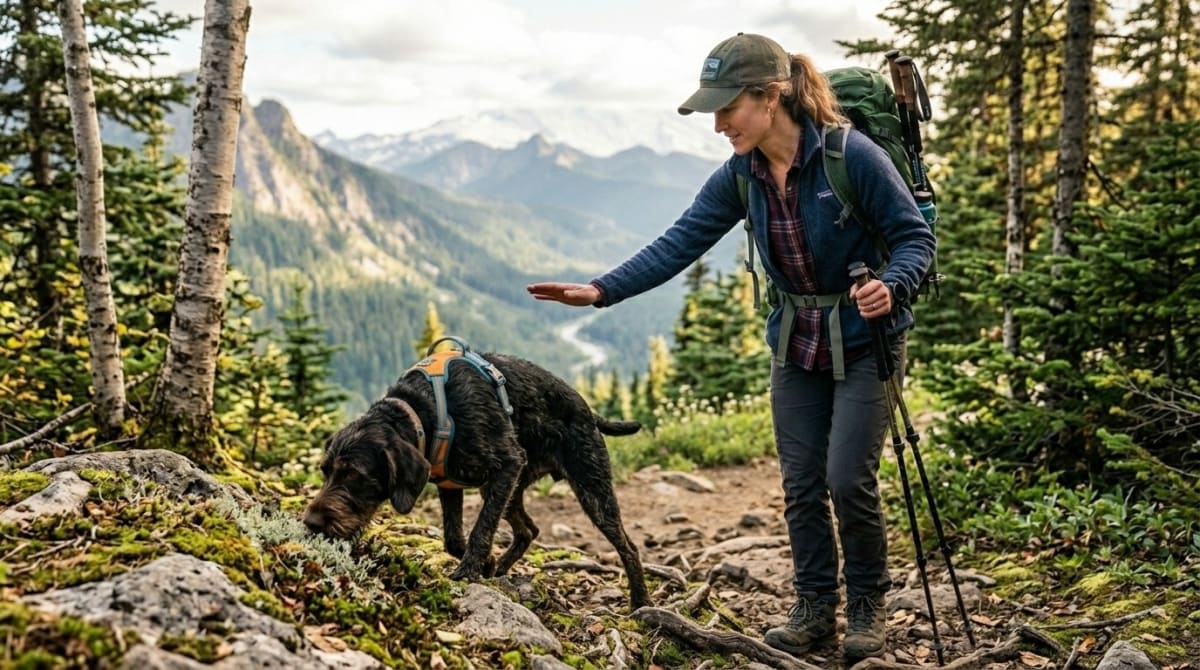
The second mode is the hybrid hike. This is the sweet spot for day trips. I set the overall direction of travel while Scout gets a longer line and the freedom to sweep side to side. When she catches an interesting scent, I stop walking. She investigates. Once she finishes, we move forward again. This setup demands direct communication between both ends of the leash, requiring the dog to understand exactly when a break begins and when it ends so they aren't constantly guessing if they have permission to pull toward a tree.
How to Train Sniff Breaks
You cannot just drag a dog away from a bush. That builds frustration. They will simply pull harder at the next stop. Instead we rely on clear verbal boundaries. We trained two distinct cues with Scout to manage our daily pace.
First you need a release cue. We use the phrase "go sniff" when Scout is cleared to explore. I stop walking. I drop the tension on the line. I say the phrase. Scout knows she has permission to investigate the dirt. The dog quickly figures out that exploring happens entirely on permission, meaning that dragging a frustrated human into the ditch never actually earns them access to the interesting smell.
Second, establish a continuation cue. We use "let's go" to signal the end of a break. I say it in a cheerful tone and take a step forward. If Scout follows, she gets a high-value treat. If she stays glued to the spot, I apply gentle pressure to the line and wait, holding that steady resistance until she makes the conscious choice to disengage from whatever she found in the dirt. I do not yank. I just hold the tension. The exact second she yields and looks away from the scent, the pressure vanishes. She gets the reward. We average fifteen sniff breaks on a typical three-mile hike. This cadence provides enough sensory input to fry her brain and prevent the anxious evening pacing we used to deal with after long uninterrupted marches.
Why Leash Length Matters
Affiliate Disclosure: Paths & Paws earns commissions from qualifying purchases made through links on this page. This supports our field testing and does not affect our recommendations. We only recommend gear that passes our trail testing standards. Learn more
Equipment dictates behavior. A standard four-foot leash forces the dog to walk right beside your leg. This guarantees conflict on dirt paths. The dog naturally wants to sweep the environment. The short line prevents it.
Field researchers studying canine habits noticed a dramatic shift when gear changed. Dogs on a longer line spent much more time naturally foraging. The extra slack allows them to track a scent plume on their own without hitting the end of the webbing. We switched Scout to a ten-foot biothane line for our open hikes. The difference was immediate.
With ten feet of freedom, Scout can trot ahead to inspect a rock. She finishes her investigation right as I catch up to her position. We never break stride. The longer line creates a buffer zone. The dog operates at a natural start-and-stop rhythm while the human maintains a steady hiking pace.
Just remember to gather that slack when passing other groups. You must actively manage the excess material. You let it out in safe areas and coil it up when hazards appear. Handlers constantly adjust the tension to match trail conditions. We keep the line choked up near cliffs and drop it fully in open meadows, an approach that maximizes the dog's freedom to explore while maintaining absolute safety when moving through dangerous alpine environments.
Reading the Sniffing Signals
Not all sniffs are the same. Dogs cycle through different respiration patterns based on what they are investigating in the brush. You need to read these physical signals to know exactly when to interrupt.
A shallow sniff rapidly gathers surface information. The dog moves fast over the ground. The nose hovers an inch above the dirt. The breathing is light. Scout does this when checking who walked down the path recently. This is a quick process. We almost never stop walking for a shallow sweep.
A deep analysis sniff looks entirely different. The dog comes to a dead stop. Their nose presses hard into the soil or bark. You will actually hear forceful exhales blowing dust away from the target. The dog might even chatter their teeth. This transfers scent molecules directly into the vomeronasal organ located in the roof of the mouth, an anatomical feature that processes pheromones and biological markers completely separate from the primary olfactory system.
You will severely frustrate the dog if you interrupt a deep analysis session. It feels like turning off a movie right before the ending. When we see Scout bury her nose into a stump, we stop moving. We wait for her breathing pattern to return to normal. She usually lifts her head and shakes off the physical tension once she finishes processing the pheromones. She gives a full body shake, sneezes once or twice, and then steps back onto the trail.
If you are working on training your dog trail commands, the same cue structure used for sniff breaks transfers directly to teaching downhill manners and passing other hikers.
Frequently Asked Questions
Filed under
Sarah is learning to hike with dogs alongside her readers. Scout is her first trail companion, and she shares every mistake, success, and lesson learned along the way.
References & Further Reading
- Let me sniff! Nosework induces positive judgment bias in pet dogs. Applied Animal Behaviour Science 2019 — Applied Animal Behaviour Science (2019)