 Paths & Paws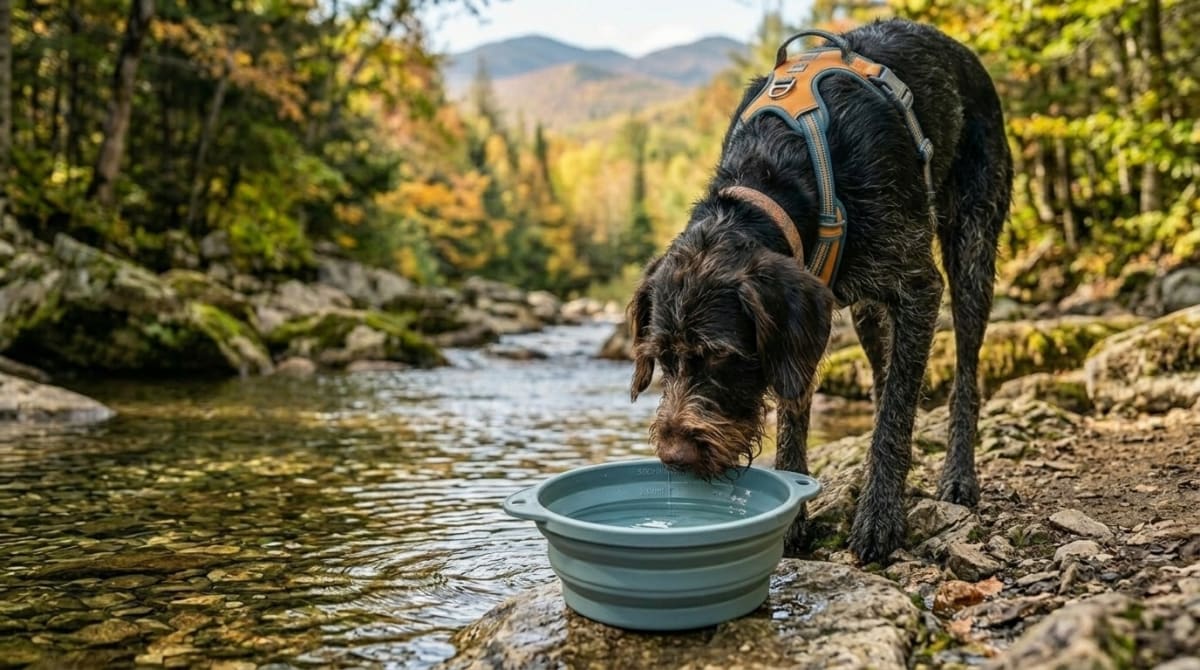
Most of us drastically underestimate how much dogs drink on the trail. We definitely did. During our first season hiking with Scout, our fifty-pound Lab mix rescue, I packed a single standard plastic water bottle that she drained completely by mile two, leaving us staring down a sketchy three-mile march back to the car in direct August sun. Dogs cannot cool themselves by sweating. They rely on panting. This respiratory evaporation burns through fluid reserves incredibly fast. A 2018 study in the Journal of Veterinary Internal Medicine tracked canine athletes turning over huge percentages of total body water during multi-day runs. A casual weekend hike obviously demands less output. The trail math still dictates what goes in the pack.
Key Takeaways
- 1The baseline formula: 8 oz of water per 20 lbs of dog per hour - a 50-lb dog on a 2.5-hour hike needs at least 50 oz minimum
- 2Above 70°F multiply the hourly requirement by 1.5. Above 80°F double it completely
- 3Offer 4-6 oz every 30 minutes in shade - thirst is a lagging indicator and dogs won't ask until they're already in deficit
- 4Turn around when the water supply hits the halfway mark - the return trip demands equal effort during peak afternoon heat
The Trail Math Formula
Stop guessing what goes in the pack. The standard veterinary hydration formula dictates eight ounces of liquid for every twenty pounds of dog per hour of exercise. We trust this exact calculation for Scout whenever we tackle routes in the Pacific Northwest.
First divide the dog's weight by twenty. Scout is fifty pounds. Her multiplier is two and a half. Multiply that by eight ounces. She needs twenty ounces of water for every hour we spend moving, giving us her absolute minimum requirement in moderate weather under seventy degrees.
Temperature throws a wrench in those numbers. Hot days accelerate water loss. When the thermometer climbs past seventy degrees you multiply that hourly requirement by one and a half. If it hits eighty, double the volume. A 2018 study in Frontiers in Veterinary Science tracked total fluid intake in adult dogs and confirmed that physical exertion combined with heat creates a compounding demand that casual drinkers simply will not meet through resting thirst triggers alone. The ground surface itself becomes a factor at high temperatures - our guide on whether the ground is too hot for dog paws covers the seven-second test that tells you when conditions are unsafe before you even leave the trailhead.
Always calculate based on time rather than mileage. Elevation gain makes distance totally irrelevant. A flat gravel path might take twenty minutes per mile while a steep scramble takes forty. The dog pants and leaks moisture the whole way up.
Calculating for a Five-Mile Route
A typical five-mile loop at a two-mile-per-hour pace on moderate dirt takes two and a half hours. Applying Scout's twenty-ounce hourly minimum to that duration means multiplying twenty by two and a half for a total of fifty ounces. That works out to about one and a half liters just for her. An unexpectedly warm afternoon pushes that need up to seventy-five ounces.
A lot of hikers balk at carrying that kind of bulk. Water adds serious weight. One liter comes in at over two pounds. It is extremely tempting to rely on streams and alpine lakes along the route to lighten the backpack, but this gamble often backfires when those reliable seasonal creeks turn to dust in late August or when the only available puddle turns out to be a stagnant mess breeding blue-green algae.
The only water you can safely trust is what sits inside the pack. Buy a separate hydration bladder just for the dog. Keeping it isolated from the human supply prevents cross-contamination and lets you track exactly how much the animal really consumed. I pour Scout's ration into a separate reservoir before we even lock the front door.
Recognizing Early Dehydration
Catching a problem early beats managing a medical crisis two miles from the car. You have to spot dehydration before the dog feels thirsty. Thirst is a lagging indicator.
Check the saliva first. A healthy animal produces thin watery spit. When fluid levels drop the body instinctively conserves moisture and that saliva turns thick and sticky. If ropey strands of spit hang from their jowls the dog is already in a hydration deficit. Stop walking immediately.
Watch the tongue. A normal panting dog lets a wide flat tongue hang loose from their mouth. When dehydration really takes hold the edges of the tongue curl upward to form a distinct spoon shape. This physical change serves as a massive warning sign.
You can also check capillary refill time. Lift the dog's lip and press a thumb firmly against the pink gums. Pull the thumb away. The spot will look white from the pressure. Count the seconds it takes for that normal pink color to flood back in. Healthy refill takes under two seconds. A delay of three or four seconds points to severe dehydration, which means forward progress ends immediately and you need to find deep shade off the trail to offer small sips until their system fully stabilizes. We practice this gum check with Scout on the living room couch so she tolerates the poking on the mountain.
Skin tenting offers one more physical clue. Gently pinch the loose skin at the scruff of the neck and pull it up. Let it go. Hydrated skin snaps right back. Dehydrated skin loses that rubbery elasticity and sinks down in slow motion. If dehydration is accompanied by stumbling or lagging behind on flat trail, our guide on signs your dog is too tired hiking explains how to read the full picture before the situation becomes an emergency.
How to Carry and Offer Water
Dispensing water on the move takes a bit of strategy. Pack a collapsible silicone bowl and keep it easily accessible.
Start by offering a drink at the trailhead before you even adjust the pack. Dogs usually refuse water when they are distracted by fresh parking lot smells. Give them time to settle down. They need a solid drink before the physical work begins. We let Scout sniff the surrounding bushes for five minutes before presenting her bowl so she starts the climb fully topped off.
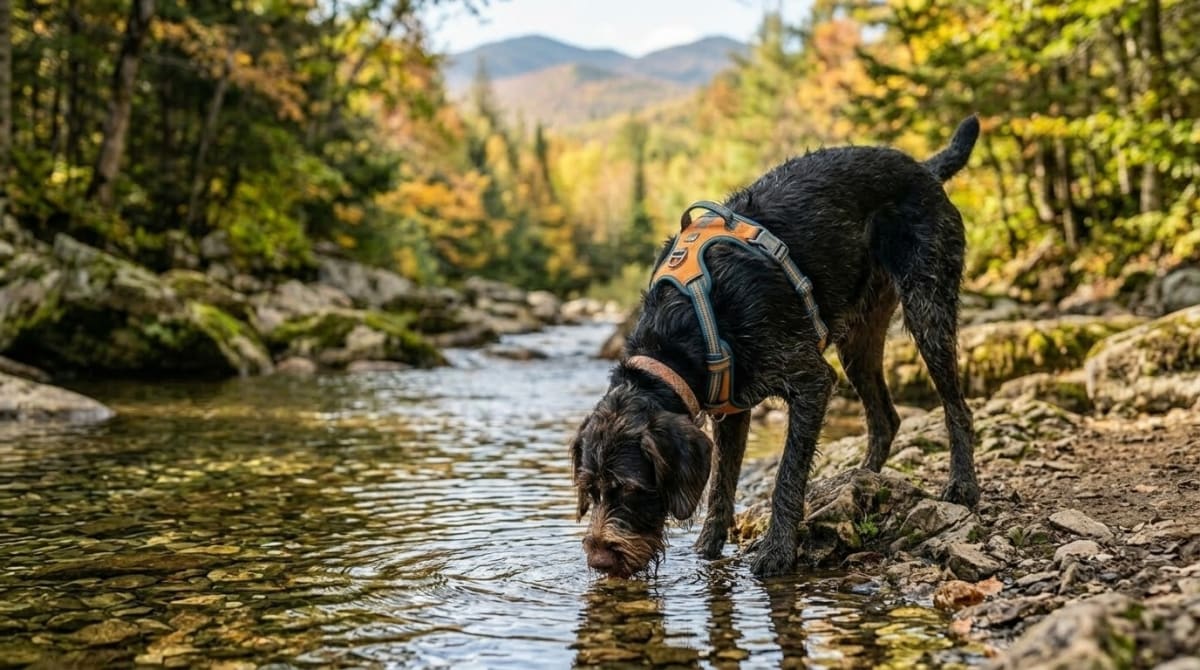
Do not wait for the dog to beg for water on the trail. Stop every thirty minutes. Find some shade. Pour roughly four to six ounces into the bowl. This rigid routine prevents large fluid deficits from forming in the first place.
Never let a hot dog chug a full liter at once. Rapid consumption almost always triggers vomiting. It can also cause a potentially fatal condition called water intoxication. Pour small amounts often rather than filling the bowl to the brim.
Sometimes drinking simply isn't enough to drop their core temperature. If a dog gets dangerously hot pour liquid directly onto their paws and groin. The paw pads contain dense networks of superficial blood vessels. Wetting those exact areas creates rapid evaporative cooling.
A shockingly common beginner mistake is pushing forward until the dog's water supply runs completely dry. This creates a dangerous trap. You must turn around when the bladder hits the halfway mark because the return trip will demand just as much physical exertion from the dog, usually during the absolute hottest part of the afternoon when solar radiation peaks. Stash a reserve gallon jug in the trunk of the car for post-hike recovery.
Frequently Asked Questions
Filed under
Sarah is learning to hike with dogs alongside her readers. Scout is her first trail companion, and she shares every mistake, success, and lesson learned along the way.