 Paths & Paws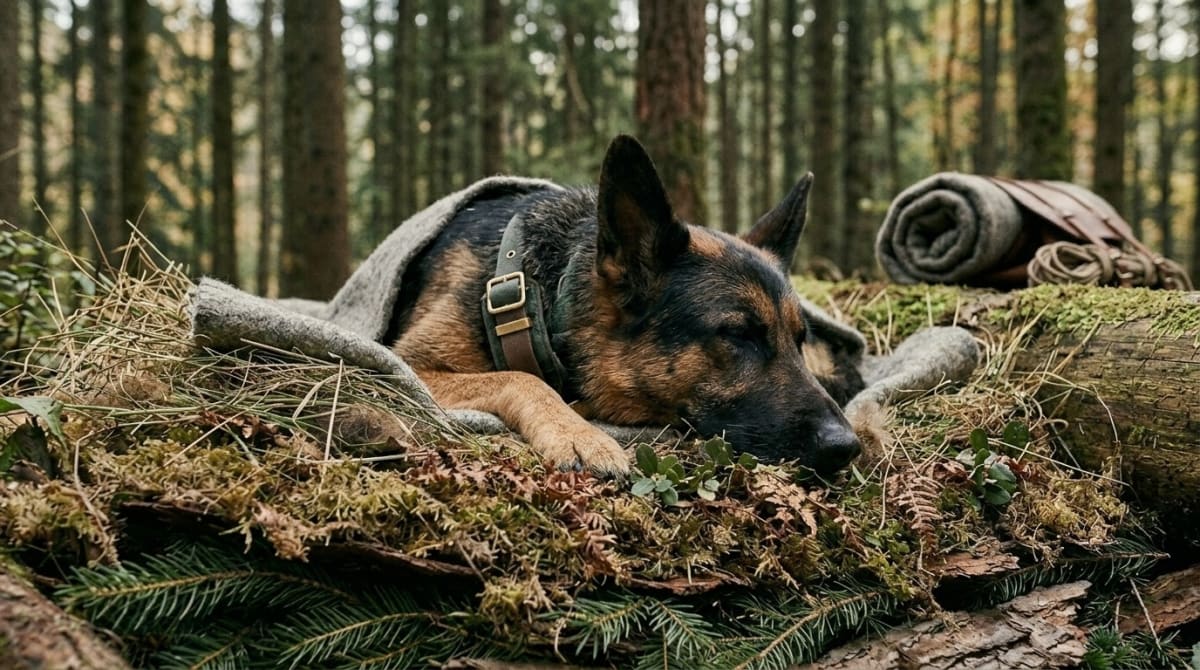
Ground contact steals body heat 25 times faster than cold air. When we track thermal loss during winter camping, conduction is the real threat. You can wrap a dog in three fleece coats. Dirt still wins. If a dog sleeps on bare 30-degree ground, their core temperature will plummet. We learned this the hard way on a late November trip up Mount Si. Jasper's a 95-pound German Shepherd. That sheer mass compresses standard foam pads right down to paper thickness. When his primary pad popped, we had to construct an emergency thermal barrier out of whatever the forest floor provided. We measured the compaction rates of different debris types under his weight. You need at least eight inches of uncompressed insulation to stop conductive heat loss. We ran five different configurations of forest matter under Jasper, watching closely to see exactly what survives a long freezing night without just flattening into useless dust and leaving him entirely exposed to the earth.
Key Takeaways
- 1Loose dry leaves compress by 90 percent under a large dog and fail as standalone insulation.
- 2Rigid pine needles maintain structural integrity and trap still air space.
- 3Containment bags prevent ticks and keep the bed intact throughout the night.
- 4Dispersing gathered materials in the morning leaves zero impact on the trail.
The Thermodynamics of a Natural Bed
Conduction pulls heat fast. The cold ground just absorbs it continuously. If a dog lies on bare dirt, their body burns through calories trying to warm a planet that will never get warm. Heat flows from warm to cold. The earth is infinitely larger than the dog. Because the planet isn't going to heat up, the animal will simply freeze unless we step in. You need a thermal break. The only way to halt this relentless physics equation is by inserting a thick, structural layer of dead air space right between the dog's body and the freezing soil beneath them.
The veterinary baseline leaves zero room for error here. A healthy dog needs to maintain a core body temperature somewhere between 98 and 102.5 degrees Fahrenheit. A 2024 Veterinary Partner review confirms anything dipping below 98 is medical hypothermia. You can't wait around for visible shivering. Once a dog starts shaking, their system is already burning through emergency caloric reserves just to fight off that dropping core temp. We monitor Jasper's comfort closely on the trail. A thick bed stops the ground from acting as a massive heat sink.
We measured how different materials compacted under Jasper. His elbows and hips drive intense point pressure into whatever he's sleeping on. Dry deciduous leaves sound like great natural insulation, but they fail entirely under a large breed. We piled ten inches of dry maple leaves on the dirt. They squashed down to less than half an inch within twenty minutes because those flat shapes just slide past each other and push outward under his weight. The air gap vanishes. The dog ends up resting right on cold soil.
Pine needles do the job far better. Stiff needles naturally create a rigid structure that resists crushing. This tangled web traps still air perfectly. Trail testing showed us that eight inches of loose pine needles compress down to roughly three inches under Jasper, providing the exact thermal break he requires to hold that core temperature safely above the 98-degree threshold.
What You Need and Leave No Trace Rules
True survival situations obviously change the rules of wilderness engagement, but for a standard hiking emergency where a sleeping pad just pops or gets left in the truck, we strictly follow Leave No Trace principles. Cutting live evergreen boughs does real damage. We never hack off live vegetation for a one-night bed. Pine boughs leave permanent scars on the trees and end up dripping sap all over the dog's coat.
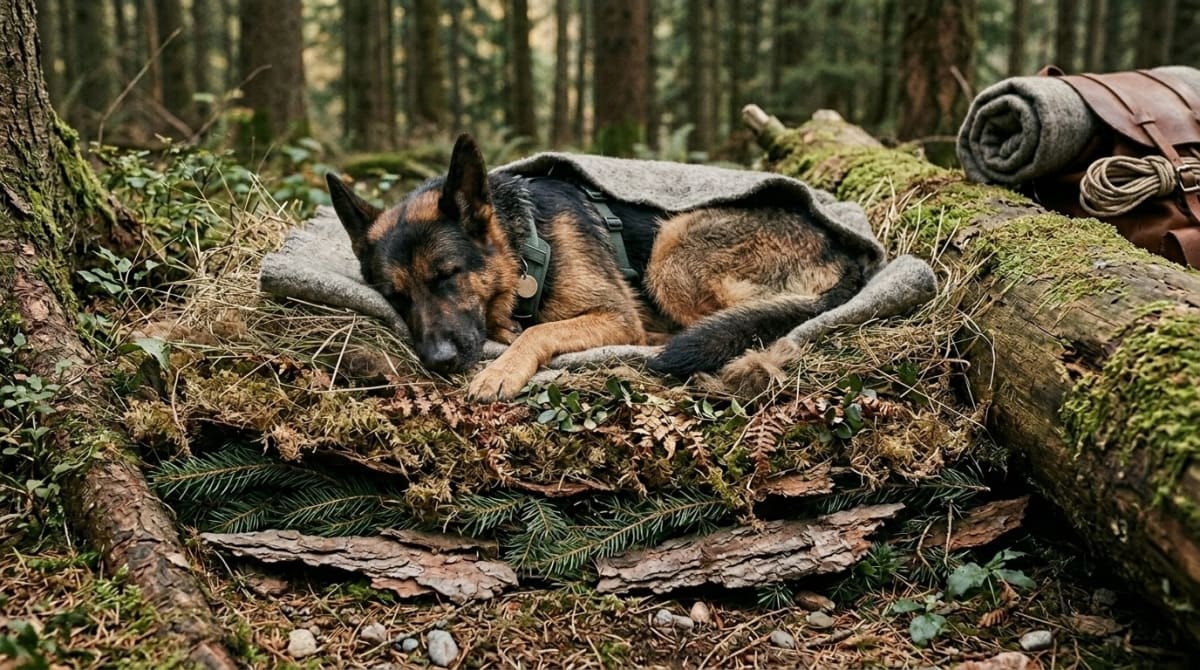
We rely completely on dead matter already resting out on the forest floor. Dry pine needles provide the primary structure. Dead grasses add a bit of softness and loft. Dry leaves act as decent filler material, while old shredded bark helps reinforce the edges. Gathering all this stuff takes serious effort. The real secret to making it work lies in how you hold the pile together.
We always keep a heavy 3-mil contractor trash bag shoved in the bottom of the pack. Loose debris scatters instantly. A dog will circle and scratch before lying down, completely kicking a loose pile apart long before midnight. Shoving gathered materials into a thick plastic bag solves four major problems at once.
The bag forces the insulation to stay concentrated right under the dog's weight. It also forms a totally waterproof barrier against unexpected ground moisture seeping up. Ticks and mites can't easily transfer from the leaf litter into the dog's fur. Morning cleanup takes about three seconds. A reusable emergency bivy sack works perfectly too. This containment layer basically transforms a useless pile of yard waste into a functional mattress. For trips where you have room to carry a proper solution, our breakdown of dog sleeping pads for backpacking covers what we use with Jasper when gear failure isn't a factor.
Step by Step Construction
Building an effective thermal barrier takes about twenty minutes of focused work. You can't rush this process as darkness starts falling, because every single step matters when you're fighting conductive heat loss.
Step 1. Select a dry foundation. Find a spot naturally elevated above the surrounding terrain, explicitly avoiding those little depressions where cold air predictably settles and moisture tends to pool over the course of a freezing night. Brush away the sharp rocks. We look for bare but dry dirt as a base layer. Seek out natural windbreaks like a large boulder or fallen log to protect against convective heat loss. A solid foundation reduces the overall workload on your insulation.
Step 2. Gather materials fast. Don't pick up leaves by the handful. That just wastes time and precious daylight. Take off a rain jacket, zip it up completely, and tie the neck and arms shut. You just created a massive collection bag. Scoop pine needles and dry grasses into the jacket to transport large volumes back to camp quickly. Look directly under mature conifers close to the trunk for the absolute driest needles, minimizing your own sweat and caloric burn during this phase.
Step 3. Stuff the containment layer. Fill the emergency bivy or contractor bag with the debris you gathered. Don't just dump the materials inside randomly. Put the rigid pine needles on the bottom for structure, add the dry leaves in the middle, and top it off with soft dead grasses. This actually mimics the internal construction of a modern sleeping pad. Pack the bag until it looks ridiculously overfilled, knowing full well it will shrink drastically the second the dog steps on it.
Step 4. Shape the mattress. Lay the filled bag flat on the ground inside the shelter. Press down firmly in the center to create a shallow nest. This physical depression encourages the dog to curl up right in the middle while the raised edges block incoming drafts and trap radiant body heat. If you're using a plastic contractor bag, leave the open end slightly unsealed. When the dog steps on it, trapped air will pop a fully sealed bag like a balloon. Just let the excess air vent out slowly.
Step 5. Disperse in the morning. Don't leave a giant pile of leaves sitting in the middle of a clearing. This confuses wildlife and ruins the site for the next hiker coming up the trail. Spread the materials over a wide radius. Shake out the bag completely and store the empty plastic back in your pack.
Common Mistakes in the Field
Most improvised beds fail because hikers severely underestimate the required volume. A small pile of leaves looks plenty thick until 95 pounds of dog actually hits it. We learned on a rainy trip in the Cascades that a bed requires roughly three times more material than your eyes initially suggest when you're staring at a loose pile. If the setup looks ridiculously huge, the volume is probably correct. You literally cannot overfill a containment bag. Gravity wins. The dog will always flatten the contents down to an inch or two.
Moisture destroys insulation immediately. If you pile wet leaves directly under the dog, that water will pull heat away from their body through rapid evaporation. Water conducts heat 25 times faster than dry air. If the forest is completely soaked, the priority shifts entirely. We elevate Jasper on a crude platform of dead logs before adding whatever relatively dry material we can strip from standing deadwood. Wet materials accelerate heat loss rather than preventing it.
Ignoring the tick risk brings long-term consequences. Leaf litter is the primary habitat for ticks and chiggers. Building a loose bed exposes the dog to heavy parasite loads right when their immune system is already stressed by cold temperatures. The containment bag approach is non-negotiable in tick country. That plastic cleanly separates the forest floor biology from the animal.
Failing to account for convection is another critical error. The ground pad only stops conductive heat loss, meaning the cold ambient air will still strip heat right off the top of the dog. Drape a jacket or a dry fleece over the animal once they finally settle onto the bed. This combined approach stops heat loss in both directions. We always carry an extra emergency mylar blanket in the hiking first aid kit. Draping that foil loosely over Jasper reflects escaping body heat back down into the natural bed, and we regularly check his core temperature with a digital thermometer to verify the system is working.
Frequently Asked Questions
Filed under
Kelly brings an engineering mindset to dog hiking gear. After thousands of miles with Jasper testing every harness, pack, and boot on the market, he knows what holds up and what fails.
References & Further Reading
- Hypothermia - First Aid. Veterinary Partner 2024 — Veterinary Partner (2024)