 Paths & Paws
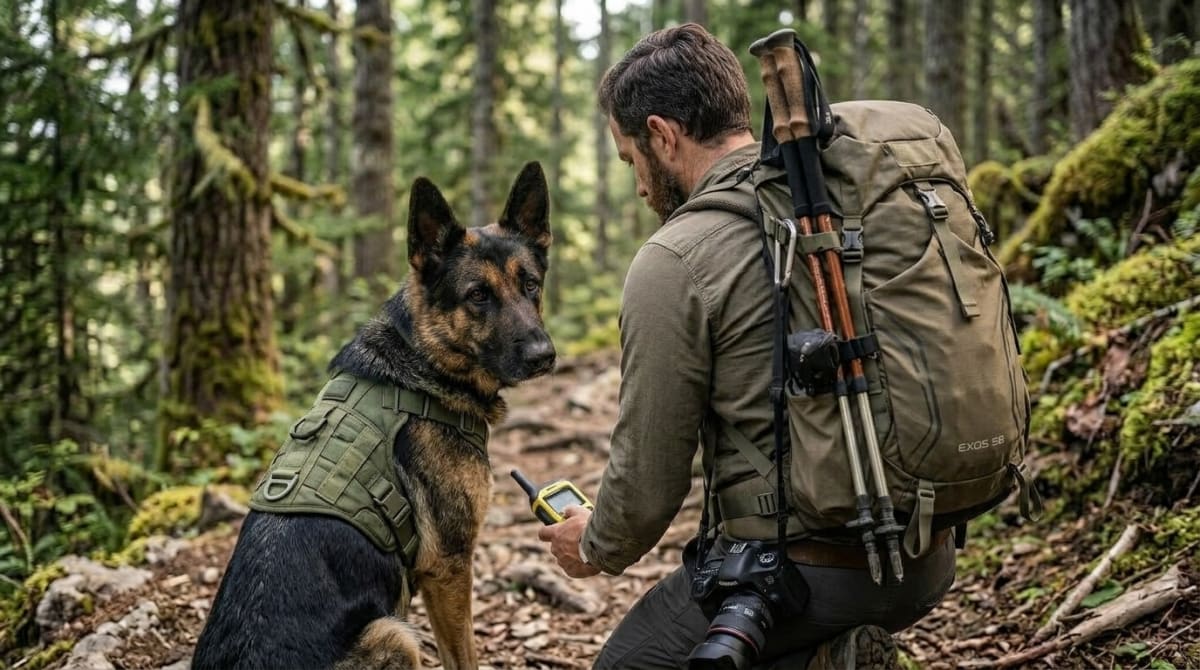
Most hikers assume Search and Rescue will carry out an injured dog. They almost never do. Emergency teams prioritize human life first. If a dog snaps a leg three miles from the trailhead you are the extraction plan.
A 2025 joint position statement published in Prehospital Emergency Care confirmed that while operational canines deserve treatment, human casualties always dictate the priority of care and available medical resources. This rule hits civilian pets hard. You cannot expect a helicopter.
Jasper is a 95-pound German Shepherd. His weight makes spontaneous carries impossible for me over rough terrain. We rely on a layered communication system and a dog evacuation harness. You need to know how to ping emergency services and how to flag down nearby hikers when cell service drops.
While many people expect a helicopter ride for any trail disaster, a dispatcher will usually require you to coordinate ground transport for a pet. This guide covers the realities of trail communication. We break down the universal distress signals below. You will learn when to sit tight and when you must attempt the carry yourself.
Key Takeaways
- 1Search and Rescue almost never extracts a pet, so plan on ground transport or self-rescue instead of a helicopter
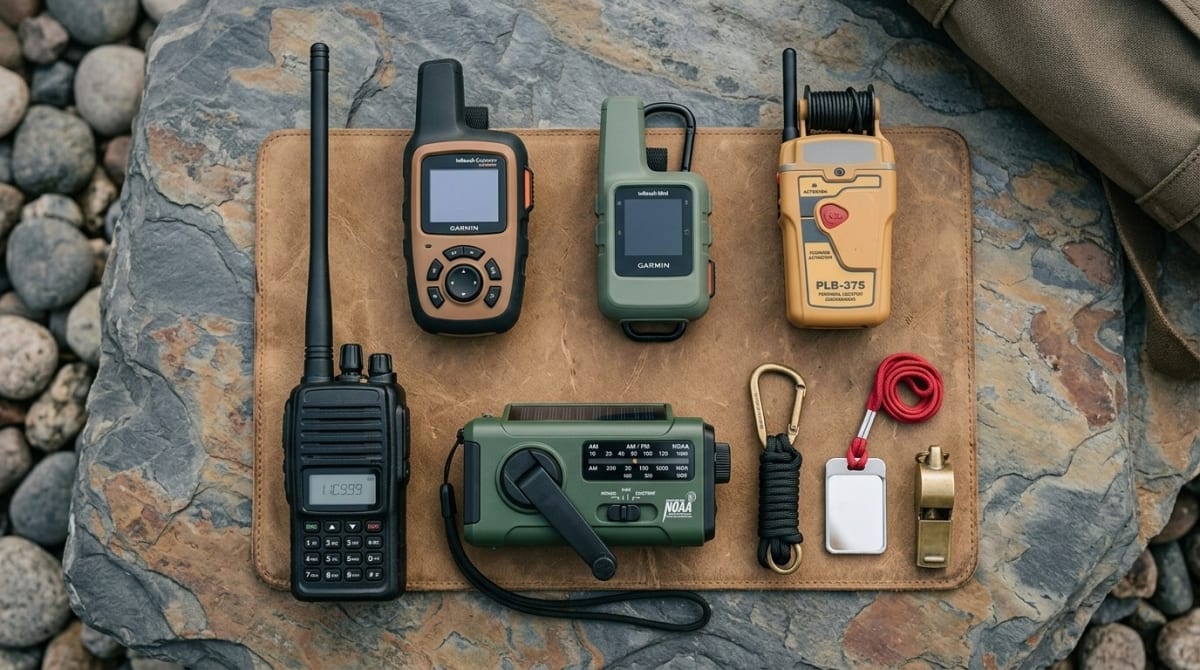
- 2Layer your communication with a two-way satellite messenger, cell phone SOS features, and analog backups like a whistle and signal mirror
- 3The universal distress signal is three blasts, flashes, or fires, paused for a minute, then repeated
- 4Never attempt to carry a large dog in your arms. A rescue sling like the Fido Pro Airlift protects your back over rough miles
What Devices You Need
Wilderness communication demands layers. You cannot rely on a smartphone alone.
Two-Way Satellite Messengers
Devices like the Garmin inReach or Zoleo allow two-way text communication with rescue coordinators. Two-way texting is non-negotiable. You have to clarify that the victim is canine. Rescuers need this detail to decide if they will deploy a ground team or authorize a local volunteer group to assist. Modern satellite units often require a monthly subscription fee, but the ability to beam exact GPS coordinates to a dispatch center while simultaneously texting a buddy to bring a four-wheel-drive truck to the nearest logging road makes them an indispensable safety tool.
Cell Phone Satellite Features
Newer phones have emergency satellite texting built in. These systems work well enough in clearings but struggle under dense forest canopy. A dedicated satellite messenger connects faster and holds a much more stable link with the network.
Emergency Whistle and Signal Mirror
Analog signals work when batteries die. A pealess whistle punches up to a mile in still air, and a simple signal mirror catches aircraft attention. Both require zero electricity.
Dog Evacuation Harness
You need mechanical advantage to haul a large animal. We pack the Fido Pro Airlift for Jasper on every Cascades hike. A rescue sling lets you wear the dog like a backpack. You keep hands free for trekking poles. Attempting to drag eighty pounds of dead weight in your arms for four miles will inevitably end in total collapse, creating a secondary medical crisis that rescue teams now have to manage.
The Stay or Carry Decision Framework
When a dog goes down panic makes you stupid. Follow a strict order of operations.
When to Stay Put
You should stay put if you suspect a spinal injury, since moving a dog with a damaged back often triggers permanent paralysis. Exhaustion is another reason to stop. Carrying a big dog spikes the heart rate and drains energy reserves incredibly fast. If darkness is creeping in and temperatures are crashing, setting up an emergency shelter beats stumbling down a steep scree field in the dark.
When to Attempt Self-Rescue
You must self-rescue if the weather is deteriorating. A thunderstorm above treeline threatens both you and the animal. You should also self-rescue for minor limb injuries where the dog can safely ride in an evacuation rig. While ground teams may occasionally pitch in with a canine rescue if resources permit, you should never trigger an SOS beacon expecting a helicopter to magically arrive to whisk a pet to safety.
How to Execute the Universal Distress Signal
If you lack digital comms deploy analog signals immediately using the universal distress code. Blow three short whistle blasts. Pause for one minute to listen. Repeat the sequence. The number three breaks natural wilderness patterns and alerts anyone nearby to an emergency. If you hear a reply blow two blasts to acknowledge their signal.
You can replicate this visually. Flash a mirror or headlamp three times in a row. Build three small smoky fires in a triangle formation if you are stranded in an open clearing. Search aircraft look for these unnatural geometric patterns. When a rescue chopper scans a massive grid for a missing party, those three distinct flashes of light are often the only reliable indicator of human presence against a chaotic forest background.
Information to Provide to Rescue Personnel
Precise communication dictates the rescue response since dispatchers juggle multiple crises at once. Give them raw, actionable details.
Location Data
Start with GPS coordinates by reading the latitude and longitude off a satellite device or offline map app. State the trail name and the specific mileage from the nearest recognizable landmark.
Patient Status
Describe the injury honestly and specify if the dog has a compound fracture. Do not claim a human is hurt. Lying about a human injury to secure a rescue is illegal and diverts resources from actual emergencies. State the breed and weight. A rescue coordinator needs to know if they are dealing with a small terrier or a massive working dog.
Hiker Condition
Report current supplies, physical state, available clothing layers, and shelter options. Tell them exactly how much water you have left. A 2026 study in Animals on canine search and rescue variables shows that environmental conditions strongly dictate performance and survival rates for working dogs. This very principle applies to pets. Rescuers need to know if you can survive the night. Rescue coordinators rely on an accurate count of remaining food, water, and insulating layers to effectively triage the situation and decide whether they need to send immediate help or let you wait until morning.
Tell the dispatcher about current trail conditions. Ground teams need to know if they are walking into a washed-out ravine or a perfectly clear logging road. Mention any major water crossings you crossed today.
Common Mistakes
People make awful choices under pressure. Skip these common errors.
Assuming Rescuers Will Extract the Dog
Assuming Search and Rescue will handle everything is a dangerous mindset. They might offer advice over text or reach out to a local volunteer group, but they rarely deploy full teams for pets. You have to plan to extract the dog yourself.
Improper Signaling
Using the wrong whistle cadence causes confusion since random blowing just sounds like a hiker looking for a lost animal. You must use three distinct blasts to signal a genuine emergency.
Carrying Without a Harness
Attempting to carry a dog without a harness usually ends badly. I tested this with Jasper on a short trail before buying our sling, and carrying a 95-pound German Shepherd in my arms wrecked my lower back within two hundred yards. Without a sling you risk dropping the dog. Many inexperienced hikers exhaust themselves by trying to carry a heavy immobilized dog in their arms over miles of uneven terrain, which ultimately puts both the hiker and the animal in a life-threatening situation. Our breakdown of carrying an injured dog solo covers the weight thresholds where a sling stops being optional.
Failing to Pack a Muzzle
An injured dog bites out of fear and intense pain. You need a lightweight fabric muzzle stuffed in a first aid kit to protect yourself when loading them into the harness. This pairs well with a broader trail first aid kit built for dogs, since a muzzle alone will not treat the actual injury underneath it.
Frequently Asked Questions
Kelly brings an engineering mindset to dog hiking gear. After thousands of miles with Jasper testing every harness, pack, and boot on the market, he knows what holds up and what fails.