 Paths & Paws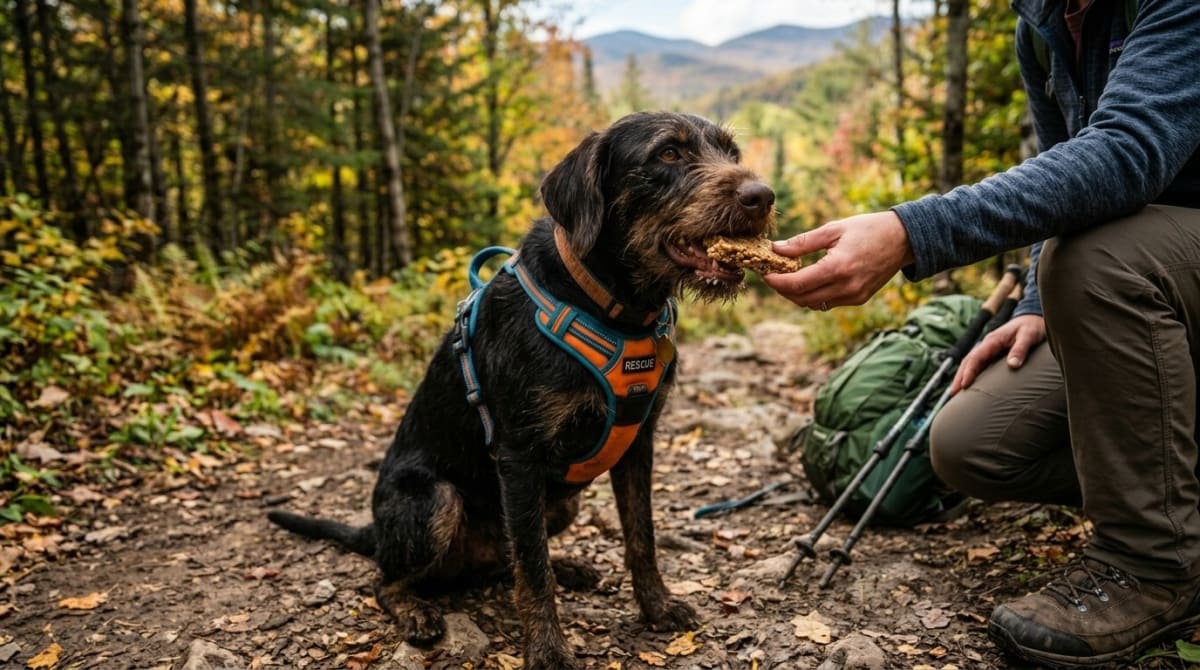
Most people toss an extra handful of kibble into a Ziploc and call it a trail snack. We tracked Scout's energy on a ten-mile loop in the Cascades last summer and that dry food did absolutely nothing for her afternoon slump. Scout is a 50-pound Lab mix. She starts fast. She crashes hard. We needed heavier fuel. A quick sugary granola bar gives people a boost but dogs require fat to sustain endurance over long distances, which is exactly why we overhauled her hiking nutrition based on veterinary sports medicine protocols rather than guessing from internet forums.
Key Takeaways
- 1Dogs run on fat, not carbs - fat delivers 9 calories per gram versus 4 for carbohydrates, making it the right fuel for endurance hiking
- 2The best trail snacks are often already in your fridge: xylitol-free peanut butter, aged hard cheese, and cooked lean meat
- 3Micro-dose snacks every hour of hiking instead of one big break - Scout used to crash at the two-hour mark until we switched to this approach
- 4Never feed a large meal right before hitting the trail - wait two hours before departure to prevent bloat risk during hard exertion
How Dogs Burn Energy on the Trail
Human athletes rely on carbs for long efforts. Dogs are wired differently. They burn fat as their primary fuel source for endurance activities, making it the most efficient calorie source to stuff in a pack.
Fat delivers nine calories per gram. Carbohydrates only provide four. When we plan long hikes for Scout we focus entirely on fat content for sustained energy and protein for muscle repair. We completely ignore the oat-heavy treats sold at big box pet stores because they just pass straight through her system without offering the lasting fuel she requires for steep elevation gains. This changes everything. Fat wins.
Clinical nutrition data from Cornell University's veterinary program shows endurance dogs need diets heavily weighted toward fat, recommending up to 35 percent fat on a dry matter basis for intense pulling or running. A standard weekend hike might not demand sled-dog nutrition. The underlying biology still applies. Fat keeps them moving.
Standard kibble is formulated for resting dogs. It relies primarily on cheap carbohydrates because they form dry shapes easily in manufacturing plants. Those carbs digest quickly. The energy spikes and drops. A dog ends up panting and dragging behind on the return trip.
We noticed a massive shift when we started supplementing Scout's trail days with fat-heavy snacks. She stopped lagging behind on brutal inclines. Her recovery the following morning improved noticeably because fat takes much longer to break down in the canine digestive system, releasing a steady trickle of energy into the bloodstream over several hours.
The Best High-Calorie Trail Snacks
We skip the expensive specialty dog bars to fuel a hike. A lot of the best trail food comes right out of the kitchen fridge.
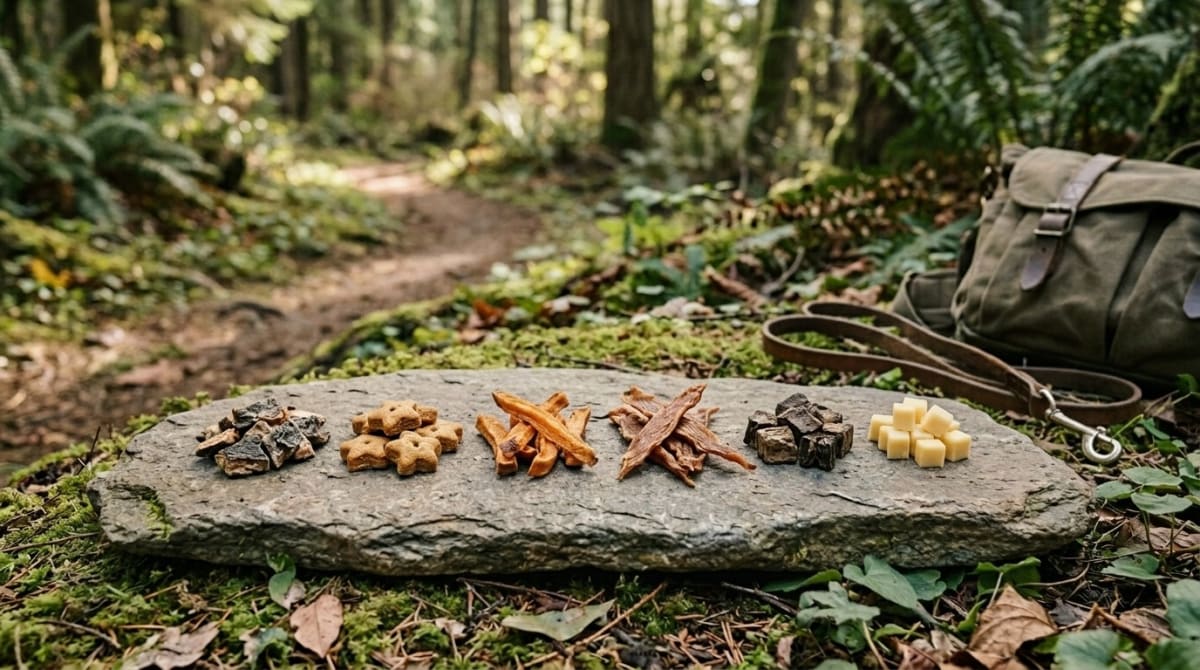
Peanut butter is the ultimate hiking hack for dogs. It just works. We carry a small squeeze tube of unsweetened peanut butter so we can shoot a quick squirt directly into Scout's mouth during water breaks, which stops her from eating dirt off the ground while trying to lick a spoon clean. Just double check the label to confirm it is xylitol-free. Xylitol is highly toxic.
Hard cheeses work beautifully too. Cheddar and Swiss travel easily in a backpack while packing rich calories. Cheese provides both fat and calcium. Scout will do almost anything for a cube of sharp cheddar on a grueling switchback. Test cheese at home first to make sure they tolerate dairy. Soft cheeses spoil too fast in warm packs. Stick to aged blocks.
Plain boiled chicken or lean beef provides great protein for muscle repair. Meat lacks the fat density of cheese or peanut butter but it digests effortlessly and encourages dogs to eat when they might otherwise ignore plain kibble due to overwhelming trail scents. We often pack a baggie of shredded turkey. Scout devours it immediately.
If you want a commercial option, freeze-dried meats are incredibly lightweight. Freeze-dried beef liver or salmon delivers a nutritional punch without weighing down a pack. These retain almost all their raw value since only the moisture disappears during processing. We like to rehydrate them with a little water on hot days, replacing fluids lost through heavy panting while simultaneously delivering calories and protein for tired muscles.
Green tripe is another fantastic freeze-dried option. It smells absolutely awful to humans. Dogs view it as fine dining. That terrible stench cuts right through trail distractions.
Pemmican-style dog bars are also popping up everywhere now. They compress meat and fats into a solid brick. They snap apart easily. Read the ingredient panel to verify meat and fat sit at the very top. Avoid bars stuffed with oats or rice flour.
Never share human trail mix. Macadamia nuts are toxic to dogs and raisins cause kidney failure. High-sodium jerky products meant for people pull moisture from the body and accelerate dehydration in the backcountry. Keep their stash separate.
When and How Much to Feed
Timing matters just as much as the snacks themselves. A 2021 study in the journal Animals tracked sled dogs during conditioning and rest days, recording substantial muscle glycogen depletion after endurance exercise. Glycogen is stored energy. You have to put it back.
Never feed a dog a massive meal right before hitting the dirt. Running hard on a full stomach drastically increases the risk of bloat. We feed Scout half her normal breakfast about two hours before we reach the trailhead parking lot, which gives her digestive system plenty of time to process the food and convert those nutrients into accessible energy before the real physical exertion begins.
During the hike we use a micro-dosing strategy. Every hour we pause for water and offer a small bite like a piece of cheese or a squirt of peanut butter to keep her baseline stable. This prevents the crash that happens when blood sugar drops off a cliff. Scout used to hit a wall right at the two-hour mark. Regular tiny bites fixed that completely.
Post-hike nutrition requires some patience. Wait until they have fully cooled down and stopped panting before dumping a full meal in the bowl. This usually takes about 45 minutes after getting back to the car. We give her a mix of protein and fat to kickstart muscle recovery. Scout gets her remaining morning kibble mixed with a little wet food, which tricks her into consuming more water after a long day in the sun while replenishing the calories she burned scrambling over fallen logs. Our full dog recovery after a long hike guide covers what to check for in the 24 hours after a big day on trail.
Common Trail Feeding Mistakes
Dehydration poses the biggest threat when feeding dogs on a mountain. Digestion demands water. Water comes first. Food comes second. If you feed dry treats or extra kibble without offering plenty of water a dog's body will pull moisture directly from their own tissues to digest the food, which rapidly accelerates dehydration during hot afternoon hikes. We always pair every single snack with a water break. If you're unsure how much your dog actually needs, our breakdown of how much water a dog needs on a 5-mile hike gives you the numbers by weight and temperature.
Overfeeding causes a completely different set of problems. Dogs obviously burn more calories on a climb than on a couch. But they don't burn thousands of extra calories on a casual three-mile loop. Dumping too many rich snacks into an empty stomach will cause severe diarrhea. A trail blowout ruins the drive home. Start with very small portions. Monitor their stool over the next 24 hours. You can slowly scale up the snack volume on future hikes once you know their gut actually handles the heavier fat load without issue. Stick to familiar foods. Tossing them a brand new protein source at mile four practically guarantees gastric distress.
Frequently Asked Questions
Sarah is learning to hike with dogs alongside her readers. Scout is her first trail companion, and she shares every mistake, success, and lesson learned along the way.
References & Further Reading
- Changes in Behaviour and Voluntary Physical Activity Exhibited by Sled Dogs throughout Incremental Exercise Conditioning and Intermittent Rest Days. Animals (Basel) 2021 — Animals (Basel) (2021)
- Feeding your performance dog. Cornell University College of Veterinary Medicine 2021 — Cornell University (2021)