 Paths & Paws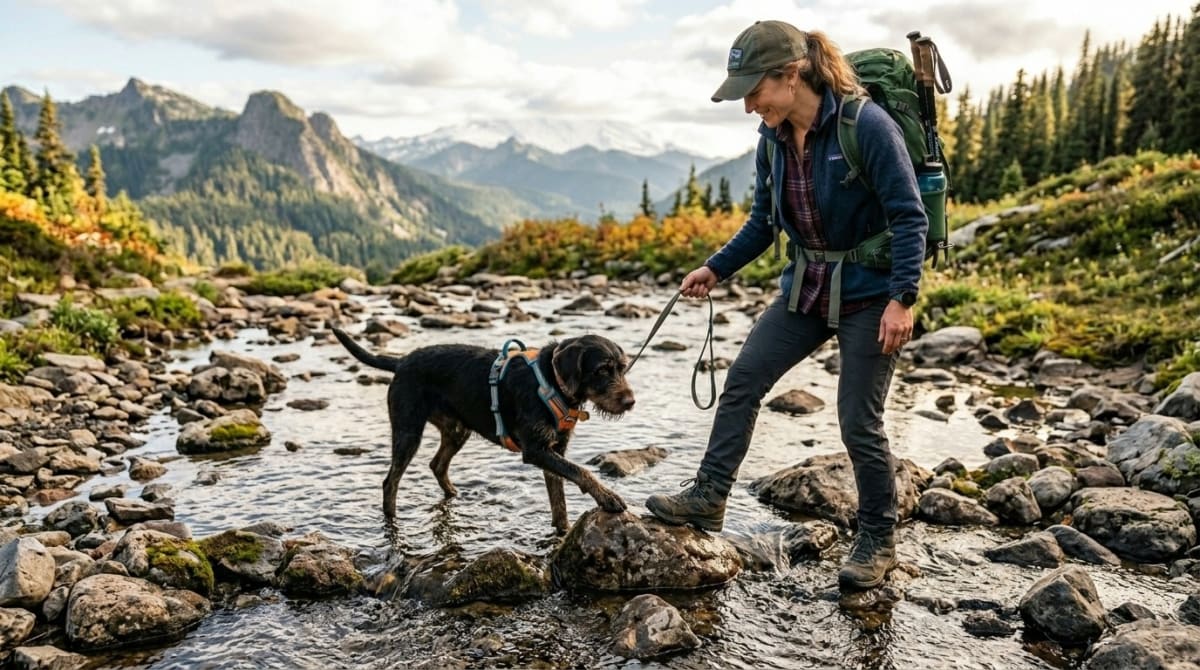
Lots of trail guides tell hikers to pick up a small dog or physically drag a large one across a rough stream. Please do not do this. To get a water-averse dog across a creek safely, you have to find a shallow entry point and let them dictate their own footing on a loose leash. We learned this the hard way. Scout is a 50-pound Lab mix rescue who used to absolutely panic at the sight of moving water. During our first season in the Cascades I tried forcing her across a knee-deep ford by keeping a tight grip on her collar, which was a massive mistake that caused her to thrash violently and slip on the mossy rocks until we both nearly tumbled into the main current. Dogs panic because they lack traction. Paws cannot grip slick riverbeds. We have to build their confidence up systematically, starting with the right gear and ending with a route that actually gives them a chance to stay upright.
Key Takeaways
- 1A lifting vest with a back handle is critical - collar pressure during a slip causes trachea injuries, not just fear
- 2The dog must choose their own path on a loose long line - tight leash tension throws animals off balance on wet rocks
- 3Standing parallel to your dog slightly upstream creates a natural eddy of calmer water and makes the crossing far easier
- 4Small dogs need a backpack carrier, not carried in arms - a wet squirming dog shifts your center of gravity on slick stones
What you need
You need a few specific pieces of gear to pull off a safe river ford. Do not attempt deep crossings without them.
A lifting vest is non-negotiable here. A reinforced grab handle sits on the back to help you stabilize the dog over awkward boulders. A standard collar puts all the pressure right on the trachea and causes severe neck injuries if a slip happens.
Grab a long line leash. A ten-foot or fifteen-foot line gives the dog room to actually navigate the terrain naturally. Standard six-foot leashes force the animal into an unnaturally narrow path, and if you take a wide step across a gap a short leash will violently jerk the dog forward. A long line totally prevents that accidental pull.
Trekking poles matter. Two points of contact are just not enough in moving water. Trekking poles provide the extra stability needed to pause in a turbulent flow while the dog figures out their next move. You cannot help a struggling animal if you are busy falling over yourself.
Wear water shoes. Never cross barefoot. Freezing water numbs human feet shockingly fast. That numbness makes it literally impossible to feel slick moss or sharp edges hiding below the surface. Bring closed-toe sandals with aggressive tread or light trail runners that drain well.
Dog backpack carriers are only necessary if the dog weighs less than twenty pounds. Dedicated packs safely transport small dogs that physically cannot wade through the current. Stashing them in a pack keeps your hands entirely free to grip those trekking poles.
How to cross a stream with a dog
Step 1. Assess the water depth and speed
If the water reaches knee height and flows fast, it will easily submerge a medium dog. Rescue protocols strictly dictate avoiding dual risk in rapids. Turn back if you feel at all unsteady. We evaluate every single crossing for Scout before committing to a route. If I cannot see the bottom, we do not cross. Period. Look for the widest section of the stream. When approaching a rapid crossing that looks sketchy, walking a few hundred yards upstream almost always reveals a wider and significantly calmer entry point where the flow loses its dangerous punch.
Step 2. Unclip from the hip belt
Lots of hikers use hands-free leashes attached to a belt while logging miles on the trail, but you have to unclip these before touching the water because a slipping dog caught in a downstream pull will literally drag you right down with them. Hold the leash loosely in the downstream hand. Drop it if they go under. Dropping the line stops a minor slip from escalating into a full-blown backcountry rescue situation.
Step 3. Let the dog choose a path
Dogs are incredibly good at reading terrain. They often pick a completely different route than a human ever would. Step into the water first and leave plenty of slack in the long line. Let them rock-hop or wade at their own comfortable pace. Instead of forcing them to march blindly behind your boots through deep pools, give them enough freedom to scramble over exposed boulders or hunt down a shallow sandbar that naturally suits their physical stride. When Scout hesitates I stand in the water and wait. I toss a high-value treat onto a dry rock near her. She usually figures out a safe path after a few moments of careful observation. The ultimate goal here is independent navigation.
Step 4. Use the vest handle for stability
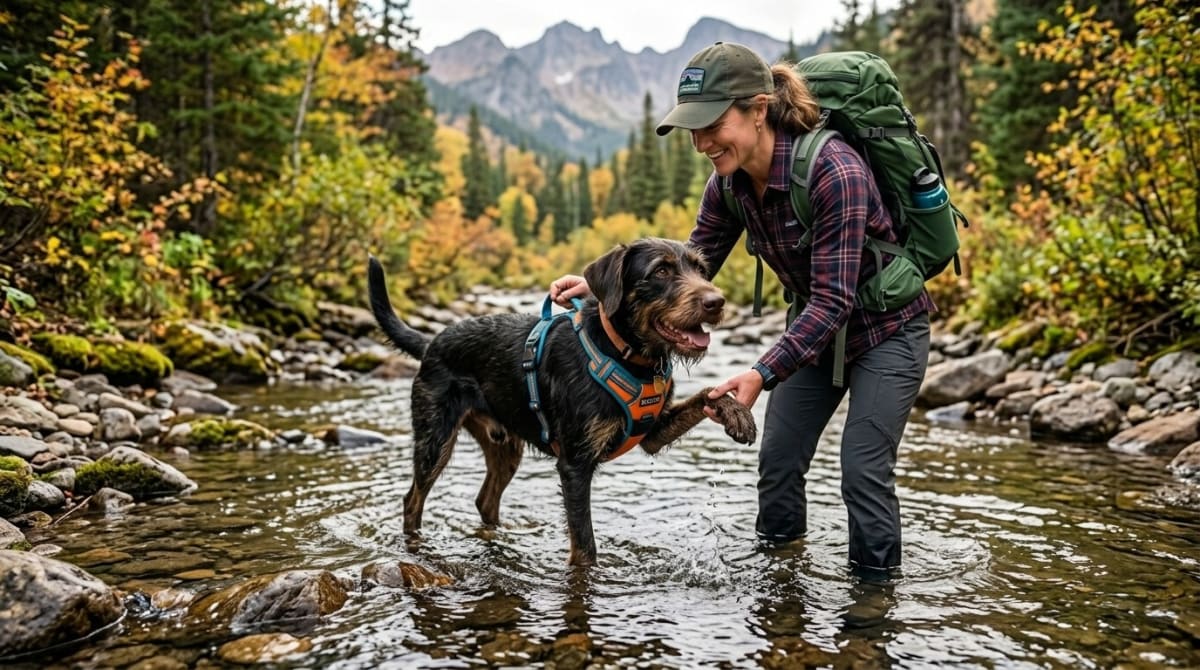
Wet stones cause instant panic. Hold the back handle of the vest to help the dog balance. Do not lift them off the ground. Lifting an animal removes their footing entirely. That triggers intense fear. Instead of pulling the animal up and ruining their contact with the ground, apply a slight upward pressure on the harness handle to support their body weight while they step over tricky gaps or navigate wet logs. We use this exact technique with Scout on deep mud pits out in the Olympics. It keeps her moving forward without feeling trapped in the muck.
Step 5. Wade alongside them
Dogs feel way more secure when they see their handler managing the obstacle easily. Do not stand on the far bank pulling them toward you. Walk parallel to them in the water. Keep your body positioned slightly upstream so your legs physically block the heaviest flow of the current and naturally create a small eddy of calmer water for the dog to comfortably walk through. The same loose-leash principle applies when hiking with a dog that pulls downhill - slack line, natural gait, handler slightly ahead. This makes the crossing massively easier. If they freeze halfway across, just stop walking. Hold the vest handle. Let them lean against your leg until they feel stable enough to resume the trek.
Step 6. Secure small dogs in a pack
Small dogs face a huge physical disadvantage in moving water - and creek crossings are just one of the unique obstacles small dogs encounter on trail. Hikers might feel tempted to just scoop them up. This is insanely dangerous. A wet and squirming dog shifts your center of gravity while you are standing on slick stones, creating a sudden weight transfer that pretty much guarantees a nasty fall and injures both the human and the animal. Place them in a secure dog backpack instead. This keeps them safely contained. Your hands remain completely free for planting trekking poles.
Common mistakes
Hikers constantly create water aversion in their dogs by making a few highly predictable errors.
Pulling the collar is the absolute worst approach. When an owner drags a dog by the neck, the natural animal reflex is to brace the legs and pull backward, which creates a terrifying tug-of-war on a slippery surface and associates that resulting panic directly with the creek itself. You will ruin months of careful training in five seconds. Do not do it.
Crossing barefoot is another massive mistake. Ice melt drops foot temperature in seconds. Hikers lose the vital ability to feel sharp rocks or gauge their own grip strength. If you fall, you drop the leash. By taking the time to bring proper footwear and actively avoiding the temptation to rush the crossing process, owners protect their own ankle joints along with the dog's fragile confidence in challenging environments.
Rushing the entry guarantees a failure. Dogs need to sniff the water and test the mud before committing to stepping in. When handlers march straight into the current and expect the dog to immediately follow, the sudden action triggers a massive flight response. Stand at the edge for a full minute. Let them process the weird new environment.
Punishing hesitation completely ruins trust. Owners so often assume the dog is just being stubborn. The animal is actually using an ancient survival instinct to evaluate the danger before committing to a sketchy jump. The dog knows they lack traction on wet stones. If you yell at them, you just validate their totally rational fear that the river is a dangerous place. Take a breath. Wait them out. Give them the minutes they need to process the obstacle in front of them. If water crossings are part of a broader pattern of fear on trail, hiking with a reactive dog covers the same confidence-building framework for other triggers.
Frequently Asked Questions
Filed under
Sarah is learning to hike with dogs alongside her readers. Scout is her first trail companion, and she shares every mistake, success, and lesson learned along the way.