 Paths & Paws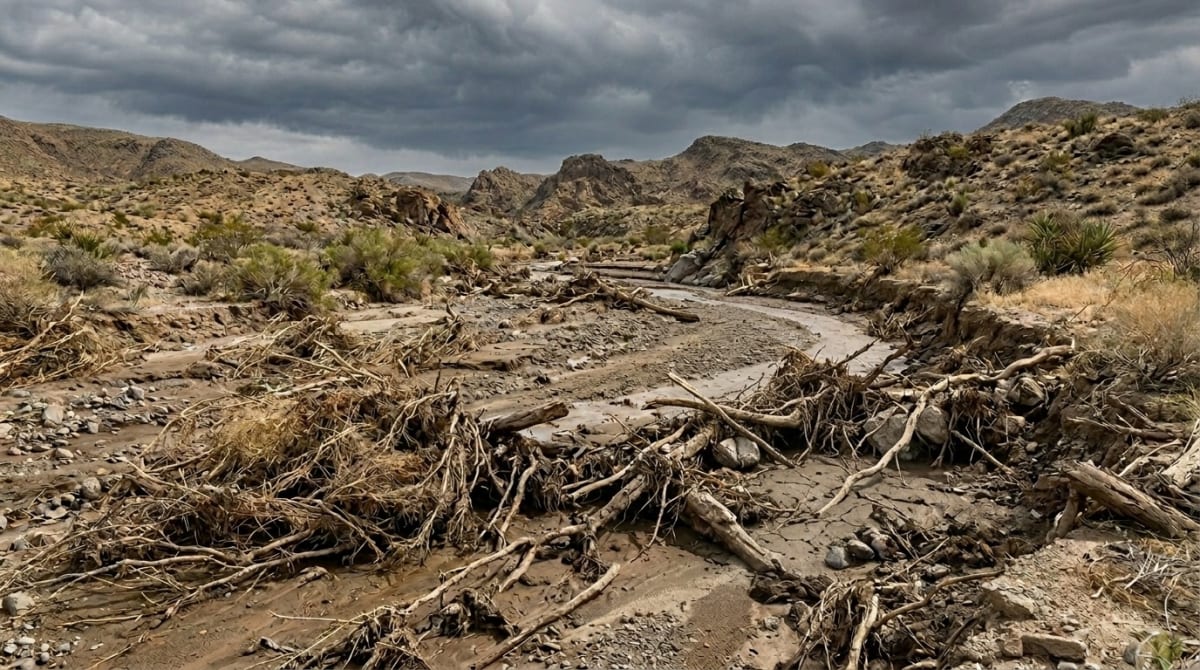
Water moving at just four miles per hour exerts roughly 66 pounds of force per square foot. It knocks people down. It wrecks gear. When we push into desert canyons, a shallow creek can become a fatal wall of water and debris in minutes. We spend weeks navigating the slot canyons of Utah with my 95-pound German Shepherd. Jasper looks athletic and capable. But if flood water hits his chest, the current will sweep him away. Hikers caught in a flash flood zone should never try to outrun the water downstream, because a panicked sprint over loose rock will just exhaust them right before the debris flow catches up. Climbing up the canyon walls is the only option. Dogs don't naturally recognize the danger of a sudden rush of water. We treat every parched wash as an active hazard.
Key Takeaways
- 1Water at 4 mph exerts 66 lbs of force per square foot - six inches of current can knock a large dog off their feet
- 2The smell of rain in a dry canyon is your first warning - exit the wash immediately, don't wait to see the water
- 3Never sprint downstream to outrun a flood - climb canyon walls and target 15-20 feet above the dry creek bed
- 4Post-flood puddles carry Leptospirosis bacteria; bring filtered water and never let dogs drink from trail pools after rain
What Weather and Environmental Signs Predict Flash Floods?
Late summer monsoon season from July through September brings the highest risk for sudden floods. Afternoon storms build rapidly over the high peaks. They dump staggering volumes of rain. The desert dirt hides a hard layer of calcium carbonate called caliche that basically acts like concrete, stopping the deluge from soaking into the earth and forcing it directly into narrow washes where it gains speed and gathers destructive force with every mile it travels.
A group might be hiking in perfect sunshine while a lethal wall of mud rushes down from a distant storm system. The scent of rain hitting baked earth travels for miles. That smell is a clear warning. Smelling fresh rain in a dry canyon means exit options are needed immediately.
An unexpected trickle of brown water is the final alarm. Dead twigs and brown foam push down the wash ahead of the main crest. This initial trickle quickly turns into a dense brown slurry. It carries enough dense sediment and loose rock to scour the canyon walls like liquid sandpaper and destroy everything trapped in the channel. Never wait to see the actual wave. Watch the ground. Trust your ears.
Where to Position Yourself During an Evacuation
Stop moving forward the second we suspect a flood is coming. Do not hesitate. Scan the canyon walls and spot the closest accessible high ground right away. We abandon the trail and climb. Because flash flood currents move infinitely faster than humans or dogs can sprint over jagged terrain, trying to outrun the water down the canyon practically guarantees getting caught in the debris flow.
Not all canyons offer an easy out. Wide V-shaped canyons usually have sloping talus fields we can scramble up. True slot canyons feature sheer vertical walls polished smooth by centuries of previous floods. In a narrow slot canyon survival depends entirely on locating a jammed choke stone or a rare break in the vertical rock face.
Lifting a massive dog by their front legs will dislocate their shoulders. We use Jasper's harness handle to lift his core weight while guiding his back legs onto stable rock ledges. I practice this lifting maneuver with him on small boulders near our house so neither of us panics when we have to execute it for real miles from the trailhead. Reaching safety requires intense physical exertion and calm deliberate movements.
Aim for wide ledges or stable rock slopes well above the canyon floor, targeting at least 15 to 20 feet above the bone-dry creek bed. The immense weight of the rushing water creates intense centrifugal force as it whips around tight corners, causing the flood level to rise wildly on the outside bend of the canyon wall and sweep away anything clinging to the rock. Always escape on the inside of the curve. Wait for the water to recede. Stay put. Secondary waves frequently follow the initial crest.
Safe Camping Site Selection
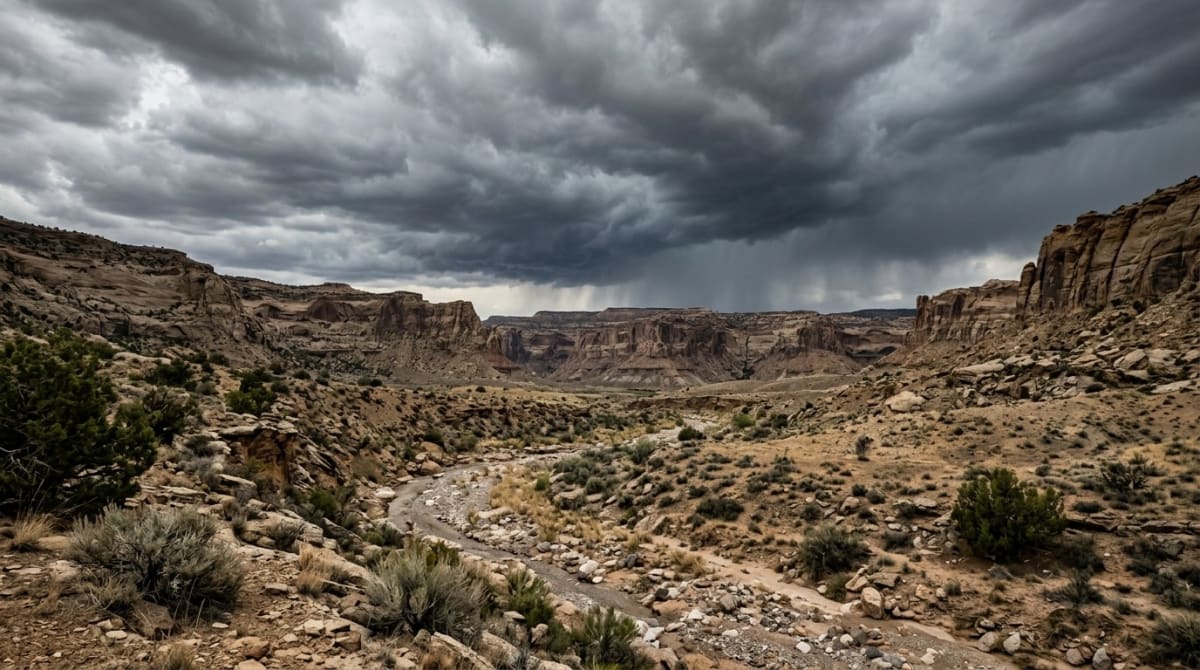
Pitching a tent in a parched wash is a massive gamble. Even if the local forecast calls for totally clear skies over the immediate camping area, an isolated thunderstorm forming dozens of miles upstream can easily funnel a huge wall of water directly through the shelter while campers sleep. We have to read the terrain carefully to find genuinely safe spots. Move high. Stay dry.
Choosing a secure campsite means analyzing the canyon geometry. Never camp on the outside bend of a dry river curve. Water traveling at high speeds cannot negotiate tight turns efficiently. The sheer momentum carries the current straight into the outside wall, scouring away the bank and destroying anything sitting in its path. We look for an elevated sand bench on the inside of the curve, tucked securely behind immovable boulders.
Look closely at the trees and brush. Lines of dead grass and dried mud tangled high up in the branches mark the exact high water level of previous floods that tore through the canyon. Pitch the tent at least 15 feet above that highest debris line. Do not trust the currently dry creek bed. The historical evidence caked onto the canyon walls shows exactly what the water is capable of doing.
We scout our camp locations long before sunset. I want elevated benches of solid rock well above the main drainage channel with a clear escape route scaling the wall. Never tie a dog to a tree near the wash at night. A tethered dog will drown in the dark before anyone can cut the line.
The Unique Danger to Dogs in Floodwater
Canine body mechanics simply aren't built to withstand swift water. A human can lean forward into the current and plant two heavy boots firmly on the riverbed to anchor themselves. Dogs just float. They present a large horizontal surface area to the rushing water. Once the flow reaches Jasper's knees, the current actually starts to lift him off his feet. Once it hits his chest he loses all control. Never guess with swift water.
We don't let our dogs wade through moving water that exceeds their wrist joints during high-flow conditions. Because the murky brown water completely hides submerged hazards like jagged branches and massive tumbling boulders, a dog fighting a strong current will burn out and completely exhaust themselves in a matter of minutes.
Freezing cold floodwaters also introduce massive hypothermia risks. The storm rain usually falls as hail or near-freezing water up in the high mountains before rushing down into the baking desert canyons. Dogs face immediate hypothermia the second they get swept away. Cold water shock causes involuntary gasping. They inhale silted slurry right into their lungs.
The thick debris tumbling in the water acts like a weapon. Fast-moving floods carry thousands of jagged rocks, splintered tree branches, rusted wire, and abrasive sand that easily slices paw pads wide open. Even after the main flood crest finally passes, the remaining mud is incredibly treacherous. Deep suction pits form along the edges. Jasper has sunk to his chest in post-flood mud, requiring me to physically dig his legs out of the thick sludge before he completely exhausted himself trying to escape the trap.
The aftermath of a flood leaves entirely new medical risks scattered across the trail environment. Surging floodwaters flush animal waste and soil bacteria into stagnant pools. A 2025 study published in Infectious Disease Reports tracked dogs rescued from heavily flooded areas and discovered severe Leptospirosis outbreaks spreading among the exposed animal population due to contaminated water exposure. The bacteria triggers fatal kidney failure. Never let them drink from trail puddles. Bring filtered water from home. Force them to drink from their own bowl.
Frequently Asked Questions
Kelly brings an engineering mindset to dog hiking gear. After thousands of miles with Jasper testing every harness, pack, and boot on the market, he knows what holds up and what fails.
References & Further Reading
- Canine Leptospirosis in Flood-Affected Areas of Southern Brazil: Molecular Assessment and Public Health Implications — Infectious Disease Reports (2025)