 Paths & Paws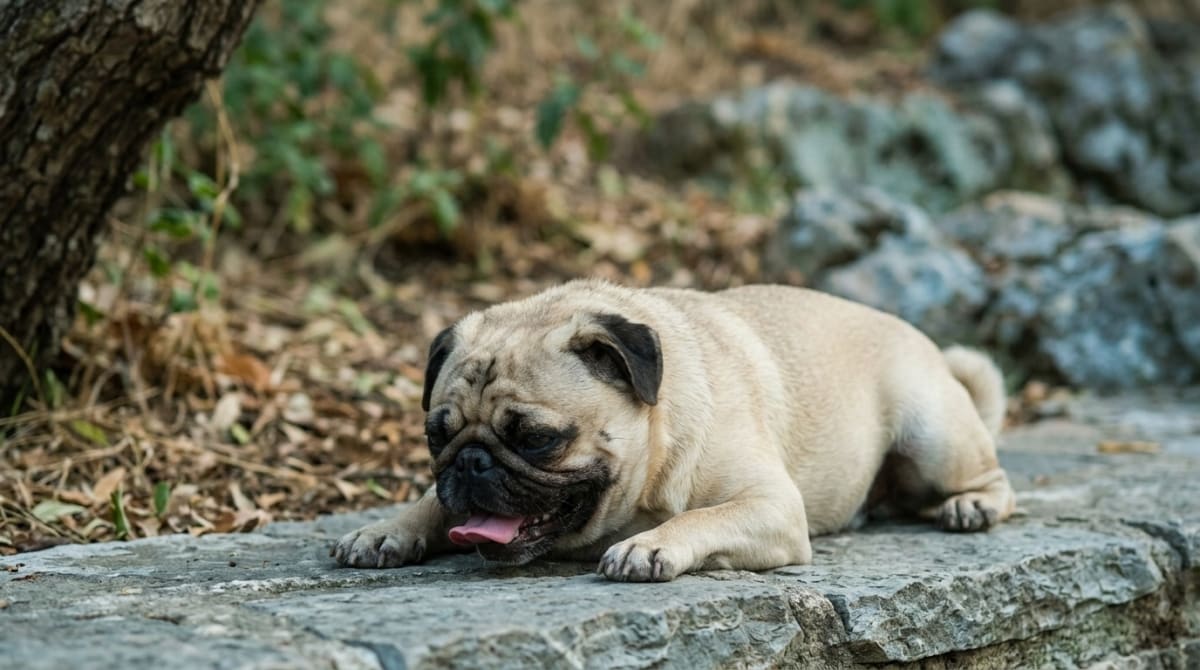
Most owners figure any dog can survive a simple nature walk. Not true. We pulled the veterinary data on exertional heatstroke and the numbers are grim. A 2022 review found that flat-faced breeds are more than twice as likely to develop heat-related illness compared to dogs with standard snouts. A 70-degree day feels perfectly fine to us. That exact same temperature can trigger a full respiratory crisis for them. Scout is a 50-pound Lab mix rescue. Her long snout makes her incredibly efficient at cooling down on the trail. But when my friend started bringing her French Bulldog, Barnaby, on our summer loops in the Cascades three seasons ago, we had to rethink our entire approach to heat management.
Key Takeaways
- 1Flat-faced breeds are more than twice as likely to develop heat-related illness as standard-snout dogs.
- 2Keep brachycephalic dogs under 70°F, on routes under two miles, and out only at dawn.
- 3Raspy panting (stertor), a blue or purple tongue, or sudden stops are emergencies - stop hiking immediately.
- 4A Y-chest harness, cooling vest, and dog carrier backpack are the three pieces of gear you must always carry.
The Breathing Mechanics
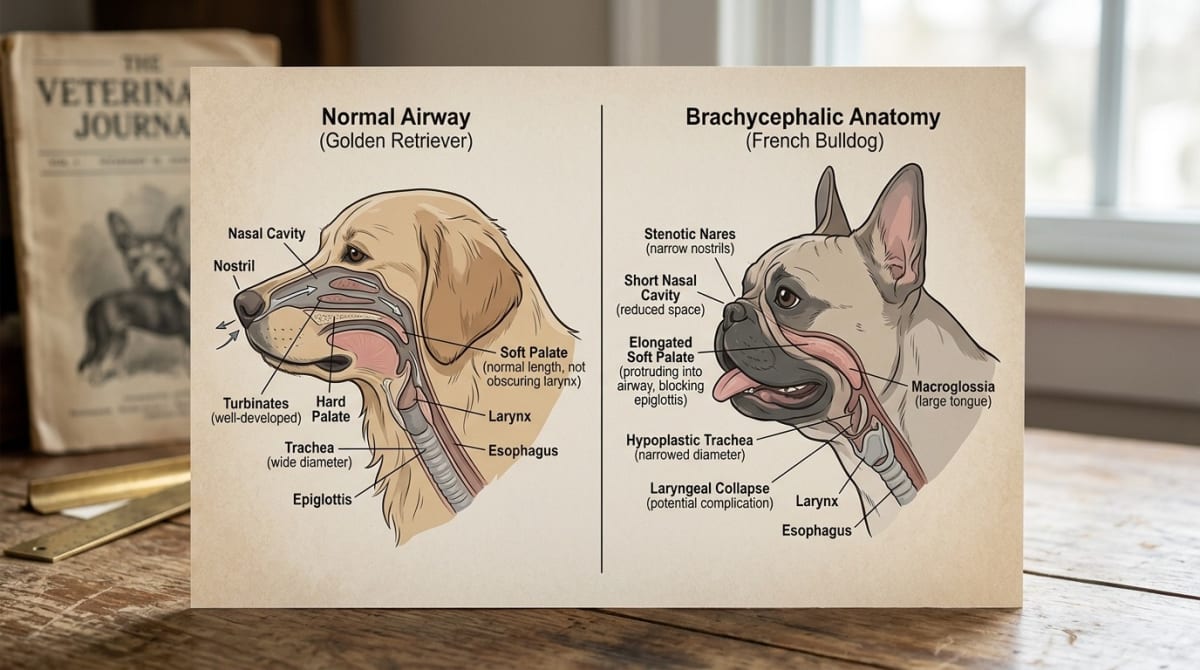
Dogs don't sweat. They dump heat through panting. When Scout pants, air flows freely over the massive surface area of her nasal passages and tongue. She releases heat easily even during steady climbs. Pugs and Frenchies have the exact same amount of soft tissue crammed into a fraction of the skull space. It creates a severe structural bottleneck. The clinical term is Brachycephalic Obstructive Airway Syndrome. The reality is much simpler. They have narrowed nostrils and an elongated soft palate that hangs down and physically blocks the windpipe.
Try breathing through a pinched cocktail straw while running. That is what a flat-faced dog experiences on a hike. Since they cannot move air efficiently they cannot release body heat. It gets trapped inside the dog's core. As internal temperatures spike the dog pants harder to compensate. This mechanical friction actually causes the airway tissues to become inflamed and swell up. Swelling further chokes off the airflow. The cycle escalates fast on the trail because any extra physical effort demands way more oxygen than that compromised airway can possibly supply, and this violent mismatch leads straight to exhaustion and a very real risk of cardiovascular collapse.
Their anatomy simply does not support sustained aerobic work. Every step up a hill forces the heart to pump harder. The lungs try pulling in more air but hit an instant wall of resistance from those tiny nasal openings. This negative pressure sucks the soft palate deeper into the airway. They literally begin to suffocate from the effort of trying to breathe.
Temperature and Distance Limits
Vets put the danger zone for these breeds much lower than you might think. A 2022 study in Veterinary Evidence confirmed that exertional heat stress is the single most common trigger for heat-related illness in dogs. For Pugs and Frenchies this risk skyrockets when the weather warms up even slightly. Follow the 70-degree rule. We treat 70 degrees Fahrenheit as the hard maximum temperature for taking Barnaby out. Even down at 65 degrees high ambient humidity can trap heat and ruin their evaporative cooling. If the humidity breaks 60 percent we leave him on the couch and Scout and I hit the trail alone.
Distance limits require brutal honesty. Keep routes under two miles. Pick flat trails heavily shielded by tree cover. Elevation gain forces the heart to work harder and demands massive amounts of oxygen. Because their airways are so restricted, climbing steep grades puts immense, dangerous stress on their cardiopulmonary system.
Timing changes everything. We only bring flat-faced dogs out at dawn. Morning air is cool and the dirt hasn't soaked up any solar radiation yet. Evening hikes pack a hidden danger because asphalt and packed dirt hold onto radiant heat from the afternoon sun and bounce that warmth straight up into the dog's underbelly, which ruins any chance they have of lowering their core temperature.
Never force them to match a standard hiking pace. Let them stop. Let them sniff. These little micro-breaks give their breathing rate a chance to drop before tissue swelling starts.
Trail surfaces dictate how much heat gets trapped. Skip the exposed rock scrambles and wide gravel access roads. Those materials bake in the sun and turn the path into an absolute oven. Stick to soft dirt winding through thick forests. We learned this the hard way on a supposedly easy loop near Mount Si. The ambient air actually felt chilly. But the exposed rocky sections radiated intense heat upward. Barnaby started gasping within ten minutes of hitting the rocks and we had to bail out immediately. Press a bare hand against the ground before letting a short-nosed dog walk there. Warm to human skin means dangerous for their paws and chest.
Map out your emergency exits before leaving the parking lot. If a heat crisis strikes you need the absolute shortest path back to the car. Deep backcountry wilderness trails are just not a smart place for Pugs or Bulldogs. Stick to state parks and urban trail networks with fast road access.
Respiratory Distress Signs
You have to watch these dogs constantly on the trail. Never wait for them to physically stop walking. Most dogs will blindly push past their own physiological limits just to stay with the pack.
Listen to the panting. Normal dog panting is rhythmic and fairly quiet. When these dogs overheat they develop a loud raspy sound veterinarians call stertor. If the breathing suddenly sounds like harsh snoring or a roaring wind, the airway is actively failing.
Watch the tongue. A healthy dog tongue stays pink. If it turns purple or muddy blue the dog is experiencing cyanosis. Their blood oxygen has tanked to a critical level. Stop immediately. Our full breakdown of dog heatstroke signs covers the complete progression from early warning to emergency, but blue tongue means you are already past the warning stage. Pay attention to the actual shape of the tongue too. A flat-faced dog in severe distress will often curl the tip of their tongue up like a spoon while panting, and this strange behavior is a desperate biological reflex to maximize surface area and dump trapped heat before their organs start taking damage.
Watch for sudden behavioral shifts. A dog that usually charges ahead will start drifting to the back. Refusing to walk isn't stubbornness, it is a basic survival mechanism. If Barnaby abruptly sits down in the shade we call the hike right there. Heavy drooling points to intense nausea triggered by heat stress. Thick ropey saliva tells you the dog is severely dehydrated and fighting for air.
Affiliate Disclosure: Paths & Paws earns commissions from qualifying purchases made through links on this page. This supports our field testing and does not affect our recommendations. We only recommend gear that passes our trail testing standards. Learn more
Cooling Strategies on the Trail
We treat heat management like a tactical operation when Scout's short-nosed buddies tag along. Ditch the neck collar. Collars put direct physical pressure on the trachea and crush an already compromised airway. A well-fitted Y-chest harness is mandatory. It redirects all the pulling force safely across the shoulders.
Pack a dedicated cooling vest. Soak the material in freezing water back at the trailhead. As the water slowly evaporates it physically pulls heat away from the dog's core. Pour fresh water over the vest every 30 minutes to keep the evaporation going.
Bring a rescue carrier. We never hit the dirt with Barnaby without carrying a specialized dog backpack. The second he shows fatigue he goes straight into the pack. We get to finish the loop and he doesn't have to walk himself into heat exhaustion.
Fill an insulated bottle with ice water. Offer tiny sips every fifteen minutes. Do not let them drain the bowl. Gulping massive amounts of water usually triggers vomiting, which clogs up that incredibly narrow airway with stomach contents and creates a terrifying choking hazard for a dog who is already fighting for every single breath. Just splash the leftover cold water directly onto their bare belly and paws to force their internal temperature down.
Who Should Stay Home
Let's be honest about this. Some dogs just do not belong on hiking trails. Plenty of brachycephalic dogs struggle to pull a clean breath while sleeping on a living room couch. Those dogs suffer from severe airway disease and have absolutely no business doing strenuous outdoor miles. Any dog with a history of fainting episodes needs to stick to flat pavement walks around the block. Passing out means the brain is being entirely starved of oxygen during exertion.
Overweight flat-faced dogs carry double the baseline risk. Extra body fat insulates the core and packs even more soft tissue into the throat. That narrows an already tiny breathing passage down to nothing. A 2023 study in Frontiers in Veterinary Science tracked thermoregulatory responses to exercise in French Bulldogs and discovered that surgical treatment for airway syndrome only offers very slight relief for exercise tolerance. Even dogs with expensive corrective throat surgery are still incredibly vulnerable to heat stress. Do not drag them past their resting limits miles from the nearest road. Keep them in the air conditioning.
Frequently Asked Questions
Sarah is learning to hike with dogs alongside her readers. Scout is her first trail companion, and she shares every mistake, success, and lesson learned along the way.
References & Further Reading
- Heatstroke and brachycephalic dogs - is there an increased risk? Vet Evid 2022 — Vet Evid (2022)
- The effect of the surgical treatment of brachycephalic obstructive airway syndrome on the thermoregulatory response to exercise in French bulldogs: a pilot study. Front Vet Sci 2023 — Front Vet Sci (2023)