 Paths & Paws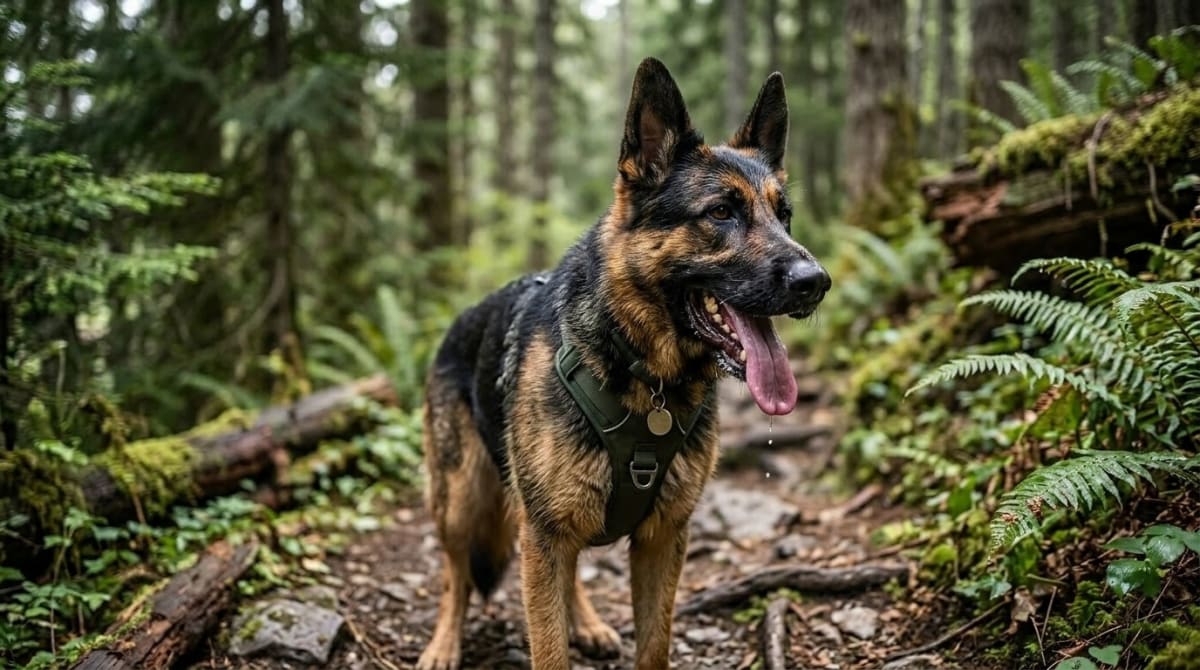
Is hiking in 90% humidity safe for dogs? Rarely. If the temperature cracks 70 degrees alongside that kind of moisture, a dog faces immediate danger of heat stroke. We see hikers make this exact calculation error every summer. They check the thermometer, see a mild 75 degrees, and hit the trail. They ignore the humidity entirely. That oversight kills dogs.
Jasper is a 95-pound German Shepherd with a thick double coat. When we tackle the lower elevations of the Cascades, we read weather apps differently. We track local weather station data against Jasper's actual panting rate on the trail, because an ambient temperature of 70 degrees places entirely different demands on his system when the atmosphere holds its maximum payload of moisture. The thermometer lies. The heat index tells the truth.
Key Takeaways
- 1When temperature plus humidity totals 150 or higher (the 150 Rule), cancel the hike and keep your dog indoors.
- 2Check dew point, not just humidity percentage. Above 70°F dew point, evaporative cooling fails completely.
- 3Phase-change ice-pack vests work in high humidity. Evaporative vests do not.
- 4Cool an overheating dog by parting the fur and applying cold water directly to bare skin at the belly and groin.
Why High Humidity Breaks the Cooling System
Dogs rely on evaporation to survive. Humans cool down by sweating and letting a dry breeze pull moisture off our skin, but dogs cool down by panting. They drag dry air in over the wet surfaces of their tongue and lungs. That air picks up heat from the blood supply in those tissues. Then the dog exhales the hot vapor. This setup works beautifully in an arid desert. In 90% humidity the system just crashes.
Think of the air as a sponge. When humidity hits 90% that atmospheric sponge is maxed out. It literally cannot hold another drop of water. When a dog pants, the moisture in their respiratory tract has nowhere to go. The internal engine keeps running and generating friction without any functional exhaust system to vent the rising core temperature. The body heat stays trapped inside.
We saw this dynamic play out with Jasper multiple times across three Pacific Northwest summers, most sharply on a muggy July morning near Mount Si. The ambient air temperature sat at just 72 degrees. Within two miles his panting became shallow and frantic. His core temperature climbed fast because the saturated air completely blocked his natural cooling mechanics. A 2021 study in Frontiers in Veterinary Science tracked environmental heat exposure in dogs, confirming that local environmental conditions dictate a dog's true thermal burden far more than regional ambient temperatures. High humidity removes their main defense against overheating.
The 150 Rule for Trail Safety
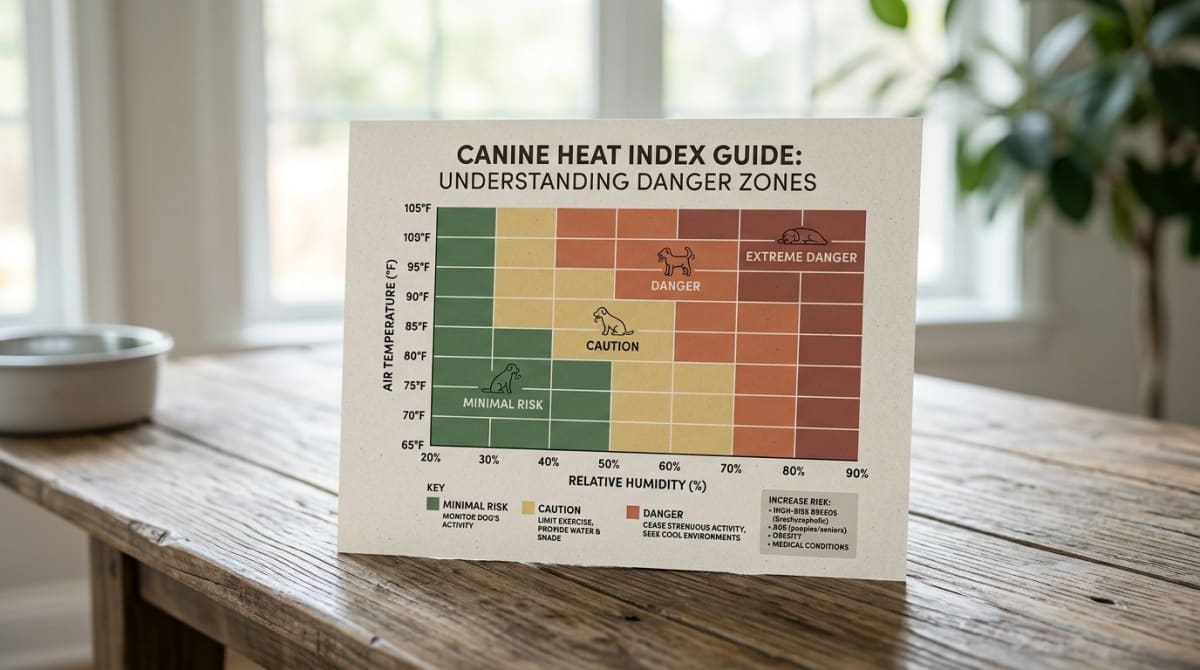
We need a reliable way to measure trail safety before even leaving the driveway. The standard veterinary guideline is the 150 Rule. Add the temperature in Fahrenheit to the relative humidity percentage. If that number equals or exceeds 150, cancel the outdoor exercise and keep the dog inside.
The math creates four clear zones. A total under 130 is generally safe for most dogs. Hitting between 130 and 140 means proceeding with caution at a much slower pace. A total from 140 to 150 indicates high risk and caps walks at under 10 minutes. Anything over 150 falls into the danger zone, meaning everyone stays indoors.
Apply this to a 90% humidity day. A thermometer reading of 75 degrees gives you a total of 165. That pushes well past the danger threshold. A 65-degree morning at 90% humidity still hits 155. Even cool but damp mornings can force dense-coated dogs into heat exhaustion if they exert themselves on a steep incline.
Because Jasper weighs 95 pounds we adjust this scale downward. Large dogs generate huge amounts of body heat through intense muscle movement alone, meaning they reach critical core temperatures much faster than smaller breeds even when the outside air feels perfectly fine to a human. We stop hiking when the total hits 135. You have to establish a baseline for your own dog based on their size and fitness level. Do not push through the muggy air just because the drive to the trailhead took an hour.
Why Dew Point Matters More Than Relative Humidity
Relative humidity fluctuates as the air heats up during the day, but the dew point gives us a fixed number representing the true moisture content outside. We always check the dew point before loading Jasper into the truck.
If the dew point is under 55 degrees the air is dry. Evaporative cooling works perfectly. When the dew point hits 65 degrees the air starts feeling sticky. Your dog will pant harder and need more frequent rest breaks. Once the dew point tops 70 degrees, the stagnant heavy air blocks evaporation from the lungs entirely, rendering any strenuous hike a serious physiological risk regardless of what the standard thermometer says.
Affiliate Disclosure: Paths & Paws earns commissions from qualifying purchases made through links on this page. This supports our field testing and does not affect our recommendations. We only recommend gear that passes our trail testing standards. Learn more
Modified Strategies for Humid Climates
Humid regions require a different approach. Staying inside all summer is not an option. We alter everything about our trail routine when the dew point climbs.
Our best dog cooling vests roundup covers which phase-change models hold temperature longest in humid conditions - it's the single gear upgrade that matters most here.
What You Need
- A digital rectal thermometer — the only accurate way to get core temperature on the trail
- Extra water — double the normal dry-weather load
- A phase-change cooling vest — evaporative vests fail in high humidity, so use ice-pack vests instead
- A plan for emergency cooling — know exactly where the closest creek or lake sits on the route
Step-by-Step Trail Adjustments
- Hike before sunrise. Do not wait for 8:00 AM. Be on the trail at first light when the ambient temperature hits its absolute lowest point of the day.
- Choose water-adjacent trails. Pick routes with safe flowing creeks or alpine lakes. When a dog wades up to the chest, the water rapidly pulls heat out of the core.
- Enforce rest breaks. Stop every 15 minutes. Offer water. Force the dog to lay down in the shade, since driven working breeds will often ignore their own physical distress just to keep moving forward.
- Monitor the pant. Watch the tongue. A relaxed tongue lolling out the side of the mouth is perfectly normal. A tongue pulled far back into a wide grimacing mouth signals thermal strain.
If a dog overheats you have to act fast. A 2023 study published in Animals found that active cooling through targeted water application dropped core temperatures far faster than passive resting in the shade. We carry extra water just for soaking Jasper's belly and groin if he gets too hot. Splashing water on the outer topcoat does absolutely nothing. You have to part the fur and get the cool water down to the bare skin where the major blood vessels run close to the surface.
Who Should Avoid Humid Hikes Completely
Certain physical traits eliminate any margin for error. If your dog falls into these categories, ignore the 150 Rule entirely and stick to air-conditioned exercise on humid days.
Brachycephalic breeds suffer the most. Pugs and Bulldogs have compressed airways. They already struggle to move enough air to cool themselves in perfect weather. High humidity makes panting practically impossible for them. We wrote a full guide to hiking with flat-faced dogs that covers their specific respiratory limits and distress signals in detail.
Senior dogs and puppies lack proper thermal regulation. Their bodies just cannot adjust to rapid temperature spikes. Obese dogs carry extra insulation that traps heat, while the extra weight forces their muscles to work much harder. Northern breeds face extreme danger too. Their winter fur traps the internal heat that the humidity prevents them from exhaling.
When summer humidity blankets the Pacific Northwest we skip the mountain trails entirely. We do scent work in the basement instead. Brain games tire a dog out just as thoroughly as physical exertion on a steep incline, and they carry absolutely zero risk of triggering a massive veterinary emergency miles from the truck. If you do suspect heat stroke, our dog heat stroke symptoms guide walks through the full emergency response.
Frequently Asked Questions
Kelly brings an engineering mindset to dog hiking gear. After thousands of miles with Jasper testing every harness, pack, and boot on the market, he knows what holds up and what fails.
References & Further Reading
- Environmental Heat Exposure Among Pet Dogs in Rural and Urban Settings in the Southern United States. Front Vet Sci 2021 — Front Vet Sci (2021)
- A Randomized Cross-Over Study Comparing Cooling Methods for Exercise-Induced Hyperthermia in Working Dogs in Training. Animals (Basel) 2023 — Animals (Basel) (2023)