 Paths & Paws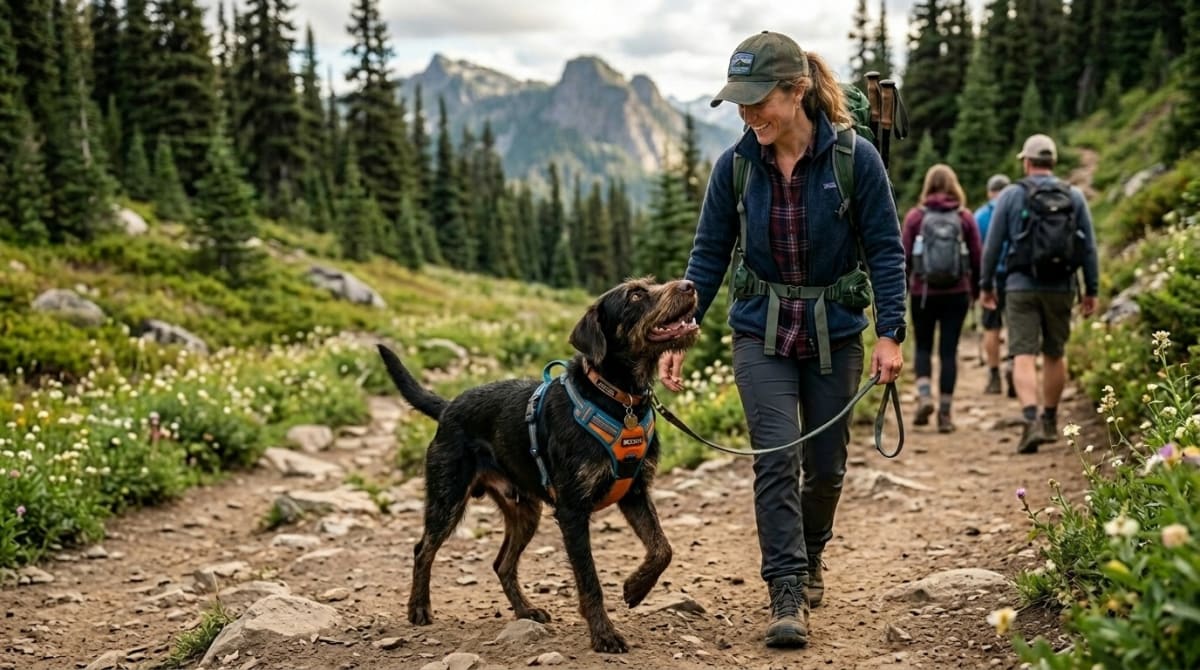
Most hikers expect every dog out in the woods to be fixed. We dug through veterinary guidelines and local trail ordinances to figure out the actual rules for hiking with intact dogs. Scent rewrites the rules. Under the right weather conditions a male dog tracks a female in heat from up to three miles away, meaning basic obedience training crumbles when you fight millions of years of hardwired biological programming.
When we adopted Scout our vet told us to wait. Scout is a 50-pound Lab mix rescue. Our clinic wanted her hitting two years old before surgery to protect her joint development. That meant we spent several seasons navigating busy Pacific Northwest trails with an intact female. We made plenty of mistakes early on. Today we run a strict management system to handle approaching dogs and communicate with the people walking them.
Key Takeaways
- 1A male dog can track a female in heat from up to three miles away - trail etiquette changes completely around intact dogs.
- 2Avoid popular trails entirely during a female's 3-4 week heat cycle and stick to quiet, isolated areas with good sightlines.
- 3Shout 'My dog is intact, please leash yours!' It works where polite requests fail because it communicates the reproductive stakes.
- 4High-value treats (boiled chicken, beef liver) and a practiced check-in command are the two tools that keep an intact dog's focus on trail.
The Behavioral Reality of Unneutered Dogs
People tend to treat intact dogs like aggressive menaces. A 2023 study in the Journal of the American Veterinary Medical Association dug into data from over six thousand dogs and researchers found that longer exposure to gonadal hormones actually correlated with reduced odds of several nuisance behaviors. Keeping a dog intact for health reasons does not automatically ruin them as a trail companion.
An intact dog simply runs on different biological priorities. Unneutered males hunt for females in heat. They mark over competing scents. High-value treats get ignored when following a strong pheromone trail because the reproductive drive overrides appetite completely. Females in heat drop scent markers everywhere they urinate and often become unusually protective or intensely distracted during their cycle.
Dogs have a specialized scent detector up in the roof of their mouth called the vomeronasal organ. It exists exclusively to process pheromones. When an intact male licks the air or chatters his teeth after sniffing a spot on the dirt he is pulling chemical signals straight into this organ. He is reading a detailed biological profile left behind in the brush. This physiological response entirely overrides sit and stay commands. Commanding an animal to stop processing hormones is impossible. Management just means controlling their physical location and redirecting that forward momentum.
Affiliate Disclosure: Paths & Paws earns commissions from qualifying purchases made through links on this page. This supports our field testing and does not affect our recommendations. We only recommend gear that passes our trail testing standards. Learn more
Handling a Female in Heat on the Trail
Scout's first heat cycle caught us entirely off guard. We figured we could just keep her on a short leash and go about our normal weekend miles in the Cascades. We were very wrong. Walking a bleeding female leaves a glowing chemical map behind you. Male dogs will track it.
A standard heat cycle lasts three to four weeks. During the first two weeks a female bleeds while her body prepares for ovulation. The bleeding stops right at the estrus phase. This is the danger zone. She is fertile. She will actively search for male dogs. Stick to quiet neighborhood walks or isolated scrublands during this entire four-week window to avoid creating a highly dangerous and chaotic situation for every other hiker trying to enjoy their weekend. Popular trailheads are just too risky.
Female dogs go through massive behavioral shifts during their cycle. Scout grew incredibly tired during her first week. She lost her usual enthusiasm for long hikes and preferred sleeping out in the sun, which taught us that forcing an exhausted, hormonally fluctuating dog up a steep mountain grade only generates unnecessary stress for everyone involved. Let them sleep. When she did get a burst of energy her recall vanished. A normally obedient female in heat will bolt into the woods to find a mate. Keep them physically attached to your body with a hands-free leash at all times. A dropped handle is all it takes to lose a dog in the woods.
If you absolutely have to hike use the drive-and-walk method. Do not walk a female directly from the house to the local park. Put her in the car and drive to the dirt. This breaks the continuous scent trail. Loose male dogs might track her around the hiking area but they cannot follow her back to the front door.
We started using washable dog diapers on the trail during Scout's cycle to prevent her from dropping urine on rocks and shrubs. Take the diaper off well off the main path when she needs to relieve herself. Pack out all used materials just like human waste. A discarded diaper tossed in the brush acts as a lasting scent beacon for any unneutered dog passing through the valley, drawing them directly to that spot for days.
Managing the Intact Male Dog on the Trail
While females in heat present a temporary headache, an intact male demands year-round management. Testosterone dictates their environmental interactions. They mark trees and wooden trail signs constantly. This marking behavior slows down the pace and creates friction with other hikers trying to pass.
We fostered an intact male Pointer named Duke for six months. Duke taught us that casual strolls through the woods with an unneutered male do not exist. Their attention requires constant active management. When a male catches the scent of a female in heat his brain shifts entirely to tracking mode. He might whine or pull violently against the harness straps.
Break the fixation immediately when these behaviors start. Do not let them linger at a scent marker. A quick sniff is fine. Standing over a patch of dirt for thirty seconds allows their arousal levels to spike dangerously high. Use the leash tension to keep their feet moving forward.
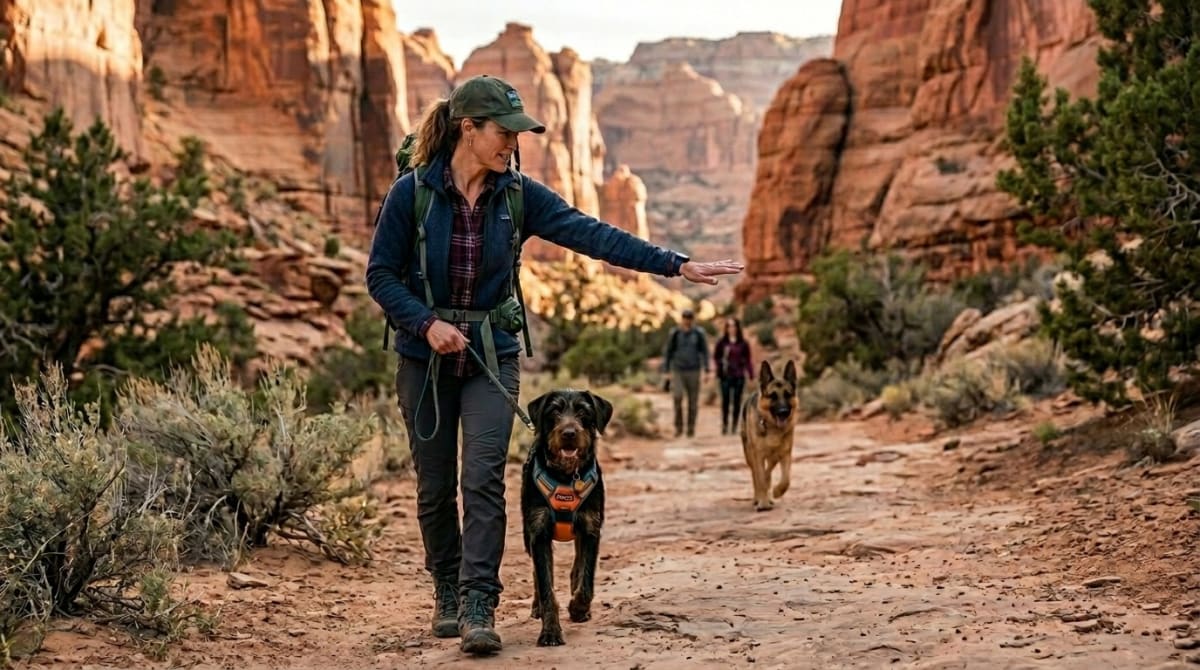
Watch closely for mounting behavior at trail choke points. When trails narrow and dogs are forced to pass shoulder-to-shoulder an intact male might try to mount the passing dog, which almost always triggers an immediate and violent fight between the two animals before owners can react. Step entirely off the dirt when another dog approaches. Make the male sit and face your direction. Hand out rewards continuously until the other animal is completely out of sight.
Trail Etiquette and Communication
Approaching off-leash dogs are the biggest threat to an intact animal. When someone spots a dog coming up the dirt they usually yell that their pet is friendly. Kill that interaction immediately. Friendly means absolutely nothing when hormones get involved.
Never say the dog is mean. That just makes people defensive. Shout back, "My dog is intact, please leash yours!" This exact phrase works beautifully. People grasp the reproductive stakes even if they habitually ignore county leash laws. We used this line constantly with Scout. Hikers who normally brushed off polite requests would sprint to grab their loose dogs before they could close the gap between us.
Always step off the path to create a buffer. Put your body between the dog and the oncoming hiker. Keep them on a short lead attached to a sturdy Y-chest harness. Retractable leashes are totally useless here. If a loose male dog charges a female in heat you need tight physical control over her movement to prevent a disaster. Use a loud firm voice to stop an approaching dog in its tracks. The main priority is protecting the animal from an unwanted encounter, which means you have to stop worrying about being polite to a stranger who refuses to recall their own pet when asked.
Impulse Control and Training Strategies
An intact male dog needs serious impulse control work before hitting public trails. Handlers have to be more interesting than the urine markers around them. That takes practice.
Start by building a rock-solid check-in command. The same focus mechanics behind the trail wait command apply here. We practiced the check-in heavily with Scout in empty parking lots before ever trying it in the woods. Say their name. Reward them the exact moment they make eye contact. They should be conditioned to look up at the handler whenever something interesting happens in the brush.
Upgrade the trail treats. Dry kibble will not pull an intact male away from a fascinating scent marker. High-value rewards like boiled chicken or dried beef liver are mandatory out here. Deliver the reward quickly. Keep a brisk walking pace. An intact dog standing still will start sniffing and sniffing leads straight to fixating. Keep them moving forward. If a dog gets completely obsessed with a spot on the dirt and refuses to budge do not just drag them away by the neck collar. Call their name enthusiastically and walk backwards to draw their body weight toward you instead.
We rely heavily on the U-Turn game. When walking down a trail suddenly say "Turn!" and jog in the opposite direction. Reward them generously the second they catch up. Practice this early on when there are zero distractions around. By the time another dog approaches on a narrow path the dog will view the U-Turn as a fun game rather than a harsh punishment, providing a fast and reliable emergency exit strategy when an unleashed dog comes charging blindly around a corner.
Legal Restrictions and Where to Hike
Local laws dictate where intact dogs can actually hike. Many state parks ban females in heat from entering the property entirely. Managed wildlife areas often run tough regulations regarding unneutered males to keep them from disrupting local breeding populations.
Check the specific regulations for the chosen route before leaving home. County parks and national forests operate under entirely different rulebooks. Never take an intact dog to an off-leash dog park. Most municipalities legally prohibit unspayed females in heat from stepping foot in these fenced areas, and dropping an intact male into a chaotic dog park environment almost always triggers intense fights among the altered dogs.
Look for wide gravel logging roads or Bureau of Land Management acres. These open areas provide plenty of sightlines. Approaching hikers are visible from a long way out. Avoid narrow single-track trails that leave zero space to step aside when a loose dog comes barreling through.
Frequently Asked Questions
Filed under
Sarah is learning to hike with dogs alongside her readers. Scout is her first trail companion, and she shares every mistake, success, and lesson learned along the way.