 Paths & Paws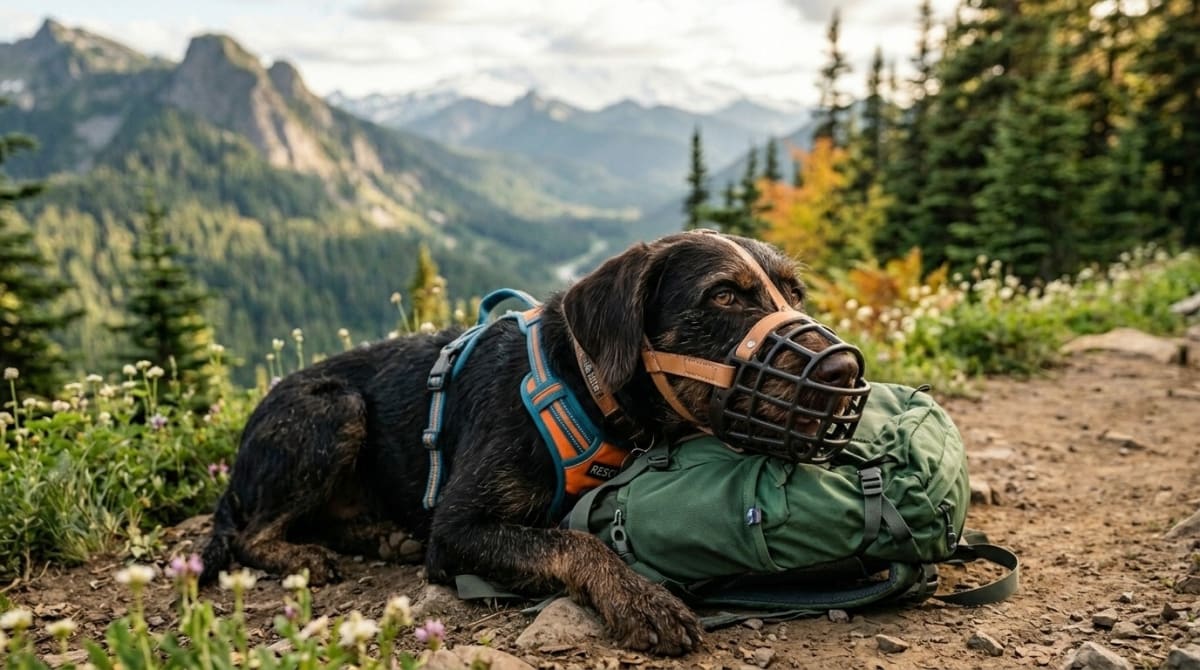
Hikers usually freeze. We saw this exact reaction across 300 miles of shared singletrack last summer with our own rescue dogs. People pull their kids close. This instinct gets the entire situation backward. A hiker who takes months to properly condition a reactive or prey-driven dog to wear basket protection is actually the safest person you will pass all day. A 2020 study in the journal Animals looking at dog aggression found a massive spike in offensive bites happening in public spaces where owners lacked direct physical control over their pets. Muzzles stop these incidents cold. They strip away the risk of severe bites while giving animals who struggle with serious behavioral issues the chance to finally smell the dirt and hit the trail safely.
Key Takeaways
- 1Muzzles signal a handler actively managing their dog — the caged dog is often the safest one on the trail
- 2Basket designs are non-negotiable for cooling and panting — nylon grooming sleeves are basically lethal on a summer climb
- 3Proper sizing lets the dog drink straight from creeks and bowls — the fit should look almost comically large
- 4Conditioning takes four to six weeks of daily couch-time before the first actual trail hike
When Muzzles Make Hiking Possible
Outdoor environments are chaos. You cannot control the deer or the loose golden retrievers. You can only control your own management tools. We regularly meet owners who leave their dogs shut indoors because they fear a bad encounter out on the dirt. This isolation crushes both the human and the animal. Basket muzzles force the outdoors open again for dogs with messy behavioral needs.
When we look at actual trail scenarios we see four main reasons to mask up. High prey drive pushes dogs to blindly chase wildlife. Fear-based reactivity causes panicking dogs to snap when an uncontrolled off-leash pet charges them at a narrow creek crossing. Serious scavenging behavior leads animals to gorge on toxic mushrooms or broken glass left at campsites. And injury recovery often makes normally rock-solid dogs wildly defensive of their personal bubble. A muzzle acts as a hard physical barrier that prevents a pain-induced bite when a well-meaning stranger reaches out to pet them without asking.
We spent last summer running gear on four different reactive rescues. The basket changed everything, giving them back the pine ridges instead of a living room rug.
The Panting Problem and Safety
We need to talk about heat. Dogs do not sweat. Panting is the only real cooling engine they have. They drag air in through the nose and blast it out the mouth to evaporate moisture straight off the tongue. This rapid air exchange chills the blood vessels before that cooled blood circulates back into the deep tissue.
A 2024 study in the journal Animals tracked working detection dogs in hot climates and found that core body temperatures skyrocketed past dangerous medical thresholds after a mere 15 minutes of intense work when the animals could not properly vent heat. Restrict jaw movement on a steep grade and you restrict their survival.
Many well-meaning owners buy cheap nylon grooming sleeves. These tight cloth tubes clamp the mouth totally shut. They are basically lethal on a summer trail. You absolutely must run a basket design built from wire or hard plastic. That cage structure gives the dog room to drop their jaw entirely open to pant or lap water. We reach for wire baskets with our heavy biters. Hard plastic options do the job for dogs who mostly need a visual deterrent or a block against eating trail garbage. Soft silicone models usually fail because they cave in the second a dog smashes its face into the dirt to smell a badger hole.
How to Fit a Basket Muzzle for Drinking
Sizing dictates survival out here. A proper fit looks almost comically large. Plenty of people buy sizes that run way too small simply because they want the rig to look less terrifying to strangers. That vanity choice directly compromises safety. The animal must be able to execute a full yawn.
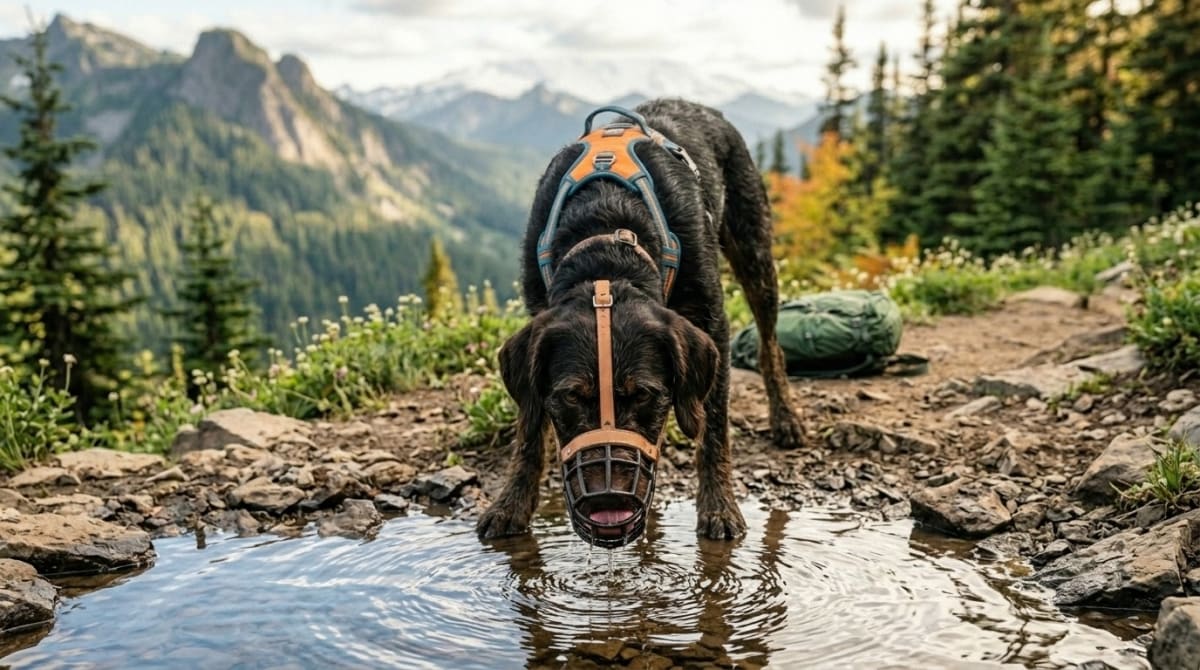
We tell everyone to measure snout length along with circumference, jaw width, and open-mouth height before clicking buy on any website. Guessing those numbers guarantees failure. A custom biothane maker will demand those exact dimensions to build a cage that matches your specific dog. When you get the fit right the dog just dunks the entire bottom third of the basket straight into a creek. The water flows right through the gaps. They lap it up like normal.
We verify four fit parameters in the parking lot before hitting the dirt. The pant clearance has to allow absolute maximum jaw extension. The top rim needs to sit below the eyes without rubbing the brow bone during heavy running. The side panels should float cleanly away from the cheeks. We also lock the neck strap tight enough that only two fingers slide underneath it so the whole rig stays attached even if a frustrated terrier tries to scrape it off against a pine trunk. We always carry an extra-wide collapsible silicone bowl so they can submerge their face completely and drink without banging the edges.
The Step-by-Step Introduction Phase
Please don't just strap the thing on. We rely on a brutally slow conditioning protocol. You literally cannot rush this phase. Force the cage onto a terrified dog and they will spend the next three miles trying to claw their own face off. Getting them used to it takes massive patience.
Our couch-to-trail sequence breaks down into four tedious stages. First we just hold the basket and smear wet food on the inside edge. The dog voluntarily shoves their nose inside to lick the reward. We repeat that boring step every single day. Next we actually clasp the neck strap for maybe ten seconds while rapidly feeding high-value meat, then rip the muzzle off immediately before the animal has any chance to feel trapped or panicked by the restriction. From there the dog wears it for five-minute bursts inside the house. Weeks later we finally graduate to incredibly brief neighborhood walks.
We only attempt a dirt hike after the dog entirely ignores the plastic on their face. This whole ordeal takes four to six solid weeks of daily reps. The gear has to become as utterly boring as a flat collar.
Handling Other Hikers and Etiquette
People will stare. Some will make entirely unhelpful comments. We have heard absolutely everything. Most casual hikers assume the cage means you are walking a vicious and out-of-control monster. You will inevitably encounter off-leash dogs charging right at you while their owner casually yells from a distance that their pet is friendly. That owner is breaking basic leash laws. The muzzle is the only thing protecting your dog from the fallout.
You have to advocate for your animal fiercely. Step straight in front of your pet to act as a physical wall and project loud, firm instructions to the approaching human well before their loose dog reaches your personal bubble. We rely on a few specific commands for these trail encounters. We shout for them to leash their dog and we state clearly that our animal needs distance. If they argue we just demand space to pass. Keep moving without offering any apologetic explanations. Your only job is protecting the dog standing behind your boots. The same positioning tactics and body-blocking techniques we use here apply directly to any reactive dog on the trail whether they're muzzled or not.
We treat dog hiking gear as raw functional tools. After thousands of miles dragging our own rescues down dirt paths we only care about what keeps everyone intact. The cage gets the hard dogs outside.
Frequently Asked Questions
Filed under
Sarah is learning to hike with dogs alongside her readers. Scout is her first trail companion, and she shares every mistake, success, and lesson learned along the way.