 Paths & Paws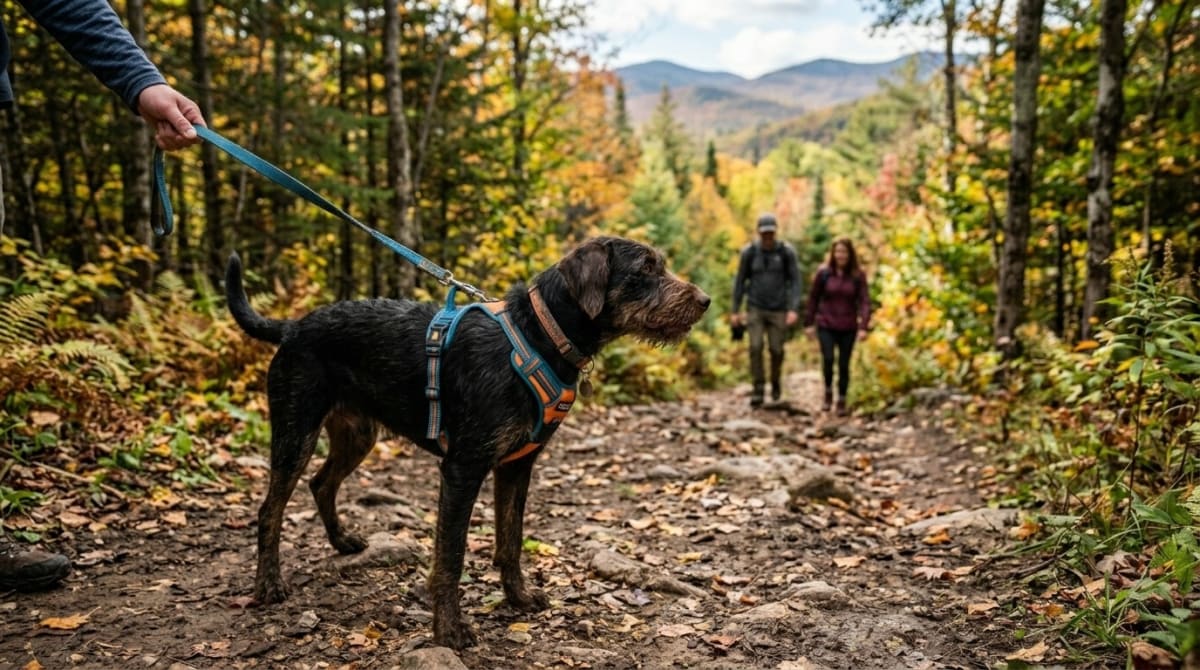
Most owners think a barking dog means the hiking dream is dead. We certainly did. Scout is our 50-pound Lab rescue. Our first trip up the Cascades was an absolute disaster. She lunged at every passing golden retriever until we just packed up and went home. Managing a reactive dog outside takes generous distance and rehearsed communication scripts alongside a solid read on canine body language. According to veterinary behaviorists at Cornell University, reactivity usually stems from fear rather than genuine aggression, and the trail environment pushes these dogs past their emotional threshold, forcing them to react wildly because they feel trapped on a narrow dirt path with practically no other way to communicate their escalating discomfort.
Key Takeaways
- 1Step off the trail at least 10 feet before a trigger approaches - the uphill side gives your dog a vantage point and reduces their sense of being cornered
- 2Keep the leash loose when a trigger appears. Tension travels down the line and signals anxiety directly to your dog
- 3For off-leash dogs heading your way, shout 'kennel cough' to prompt owners to recall their pets immediately
- 4Work at threshold distance and reward calmness - narrow that gap only after months of consistent success
The Gear You Need
Control starts at the trailhead. A standard flat collar puts entirely too much pressure on the trachea when a reactive dog lunges, so we use a front-clip harness for Scout to physically redirect her shoulders the second she locks onto a trigger. Retractable leashes are dangerous. They offer zero leverage. Bring snacks that smell pungent. Dry kibble just will not work when a dog is stressed out of their mind. We pack chopped hot dogs or sharp cheddar cheese in a silicone pouch. A fearful animal needs a compelling reason to focus on the handler instead of the perceived threat. We also clip a bright yellow warning sleeve to Scout's leash that stops well-meaning but clueless hikers from reaching out to pet her without asking us first.
Step 1. Reading Body Language Early
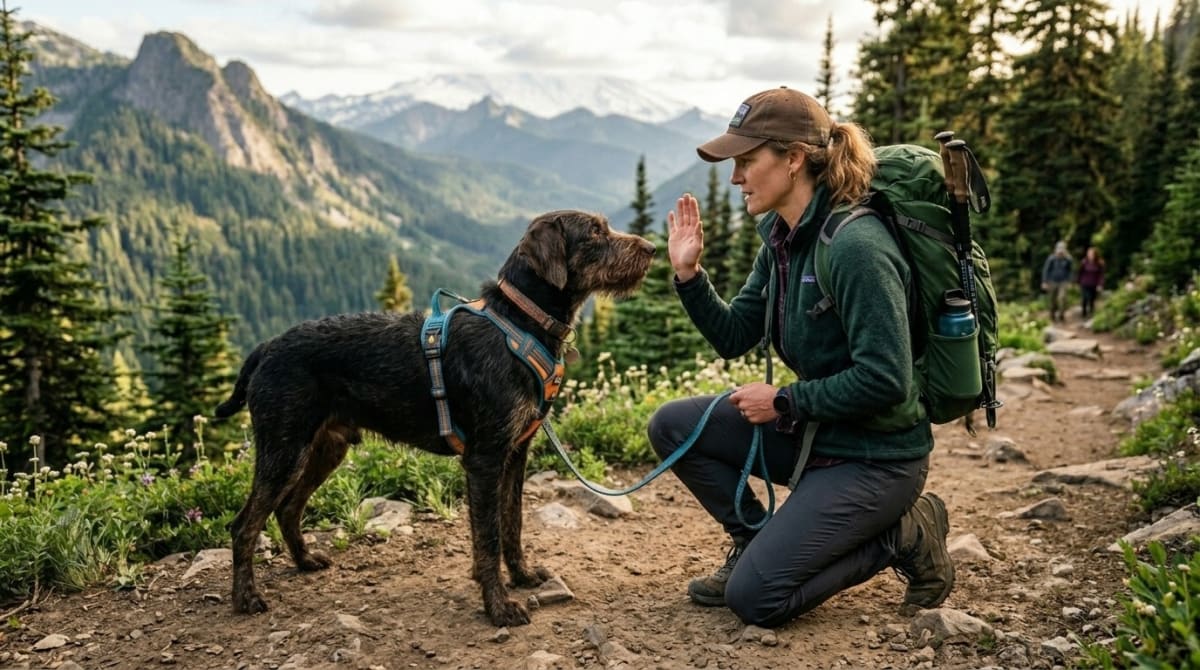
We have seconds to act. A dog will broadcast multiple signs of stress before they finally erupt. We watch the ears and tail position closely. Scout's ears always pin flat against her skull the second she spots a dog in the distance. Her body gets stiff as a board. Move fast. If the growling starts before any leash redirection actually happens the training opportunity is already lost because the logical part of the canine brain completely shuts down the moment they tip over into a full emotional reaction. Our whole goal is intervening during that tiny window of hyper-fixation. We call her name in an upbeat tone. She gets a chunk of hot dog instantly.
Step 2. Trail Etiquette and Creating Space
Dirt paths force dogs into unnatural head-on greetings. This builds immense pressure. We step off the trail early. We push at least ten feet into the brush if the terrain allows it. We always step off on the uphill side of the trail because standing below the path can make a dog feel completely cornered, while an elevated spot gives them a superior vantage point to watch the perceived threat pass by safely. If gaining distance is impossible we just look for natural barriers. We frequently use large trees or boulders to physically block Scout's line of sight. Never ask a nervous dog to sit. Once off the path we use the magnet hand technique where we shove a handful of smelly treats right against her nose and let her nibble the food continuously while the other hikers pass by. Forcing a fearful dog into a stationary position removes their flight option and makes the resulting explosion exponentially worse.
Step 3. Scripts for Passing Hikers
Talking to strangers is our best defense against loose dogs. We prioritize safety over politeness. When an off-leash dog runs forward the owner will usually yell that their pet is friendly. We respond with a firm command. We never say Scout is unfriendly. People routinely ignore that warning. Instead we shout that she is contagious. Yelling "Please recall your dog, we have kennel cough!" works perfectly because people will immediately scramble to leash up their pets to protect them from catching a respiratory illness on the trail. If she just needs space we state her training status plainly. We say "My dog needs space. Please walk past." We skip the long explanations. There is absolutely zero time or mental bandwidth to explain the nuances of behavioral modification to a complete stranger when a giant trigger is thirty feet away and closing the gap fast. Scout used to react twice as hard when she heard the panic in our voices.
Step 4. Training Techniques That Build Confidence
Building confidence takes months of grinding. The whole point is changing the underlying emotional state. Modifying outward behavior comes second. We started by mapping out her threshold distance. This is the exact gap where a dog notices a trigger but can still take food and respond to their name. For Scout this was originally about fifty yards. We spent weeks hiking on wide logging roads where we could easily maintain that wide buffer. When Scout spotted a dog and stayed quiet she got a cheese cube. We repeated this deeply tedious process hundreds of times over a period of six months, slowly decreasing the distance only when we were completely certain that she felt relaxed and happy to see another dog approaching from afar. A strange dog appearing should predict a handful of meat. If barking and lunging happen the distance is just too short, so we turn around and walk briskly in the opposite direction to relieve the pressure before trying again. Her threshold eventually dropped to ten yards. By month four we noticed her body language shift - instead of the immediate shoulder lock and ear-pin the moment another dog appeared on the trail, she would glance at the dog and then flick her eyes back to us looking for cheese. That tiny look-back is the moment you know the underlying emotional association is actually changing.
Common Mistakes to Avoid
Accidentally reinforcing anxiety is incredibly easy. We made several major mistakes during our first year with Scout. The biggest error is tightening the leash when a trigger appears on the horizon. The moment the leash wraps tightly around a wrist, a direct physical signal of tension travels straight down the nylon to the dog's neck. They feel that anxiety. They go on defense. We keep our arms relaxed and the leash loose until maneuvering is actually required. Another massive mistake is choosing the wrong trail at the wrong time of day. Taking a reactive dog to a crowded destination like Mount Si on a sunny Saturday morning is a guaranteed recipe for failure because triggers appear constantly with nowhere to step off and hide. Dogs need quiet dirt to learn new coping skills. We stick to unpopular trails during off-peak hours like early Tuesday mornings. If your dog starts lagging on flat sections or loses interest in treats before a trigger even appears, the environment is already too stimulating for productive training that day. Our guide on signs your dog is too tired hiking covers what to watch for before stress builds into a full setback.
Frequently Asked Questions
Sarah is learning to hike with dogs alongside her readers. Scout is her first trail companion, and she shares every mistake, success, and lesson learned along the way.
References & Further Reading
- Managing reactive behavior — Cornell University College of Veterinary Medicine (2023)