 Paths & Paws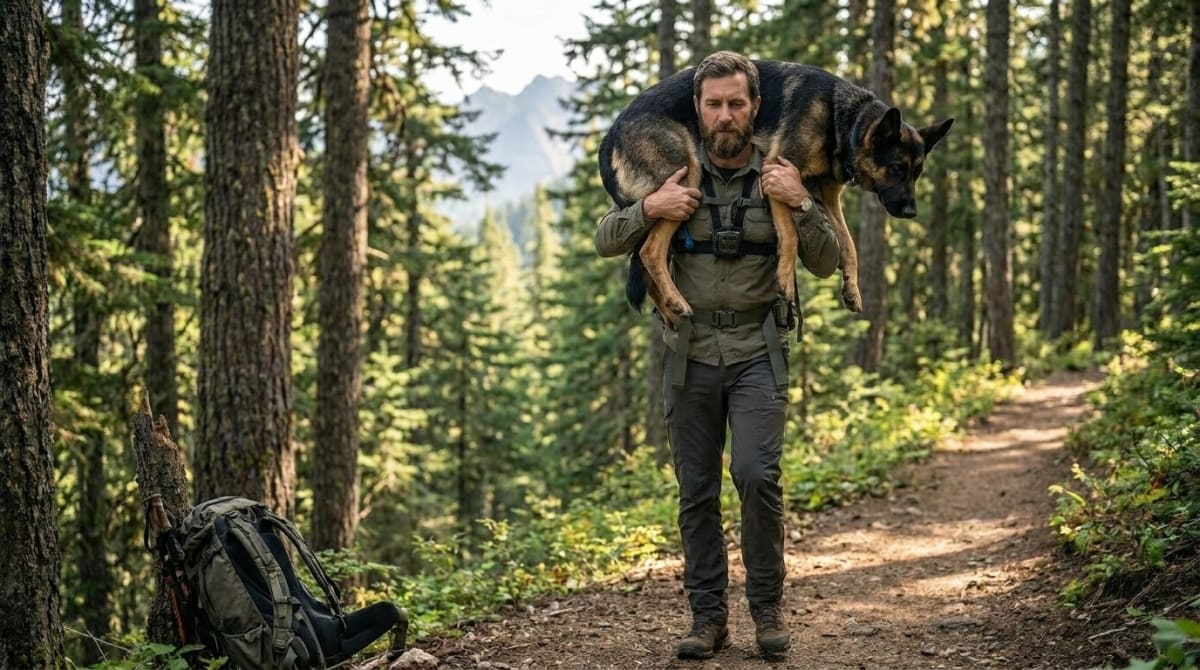
Most people think they can just throw an injured dog over their shoulders and hike out. That almost never works. To extract a dog safely, especially right at that critical 50-pound threshold, you have to muzzle them and shift the weight across both shoulders using a rescue sling or a rigged stretcher. Doing it wrong gets dangerous fast. Veterinary trauma center data proves that prehospital transport frequently makes baseline canine injuries much worse, mostly because panicked owners try to improvise carrying techniques without relying on any structured mechanical system. You will probably drop them.
We ran wilderness trauma protocols on rugged terrain to see what actually works. Jasper is a 95-pound German Shepherd, so a solo carry is physically off the table for me without a specialized litter. To test emergency lifting mechanics, we hike Mount Si with 50-pound sandbags. Hauling 50 pounds of dead weight down a boulder field takes serious core stability along with strict obedience to veterinary handling rules. Gravity pulls aggressively on the way down. One stumble ends the rescue.
Key Takeaways
- 150 pounds is the safe solo carry limit - heavier dogs need a two-person stretcher or a rescue call
- 2Muzzle the dog first. Pain overrides all training and even the friendliest dogs bite when frightened
- 3A jacket threaded through two trekking poles builds a rigid stretcher that keeps the spine flat
- 4Carrying a dog in front of the body fails inside a quarter mile - shoulder carry across the trapezius is the correct method
What You Need
Muscle isn't enough out here. You need actual leverage. Arm strength fails quickly on rough trails.
Essential Gear
- Commercial rescue sling
- Stout trekking poles
- Heavy-duty nylon jacket
- Tubular climbing webbing
Pushing deep into backcountry zones where cell signals vanish means you absolutely must pack a dedicated evacuation sling, otherwise you are trading precious time for a high likelihood of blowing out your own lumbar spine during a panic carry. We keep one jammed at the bottom of the pack at all times. It stays there.
Step-by-Step Extraction Guide
Step 1 - Secure the muzzle
Pain overrides all that good obedience training. Even the friendliest dogs bite when terrified. Tie a spare leash firmly around the snout and secure it behind the ears. A 2021 Journal of Veterinary Emergency and Critical Care study looking at prehospital trauma showed owner safety has to remain the absolute first priority before attempting any field transport. Don't skip this.
Step 2 - Position the commercial sling
Getting the sling positioned correctly takes patience. Roll the dog gently onto their uninjured side and slide the fabric right under the chest. Fasten every buckle across the back. Lift from your knees. You have to compress that load tightly against your own spine to fight off lower back fatigue when navigating steep descents over loose dirt, which ultimately keeps you balanced on technical trail sections.
Step 3 - Build a makeshift stretcher
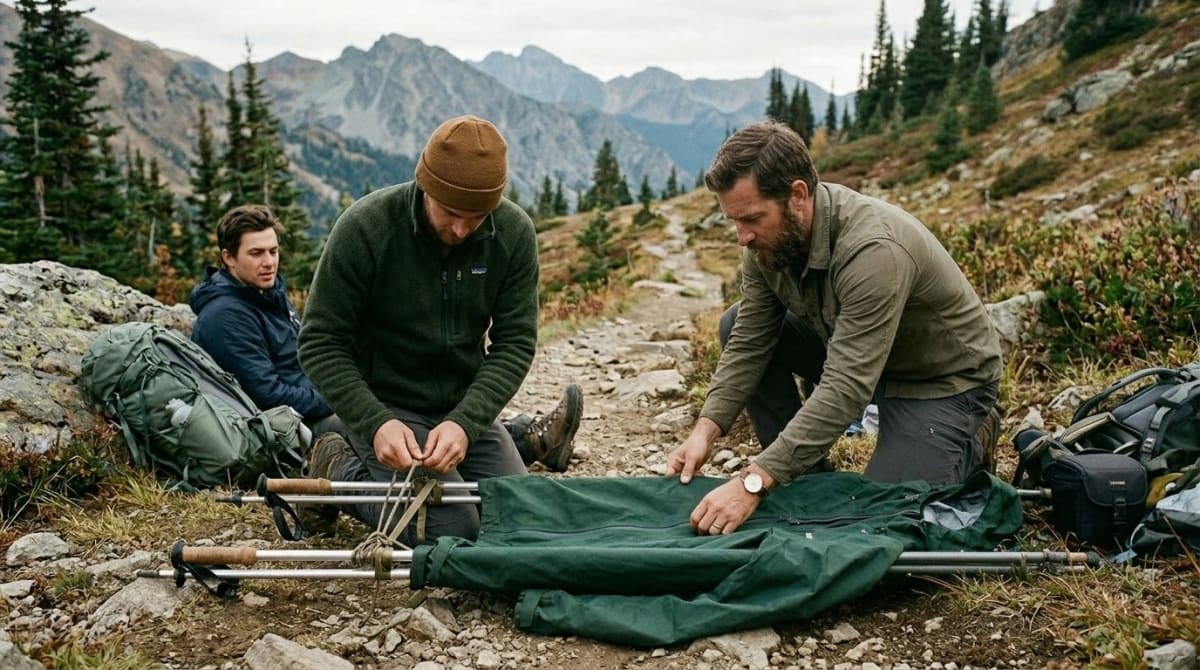
Sometimes the gear breaks. Then you improvise. Zip a rugged jacket closed and thread two trekking poles right through the armholes to build a rigid platform that keeps the spine supported while you walk. Center the dog on the fabric.
Step 4 - Execute the modified shoulder carry
For the modified shoulder carry, drape the animal behind your neck like a heavy barbell. Grab the front legs in one hand and the rear legs in the other. Balance is everything. We found this setup distributes weight evenly across the trapezius muscles, holding off muscle exhaustion during those brutal miles of elevation loss where a single badly placed boot could tear your ACL.
Step 5 - Assess rescue necessity
Know when to stay put. Stop walking immediately if you see severe respiratory distress or suspect a major spinal misalignment. Carrying them in that condition will likely trigger permanent nerve damage or fatal breathing complications. Just sit down. Call the local search and rescue crews. Having a basic first aid kit on hand gives you options while you wait.
Common Mistakes
People panic and make bad calls under pressure. Never drag them by the collar. It chokes them out. Dragging also shreds paw pads on the rocks. We constantly see hikers trying to hold big dogs like Jasper against their chest like an oversized baby. Carrying 50 pounds in front of your body wrecks the lumbar spine in less than a quarter mile, and total muscle failure guarantees you end up dropping them onto the dirt.
Moving too fast ruins everything. Adrenaline tricks people into sprinting downhill. A sprained ankle means you both sleep in the woods tonight. Slow down. Lean hard on those trekking poles to test the rock stability before you commit all that combined weight to your next foot placement.
Improvised stretchers fail constantly too. Dead branches snap under weight. Skinny paracord slices into the animal and cuts off circulation instead of supporting them like proper tubular webbing does. The 2021 trauma data showed civilian dogs suffer vastly higher rates of transport complications than military working dogs simply because regular owners lack basic rigging knowledge and fail to secure the load. Recognizing the signs that your dog is too tired to continue before an injury happens is always the better outcome.
Frequently Asked Questions
Kelly brings an engineering mindset to dog hiking gear. After thousands of miles with Jasper testing every harness, pack, and boot on the market, he knows what holds up and what fails.
References & Further Reading
- Assessment of prehospital care in canine trauma patients presented to Veterinary Trauma Centers - A VetCOT registry study. J Vet Emerg Crit Care — J Vet Emerg Crit Care (2021)
- Comparison of trauma sustained by civilian dogs and deployed military working dogs. J Vet Emerg Crit Care — J Vet Emerg Crit Care (2021)