 Paths & Paws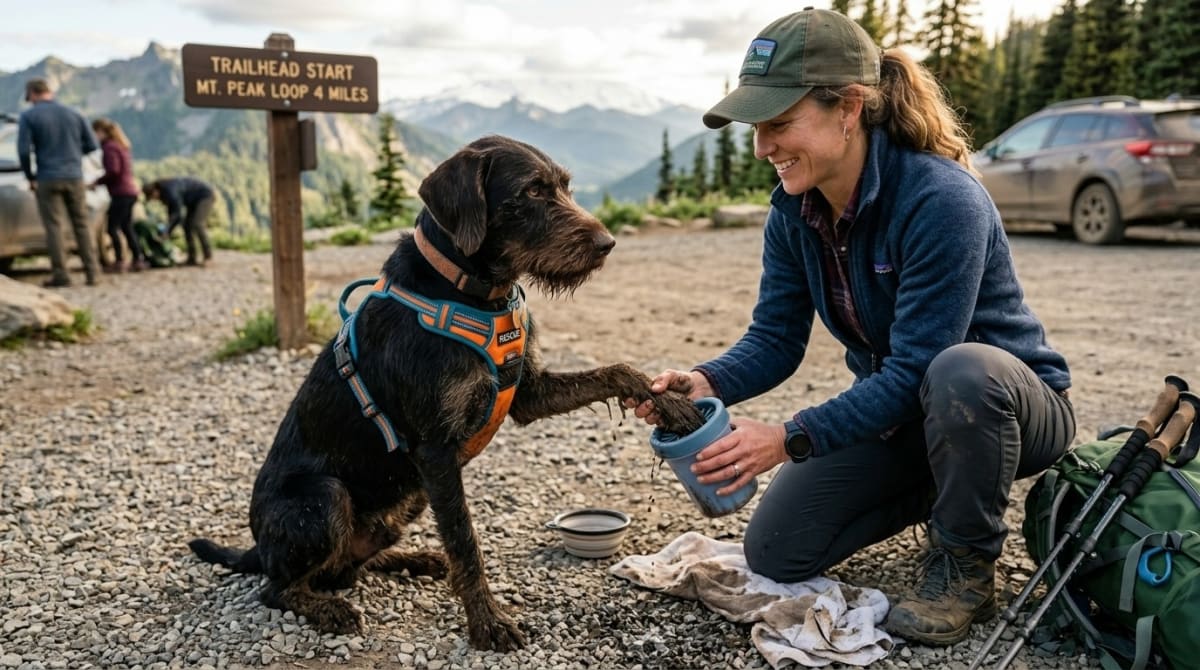
Most hikers trash their car interiors with flimsy baby wipes. The quickest way to strip muddy paws before the drive home requires a portable silicone paw washer and thick automotive detailing towels. Bring two gallons of temperature-controlled water. We hike year-round in the Pacific Northwest with Scout. She is a 50-pound Lab mix rescue with a knack for sniffing out the deepest bogs, which means we end up running through dozens of post-hike cleaning routines just trying to save our upholstery from total ruin. Light dust brushes off. Clay mud demands a system.
Key Takeaways
- 1Use a silicone paw washer with warm water - it scrubs between toes and dewclaw webbing that flat towels miss entirely
- 2Prep your car before the hike with a waterproof hammock seat cover and staged cleaning kit to avoid trailhead scrambles
- 3Dry paws completely between the toes - trapped moisture breeds yeast infections and tracks residual dirt onto upholstery
- 4Treat every cleaning session as a health inspection - spread toes to find foxtails and check pads for scrapes before they become vet bills
Preparing the Vehicle Before the Hike
A solid cleanup routine starts in the driveway. Preparation is everything. Organizing the car ahead of time prevents that chaotic scramble at the trailhead when you are holding a muddy leash with one hand and digging blindly for a towel with the other.
The Waterproof Barrier
Forget trusting factory upholstery to repel swamp water. Buy a rugged hammock seat cover. These things anchor to the front and rear headrests to create a waterproof tub, and that hammock shape physically stops a dirty dog from slipping down into the footwell when you hit the brakes on a steep logging road. We run one with a rubberized grip backing. Scout used to surf across the back seat on sharp turns before we upgraded our setup. Canvas materials trap wet dog smells permanently. Coated polyester handles the mess better.
Staging the Cleaning Kit
Keep the kit out of the cargo area. Location matters. We drop a rigid plastic utility tote on the floorboard directly behind the passenger seat to hold all the washing supplies in one spot so we never have to dig through a messy trunk while restraining an impatient animal. If a dog jumps into the back before the towels are ready the upholstery takes a permanent hit. Place the tote right next to the door you open first. Make the gear instantly accessible.
What to Pack for Trailhead Cleaning
A proper kit keeps the mess outside. Build it right. Different layers of grime require dedicated tools, because trying to fix baked-on clay with the same flimsy towel you use for light summer dust will just drive the dirt deeper into the coat.
Portable Paw Washer
This gear altered our routine. These cups pack silicone bristles inside. Fill it with water and insert a muddy paw before twisting the cylinder back and forth to let those bristles scrub deep into the webbing between the toes, dislodging stubborn clay that a flat towel would just smear across the fur. Scout hated the contraption at first. We spent a week practicing in the living room with warm water and treats. Now she lifts her feet automatically. Buy a size up. A 50-pound dog actually needs the extra-large version just to accommodate the dewclaw without snagging it on the rim.
Water Storage Strategy
Never use leftover drinking water. Bring two dedicated gallons. Leave this rigid plastic jug on the floorboard of the passenger seat during winter months, because pouring freezing liquid onto warm paw pads causes immediate shock and guarantees the animal will fight the entire cleaning process from that point forward. In summer keep the supply in a cooler. Warm water cuts through dried mud much faster anyway.
The Right Towel Material
Standard cotton towels fail miserably. They just push mud around. Pack high-density microfiber towels designed for automotive detailing, because these specialized fabrics absorb seven times their weight in liquid while trapping fine trail silt deep within the fibers so it never transfers back onto the coat when you wipe a second time. Bring four towels total. One acts as a ground mat while another wipes down the body. Reserve one for the face. The final cloth dries the paws.
Brush Selection
Towels cannot strip dried mud. Pack two different brushes. A soft rubber curry tool handles short coats like Scout has. Grab a metal slicker brush for longer hair or dense undercoats, since a thorough dry brushing shatters that crusty top layer of clay and drops the loose debris straight onto the ground before any water even touches the animal. Skip this step and you just make mud soup.
Winter vs Summer Trailhead Cleaning
Weather shifts change the rules. We adapt the gear. Handling a frozen trail in late January requires a completely different mindset and toolset than trying to scrub baked river clay off a panting dog in the middle of August.
Winter and Freezing Mud
Snow builds brutal ice balls. Brushes cannot break these apart. They require melting. We pack a thermos of warm tap water during winter trail runs so we can pour it directly into the silicone washer and melt those frozen chunks instantly without ripping any hair out. Never use boiling liquid. It should feel like a mild bath. Any moisture left trapped between the pads in freezing weather guarantees the dog will just form new ice balls walking from the wash station back to the open car door.
Summer and Baked Clay
Summer brings baked creek clay. This stuff hardens like pottery. A silicone washer struggles to punch through that hard shell alone. We keep a continuous spray bottle handy during the hotter months, misting the legs with water to soften the clay armor for five full minutes while we load backpacks into the trunk before even attempting the main wash. You have to rehydrate the crust. Do not rip at dried chunks.
Step-by-Step Trailhead Cleaning Process
We follow a strict sequence. Order prevents cross-contamination. Trying to wash a dog haphazardly usually means you end up wiping a clean paw with a dirty towel or letting them step right back into the mud puddle you just pulled them out of.
Create a Clean Zone
Drop a large microfiber towel. Guide the dog onto it. This landing pad physically stops them from stepping right back into the trail dust after you just spent three minutes scrubbing a foot clean. We taught Scout a wait command specifically for this mat, so she knows to plant herself and stand perfectly still while we work through the entire washing routine until all four paws are cleared.
Target the Body First
Hit the dry debris first. Leave the paws for later. Dragging a damp cloth over a dusty undercarriage just creates a fresh layer of wet mud that pushes deep into the fur and becomes nearly impossible to extract without a full bathtub session at home. Always brush with the grain.
Wash the Paws
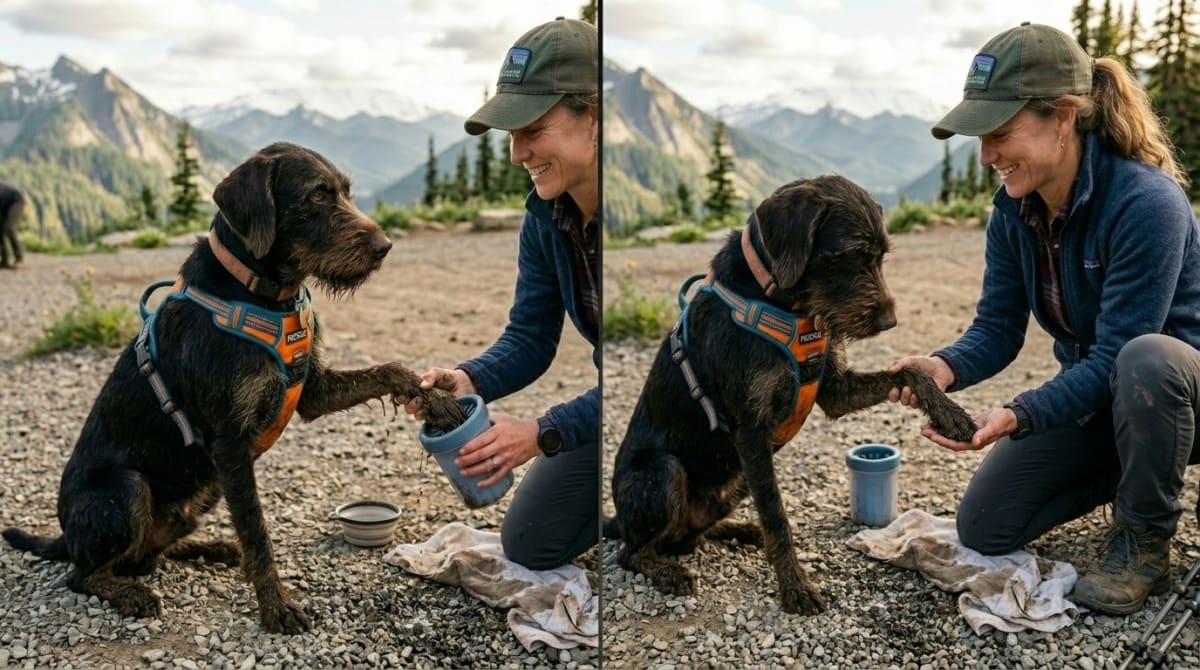
Fill the silicone cup. Dip one paw at once. Plunge the foot up and down three times and twist the cylinder twice to knock the heavy clay loose. Pull the leg out and immediately wrap it in a dry microfiber towel, squeezing gently to pull trapped moisture from deep between the pads before repeating this exact ritual for the remaining feet. Dump the gray water away from the cars.
Final Belly Wipe
Wet a clean towel section. Target the chest and undercarriage. Dogs carry an enormous amount of splash-up dirt on their stomachs, so start right at the breastbone and pull the cloth firmly down the entire length of the belly to drag out the hidden grime.
The Paw Inspection (Debris and Safety)
Cleaning is half the battle. Mud covers up trail debris. Treating the post-hike wipe down as a mandatory health check means you catch minor pad scrapes or embedded grass seeds at the trailhead before they have a chance to turn into massive veterinary bills three days later.
Hunting for Foreign Objects
Spread the toes while drying. Feel for hidden trail hazards. Foxtails and grass seeds embed themselves in the soft tissue webbed between the toes, and those barbed heads will migrate straight through the skin if you fail to catch them at the car. Pull any hard lump with tweezers immediately. We check Scout intensely after pushing through dry brush in late August. Wet mud cements pine needles right into the fur.
Checking Pad Integrity
Stripping grime reveals pad condition. Look for torn skin flaps. Rocky alpine trails act like heavy-grit sandpaper on dog feet, and a perfectly clean pad makes it incredibly easy to spot a minor scrape and address it before an infection sets in. Always check the dewclaw for splits.
Bacterial Risks in Mud
Stagnant puddles carry invisible risks. Stop them from self-grooming. The American Veterinary Medical Association warns that leptospirosis bacteria thrive in warm wet soil and standing water, creating a serious health hazard for any dog walking through contaminated bogs with minor cuts on their pads. Washing the feet stops the animal from licking infected mud off their coat during the drive home.
Common Trailhead Cleaning Mistakes
People overcomplicate the cleanup routine. Avoid these common trailhead missteps. Making a tired dog physically uncomfortable during the wash phase guarantees they will fight you tooth and nail every single time you open the trunk for the rest of their hiking career.
Using Ice Cold Water
Freezing water creates a miserable experience. Cold constricts the blood vessels. Keep the rinse supply inside the heated cabin during winter trips. Dogs possess highly sensitive paw pads packed with nerve endings, so plunging a warm foot into ice water creates an immediate physical shock that teaches them to hate the wash routine forever. They will fight the process.
Leaving Paws Damp
Never just wipe the surface. Squeeze the cloth firmly around the foot. Leaving moisture trapped between the toes breeds persistent fungal and yeast infections, while a damp pad will inevitably track residual trail dust right onto the otherwise clean fabric of the back seat. The hair between the pads needs to feel dry.
Relying on Baby Wipes
Standard wet wipes fail entirely. They lack the necessary texture. These flimsy sheets just push the mud deeper into the fur while leaving a strange chemical residue behind that the dog will immediately try to lick off on the ride home. Human formulas often irritate canine skin. Pack textured grooming wipes made for dogs if water runs out.
Frequently Asked Questions
Filed under
Sarah is learning to hike with dogs alongside her readers. Scout is her first trail companion, and she shares every mistake, success, and lesson learned along the way.
References & Further Reading
- Leptospirosis in dogs — American Veterinary Medical Association (2024)