 Paths & Paws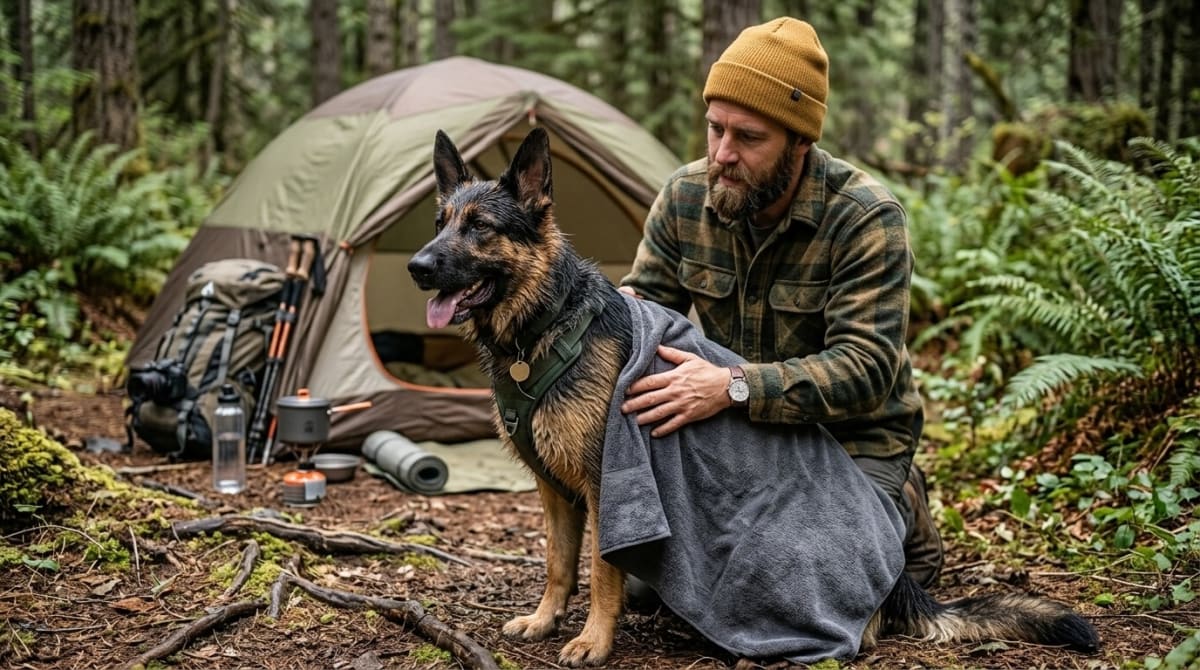
The Physics of a Wet Dog Coat
Most folks figure a quick towel rub will keep a wet dog from soaking the tent overnight. We tracked moisture retention across different coat types on our backpacking trips, and honestly, the first shake does almost nothing. A large retriever coat holds up to three liters of water after a quick lake swim. Bring that saturated animal into a small nylon shelter and the resulting condensation creates a humid microclimate that will invariably soak through expensive down sleeping bags long before the sun actually comes up. Gear for the dog is survival gear for you. After thousands of miles with Jasper through four Pacific Northwest seasons, we learned to solve this problem. We built a dedicated drying system. It relies on a rigid sequence.
Fur traps moisture against the skin through capillary action. The undercoat acts like a dense sponge. Surface wipes just grab the top layer. Deeper layers stay completely saturated. That animal is going to off-gas water vapor into the air for hours. We tested ambient evaporation times up in cold alpine bowls and found that a double-coated breed takes up to six hours to fully dry without help, which pretty much wrecks any evening camp routine when the temperature suddenly tanks. Wind won't do it alone. The sunset temperature plunge kills passive evaporation outright. We needed a system that violently pulls liquid from the base of the hair follicles.
Key Takeaways
- 1A synthetic shammy removes bulk water fastest. Microfiber handles the final drying pass.
- 2A three-stage drying sequence (hand squeegee, shammy, microfiber) cuts time down from hours to minutes.
- 3The tent vestibule is a mandatory buffer zone. Never bring a wet dog onto sleeping pads until the outer coat is dry.
- 4For double-coated breeds, a metal comb separates clumped fur and dramatically speeds up the final evaporation phase.
Shammy vs. Microfiber Towels
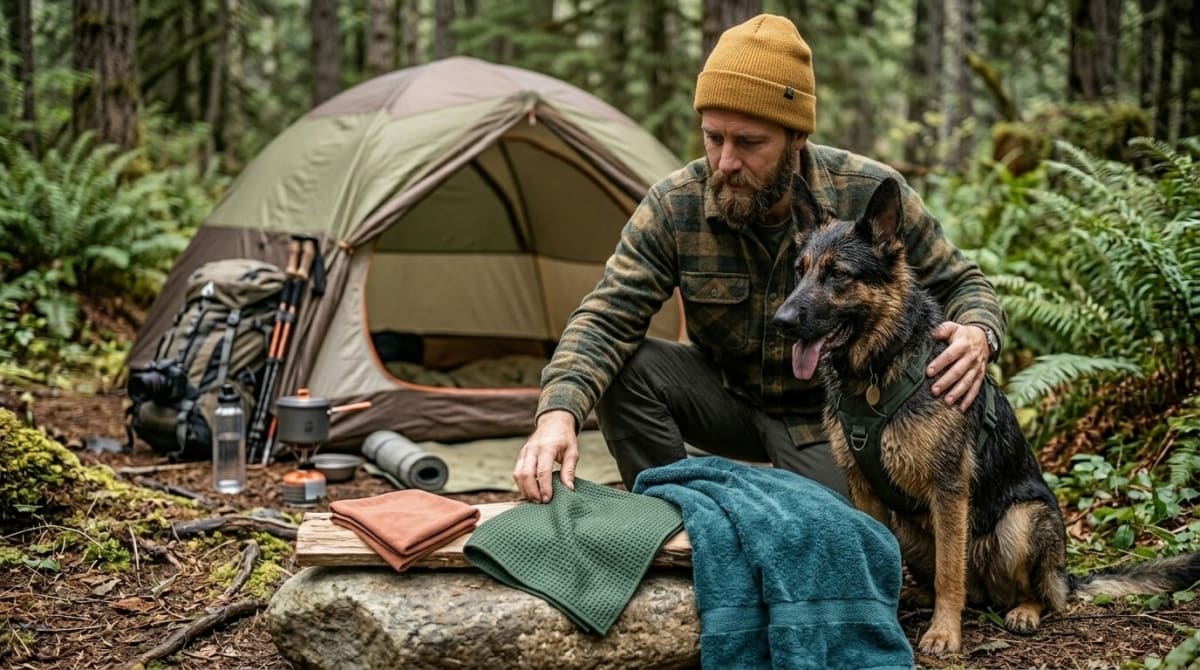
Backpackers usually pack a single standard towel, which is a massive mistake when you consider the sheer volume of water a double-coated dog can carry out of an alpine lake before shaking off. We ran synthetic polyvinyl alcohol shammies against high-density microfiber blends during a soaked week up in the Cascades. They do entirely different jobs. The synthetic shammy operates as a high-capacity water vacuum. It sucks incredible amounts of liquid out of a drenched dog and wrings out to near-dryness in seconds. A traditional chamois cloth actually needs to stay slightly damp to work right, so we keep our primary shammy in a sealed ziplock bag. This way it is primed to absorb the worst of the trail mud and creek water before paws ever touch the vestibule dirt. Microfiber steps in for phase two. Those tiny synthetic threads grab the lingering dampness and trap fine grit that the shammy ignores completely. We keep a fresh microfiber cloth strictly for that final pass.
The Step-by-Step Drying Technique
Getting a dog dry at camp takes a systematic process. The goal is stripping maximum liquid volume before they cross the tent threshold. Start by manually squeegeeing them down. We run our hands hard down the neck and back to force out the bulk surface water. Stand back and give a verbal command to trigger a full body shake. That reflex alone flings off about a third of the moisture burden. Grab the damp shammy next. Shove the material deep into the chest and underbelly to extract the water. Vigorous rubbing can create nasty mats in longer fur, so we rely on a firm blotting motion that forces the polyvinyl alcohol down into the undercoat to pull moisture outward. Wring the shammy out well away from the campsite - a fully loaded shammy on a large dog drains close to a half-liter before the cloth stops dripping. Keep at it until the fabric stops dripping entirely. Finish up with the dry microfiber cloth. Hit the paws and legs to catch any lingering trail grime. This specific three-stage attack takes a soaking wet trail companion and transitions them into a manageable damp state that a well-ventilated shelter can comfortably handle overnight without creating an artificial rainstorm inside your sleeping compartment.
Tent Vestibule Management
Even an aggressively toweled dog holds onto some ambient dampness. The tent vestibule acts as your buffer zone. We absolutely never let a damp animal step onto our sleeping pads. Throw down a lightweight closed-cell foam pad in the vestibule dirt. This builds an insulated floor space separating the freezing ground from the dog. We make our pack rest on this temporary pad for the first hour after sunset. Their own body heat accelerates the final evaporation phase. Keep the mesh tent doors zipped tight to block the humidity. Prop the vestibule zipper open maybe four inches at the top... the rising warm air carries the water vapor straight out the vent. We wait there until the outer coat feels bone dry. Enforcing this strict boundary protocol successfully preserves the critical loft of our down gear and prevents the lingering wet dog smell from permanently baking into the delicate nylon walls of our shelter. If this is your dog's first time in a tent, our guide to getting a dog to sleep in a tent covers the boundary training that makes vestibule protocols click before you're managing it in the rain.
Affiliate Disclosure: Paths & Paws earns commissions from qualifying purchases made through links on this page. This supports our field testing and does not affect our recommendations. We only recommend gear that passes our trail testing standards. Learn more
Packing the Right Moisture Management Kit
Dragging household cotton bath towels into the backcountry is a guaranteed fail. Cotton fibers hoard water and refuse to let it go. A saturated bath towel adds literal pounds of dead weight to a pack and takes days to dry out in the shade. We put together a lightweight moisture management kit that tips the scales at under eight ounces combined. The setup includes one medium synthetic shammy and two small edgeless microfiber cloths. We stash these in an exterior mesh pocket. This keeps the damp fabrics isolated from our dry clothing and lets the materials shed moisture while we hike. The edgeless design on the microfiber matters. Stitched borders on cheap auto-parts towels usually hide thick polyester threads that trap abrasive sand. Rubbing that trapped sand into a canine coat causes severe skin irritation right underneath the load-bearing harness straps. We strictly buy the denser four-hundred gram microfiber options because our miles point to them striking the perfect mechanical balance between absorbing heavy liquid and drying out exceptionally fast on the trail.
Common Mistakes When Dealing With Wet Fur
Beginners often try drying the dog inside the tent. This ruins the shelter interior instantly. The animal shakes off the moisture, and those flying droplets hit the sloping nylon walls and drip straight onto unprotected sleeping bags before you can even react. Another frequent mistake is ignoring the paws and underbelly. The top coat might feel perfectly dry to a casual pat. But the thick fur clustered around the chest and between the toe pads holds hidden reservoirs of mud and ice-cold water. We always lift each paw and jam the microfiber cloth between the toes. Check the armpits. Check the groin area. These hidden spots retain dampness that relentlessly drains the core temperature of the animal during cold alpine nights. A cold animal will shiver and keep the whole camp awake until dawn. Check our breakdown of how cold is too cold to hike with a dog - a wet coat drops the effective temperature threshold considerably. Skipping these friction points inadvertently sets up a scenario where trapped moisture grinds into painful chafing sores the second you strap the heavy hiking harness back onto them the next morning.
Addressing Trail Rain Before Reaching Camp
Moisture management starts miles before you hit the designated campsite. Hiking through a sustained afternoon downpour creates a totally different beast than a quick lake swim. Continuous rain drives water deep into the undercoat for hours. Deal with it early. We stop hiking thirty minutes before setting up camp and look for shelter under a thick tree canopy. This pause buys us time for a preliminary trail-side drying session. Pull out the shammy to extract the bulk water now. Knocking this out early prevents the animal from freezing the exact moment they stop moving and their internal engine shuts down. We want the bulk of that freezing rainwater stripped out of their dense fur while their cardiovascular system is still pumping warm blood and generating massive amounts of internal heat. This proactive hit drastically drops our workload later. The same principle applies after creek crossings, where a full submersion mid-route can undo a full morning of drying work in seconds.
Drying the Towels at Camp
A drying system only works if the tools themselves can actually dry out. You can't just shove a soaking wet cloth into a dark backpack. That closed environment breeds mildew in under twenty-four hours. We string up a piece of ultralight paracord as a clothesline the second we finish pitching the tent. Hang the microfiber towel in the direct path of any available breeze. Moving air strips moisture much faster than direct sunlight. The shammy needs totally different care. We wring it out tight and seal it right back inside a plastic bag. Polyvinyl alcohol functions best when it holds onto a slight dampness. If we mess up and leave a synthetic shammy hanging on a clothesline in the dry evening air, the material inevitably cures into a stiff, unusable sheet of cardboard by sunrise. We learned that one the hard way. Treat the tools right. They will be ready for the next stream crossing.
Coat Types and Drying Times
Different breeds demand totally different moisture strategies. A single-coated pointer dries incredibly fast. A quick wipe with the microfiber and you are basically done. Double-coated breeds like huskies and retrievers present a huge logistical headache. Their coats hide a harsh outer layer over a soft insulating underlayer that traps both dead air and chilled water. Once that dense underlayer gets saturated, a surface wipe accomplishes absolutely nothing. We change tactics. For our thick-coated dogs, we spend triple the time pressing the shammy deep into the underbelly. We keep a small metal greyhound comb in our pack. Raking a comb through a wet double coat physically separates the clumped hairs. Adding this mechanical separation step to the routine exposes the underlying wet skin to circulating air and aggressively speeds up the final evaporation process inside the vestibule when the temperatures drop. It cuts wait times in half.
Frequently Asked Questions
Filed under
Kelly brings an engineering mindset to dog hiking gear. After thousands of miles with Jasper testing every harness, pack, and boot on the market, he knows what holds up and what fails.