 Paths & Paws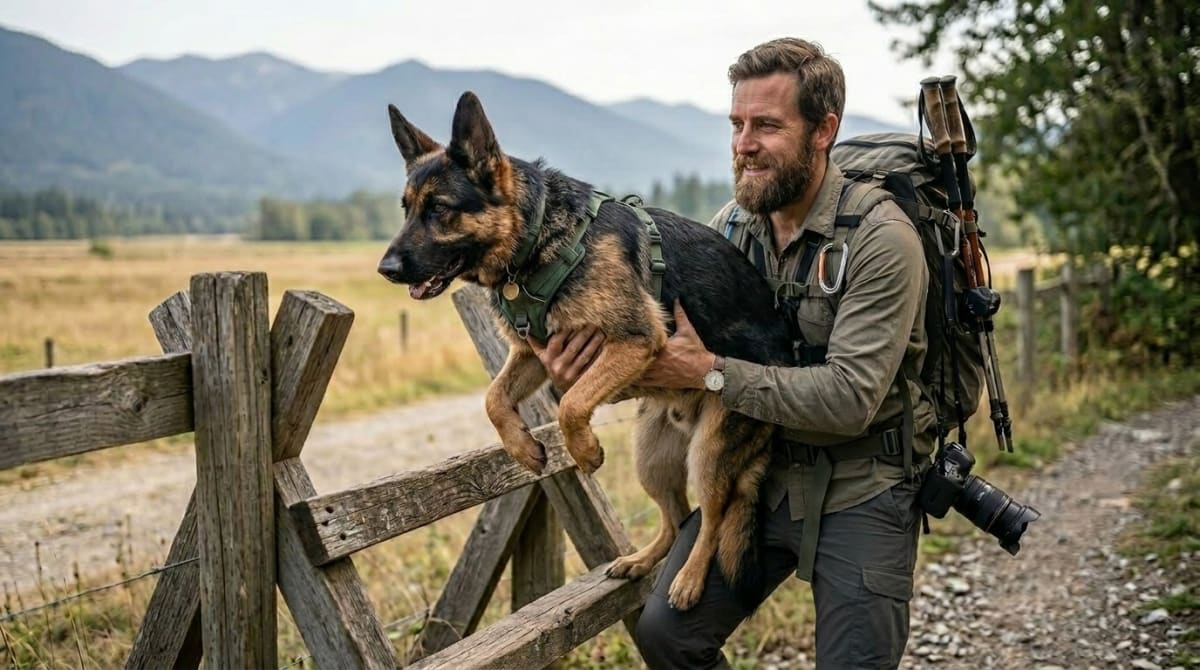
Farmland trails throw a pretty simple math problem at hikers with big dogs. Let's say you weigh 160 pounds. Your dog clocks in at 70 pounds. The wet wooden stile blocking the path is four feet high.
UK workplace safety guidelines cap unaided lifting at 55 pounds for men and 35 pounds for women, yet hikers routinely try to deadlift massive animals over slick timber fences when they encounter unexpected obstacles. We learned this the hard way navigating the Lake District with Jasper. He's a 95-pound German Shepherd. Lifting him straight off the ground is a fast track to a blown disc. Attempting to heave him over a barrier without the right gear usually ends with a panicked dog and a strained back.
We tracked our stile encounters over a 40-mile test route. Out of 14 stiles, only four had a dog gate. Crossing the remaining ten without injury requires serious leverage and a cooperative dog. We stopped trying to deadlift him entirely.
Key Takeaways
- 1Standard walking harnesses lack the structural strength to support a dog over 50 pounds during a vertical pull
- 2Lifting a dog by their front legs creates extreme stress on the shoulder joint and causes soft tissue injuries
- 3Training the dog to place their forepaws on an obstacle reduces the dead weight you have to lift by up to 40 percent
- 4Knowing your own physical limits prevents catastrophic trail injuries when you are miles from the car
The Gear Required for Large Dog Lifts
Boosting a massive dog over a fence requires the right rigging. Never try to lift 70 pounds by a collar. Standard walking vests are also totally unsafe for this. We tested four support setups on Mount Si before tackling rural UK trails with Jasper. We wanted to see exactly how each harness handled the load under actual trail conditions.
Basic nylon walking vests dump the entire lifting load directly into a dog's armpits and lower neck. This cuts off their airway. It also pinches major nerve clusters right in the shoulder. A large dog will quickly learn to fight the lift if every single attempt hurts them.
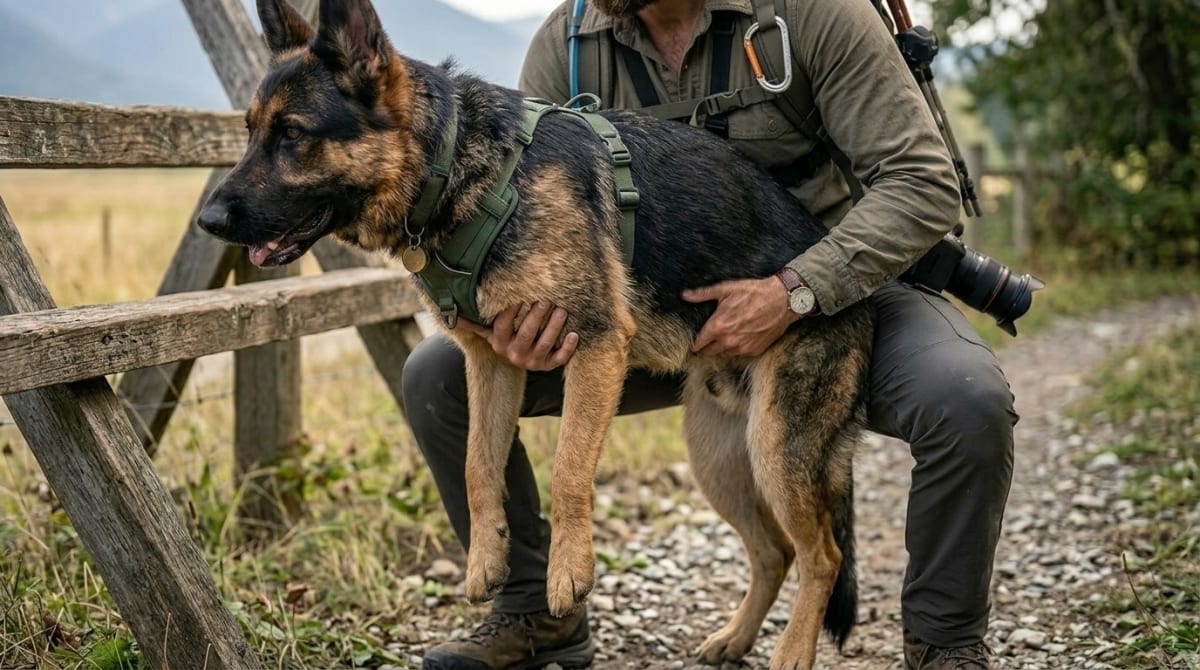
You need a dedicated mobility rig. The vest has to have two handles. One sits right over the shoulder blades. The other needs to anchor over the pelvis. A wide padded belly panel is non-negotiable. Hoisting a large dog forces their entire body weight down into that bottom strap, which means thin nylon webbing will slice straight into soft tissue and trigger a panic response.
A true support rig spreads the mass across the sternum and rib cage. Jasper wears a heavy-duty harness for this exact reason, and the dual handles let us keep his spine perfectly parallel to the ground during a lift to prevent unsafe compression on his lower back.
We also carry a heavy-duty locking carabiner. It lets us secure Jasper to a fence post for just a second while we reposition our footing on a muddy step. A short traffic lead with a padded handle is also great for keeping the dog parked exactly where you want them while you evaluate the wood.
Assessing the Obstacle and Preparing the Lift
Not every fence is safe to cross. You have to inspect the timber before attempting any kind of lift.
Check the base of the stile first. A lot of rural fences hide a gap underneath. We always look for loose wire or a hinged dog gate at ground level because squeezing under is infinitely safer than lifting over. Check the wood itself. Rotted timber steps will absolutely snap under the combined weight of you and a giant dog.
Measure the height of the top rail against your own chest. If that top rail sits higher than your lower sternum, a solo lift gets extremely risky. The physics just start working against you. Once the dog's center of gravity passes chest height you lose the ability to control their mass, and a sudden shift in their body weight at that height will easily pull you backward right off the stile.
Plan the landing before picking up the dog. Know exactly where they will touch down. Look out for hidden mud pits or jagged rocks. We always locate a totally flat target area. Holding 70 pounds of squirming animal while scanning the brush for a safe drop zone is a nightmare. Look a few feet left or right off the main path and clear away any large deadfall before you start the lift.
Step-by-Step Solo Lifting Mechanics
Proper lifting technique protects the spine and keeps the dog calm. We developed a strict step-by-step protocol for getting Jasper over standard UK ladder stiles.
Position the dog parallel to the fence. Do not face them straight into the wood. A parallel stance gives you much better access to both handles and keeps the dog from kicking off the fence as they move upward.
Tell the dog to stand still. Place your dominant hand on the rear handle and your off hand on the front. Squat deep. Keep your back straight and brace your core.
Lift the dog straight up using your legs. Do not bend at the waist. Keep the dog pulled tight against your chest to maintain a shared center of gravity, because holding a 90-pound animal out at arm's length places an incredible strain on the lower lumbar discs.
Use the wooden treads to your advantage. Lift the dog onto the first step and let them bear some of their own weight. Step up onto the stile yourself before lifting them to the next level. We treat the whole thing like a ladder progression.
If you run into a solid stone wall or fence without steps you have to execute a continuous motion. Lift the dog until their center of mass clears the top rail and gently guide their front half over the other side. Let those forepaws touch the ground. Keep a firm grip on the rear handle to slow the descent. Never just drop the back half of the dog. A free-fall puts dangerous stress on their hips and lower spine. Pause for a second when all four paws hit the dirt. Check their posture to confirm they have their balance before you climb over yourself.
Training Your Dog for Assisted Lifts
Lifting dead weight is exhausting on a long hike. A dog that actively participates in the maneuver makes the entire process easier. We actually taught Jasper to assist with his own lifts through targeted commands.
Start with a simple Paws Up command. Find a low park wall. Lead the dog over to it, pat the top surface, and encourage them to place their front paws up. Give them a reward immediately. This posture shifts all their weight to their back legs. When Jasper puts his front paws on a high stile he reduces the static weight we have to lift by up to 40 percent. We only have to lift his rear end. This partial lift technique is honestly the most efficient way to cross low farm fences.
The second essential command is a rock-solid Stay command on elevated surfaces. The dog has to remain completely still while resting on the top step of a wet stile. We practiced this for weeks on retaining walls and fallen logs. Jasper learned to just freeze. A struggling 90-pound dog on a narrow wooden plank is a massive falling hazard that will easily break bones if either of you slips.
Practice lifting the dog in a controlled environment long before hitting the trail. Start in the living room. Put their lifting vest on and lift them just two inches off the floor, rewarding them for staying calm. Increase the height gradually over a few weeks. You can even practice transferring them over a low couch to make the weird sensation of being airborne feel perfectly normal, because practicing at home prevents a panic attack on the trail.
Common Mistakes and Hard Limits
We see hikers make critical errors when attempting to lift large dogs. The most common mistake is pulling the dog up by their front legs.
This causes serious injury. A dog's shoulder joint lacks a rigid collarbone connection. It relies entirely on muscles and ligaments for stability. Yanking 70 pounds of animal upward by their forepaws tears soft tissue and causes bicipital tenosynovitis. Always lift from under the chest and pelvis.
Twisting under a major load is another frequent error. Handlers pick the dog up, plant their boots, and twist their spine to clear the fence. This is exactly how you rupture a spinal disc. Always pivot the feet to turn. Move the hips and shoulders together.
You also have to recognize when a barrier is simply impassable. A six-foot deer fence with no gate is a hard limit. A stile built from slick moss-covered logs on a steep incline is a hard limit. We have aborted hikes and turned back rather than risk a sketchy lift with Jasper. Testing your luck on a slippery wooden stile three miles from the nearest road is incredibly reckless. The same applies on technical scrambling terrain where obstacles compound on top of each other.
Fatigue also changes the math. A lift you can easily perform at the trailhead might become totally impossible after a twelve-mile hike with steep elevation gain. We cover post-hike recovery separately, but the short version here is simple. Assess energy levels before attempting any difficult lifts late in the day. Rerouting is perfectly fine. Getting both you and the dog back to the car without injury is the only metric that matters. Do not risk a torn canine ligament or a blown back by overestimating personal physical strength.
Frequently Asked Questions
Kelly brings an engineering mindset to dog hiking gear. After thousands of miles with Jasper testing every harness, pack, and boot on the market, he knows what holds up and what fails.