 Paths & Paws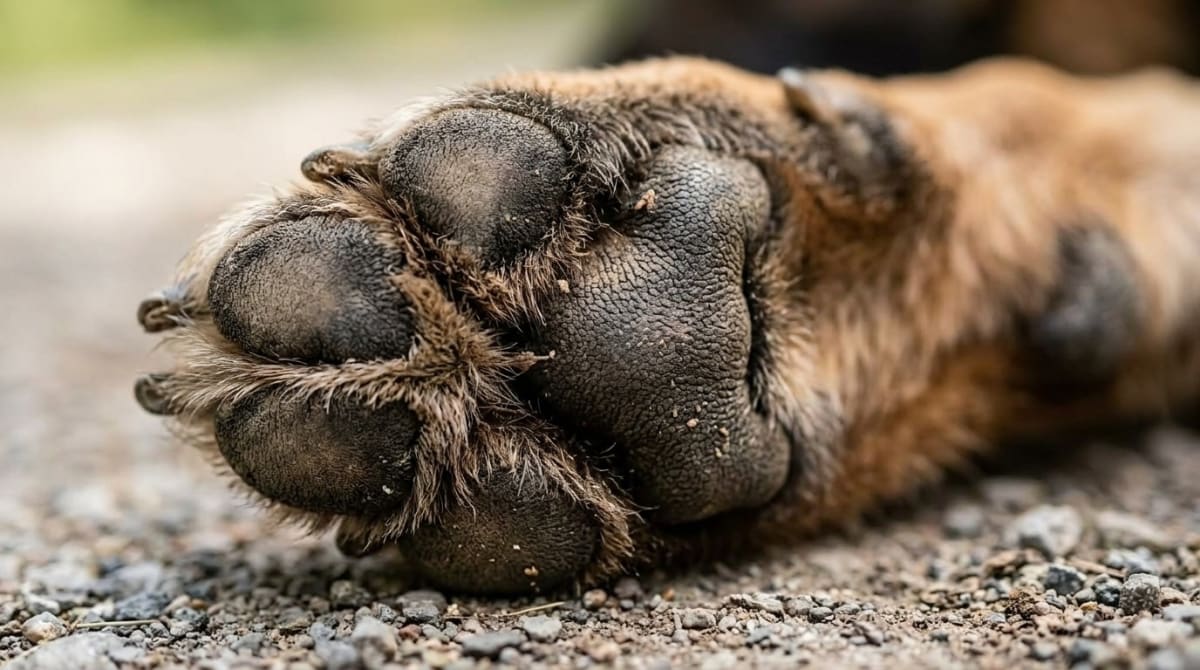
Most hikers just accept bloody paws as a normal trail hazard. We learned the hard way that they aren't. When we first took Jasper up Mount Si, his 95-pound frame absolutely shredded his unconditioned feet. He limped for three days straight. That mistake forced us to really look at how canine tissue actually adapts to abrasion and impact forces out in the wild. After tracking Jasper's recovery and digging into the biomechanical research on canine digitigrade systems, we built a targeted conditioning protocol that thickens the outer keratin layer without causing the deep fissures that sideline dogs for weeks. Building trail-proven calluses takes patience. The process requires deliberate surface exposure paired with exact recovery windows. Expect to spend roughly four weeks running this protocol.
Key Takeaways
- 1Paw conditioning takes 28 days of progressive loading, starting on soft dirt and building up to rocky technical terrain
- 2A trail-hardened pad feels like heavy-grit sandpaper and stays pliable. Rigid or cracked tissue signals damage, not fitness
- 3Rubbing alcohol and soft lotions weaken pads. Use beeswax-based wax to seal moisture without softening the tissue
- 4Calluses fade after 3 weeks off trail. Twenty minutes of daily pavement walking maintains baseline toughness through winter
The Physiology of a Dog Paw Pad
Think of a dog foot as a biological shock absorber. The outer layer is the stratum corneum. It is essentially a shield of heavily keratinized tissue. Beneath that shield lies the epidermis and a dense dermis packed with collagen. Right at the core sits a pocket of subcutaneous fat. That pocket takes the brunt of the impact energy when a dog bombs down a rocky decline.
A 2017 study in Biology Open demonstrates that all these layers must function together as an integrated hydrostatic unit just to dissipate the immense ground reaction forces generated during basic locomotion. The researchers found that the epidermis layer handles impact velocities up to 0.4 meters per second while distributing mechanical stress uniformly. Jasper is a German Shepherd. His massive size means every single step generates intense force. We monitored these loads during downhill sections in the Cascades. A 95-pound dog running downhill places wild amounts of stress on a surface area smaller than a human palm.
Toughening happens through a biological response called hyperkeratinization. Give the stratum corneum some mild abrasion and the body responds by laying down more keratin. The pad thickens. The surface develops a coarse texture. This cycle demands stress and recovery. Applying too much friction at once simply blisters the pad and tears it completely away. Balancing periods of abrasive mechanical stress with adequate rest days tricks the epidermal cells into constantly reinforcing the outer boundary layer until it resembles thick leather.
Paw pads also house eccrine sweat glands for traction and minor thermoregulation. The moisture leaking from these glands keeps the keratin layer from drying out entirely. When a dog pushes through an arid environment the rapid evaporation of this sweat can leave the pad vulnerable to sudden cracking. Because these eccrine glands act as an internal moisturizing system for the highly stressed contact surfaces, keeping a dog fully hydrated during a long hike directly impacts the mechanical durability of their foot tissue.
The Difference Between Tough and Damaged
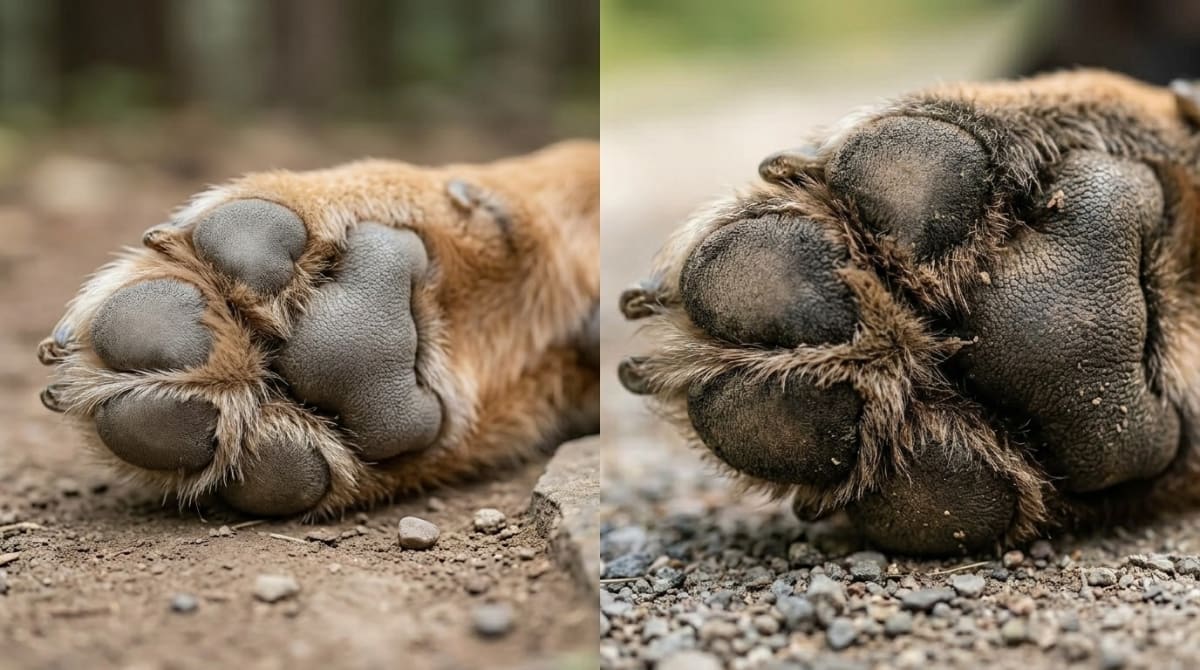
People often confuse a trail-hardened foot with a damaged one. A healthy, conditioned paw pad actually feels like heavy-grit sandpaper. The tissue remains pliable enough to bend over roots and rocks without splitting open. The surface looks dull. It has a slight texture.
Damaged pads show obvious warning signs. Look out for deep fissures that expose raw pink tissue. Watch for peeling flaps of skin right along the edges. Excessive rigidity is another massive red flag. A pad that feels like hard plastic is going to crack under pressure. While the outer layer should absolutely feel strong against the terrain, any tissue that has become so hard that it loses all inherent elasticity will inevitably split apart the moment the dog puts full weight on a sharp uneven rock.
Some dogs also develop a condition called hyperkeratosis. This medical issue causes the body to produce too much keratin far too quickly. The pad grows these weird crusty extensions that look a bit like tiny hairs or fronds. This is a pathological condition rather than a fitness adaptation. Pushing a dog with severe hyperkeratosis on a hike almost always causes severe tissue splitting straight down to the dermis.
A Four-Week Conditioning Plan
Building calluses takes time. We use a 28-day progressive loading protocol to prepare Jasper for the summer hiking season.
Week One Focuses on Dirt
We start on soft dirt trails and grass fields. Walk for 30 minutes twice a day. The goal here is simple impact conditioning. Avoid abrasion entirely. The soft ground lets the internal fat pads adapt to the weight transfer without tearing the outer keratin layer at all. Because this initial phase focuses solely on strengthening the shock-absorbing properties of the subcutaneous fat and the lower dermal collagen, avoid harsh textures and just concentrate on building up structural tolerance. Schedule one full rest day.
Week Two Introduces Friction
Shift over to packed sand and smooth river rocks. Bump the duration to 45 minutes. Sand provides the perfect low-level friction for the stratum corneum. This slight irritation triggers the body to produce more keratin. Check the feet after every single session. Carefully managing this friction over a series of controlled walks forces the epidermal cells to ramp up their production of protective proteins without crossing that dangerous threshold into destructive tissue failure. If pinkness appears, stop the walk immediately.
Week Three Adds Gravel
Track down some crushed gravel paths and root-heavy trails. Walk for an hour. Gravel introduces uneven pressure points that really test the flexibility of the foot. The pad must bend and grip the odd shapes without cracking. We always pack protective boots and first aid supplies during this exact phase of the protocol because those jagged irregular edges can occasionally cause small penetrating punctures before the skin has completely thickened up.
Week Four Hits Technical Terrain
Move onto true hiking trails with jagged rocks and steep drop-offs. Keep this first technical test to roughly three miles. Downhill sections always generate the highest shear forces. When a heavy dog like Jasper brakes aggressively on a steep 15-percent decline the extreme mechanical shear force actually pushes the entire fleshy pad structure backward against the underlying skeletal bone. A properly conditioned foot will bend right around those jagged edges without splitting open.
Maintaining Calluses During the Off-Season
Calluses fade away the minute a dog stops hitting the trail. A trail-proven foot softens after just three weeks of couch time. When winter hits the Pacific Northwest Jasper spends way more time indoors. His pads lose their coarse texture by early January. Because the keratinization process requires constant mechanical signaling from the environment removing that friction essentially tells the body to shed those protective outer layers and return to a softer baseline state.
Walking dogs on basic pavement or concrete for 20 minutes a day maintains baseline toughness through the dark months. Concrete provides just enough low-level abrasion to keep the stratum corneum thick. Keep an eye on the actual ground temperature though. Freezing pavement causes silent thermal damage. While neighbourhood pavement walks definitely cannot replicate the complex multidirectional shear forces of a rugged mountain trail the consistent friction is usually enough to prevent the tissue from reverting completely to a raw unconditioned state.
Indoor conditioning exercises are another solid option. We have Jasper perform rapid stops on textured rubber gym mats. This maintains the shear-force tolerance of the internal fat layers without braving the ice. Apply a beeswax balm twice a week. That seals the tissue against dry winter air.
Common Conditioning Mistakes
A lot of hikers try to shortcut the hardening phase. Applying rubbing alcohol to the feet is probably the most popular myth we see. While some older hunting guides swear by chemical astringents to toughen the skin rapidly alcohol actually strips away natural lipids and leaves the keratinized outer shell so incredibly brittle that it shatters upon impact with jagged rocks.
Owners also make the mistake of over-moisturizing the skin. Slathering dog feet in soft human lotions makes the tissue completely mushy. A mushy foot tears instantly on granite. Stick to beeswax-based paw waxes instead of lotion. Wax seals in internal moisture while maintaining crucial surface friction.
Another major error involves totally ignoring ground temperature. Hot pavement or sun-baked trail rocks rapidly speed up tissue degradation. The heat actually breaks down the structural proteins right inside the epidermis. Even perfectly callused feet will suffer severe thermal blistering in a matter of minutes during sustained contact with a granite slab baking in the hot afternoon sun. Train dogs during the early morning hours to avoid those hot surfaces.
Skipping rest days ruins the entire timeline. Tissue adaptation only happens during the recovery window. When we mistakenly pushed Jasper through consecutive days of highly abrasive terrain without adequate recovery time the sustained friction overwhelmed his cellular repair rate and caused painful blistering across all four of his feet. Two days of work followed by one day of complete rest prevents that breakdown. A solid post-hike recovery routine makes those rest days even more effective.
Frequently Asked Questions
Kelly brings an engineering mindset to dog hiking gear. After thousands of miles with Jasper testing every harness, pack, and boot on the market, he knows what holds up and what fails.
References & Further Reading
- How does the canine paw pad attenuate ground impacts? A multi-layer cushion system — Biology Open (2017)