 Paths & Paws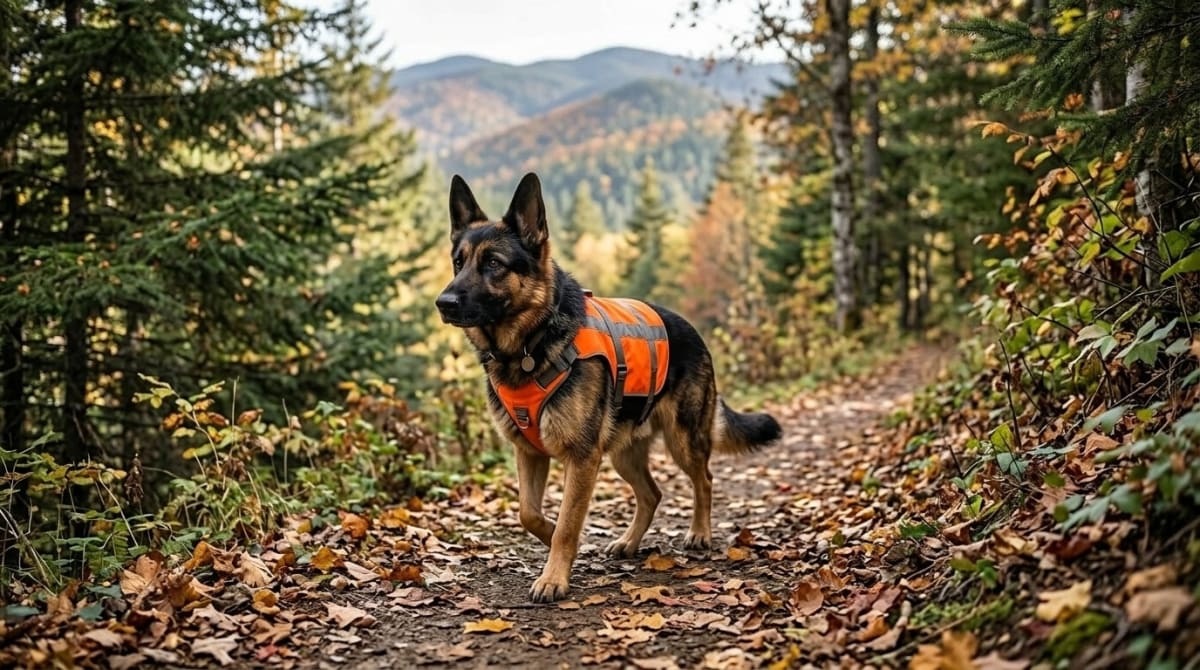
Please don't stop hiking just because rifle season kicks off. We track trail usage across the Pacific Northwest, and most people abandon the woods entirely from October through December. This is a mistake. Taking a dog out in November just requires a rigid protocol. You have to dress so both of you look unmistakably like a recreational hiker and a pet from literally any viewing angle. Jasper is a 95-pound German Shepherd. His dark tan and black coat melts straight into the dead ferns and autumn brush. At fifty yards out, he looks exactly like a coyote or a small bear, which dictates our entire approach to fall trails. A thin orange collar won't keep a large dog safe. You need serious coverage. We push high-visibility setups to their limits on public lands during peak elk and deer seasons just to see what actually punches through the visual noise of thick timber. I will show you how to equip a dog and manage the very real risks of sharing the woods with people carrying firearms. Check the dates. Then get back out there.
Key Takeaways
- 1Dress both yourself and your dog in solid blaze orange during rifle season, targeting 400+ square inches of coverage visible from every angle
- 2Midday is the safest hiking window. Avoid the first and last two hours of daylight when hunters are most active in low light
- 3Large breeds like German Shepherds and Huskies can be mistaken for coyotes in thick brush. A full-coverage vest breaks up the silhouette completely
- 4National Parks ban hunting entirely. Swapping a Forest Service trail for a state park on rifle season opening weekend is a zero-risk alternative
Decoding Dates and Locations
Hunting season isn't a single switch that flips on. It is a wildly overlapping schedule of different game types, weapon restrictions, land designations, and local county ordinances. You can't just guess when the woods are active. You have to pull the exact dates for a specific region before every single fall hike.
Archery season usually starts up in late August or early September. Bow hunters operate at incredibly close range. They wear head-to-toe camouflage and rely on absolute stealth. The risk to a casual hiker is pretty low during this window. Rifle season changes the math entirely. This period usually opens in mid-October and hits a fever pitch by November. Rifle hunters can take ethical shots from hundreds of yards away. Most states legally require them to wear blaze orange, and you need to match their visibility standards so you pop clearly against the fading autumn foliage from a distance.
Digging up these dates requires some homework. Pull up a state Department of Natural Resources or Fish and Wildlife website. Dig into the big game hunting schedules. Pay special attention to deer and elk rifle dates. These draw the massive crowds and create the busiest conditions on public lands, which means you need to stay hyper-aware of your surroundings from the moment you cut the engine at the trailhead.
Land designation matters just as much as the calendar block. National Forests and Bureau of Land Management parcels are totally open to hunting. State Wildlife Management Areas literally exist for hunting and conservation. If you want a zero-risk afternoon, change the destination entirely. National Parks strictly prohibit hunting. A lot of state and county parks ban firearms too. We drag Jasper to those packed state parks on the opening weekend of rifle season. The crowds are much thicker but the peace of mind is easily worth the trade.
Do not assume hunters will avoid heavily trafficked hiking trails. They use the exact same trailheads and paths to hike deep into the backcountry. You will share parking lots. You will share singletrack. A hunter might sit quietly on a ridge overlooking a valley where a popular hiking route runs. They have every right to be there. Assume they are present and gear up for maximum visibility.
Blaze Orange Gear Requirements
Hunters call it blaze orange. The official legal term on the books is hunter orange. It relies on a precise wavelength engineered to burn through any natural background in the woods. Deer can't see this color well at all, but human eyes register it instantly.
A lot of states force hunters to wear a minimum of 400 square inches of it above the waist. The law doesn't bind hikers to those same rules. This lack of regulation leads to a really dangerous complacency among outdoor folks. Apply that 400-square-inch rule to yourself, and scale it down appropriately for the dog.
We learned this lesson fast with Jasper. A one-inch orange collar completely vanishes under his thick neck fur. A cheap little orange bandana twists around as he walks and becomes totally invisible from the side. You need true 360-degree visibility.
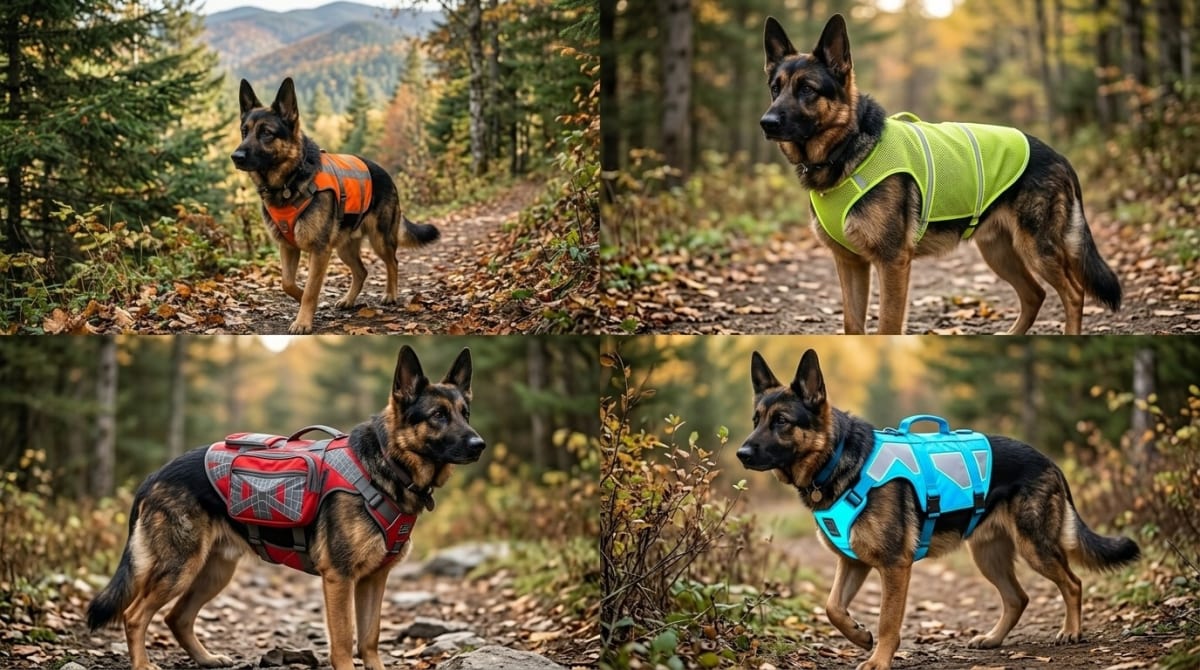
The absolute foundation of a dog's safety out there is a full-coverage blaze orange vest. It needs to cover the back, shoulders, ribs, and chest. We ran various styles on the trail. Vests sporting large reflective panels work best when the light gets low. The base material should be solid orange. Skip the camouflage orange patterns. Solid blocks of color are vastly more visible to a human eye at a distance than any broken pattern.
Fit is critical for moving dogs. The fabric can't bind the shoulders or rub those sensitive armpits raw. Jasper runs in a tough nylon rig that takes a beating from sharp thorns and stray branches, mainly because flimsy mesh vests rip to shreds after a single afternoon pushing through dense brush.
Layer the visibility tools. Throw on a wide orange collar. Clip a bright safety light onto the harness for dawn and dusk miles. Don't stop there. If a person wears an orange hat and vest, and the dog wears a full coverage block of orange, a hunter looking through a magnified scope will instantly identify a recreational hiker with a pet. Never compromise on this gear.
Trail Tactics During Active Seasons
Gear only solves half the puzzle. Trail behavior has to adapt to the hunting schedule.
Time of day dictates the overall risk level. Game animals move constantly at dawn and dusk. Hunters hunker down in tree stands or glass remote ridges during these low-light windows. Visibility is terrible. Shadows play nasty tricks on tired eyes. We explicitly avoid hiking during the first two hours of daylight and the last two hours before the sun drops in November. Sleep in a bit. Enjoy the midday sun.
Keep dogs on a short leash. Off-leash hiking during rifle season is a totally unacceptable risk. A dog crashing through dry underbrush sounds exactly like a deer walking. If a dog accidentally flushes a game bird, they might chase it straight into a hunter's firing lane, creating a wildly unpredictable scenario that a simple six-foot leash prevents completely. Jasper has a huge prey drive. A strong leash keeps him anchored to the established path and right by my side.
Use noise as a tactical tool. Hunters want dead quiet. Hikers should be moderately loud. Talk to the dog occasionally and strap a large bear bell to a backpack. That constant metallic jingle doesn't sound like any natural animal moving through the forest. When you hear a gunshot pop off nearby, yell out a loud greeting like "Hikers coming through the area" to establish an exact location and confirm a human presence for anyone aiming down a valley.
Toss out any white, black, brown, or tan clothing. A quick flash of white fabric can look identical to the tail of a fleeing whitetail. Earth tones just melt straight into the dead leaves.
Sound-Based Dangers and Dog Behavior
Gunshots are deafening. The sharp crack of a high-powered rifle echoes deep into valleys and bounces violently off rocky ridge lines. This intense acoustic shock terrifies a lot of dogs. Hikers have to know how a dog handles explosive sounds before taking them into hunting zones.
Some dogs just freeze up. Others panic completely and try to bolt back to the truck. If Jasper catches a distant shot, his ears pin flat and he looks right at me for direction. I hand over a high-value treat immediately to build a positive association with the sudden boom.
A terrified dog will back out of a loose harness in seconds. Double-check all equipment before stepping away from the car. Check that the collar sits snug against the neck. The harness needs to be practically escape-proof. If a dog is genuinely noise phobic, skip hunting areas altogether. A panicked eighty-pound animal fighting a leash on the side of a mountain is a massive liability. Hit a local paved path instead of forcing them to endure the stress.
Keep moving deliberately if you bump into hunters out on the trail. Be polite. Be friendly. Ask them if they have had any luck today. Most hunters are deeply invested in wildlife conservation and outdoor safety. They actually appreciate hikers who wear bright colors and keep their dogs under physical control during the peak season. A quick chat lets them know you are pushing through the area so they can adjust their firing angles.
The Silhouette Problem for Large Breeds
Small dogs deal with their own risks, but large breeds actually look like the game animals people are out there tracking. The silhouette of a German Shepherd, Husky, Akita, or Malamute can easily mimic a coyote or a wolf from a distance when they are moving fast through heavy brush and dappled forest shadows.
Jasper tips the scales at 95 pounds. He has those pointed ears and a dense dark coat. Deep in the timber of the Cascades, a hunter catching a split-second glimpse of his hindquarters might make a catastrophic misjudgment. This is the silhouette problem. You have to break up the animal's natural shape with aggressive artificial geometry.
Vests beat bandanas for this exact reason. A full jacket covers the entire torso area. It warps the visual profile from a four-legged predator into a bright fluorescent block sliding through the trees. We also strap on a wide two-inch orange collar to visually break up his broad neckline.
Think critically about the changing environment around you. In deep snow, dark dogs stand out sharply. In late autumn, dead ferns and decaying leaves provide incredible natural camouflage for tan and brindle coats. You have to wildly overcompensate for this effect. If getting dressed at the trailhead feels slightly ridiculous, the setup is probably correct.
The stakes are impossibly high for everyone involved. Accidental shootings are statistically rare, but they do happen every single year. Every incident involves a fatal failure of visibility or target identification. Take absolute control of the variables you can actually manage by wearing the orange, gripping the leash, and hiking at noon.
Emergency Prep During Fall Hikes
Fall hiking drags unique weather challenges into the mix alongside the hunting season risks. The ambient temperature plummets the second the sun dips behind a ridge. You must carry gear to manage cold weather emergencies.
Jasper hauls his own pack on longer routes. We stuff it with a lightweight emergency blanket and a basic first aid kit. If a dog takes an injury miles from the car, you might have to carry them out, which is exactly why we keep a specialized canine rescue sling stashed in my backpack at all times. This rig allows a person to carry a 95-pound dog on their shoulders like a loaded backpack. Nobody wants to improvise a carrying system while standing in freezing mud.
The first aid kit needs a few specific additions for autumn. Throw in a metal tick key. Ticks stay surprisingly active during the fall months right up until the first hard freeze hits the dirt. Bring a clotting sponge and self-adhering bandages. A severe puncture wound from a hidden branch requires immediate pressure and tight wrapping.
Know the extraction route. Cell service drops off completely in deep valleys. Download offline maps before leaving the house. Drop a pin on the parking location. If sustained gunfire sounds a little too close for comfort or a certain drainage just feels sketchy, turn around without hesitation. Hike back out to the trailhead instead of pushing blindly forward to finish a planned loop.
Frequently Asked Questions
Filed under
Kelly brings an engineering mindset to dog hiking gear. After thousands of miles with Jasper testing every harness, pack, and boot on the market, he knows what holds up and what fails.