 Paths & Paws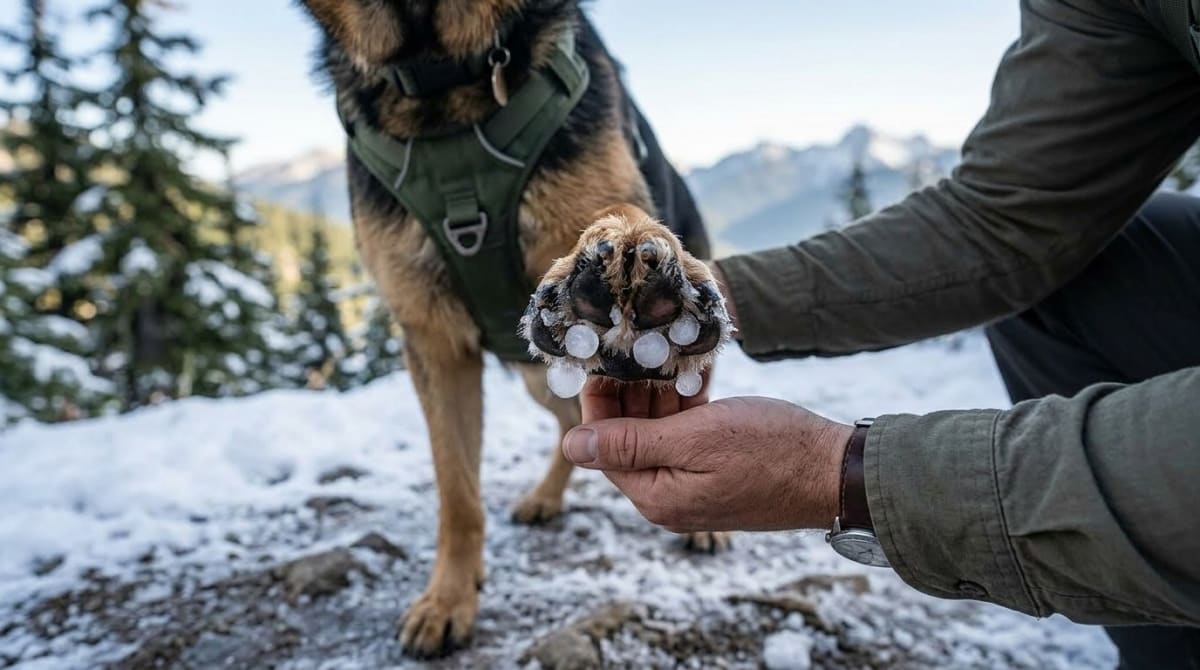
Many hikers expect a dog's winter coat to protect their paws in the powder. We used to think the same. Then Jasper and I hit the trails in the Cascades and we realized his thick fur actually creates a nightmare. Jasper is a 95-pound German Shepherd. His sheer bulk drives snow deep into his paw pads. We learned this the hard way, tracking his sudden limp on Mount Si after just two miles of breaking trail, realizing that his own body heat melted the snow before the biting air could turn it into abrasive solid ice spheres pressing directly against his tendons.
We stop these ice blocks by trimming the hair flush, applying wax barriers, adjusting route choices and strapping on fitted boots. This prep has to happen at home. Ignoring the buildup leads to torn tissue and cut pads.
Key Takeaways
- 1A dog's fur does not protect paws in the snow. It traps moisture that melts against body heat, then refreezes into abrasive ice between the toes
- 2Trimming the hair flush with the pad, without digging into the webbing, removes the anchor points that let ice balls form in the first place
- 3Wax barriers, packed trail routes, and properly measured boots each add a layer of defense, but firm packed snow beats fresh powder every time
- 4Melt ice balls out with warm bare hands instead of yanking them, since ripping frozen chunks tears skin and hair and invites infection
The Physics of Snow Packing
Snow melts. Ice forms. Dogs run hot. They maintain a baseline body temperature hovering right around 101 degrees, meaning that whenever they punch into loose powder their paws radiate heat downward to briefly turn that top layer of frost into liquid water before the ambient air cools it straight back into ice.
Because a large dog spreads their toes wide under heavy load, the webbing opens up completely and snow jams tightly into the crevices. Down in there the temperature drops and the slush crystallizes into a solid chunk. Fur acts as an anchor for this whole mess. Moisture clings stubbornly to those long hairs between the pads. We found that as a dog takes more steps, new layers of snow keep melting and freezing over the existing ice until those small chunks swell into hard marbles.
The ice presses upward into the tendons and forces the toes apart unnaturally. Every single step hurts. The animal naturally compensates by shifting weight to spare the foot, putting intense strain on their shoulders and back over a ten-mile day.
Pre-Trail Trimming
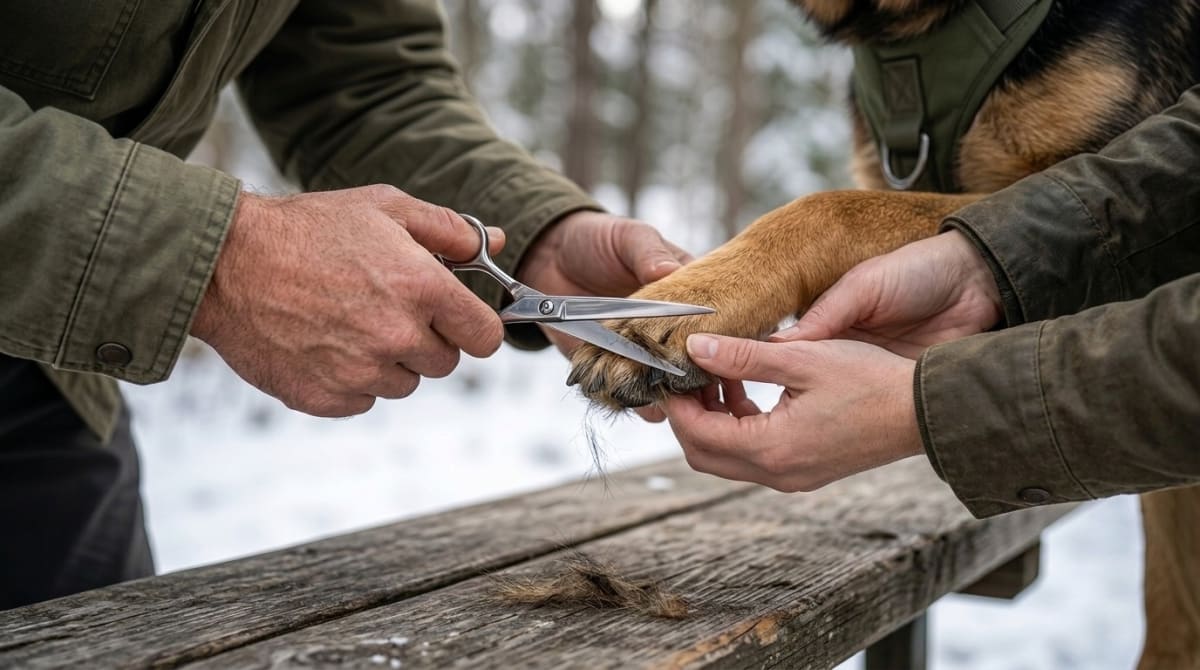
Taking clippers to the hair between the paw pads is our first line of defense against winter buildup. We have to remove the anchor points where moisture clings. Long fur acts like a dragnet moving through the powder. Short fur gives the ice absolutely nothing to grab onto. We inspect Jasper's paws every two weeks during peak winter season. We lay him on his side on the floor and run cordless clippers with a safety guard over the bottom of his foot.
Cut the hair perfectly flush with the main pads. Do not dig the blades deeply into the webbing. We found that pushing the clippers too far down into those pockets strips away the crucial insulating hair layer, exposing bare skin directly to freezing ground and chemical ice melts and leaving the foot incredibly vulnerable to rapid frostbite.
Leave the hair inside the webbing alone. Focus exclusively on the wild tufts sticking out past the leathery surface of the pad. Scissors work if the dog stays perfectly still. Blunt rounded tips prevent accidental punctures. But clippers remain the safer bet for most people. We always use clippers.
Barrier Waxes and Paw Balms
Wax barriers add a second wall of defense. We apply paw balm directly to the trimmed pads in the parking lot before even opening the car doors. The paste creates a hydrophobic shield. Water beads up and rolls right off rather than soaking into the skin and surrounding hair. We rub a huge handful of Musher's Secret into Jasper's paws before tackling deep drifts.
Plain old petroleum jelly works if specialized dog wax isn't sitting in the gear bin. Both options stop snow from bonding to the paw surface. But application technique matters. Do not just slap a thick glob onto the bottom of the foot. A giant clump of grease will just pick up pine needles and trail grit. Thin layers work best. Rub it in completely.
We massage the wax thoroughly into the leathery pads, the freshly trimmed hair, the lower webbing of the toes and the outer edges of the foot to guarantee total coverage against wet snow. We reapply halfway through the mileage if flakes start sticking again. The friction of grinding on rough snow eventually wears the barrier down to bare skin.
Adjusting Trail Routes
Trail choice dictates exactly how much snow a dog has to fight. Deep powder triggers the worst ice accumulation. Packed trails offer a much safer runway. We learned this lesson on a miserable Tuesday afternoon. Breaking trail through two feet of untouched snow forced the drift right up to his chest, meaning his paws plunged violently through the crust on every single step and packed ice solidly into his webbing. Golfball-sized ice formed within twenty minutes. Yet when we stick to heavily trafficked snowshoe routes his paws stay entirely clear for hours at a time.
We always assess the snow conditions before leaving the house. Wet sticky snow packs into hair far faster than dry powder. If the thermometer sits right around freezing the snow contains a high volume of water. That slush binds to fur instantly. Plunging negative temperatures create dry sandy snow that falls right off the animal. We drop our planned mileage by half when dealing with sticky snow.
Protective Booties for Snow
Sometimes trimming and wax simply fail to handle the conditions, and it's worth reading our full breakdown of dog boots versus wax for winter hiking before you decide. Booties become non-negotiable. We strap boots on Jasper whenever the thermometer drops below twenty degrees. His immense bulk presses down hard. That intense pressure forces loose powder straight into unprotected toes regardless of how perfectly we trimmed his fur beforehand.
Dogs need footwear cut from flexible materials. Stiff cordura changes the way a dog walks and causes bloody chafing around the carpal pads. When measuring for these we always account for the natural biomechanical expansion of the foot. Because a heavy dog forces their toes apart under physical load, the paw spreads drastically wider when actively bearing weight than it ever does when just dangling casually in the air while they lay on the couch.
We lift the opposite paw to force the dog to put their full body weight onto the foot being measured. Get the width at the absolute widest point. Buy based solely on this loaded number. Boots that run too small will crush the toes together. Boots that run too large get sucked off in tall snowdrifts. We look for a snug fit without pinching the sides. Dual velcro straps hold the cuff tight.
On-Trail Removal Techniques
Ice balls eventually form on bare paws if we hike long enough. We had to learn how to remove them safely on the fly. We stop walking immediately. Never force a dog to keep pushing miles once they start limping or frantically chewing at their feet. The hard ice chunks cause intense pain by stretching out the tendons.
Never yank the ice balls out with bare fingers. Ripping the frozen mass away pulls the attached hair right out by the roots and creates bleeding micro-tears in the incredibly delicate skin between the pads, opening the door for bad infections. We melt the ice instead. We rip our gloves off and wrap warm bare hands directly around the dog's paw.
Direct skin-to-ice contact transfers enough raw body heat to loosen the slush from the hair without causing the micro-tears that inevitably lead to trailside infections later in the week. Gently squeeze the paw until the ice softens up. The chunks will eventually shatter or slide off the hair cleanly. Dry the foot off as best as possible. Slap on a fresh layer of wax before moving again. This whole process eats up precious daylight but prevents soft tissue tears.
Safety Limits and Frostbite Risks
Pushing through winter trails carries real risks far beyond temporary discomfort. We constantly monitor for signs of severe cold exposure. Frostbite creeps in without obvious warning signs. A 2024 American Veterinary Medical Association report actually warns that sudden lameness during a winter walk points directly to ice accumulation, meaning we have to remove the ice and inspect the skin immediately to prevent localized frostbite in the extremities.
We follow the same routine outlined in our guide to checking a dog's paws after a hike, watching the color of the pads constantly. Pale or gray skin indicates restricted blood flow. If the toes feel frigid to the touch we abort the hike and head straight back to the truck. Chemical deicers present another hidden hazard. Access roads and plowed parking lots leading up to trailheads often sit under thick layers of industrial salt and melting chemicals.
These harsh compounds burn the raw skin between the toes. They also pose a serious toxic risk if a dog licks their paws in the backseat to clear out the ice. We wash Jasper's feet with a jug of lukewarm water immediately after finishing the hike. We run a microfiber towel through the webbing to dry it out completely. Warm water removes the salt, melts any remaining ice chunks, flushes trail grit and helps restore normal blood circulation to the chilled toes.
Frequently Asked Questions
Kelly brings an engineering mindset to dog hiking gear. After thousands of miles with Jasper testing every harness, pack, and boot on the market, he knows what holds up and what fails.
References & Further Reading
- Cold weather animal safety — American Veterinary Medical Association (2024)