 Paths & Paws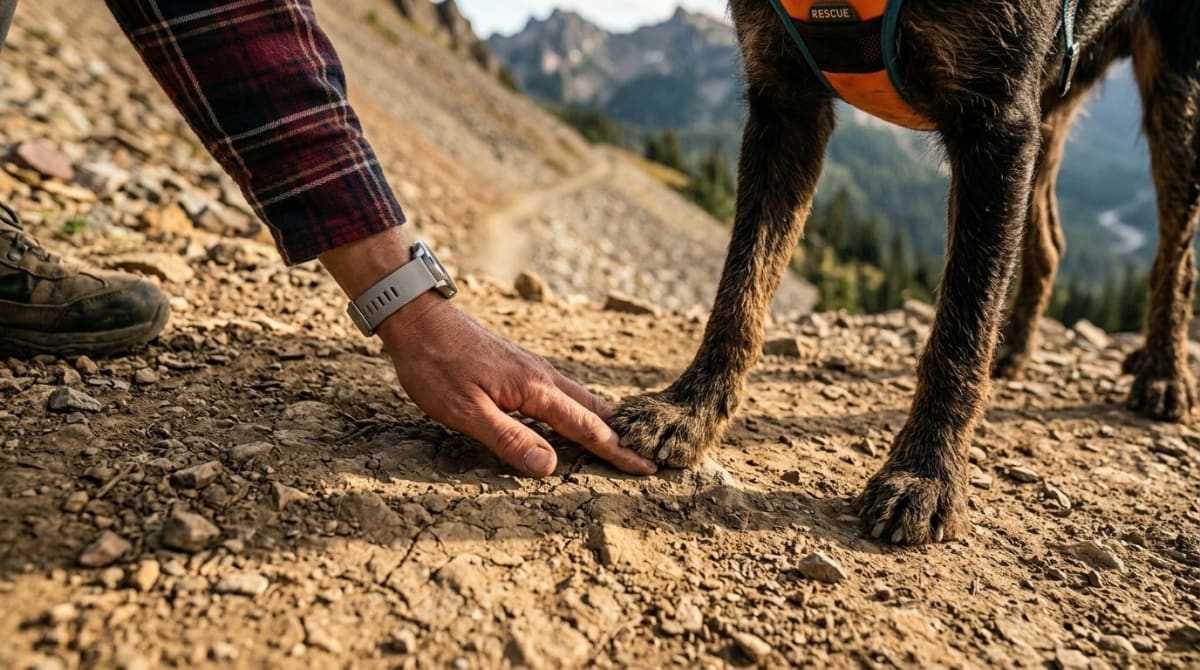
Press the back of your bare hand against the dirt. Hold it there for seven full seconds. If the heat forces a flinch before you finish counting, the ground is too hot for a dog. Air temperature and ground temperature operate on entirely different scales, so when the forecast says 86 degrees, that exposed trail might actually be baking at 135. That heat causes burns in 60 seconds.
We learned this the hard way. When we first brought home Scout, our 50-pound Lab mix rescue, I completely underestimated the sun. We were three miles up the trail. She started lifting her paws. She refused to walk. Her pads were bright red and inflamed. I carried her back to the trailhead. Since that afternoon we check the dirt before we ever leave the parking lot.
Key Takeaways
- 1Press the back of your hand to ground for 7 seconds — if it burns you, it burns your dog
- 2An 86°F day can heat black asphalt to 135°F — air temperature is not the right measure
- 3Dogs experience thermal pain at 120°F and naturally hide discomfort until burns are severe
- 4Breathable boots protect paws without trapping sweat that spikes core temperature
How the 7-Second Test Works
The test takes almost no effort. Slap the back of your hand flat against the pavement or packed dirt. The skin there runs a bit thinner than the palm. Press down hard. Count to seven. If the heat makes you pull away, a dog will suffer burns.
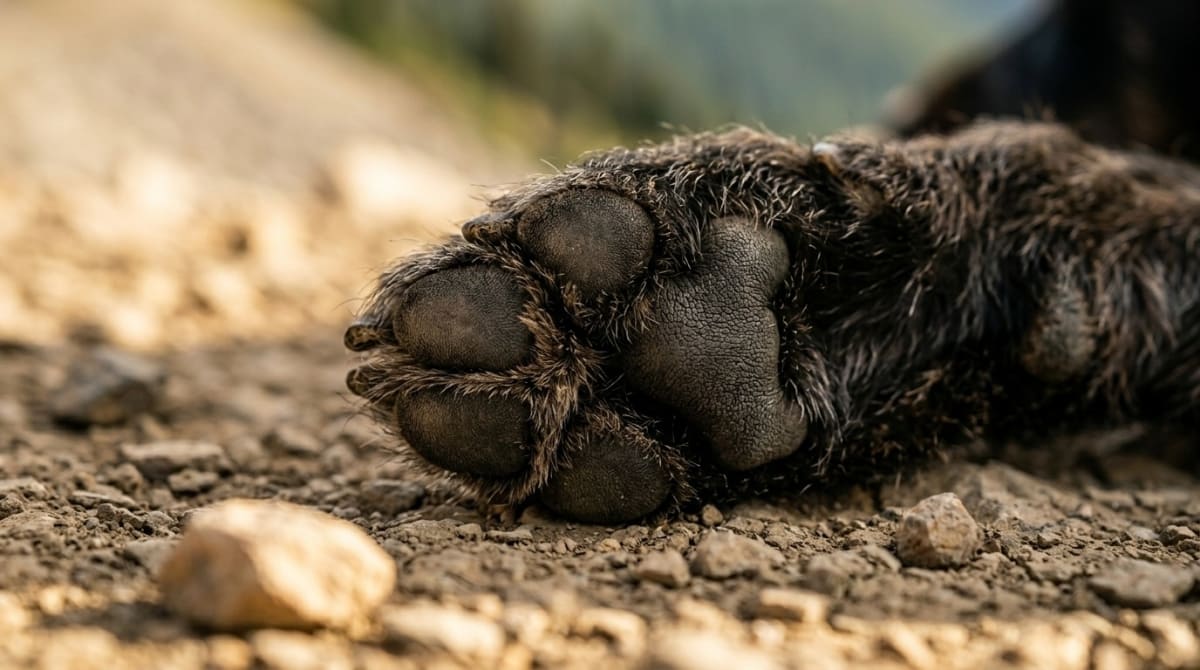
Paw pads pack dense layers of fat and tough keratin. They look like armor. They aren't. At 125 degrees the outer tissue starts cooking. A 2008 study in the Journal of Neuroscience Methods tracked canine thermal responses and found that dogs experience active pain at 120 degrees, meaning any surface hitting that number triggers immediate distress and microscopic cellular breakdown. The damage accelerates from there. Dogs feel the heat just like we do.
Scout has thick black paw pads that hide early redness perfectly. We used to wait for her to tell us if a trail felt uncomfortable. That plan failed us completely since dogs naturally hide discomfort to keep pace with their pack. You cannot wait for limping. Checking the ground is mandatory. The hand test removes all the guesswork.
Temperature Data and Hidden Trail Hazards
Weather apps track atmospheric heat. The ground plays by different rules. Trail materials soak up the sun and trap that energy fast.
Black asphalt is obviously the worst offender. A 1970 study in the Journal of the American Medical Association tracking contact burns found that an 86-degree day bakes pavement up to 135 degrees. People wearing thick rubber shoes never even notice. Compacted dirt and exposed rocky slabs act the same way. An 85-degree afternoon easily creates a 130-degree granite scramble that stays dangerously hot long after sunset.
We keep a cheap infrared thermometer in our pack now. Point the laser at the dirt to grab an instant digital readout. Anything over 120 degrees means we turn around immediately. You might be surprised by how fast a cool shaded forest path opens up into a scorching exposed ridge. Direct sunlight shifts the ground temperature by forty degrees in just a few steps. The reading jumps from 80 to 120 the second you leave the tree line.
Timing Your Hikes and Protective Gear
Summer miles demand strict schedule changes. Go before nine. Or go after seven. Early morning beats the evening every time. The dirt cools off overnight while evening trails still hold onto all that trapped afternoon radiation.
We ordered Scout a set of lightweight hiking boots after our first scare. She walked like a spider at first. Now she wears them confidently on any exposed route above 80 degrees. Check for rugged rubber soles and breathable mesh uppers. Paws need airflow. Dogs actually vent excess body heat right through their foot pads. Solid rubber booties trap that sweat inside the shoe, which artificially spikes their core temperature and creates a massive heat stroke risk during heavy outdoor miles.
We acclimated Scout inside the house first by tossing her treats while she practiced navigating the living room rug. It takes about a week of indoor practice before a dog stops high-stepping.
Warning Signs of Paw Pad Burns
Watch for subtle shifts in how they move. A dog with burning feet naturally alters their gait. They might lift their paws higher than usual. You will see them darting toward grassy edges. They hunt for shade.
Check the pads yourself. Healthy ones feel rough and heavily textured. Burned pads look inflamed or visibly swollen. Peeling skin usually shows up first. Sometimes the entire surface layer just sloughs off. Flush the feet with cool water immediately if you spot a burn. Do not use ice. Ice forces blood vessels to constrict and actually damages the fragile outer tissue even more.
Carry the dog to the car if visible blisters develop. The miles are done. Minor scrapes close up fast. Severe thermal burns require veterinary treatment and heavy protective bandaging to stop aggressive infections while the deep tissue rebuilds over four to six weeks. Knowing what to pack for trail emergencies before you leave the trailhead makes those moments far less chaotic — our dog first aid kit guide covers the essentials.
Frequently Asked Questions
Sarah is learning to hike with dogs alongside her readers. Scout is her first trail companion, and she shares every mistake, success, and lesson learned along the way.
References & Further Reading
- Development of a Canine Nociceptive Thermal Escape Model. Journal of Neuroscience Methods — J Neurosci Methods (2008)
- Thermal Contact Burns from Streets and Highways. JAMA — JAMA (1970)