 Paths & Paws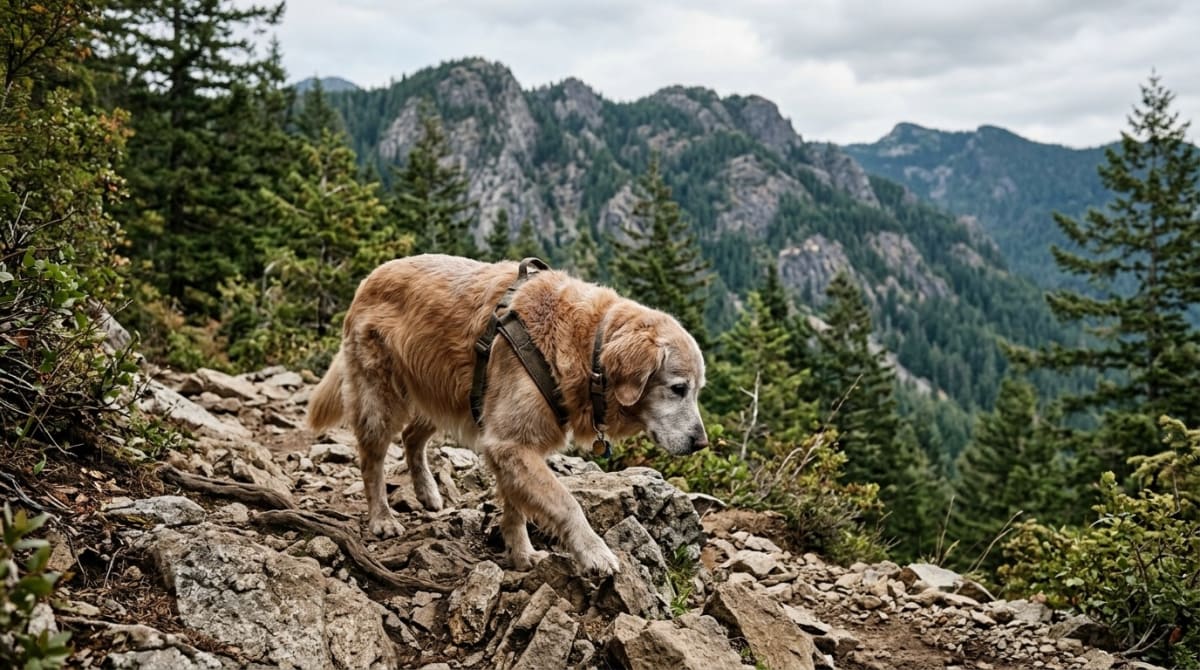
Most owners wait for a limp. Then they turn back to the trailhead. We reviewed the 2022 American Animal Hospital Association pain management guidelines to figure out how dogs actually hide discomfort. Limping is a late-stage symptom of joint pain. By the time an older dog hobbles down the trail they have been masking severe ache for miles.
Scout is my 50-pound Lab mix rescue. Since she is only three she bounces back from ten-mile treks on Mount Si in just a few hours. When we hike the Cascades with my trail partner's 11-year-old Retriever the rules shift entirely. Healthy joints act as natural shock absorbers that allow fluid movement over roots and rocks, but an arthritic joint experiences bone grinding against bare bone with every single miserable step up a steep incline. We track distinct gait changes instead of waiting for obvious exhaustion. Dogs are hardwired to push through pain to stay with their pack. You have to be the one to call it.
Key Takeaways
- 1Limping is a late-stage symptom - dogs hide joint pain for miles before they ever show visible lameness
- 2Watch for pacing, bunny hopping on climbs, head bobbing, and hesitation on descents - these appear long before a limp does
- 3Soft terrain matters as much as distance - packed dirt and pine needle trails absorb the impact that hard surfaces send straight into worn cartilage
- 4Preemptive pain medication before a hike works better than reactive dosing after - it blocks the inflammatory cascade before it starts
The Biology of Canine Osteoarthritis
Joints act like biological hinges. A layer of slick cartilage covers the ends of the meeting bones. Then a viscous synovial fluid bathes the joint space and provides constant lubrication. Healthy joint fluid contains high levels of hyaluronic acid to hold that thick texture.
In a dog with osteoarthritis this entire system experiences progressive structural failure. The cartilage layer thins out and starts to fray. The synovial fluid gets watery and loses its lubricating power. The body responds to this breakdown by pumping inflammatory enzymes inside the joint capsule. These enzymes cause the surrounding tissues to swell and trigger local pain receptors. Because the protective cushion is gone the underlying bone starts taking on heavy impact force.
The bone remodels itself to handle this stress. Hard bone spurs sprout up around the joint margins. These spurs restrict normal range of motion and cause sharp pain during extension, which forces the dog to drastically alter how they carry their body weight across uneven terrain over the course of a long afternoon hike. This breakdown doesn't happen overnight. It is slow. It stays silent for years. A dog might feel a dull ache in their hips for months before they ever show a visual sign of lameness. We can't cure this degradation. We can only manage the inflammation and adjust daily mileage to prevent further mechanical wear before the joint hits total failure.
Four Gait Changes That Signal Pain on the Trail
We always watch the dog move on flat ground before leaving the parking lot. We establish a baseline for how they carry their head and place their feet. Once fatigue or pain sets in on the dirt their mechanics will shift to compensate for the ache.
The first warning sign is pacing. Scout trots with a smooth diagonal rhythm. Her front left leg and back right leg strike the dirt at the exact same time. Older dogs with tight hips will often shift into a pace. They move both legs on the right side forward at once. This keeps the spine rigid. It minimizes rotation through the hips and shoulders. If a dog starts pacing halfway through a hike we know their back or hips are hurting.
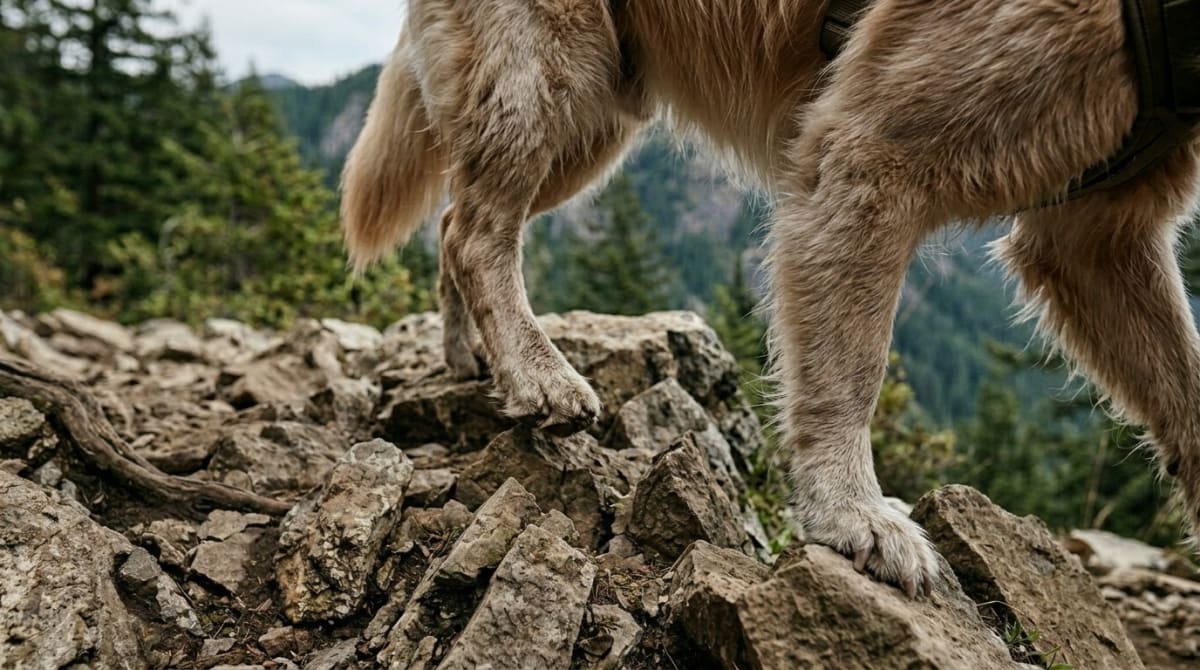
The second indicator is the bunny hop. We see this when a dog climbs vertical inclines or stairs. Instead of powering up with alternating back legs they will launch both hind feet off the ground together, which forces their front assemblies to absorb the entire impact of the climb and rapidly speeds up fatigue in their chest and shoulder muscles. This transfers the effort from weak hind legs to stronger front quarters.
The third tell is head bobbing. This is a common weight-shifting trick. If a right front elbow hurts they will drop their head sharply when the left front foot hits the ground. Lifting the head when the painful right leg touches down removes a fraction of body weight from that sore joint.
The fourth sign is hesitation on descents. Going downhill puts massive braking force on the front shoulders and elbows. A painful dog will stop at the top of a rock scramble and pace back and forth. They are trying to find a path requiring the least amount of drop. We never force a hesitating dog to jump down from a high obstacle when they already show anxiety about the landing zone.
Terrain and Weather Factors for Senior Dogs
Dirt conditions dictate the stress load on the skeleton. A three-mile walk on a paved path causes far more skeletal impact than a five-mile hike on spongy forest duff. Hard surfaces send shockwaves up the leg bones and straight into the worn cartilage.
We seek out trails heavily cushioned with pine needles or packed earth. We skip routes with extensive scree fields. Checking the elevation profile before leaving home is critical. A trail with one thousand feet of elevation gain spread over three miles feels gentle enough for a healthy adult dog. For an arthritic dog that same continuous incline will exhaust their hind legs and force them to drag their toes. We look for routes with rolling hills rather than sustained climbs.
Stepping down off a two-foot rock places the dog's entire body weight onto those front elbows. For a senior dog dealing with elbow dysplasia a single hard drop can trigger a pain flare-up that severely restricts their movement for several consecutive weeks and requires immediate veterinary intervention just to get them walking comfortably around the house again.
Weather plays a massive role in joint comfort too. Cold and damp mornings cause joint fluid to thicken up. This makes the initial miles feel incredibly rigid. Warm weather keeps things loose. But older dogs cannot regulate body temperature as well as young dogs so heat exhaustion becomes a secondary risk. We aim for dry mild days. Put a fleece jacket on an older dog during winter hikes. It keeps the muscles surrounding those joints warm and pliable.
Post-Hike Recovery Timelines and Sleep Signs
Recovery time tells us if the pace was too aggressive. A healthy adult dog might sleep deeply for a few hours after a long trek. An older dog might need a full day of rest on the sofa. If a dog wakes up stiff and struggles to stand 24 hours after returning home they exceeded their physical limits.
We pay close attention to how they sleep that first night. A comfortable dog will sleep deeply in one spot. A dog with throbbing joints will continually get up, pace the room, circle their bed, and lie back down. They cannot find a single position that relieves the pressure on their hips or shoulders. We might also hear them constantly licking their wrists or stifles in the middle of the night, which is a compulsive behavior dogs use to self-soothe the throbbing sensation of localized joint inflammation when everyone else is asleep.
Track that recovery window closely. If a four-mile hike leaves them stiff for two days we cut future hikes in half. They still need to maintain muscle mass. Strong muscles hold unstable joints in proper alignment. Letting atrophy set in causes far more harm. We track the exact mileage limit where the benefits of exercise outweigh the mechanical cost to the cartilage.
Joint Supplements and Prescription Pain Management
We break treatment down into daily baseline support and active pain relief. Baseline support requires strict weight management and omega-3 fatty acids. Keeping the dog lean is the absolute best way to reduce joint strain. Every extra pound of fat applies unnecessary force to failing cartilage. Omega-3 fatty acids help pull down chronic inflammation throughout the body. Joint supplements containing glucosamine and chondroitin are widely popular but clinical evidence supporting their efficacy remains pretty mixed.
Active pain relief relies on prescription medications. Non-steroidal anti-inflammatory drugs are the standard treatment for trail dogs. A 2010 review in the Veterinary Record showed that long-term NSAID administration provides sustained improvement in mobility for dogs dealing with osteoarthritis. These drugs block the exact enzymes responsible for joint swelling and pain transmission.
Never give dogs human pain medication like ibuprofen. It causes acute kidney failure. A veterinarian can prescribe canine-safe NSAIDs for hike mornings. Some owners prefer to give NSAIDs only when the dog shows obvious pain after a hike. Veterinary consensus has moved completely away from this reactive approach. The American Animal Hospital Association recommends preemptive pain management. Giving the medication before the activity prevents the central nervous system from winding up and amplifying those incoming pain signals. This preemptive dosing blocks the pain pathways before the inflammation even starts, allowing a dog to navigate uneven terrain comfortably without sparking a massive inflammatory cascade that ruins the entire weekend.
Knowing When to Retire a Dog From the Trail
Rugged trails will eventually become too much for the dog. It is an emotional transition for any hiker. We stop taking them on technical routes when the bad days outnumber the good. If they require multiple days of strong pain medication to recover from a short walk in the woods the trail is no longer serving them.
Dogs can still enjoy the outdoors long after they retire from high mountains, so we just shift their activity to flat paved park trails or grassy fields where the impact is minimal. We call these outings sniffaris. The goal changes from covering distance to letting the dog process smells at their own slow pace. Mental stimulation tires an older dog out just as much as physical exertion - sometimes even more. Let them dictate the speed. We often spend an entire hour covering just one mile of flat trail while the older dogs dissect every single scent marker hidden in the brush.
Frequently Asked Questions
Filed under
Sarah is learning to hike with dogs alongside her readers. Scout is her first trail companion, and she shares every mistake, success, and lesson learned along the way.
References & Further Reading
- 2022 AAHA Pain Management Guidelines for Dogs and Cats. J Am Anim Hosp Assoc 2022 — Journal of the American Animal Hospital Association (2022)
- Review of the safety and efficacy of long-term NSAID use in the treatment of canine osteoarthritis. Vet Rec 2010 — Veterinary Record (2010)