 Paths & Paws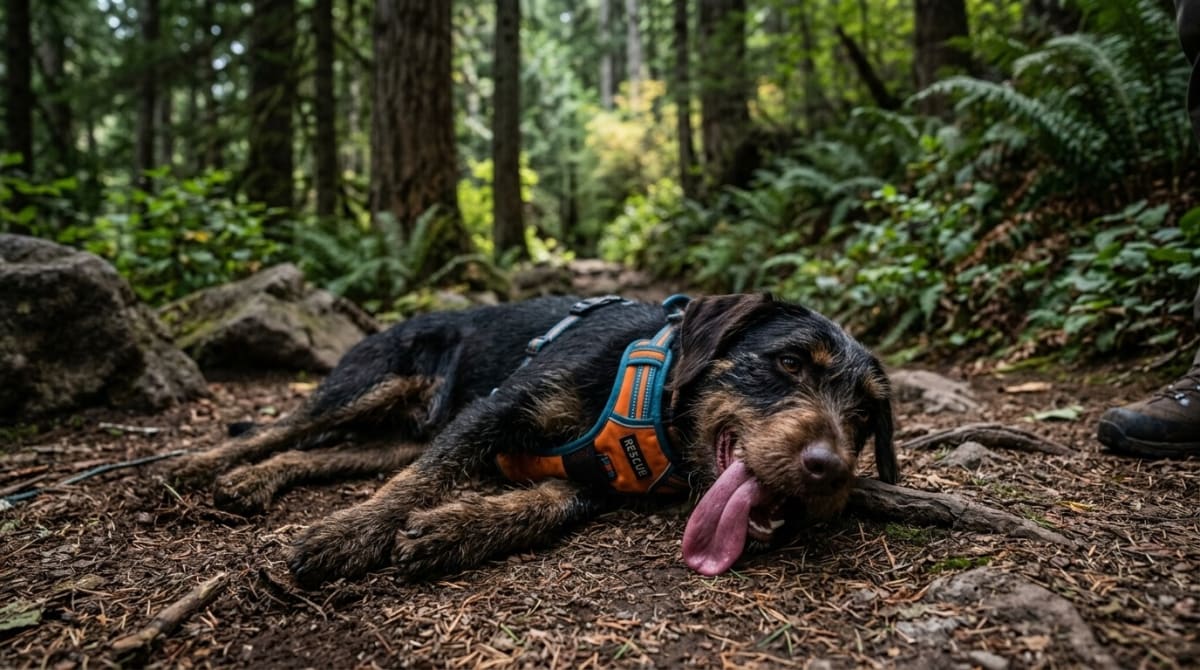
Dogs want to keep up. They'll push straight past their physical limits to follow us up a mountain. We have to be the ones to call it.
We learned this early on with Scout. She is a 50-pound Lab mix rescue with endless drive. During our first summer working our way up the Mount Si trail in the Cascades I completely missed her early fatigue signals. I assumed her relentless willingness to keep walking meant she was perfectly fine, right up until the moment she collapsed under a fern and simply refused to move another inch.
Overexertion looks totally different from ordinary tiredness. Normal fatigue means a dog sleeps well after a trek. Dangerous overexertion means their body is actively failing to regulate internal temperature or oxygen. We started tracking Scout's heart rate recovery and panting patterns across dozens of afternoon hikes, which revealed that the bodily cues of complete exhaustion are impossible to ignore once you know what to watch for in the dirt.
Key Takeaways
- 1A spatula-wide tongue is one of the earliest physical signs of dangerous heat load. The shape widens because the cardiovascular system is desperately trying to dump heat
- 2Lagging behind on trail and veering toward shade are behavioral fatigue signals that appear before physical collapse
- 3Bright red, pale, or blue gum color is a medical emergency that ends the hike immediately
- 4Cool paw pads and belly to lower core temperature. Never cover an overheated dog with a wet towel
Early Warning Signs of Fatigue
The Spatula Tongue
Check the shape of the tongue. A relaxed dog pants with it hanging straight down. A dog working hard widens the bottom to create extra surface area for evaporation. We call this spatula tongue. When Scout's tongue curls up at the edges and spreads wide we know she is approaching a hard limit. This shape change happens because the cardiovascular system is desperately trying to dump heat, meaning the wider that pink surface gets, the closer the animal is to total collapse.
Lagging and Trail Position
Trail position reveals everything about current energy reserves. Most dogs naturally lead the way and check back constantly. If they fall behind, they are spent. Dropping behind our heels is a massive red flag on a climb because they are burning every single ounce of remaining energy just to maintain forward momentum on the dirt while fighting gravity. Scout usually charges ahead on a twenty-foot longline. We stop the exact moment she drops back to walk beside my knee.
Shade Seeking and Lying Down
Shade-seeking behavior is a dead giveaway. A comfortable dog walks straight down the center of the path. A tired pup veers off the packed dirt to hunt for shadows under trees. If they drop into the brush every time we pause to adjust a backpack strap or tie a boot, they need a serious rest period before pushing any higher. Hitting the ground instantly stops those working muscles from generating excess heat.
Clumsiness and Foot Dragging
Coordination drops fast. Fatigue makes dogs incredibly clumsy. We might hear nails dragging across flat rocks, or notice Scout repeatedly tripping over small exposed roots that she would normally clear without a second thought during that easy first mile. Watch the back legs. They might look slightly wobbly. They might struggle on steep timber steps or lose their footing on switchbacks.
Danger Signs of Complete Exhaustion
Ordinary tiredness clears up with a short break. Dangerous overexertion demands immediate intervention. We always test recovery by stopping in deep shade for ten full minutes.
The 10-Minute Shade Test
A normally tired dog pants hard for a few minutes before closing their mouth. Breathing slows down to a steady rhythm. An overexerted dog keeps panting with rapid, shallow breaths well past that ten-minute mark. It might sound awful and raspy. The chest will heave violently. According to guidelines from the American Veterinary Medical Association, heavy panting that flatly fails to resolve with rest is a primary indicator of dangerous heat stress.
Glazed Eyes and Loss of Focus
Eye contact reveals mental clarity. Call their name out loud. A healthy dog looks back. A completely exhausted animal gets a glazed, blank look in the eyes. They might stare off into the trees and ignore commands entirely because the brain is starved for oxygen and totally overwhelmed by the rapidly rising core temperature inside the body.
Refusing Water or Vomiting
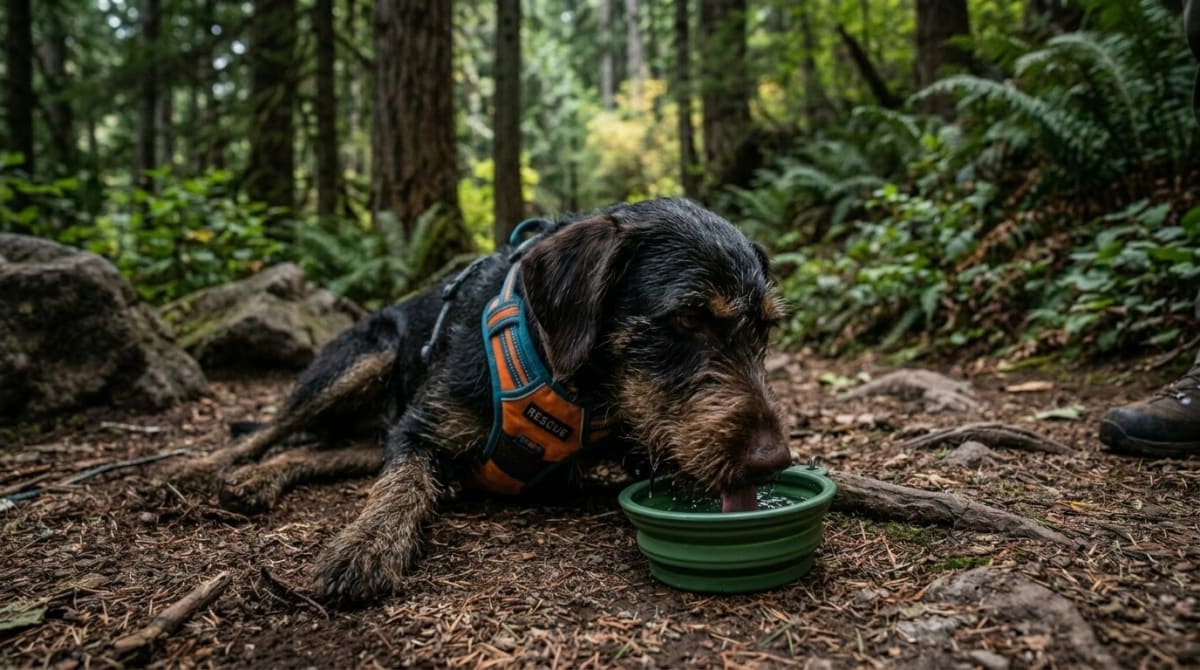
Water rejection is terrifying. Dogs usually drink eagerly when thirsty. A dog suffering from extreme heat stress often refuses to drink entirely, or they might take a few shallow laps from a bowl only to throw it back up onto the trail moments later. That means the body is in full crisis mode. The digestive system shuts down to redirect blood to critical internal organs.
Sudden Gum Color Changes
Healthy gums look like bubblegum. Pull back the lip and check that tissue color. Bright red gums point to overheating and high blood pressure, while pale or blue-tinged gums mean they aren't pulling enough oxygen from the air. A dog's normal body temperature runs between 101 and 102.5°F. Gum color changes at these extremes typically mean core temperature has already crossed the 104°F danger threshold into clinical hyperthermia. Either change is a hard medical emergency that requires pulling the plug on the hike right then and there.
Environmental Factors That Speed Up Exhaustion
Air temperature is just half the equation. High humidity absolutely wrecks a dog's ability to cool down. Panting relies entirely on moisture evaporating from the tongue and lungs, which means when the ambient summer air is completely saturated with humidity, that moisture has absolutely nowhere to go and the cooling engine fails. They will pant harder but receive zero benefit from the effort.
Direct sun drains energy fast. Scout has thick black fur. She absorbs heat like a wet sponge on exposed ridge lines. A sixty-degree afternoon in direct sunlight feels entirely different to her than a sixty-degree morning in a dense pine forest, because that dark fur traps the radiant solar energy and bakes it right against her skin.
Pay attention to ground temps. Dirt paths stay relatively cool. Rocky surfaces and exposed granite slabs bake in the afternoon sun and radiate intense heat upward into the animal. This cooks a dog from the bottom up, which gets especially dangerous because the belly has very little fur to protect the bare skin from radiating rock heat. Ground surface temperature often matters more than air temperature on a summer afternoon hike.
Altitude hits hard too. Higher elevations mean thinner air, forcing dogs to breathe much faster just to get a baseline amount of oxygen into the bloodstream. Driving straight from sea level to a trailhead at five thousand feet guarantees they will fatigue much faster than usual. Give them twenty minutes to acclimate at the bumper before starting the actual climb.
What to Do Immediately
Stop hiking right now. Find the deepest shade available. Get the dog off the hot trail surface immediately.
Offer small amounts of water instead of letting them chug the entire bowl. Giving too much water too fast triggers vomiting. Restrict access to a few laps every couple of minutes.
Pour cool water on the paw pads and the bare belly. These zones have less fur and a huge concentration of surface blood vessels. Cooling these specific spots helps drive down the internal core temperature. Never cover a hot dog with a wet towel. A soaking wet towel traps heat against the skin, working just like an insulating winter blanket to make the internal overheating drastically worse.
Assess the situation honestly. Keep in mind the actual logistics of a rescue. Scout weighs fifty pounds, meaning I simply cannot comfortably throw her over my shoulders and carry her down a steep mountain scree field. There is a right way to carry an injured dog off trail when it comes to that, but prevention is always the better plan. If a dog fails that ten-minute recovery test, the trip is done. Walk back to the car at a painfully slow pace and take rest breaks every few minutes.
Preventing Exhaustion on the Trail
Conditioning prevents most trail emergencies. Build their endurance up slowly. Start with flat two-mile walks before attempting steep five-mile alpine climbs. Muscles and paw pads need weeks to adapt to rough terrain. A well-conditioned dog can handle 10 miles of trail without hitting the danger signs above. A dog thrown into that distance unprepared will hit them fast.
Beat the summer heat. We hit the trailhead early in the morning from June through August. The ground is cooler and the sun lacks that brutal midday sting. If the forecast pushes over seventy degrees we pick routes with dense tree cover and natural water sources, because a shaded path with a deep creek crossing will keep Scout's core temperature radically lower than an exposed ridge run.
Force them to stop. Dogs refuse to pace themselves. We halt every thirty minutes on steep climbs. Scout gets a water break whether she asks for one or not, because forcing mandatory downtime keeps the heart rate stable and prevents heat from compounding dangerously over the course of an entire afternoon trip.
Watch the scale. An overweight dog works so much harder on the dirt. Carrying extra pounds puts immense stress on the joints and forces the cardiovascular system to work overtime just to maintain a steady walking pace on flat ground. Keep dogs lean to massively improve their endurance and heat tolerance.
Frequently Asked Questions
Sarah is learning to hike with dogs alongside her readers. Scout is her first trail companion, and she shares every mistake, success, and lesson learned along the way.