 Paths & Paws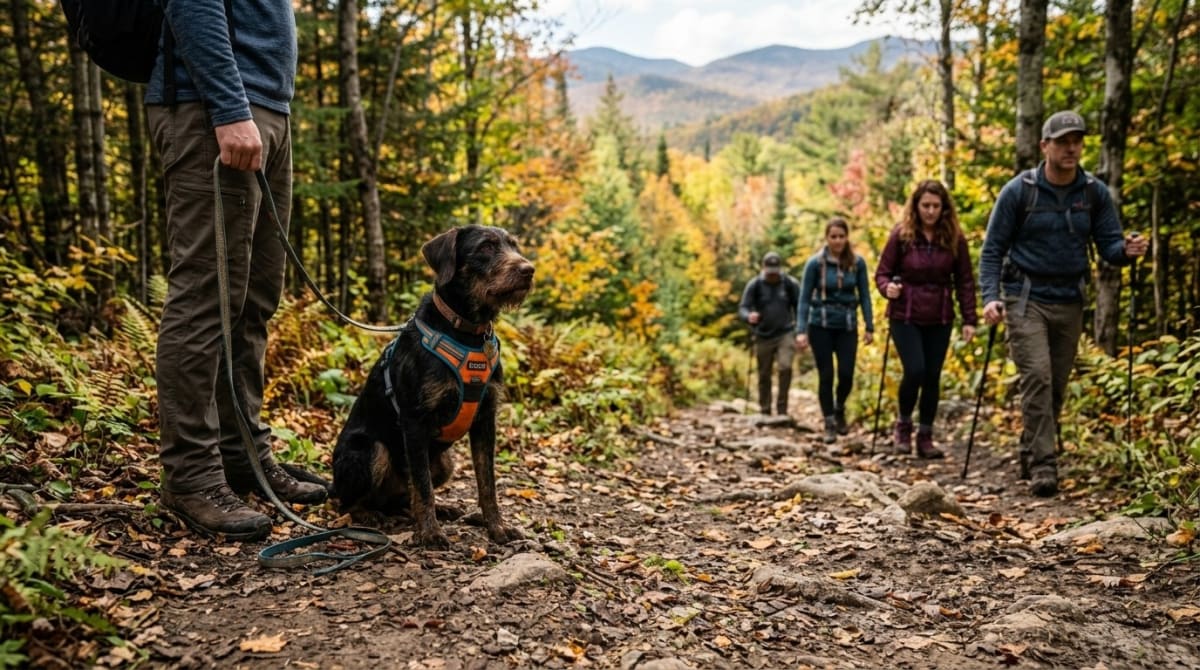
Most folks think hauling a dog into the bushes on a tight leash counts as decent trail manners. It really just creates a major tripping hazard. We used to do exactly that with Scout. We spent hours apologizing to passing trail runners while tangling ourselves up in six feet of nylon webbing. The step aside command fixes the chaos. It shifts a frantic scramble into a predictable yield.
Scout is a 50-pound rescue Lab mix. When we first tested this training protocol on Mount Si, her immediate instinct was to greet every single uphill hiker she saw, which meant we spent half our afternoon wrestling a muddy animal while total strangers tried to awkwardly squeeze past us on narrow, steep switchbacks. Not ideal. After four weeks of consistent positioning work she now drops off the dirt and holds a sit automatically. Teaching a dog to yield on command drastically cuts down on shared path collisions. It also prevents trail erosion from panicked scrambling and halts dangerous face-to-face encounters with reactive dogs.
Key Takeaways
- 1Dogs yield to hikers, horses, and mountain bikes to keep multi-use trails safe
- 2Uphill traffic always retains the right of way over downhill traffic
- 3The step aside command requires an active off-trail position and a held stay
- 4Hand signals bridge the communication gap when trail noise drowns out spoken words
The Rules of Trail Right of Way
Figuring out when to deploy the step aside maneuver is dead simple. Almost always. Dogs sit at the absolute bottom of the trail right-of-way totem pole. Hikers grinding up a steep grade always retain priority. Uphill travel demands heavy momentum and oxygen. Forcing a climbing hiker to brake and awkwardly navigate around a pet shatters their rhythm and drains their energy.
Scout struggled with this concept initially. We hike highly trafficked paths in the Cascades where you end up passing someone every five minutes or so. We learned that stepping aside early prevents leash reactivity entirely. Move off the tread before the approaching person gets within twenty feet. This buffer zone blocks the dog from launching a surprise greeting. It signals to the passing person that the animal is fully managed so they can just keep their hiking pace steady.
Yielding to horses takes extreme caution. A barking dog spooks a horse in a heartbeat. That creates a lethal scenario for the rider and the animal. When hooves approach we step far off the trail. We try to find a pocket on the downhill side of the path if possible because horses instinctively perceive threats coming from above them much more acutely than things positioned below their sightline. Grip the harness tight. Feed them high-value rewards constantly until the riders pass by. We cover the full horse encounter protocol in our guide to trail etiquette with horses.
Mountain bikes bring a totally different puzzle to solve. Cyclists move fast and they run virtually silent. They should theoretically yield to hikers on foot. Reality rarely plays out that way on steep descents where riders carry heavy downhill momentum. Step aside to shield yourself from a high-speed collision. Keep eyes up and listen for the mechanical hum of rubber tires grinding against dirt.
Essential Training Gear
You really do not need much gear for this work. Keep the toolkit stripped down. A standard six-foot leash is absolutely mandatory. Retractable leashes are hot garbage for teaching precise off-trail positioning because they condition the dog to constantly pull against spring tension which makes it entirely impossible to transmit subtle physical cues through the line. A fixed length guarantees exact placement. We prefer biothane materials for trail sessions. They refuse to soak up water or get heavy in the rain. The material slides cleanly through bare hands so we can gather slack in a fraction of a second.
Pack a treat pouch jammed full of rewards. We run with freeze-dried beef liver or greasy little chunks of hot dog. The outdoor trail environment acts as an intense sensory overload full of distracting scents and wild noises. Dry breakfast kibble will not hold a dog's attention when a full-suspension mountain bike rattles past on a rocky descent. Bring something genuinely irresistible.
A reliable front-clip harness is what makes the difference here. We strap one onto Scout on every single hike. It forcefully redirects her forward momentum back toward our legs if she decides to lunge at a passing golden retriever. Dragging a dog off the dirt by their neck collar dumps unnecessary physical stress onto their throat. It restricts their airway precisely at the exact moment when they desperately need to remain calm and focused on the job.
Finally we grab a marker to tag the correct behavior. A plastic mechanical clicker does the trick nicely. If juggling another piece of plastic on the trail sounds deeply annoying just load a verbal marker like the word "yes" into the dog's vocabulary. Capture the move you want. Mark the literal millisecond the dog's tail hits the pine needles.
How to Train the Step Aside Command
Step 1. The Living Room Foundation
A chaotic hiking route is a terrible spot to introduce a brand new skill. Start inside the house. We walk with the dog on a leash through the living room. Say the command word loudly and with conviction. "Aside" and "Yield" operate as solid options here. We use a chunk of food to literally magnetize the dog's nose outward and away from our legs. Guide their momentum until they pivot backward to face the path we just walked on. Ask for a sit. Mark the action with a positive verbal cue and pay out the food immediately. We repeat this boring loop until the dog naturally anticipates the outward turn.
Step 2. The Sidewalk Pivot
Take the rehearsal outdoors to a quiet neighborhood sidewalk. Walk right along the edge of the concrete. Drop the command and apply mild leash pressure to physically guide the dog onto the grass. Ask for a firm sit. To build a stark contrast between walking and yielding we guide the dog deep enough onto the lawn so they sit parallel to the sidewalk but entirely off the paved surface. Reward heavily. Treat this like a ridiculously fun game. We ran this drill with Scout around our block for a full seven days before ever attempting it on actual dirt. The dog absolutely needs to understand that the visual boundary dividing path from grass is the target zone.
Step 3. The Empty Trail Rehearsal
Track down a wide flat path during awkward early morning off-peak hours. Practice the sequence without any strangers around. After walking at a relaxed pace for five minutes deliver the verbal command and step off the trail together. Keep the leash short enough to physically block them from wandering off into deep brush or sniffing sketchy wildlife trails. The immediate shoulder of the path is the goal. Pay the dog for holding the seated position for ten seconds. Release them back onto the walking line with a release word like "okay" or "free."
Step 4. Adding Live Distractions
Now we wait for a real hiker to show up. Spot the person from a distance. Drop the command and step off the dirt. We intentionally position ourselves between the trail traffic and the dog while asking for a rock-solid sit. To construct a highly positive association with sweaty strangers stomping past we just feed the dog a rapid-fire stream of hot dogs for the entire duration of the encounter. Over time we fade the food out. Scout now directly associates approaching hikers with sitting calmly.
Step 5. Generalizing to Different Environments
Dogs operate as incredibly situational learners. Scout nailed the step aside command on our daily neighborhood loops shockingly fast. But when we drove out to a brand new state park stacked with wild smells and weird terrain she completely forgot what the word meant. Practice the yield in radically different environments. Run it in dense woods. Push through it on rocky switchbacks. Test it right next to screaming river water. We practice the command when it is not actually required. Deploying the word only when a loud downhill mountain bike approaches simply turns the cue into an early warning alarm for incoming danger. Ask for a random yield every ten minutes or so during the trek. This stops the behavior from going stale and keeps the animal constantly guessing about when the next jackpot of liver will drop.
Using Hand Signals for Distance Work
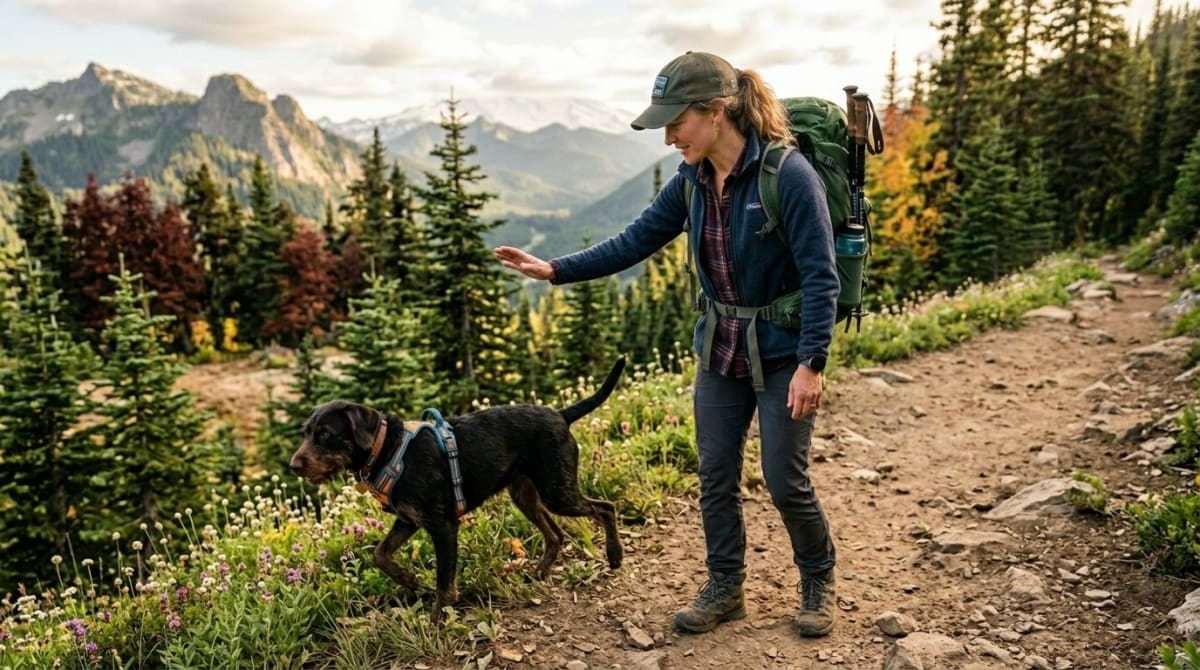
Spoken commands fail miserably outdoors. Howling wind and rushing river water easily drown out shouted words on an exposed mountain ridge. A visual hand signal bridges this communication gap and tells the dog exactly what we expect. We rely on an open flat palm pointing directly outward toward the side of the trail. The motion is sweeping and visually obvious.
Introduce the hand signal back during the sidewalk training phase. Flash the visual cue a split second before barking out the verbal command. Dogs read physical body language dramatically faster than they process human vocabulary. Once the dog grasps the hand movement we start stretching out the working distance. If the dog happens to be walking slightly ahead on a longer biothane line we just signal them to step aside from ten feet back which entirely bypasses the chaotic process of reeling them all the way in hand over hand. They just step off the dirt and sit. We walk up to them and reinforce the stay. This advanced technique requires months of grinding practice to perfect. It prevents the frantic rope-hauling that ruins a peaceful walk in the woods.
Managing Space and The Buffer Zone
Grasping spatial pressure shuts down leash reactivity. Dogs get intensely reactive when they feel cornered. Hauling the dog to the absolute razor edge of a narrow singletrack forces a hiker to physically brush past their nose. The dog will almost certainly shatter the sit and attempt to blast backward to escape the bubble of pressure. They require a comfortable buffer zone.
We try to carve out at least four feet of clearance from the trail edge for Scout. This physical distance noticeably tanks her arousal levels. If the path happens to be far too narrow to afford that kind of space we simply throw it in reverse and walk backward to a wider clearing or a switchback corner. Losing sixty seconds of forward progress is always infinitely better than forcing a high-tension close-quarters encounter. The handler controls the geometry of the pass.
This spatial awareness becomes do-or-die when navigating an off-leash dog encounter. This remains the absolute most stressful scenario for any handler out there. If a loose dog charges the position during a highly vulnerable yield stay absolutely do not punish a broken sit. Bare survival instincts naturally override obedience training every single time. We step firmly in front of the dog and chuck a giant handful of treats directly at the approaching dog's face. This tactical distraction is called a treat scatter. It usually stalls the loose dog just long enough for their panicked owner to sprint up and attach a leash.
Common Mistakes to Avoid
People make the identical predictable blunders out there. They wait entirely too long to trigger the yield. A downhill mountain bike will spark absolute panic if it gets within ten feet before we react. Step aside early. We start moving off the trail the literal second we make eye contact with approaching hikers or bikers. This buys the dog plenty of processing time to scan the environment and lock in a comfortable sitting posture before the stranger arrives.
Another classic error involves ignoring the physical rules of the environment. Do not trample delicate alpine flowers or crush sensitive cryptobiotic soil just to yield. Hunt for a durable surface like bare rock or packed dirt. If the skinny trail is walled in by fragile mosses or nasty vegetation like poison oak retreat to a wider section rather than shredding the local ecosystem. If we cannot step off safely we simply turn around and walk back down to a wider pullout.
Dragging the dog by the neck is deeply counterproductive. Yanking a dog off the trail breeds intensely negative associations with approaching hikers. It cranks up their frustration and sparks severe leash reactivity over the long haul. Rely on the living room foundation training steps to make the yield a strictly voluntary action where the dog actively chooses to bail off the path.
Finally allowing a quick sniff completely torpedoes the training. The dog absolutely must hold the position until the person clears the area. We do not let them break the sit to aggressively investigate a hiker's muddy boots. Never shout out that a dog is friendly while they lunge toward a stranger. That exhausted phrase attempts to excuse garbage behavior while shoving the entire burden of the interaction onto a random passerby who might harbor severe dog trauma or own a reactive dog themselves. Keep the dog locked in a strict sit until the passing party is at least ten feet down the trail.
Frequently Asked Questions
Filed under
Sarah is learning to hike with dogs alongside her readers. Scout is her first trail companion, and she shares every mistake, success, and lesson learned along the way.