 Paths & Paws
Most hikers lean entirely on a basic stay command for trail safety. We timed our response rates on rocky descents in the Cascades. Stay takes too long during an emergency. The dog has to process stopping and physically shift into a seated posture. Wait works differently. It tells the dog to freeze wherever they are right now, whether they are standing or walking, and check back with us for the next piece of instruction.
When a mountain bike flies around a blind corner, we need an instant brake pedal. Scout is a 50-pound Lab mix rescue with a serious prey drive - we cover managing that on hikes with a reactive dog too, but the wait command is the most practical emergency tool we've built. If she spots a chipmunk near a steep dropoff, asking for a formal sit-stay burns critical seconds while forward momentum keeps carrying her toward the dangerous edge of the trail. Wait just kills onward motion. Stay is a parking brake. We built this rapid response from our living room directly to the dirt.
Key Takeaways
- 1Wait halts forward momentum instantly without any posture change - stay forces a sit which burns critical seconds during a trail emergency
- 2Train in strict progression: doorway → parking lot → long line in open park → trail simulation; skip any step and outdoor reliability collapses
- 3Use soft high-value treats that swallow fast for the entire foundation phase - pulling good rewards early wrecks reliability against real trail distractions
- 4A crossing-guard hand signal alongside the verbal cue builds a far stronger response - dogs read body language before they process words
What You Need
You cannot train an emergency stop while facing an actual crisis. Build the foundation using gear meant for control.
- Standard six-foot walking lead
- Fifteen-foot nylon training line
- High-value soft treats (plain boiled chicken works best)
- Snug walking vest with a secure back attachment ring
We ran this setup for weeks. The shorter lead handles initial doorway blocking. That longer line becomes mandatory later when adding space between handler and dog. Soft treats force immediate swallowing. Crunchy biscuits require chewing, and that brief distraction totally breaks the learning cycle. We want the reward swallowed fast. Fast chewing builds fast repetition. When we first tried this protocol with Scout on the lower trails of Mount Si, using dry kibble failed completely because she just sniffed the dirt looking for dropped crumbs instead of snapping her focus back to us for the next rep.
Step-by-Step Training
We always start inside the house. Move to the driveway next. Then hit a quiet street. Only take it to the dirt after that.
Step 1. The Doorway Block
Walk toward an exterior door. Pause right before crossing the threshold. Say the wait command once in a calm voice. Step right in front of the dog to block their path if they try to slide outside. You become a physical gate. Pay them. Hand over the treat the exact second they kill their momentum and look up at you. We practiced this blocking maneuver every single day for a week. That boring repetition hardwired the physical response before we ever introduced wild outdoor variables like running squirrels or heavy traffic.
Step 2. The Sidewalk Pause
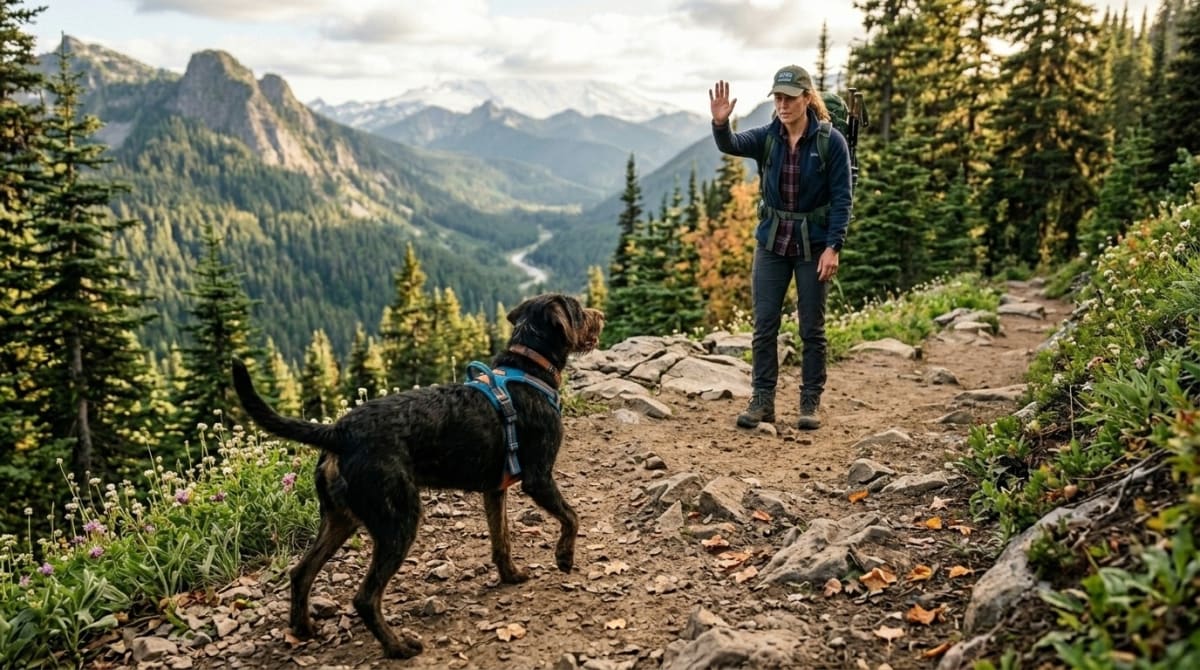
Take the training to an empty parking lot. Walk at a normal clip and just stop without any warning. Issue the verbal cue while throwing a flat hand out like a crossing guard. Dogs anchor on visual cues. If the leash pulls tight, gently hold ground until the tension drops naturally. Do not drag the dog backward. Mark the split second they plant their feet and shove a high-value treat straight into their mouth. Repetition builds the muscle memory. Soon they freeze the moment they see that hand signal flash in their peripheral vision. We practiced this sequence on regular morning walks until Scout learned to brake automatically the moment the visual barrier went up, totally ignoring passing cars or neighborhood dogs.
Step 3. Building Distance with a Long Line
Clip on the fifteen-foot nylon line in a big open park. Let the dog wander ahead. Wait until they bury their nose in the grass near the end of the tether. Shout the wait cue across the open space. Stomp on the dragging line with a heavy boot. This kills any forward progress. When they hit the end of the slack and whip around, praise them heavily and walk up to hand over the chicken. This phase took Scout three full weeks of daily practice. It demands serious patience because we were fighting random environmental distractions while trying to override her biological urge to chase fresh scents away from us.
Step 4. Trail Hazard Simulation
Bring the setup to a familiar dirt path. Look for obvious boundaries like wooden bridges or downed logs. Throw the stop command right before they reach the obstacle. Walk up. Deliver the reward. Then use a release word to let them cross. By forcing artificial pauses at these physical bottlenecks, we taught Scout to view tricky trail features as a chance to earn a payday. The obstacle itself becomes the trigger to pause. She used to sprint blindly over crests. Now she hits the top of a steep rise, hears the command, and locks into position while we scout the other side for approaching horses. The same freeze behavior is what lets us manage a rattlesnake encounter on trail without physically wrestling Scout back on the leash.
Common Mistakes
Most failures happen when handlers rush the progression. We definitely messed up during Scout's early dirt sessions. Catching these errors early prevents sloppy habits.
The biggest mistake is mixing up the stay and wait criteria. If we ask the dog to stop and they freeze while standing up, that is a huge win. Handlers often ruin the rep by demanding the dog sit down right after. That muddles the objective. The only goal is killing forward momentum. Posture means nothing during a trail emergency.
Another trap is fading the high-value treats too early. Emergency stops demand a massive override of a dog's prey drive, and a stale biscuit just won't beat the thrill of chasing a squirrel toward a cliff edge. We had to pay generously for every successful halt during those first few months of outdoor practice. The woods constantly offer competing reinforcements that easily drown out a verbal phrase. Intermittent rewards come later. Pulling the good snacks away during the foundation phase just wrecks the reliability.
Once the wait command is solid, pair it with the behind command for downhill trail sections - together they give you full directional control on technical terrain. Watch out for unintentional body language cues. Leaning forward while shouting the stop command contradicts the verbal instruction because the dog reads that forward lean as an open invitation to keep moving down the path. The handler's body needs to act like a concrete pillar. Stand tall, square the shoulders, drop the center of gravity, and breathe out heavily.
Frequently Asked Questions
Sarah is learning to hike with dogs alongside her readers. Scout is her first trail companion, and she shares every mistake, success, and lesson learned along the way.