 Paths & Paws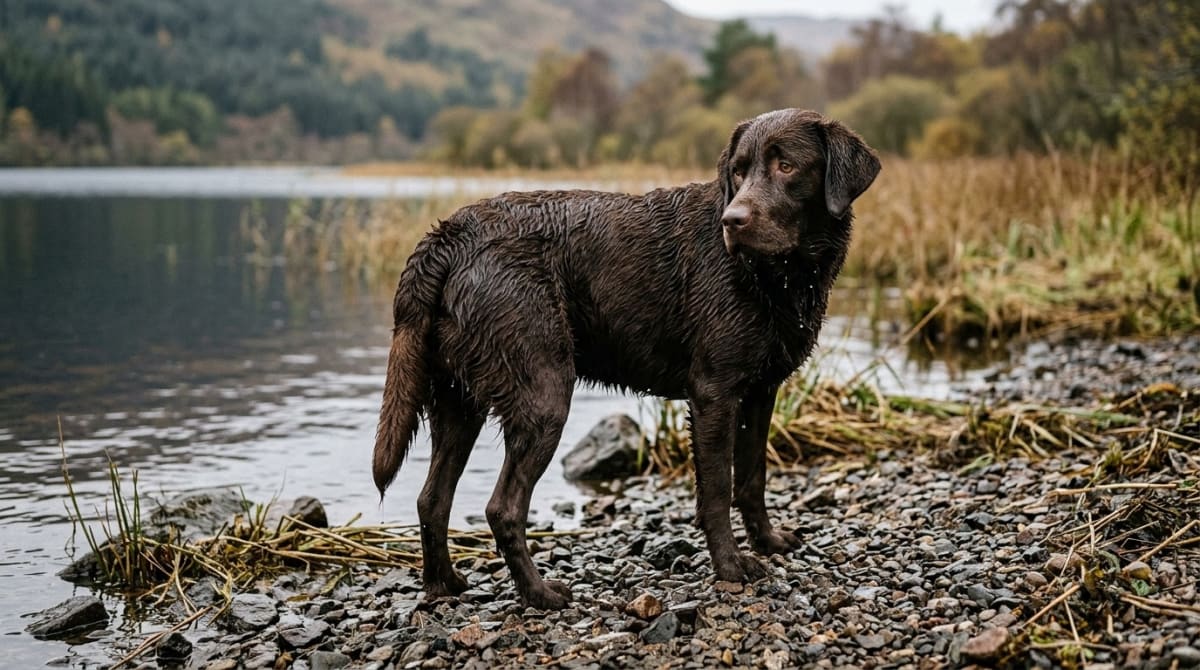
Your dog just climbed out of a mountain lake. Now their tail just hangs there. Totally dead. Most people panic and assume it's broken, but this sudden drooping is almost always limber tail syndrome. The clinical name is acute caudal myopathy. It's a temporary but violently painful condition where the tail muscles swell up and choke off their own blood supply.
We learned about this the hard way with Scout, our 50-pound Lab mix rescue who absolutely lives for alpine water, after we let her swim in a freezing tarn up in the Cascades and watched her tail drop straight down by the time we hit the trailhead parking lot. I honestly thought she had fractured her spine. The reality was a severe muscle strain that demanded a week of strict rest and prescription painkillers. This guide covers exactly what happens inside that tail, how to spot the difference between a bad strain and a spinal emergency, and what steps actually get them wagging again.
Key Takeaways
- 1Limber tail is a temporary muscle strain, not a break, caused by swelling that cuts off blood flow inside the tail
- 2Cold water swimming and unconditioned trail days are the two biggest triggers
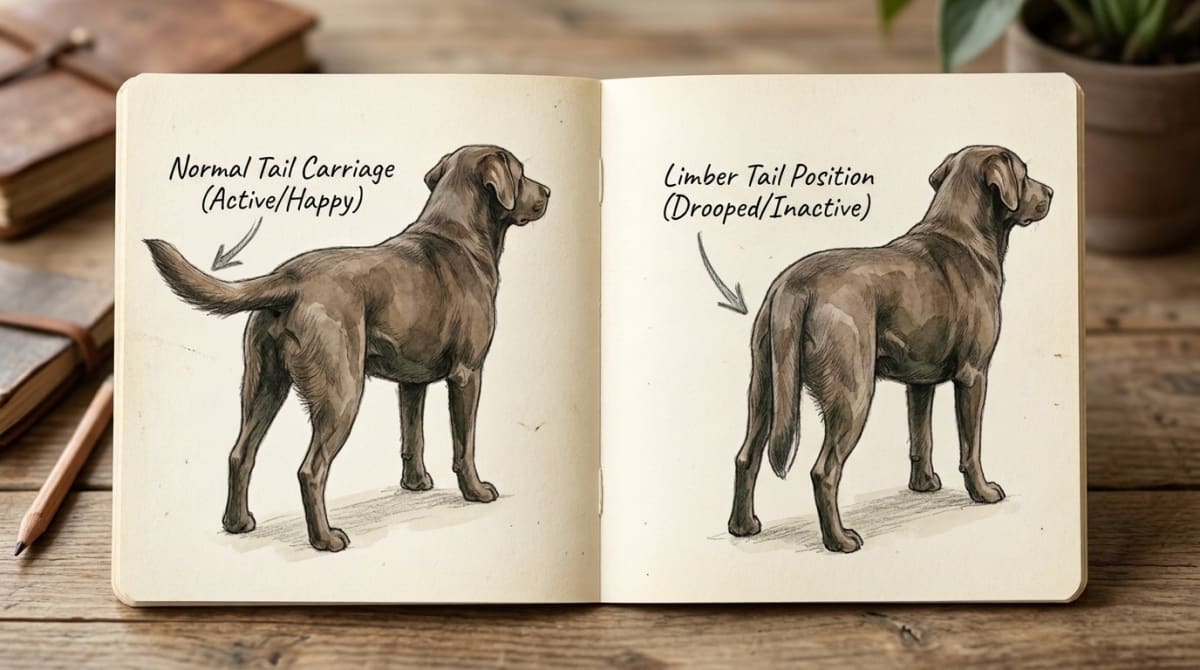
- 3The classic sign is a tail that sticks out straight for a few inches, then drops like a snapped hinge
- 4Weakness in the hind legs or loss of bladder control means it's not limber tail. Get to an emergency vet
The Biology of a Broken Wag
Vets call this acute caudal myopathy. Working dog handlers usually just say swimmer's tail or dead tail. The actual mechanics come down to anatomy and confined spaces. A dog's tail is just a direct continuation of their spine. It houses vertebrae, blood vessels, nerves, and surprisingly dense muscle groups. Those base muscles pack serious power. They have to act as a heavy counterbalance whenever a dog cuts sharply at a full sprint or navigates a sketchy downhill pitch.
The specific muscle group taking the hit is the intertransversarius ventralis caudalis. It runs right along the underside of the tail bones. Like a lot of load-bearing muscles it comes wrapped in fascia. Think of fascia as a dense, fibrous sleeve holding the meat together. The problem is this sleeve has absolutely zero give.
Pushing the tail too far causes micro-tears in the fibers. The body immediately floods the zone with fluid to jumpstart healing. Swelling happens fast. Because that fibrous sleeve refuses to expand, internal pressure skyrockets and crushes the local blood vessels until oxygen can no longer reach the tissue, leaving the starving muscle cells to dump an enzyme called creatine kinase right into the bloodstream.
The whole chain of events perfectly mirrors compartment syndrome in human runners. The dog loses all function back there because the tissue is quite literally suffocating. They drop the tail because lifting it against that kind of internal pressure is physically impossible.
What Triggers Limber Tail?
Doing too much too fast triggers the swelling. Water time is the classic culprit. A 2016 study in the Veterinary Record followed a massive group of Labrador Retrievers to track how often this happens in the real world. The numbers were surprisingly high. Data confirmed a 9.7 percent cumulative incidence of unexplained tail limpness across the dogs.
Hitting the lake proved to be the biggest risk factor. Dogs who swam were nearly five times more likely to drop their tails compared to the dry dogs. They use that appendage like a heavy rudder in the water, constantly firing the base muscles to steer. Throw freezing alpine runoff into the mix and the risk absolutely spikes. Ice-cold temperatures clamp down blood vessels right from the jump, forcing the muscles to work twice as hard on half the oxygen.
Those researchers also found a weird geographic link. Living further north directly correlated with getting the condition. For every degree of latitude closer to the pole, the risk jumped by 50 percent. Cold climates simply create a much more hostile environment for heavy muscle exertion.
But water isn't the only way it happens. We see this constantly on big trail days where dogs use their tails as a pendulum on rocky, uneven ground. Poor conditioning is usually the real villain here. A lot of dogs get hit with this during their first major outing of the spring. They spend five months sleeping on a couch and then suddenly bag a ten-mile peak. Those unconditioned fibers fatigue out, the fluid rushes in, and the tail shuts down completely.
Crates are the hidden danger nobody talks about. We hear from hikers whose dogs develop the condition after riding in a tight plastic box for hours and then immediately launching up a steep trail. That cramped posture restricts baseline blood flow before the real work even starts. Think about the average weekend warrior dog. They sleep indoors all week, wedge into a bumpy truck bed crate for a long Saturday drive, and then hike eight miles with thousands of rapid balance adjustments while chasing chipmunks. Going from zero to a hundred like that guarantees microscopic tissue damage.
Spotting Limber Tail vs. Serious Injury
Watching your dog's tail go dead is terrifying. You need to know how to separate a bad strain from a spinal emergency. The biggest giveaway is always the exact angle of the droop.
A classic limber tail will stick out perfectly straight for about three inches and then drop straight down to the floor. It looks exactly like a snapped hinge. You'll usually notice the fur standing straight up right over the swelling at the base. Gently run your thumb over that spot about three inches down from the rump and the dog will almost certainly flinch or whine.
A few other bad things mimic this posture. Snapping a tail bone requires x-rays and heavy splinting. Spinal cord disease causes true paralysis that wipes out both the tail and the hind legs simultaneously. Impacted anal glands create intense localized pain, forcing the dog to clamp everything down tight and refuse to lift the tail for anyone. Prostate flare-ups in males cause the exact same guarding behavior.
Watch how they walk. A dog with a dead tail will still move their legs normally, though the lack of a rudder makes them look weirdly clumsy. They hate sitting down. You'll catch them shifting their weight constantly or just pacing around the living room trying to find a comfortable angle.
But if they start showing weakness in their back legs, or if you hear their hind claws scraping the pavement because they can't pick their feet up, or if they randomly wet the floor, you are not dealing with a muscle cramp. Get to an emergency clinic right then. Those are bright red flags for nerve damage. If the dog can't walk out on their own, our guide on carrying an injured dog off the trail covers safe carry methods for the hike back.
Recovery and Treatment
Don't try to manipulate the tail or force a wag. You absolutely cannot stretch this injury out. The gold standard for fixing it relies on strict rest and professional pain meds. Most dogs bounce back fully in anywhere from three days to two weeks. The fastest turnarounds always happen when people just take the dog to the vet on day one.
Just make the appointment. The vet will run a physical exam to rule out fractures and disc issues. They might want x-rays just to be absolutely sure the vertebrae are intact. Blood tests can technically confirm that elevated creatine kinase enzyme, though nobody really bothers with that if the dog has the classic hinge droop. The diagnosis usually happens by crossing the scary stuff off the list.
Once they confirm a muscle strain they'll prescribe dog-safe NSAIDs. A 1999 study in the Journal of Veterinary Internal Medicine looked at these specific muscle injuries in English Pointers, finding that hitting the dog with anti-inflammatory drugs within the first twenty-four hours drastically cuts down the healing timeline by clearing the swelling inside that rigid fascia and letting blood flow back into the starved tissue.
Never give a dog human painkillers like ibuprofen or acetaminophen. Those cabinet drugs are highly toxic to canines and will cheerfully cause fatal organ failure. Stick to the prescription stuff.
While you wait it out at home, try holding a warm damp towel over the base of the tail to encourage circulation. Keep the dog completely quiet. No fetch. Zero swimming. They get short leash walks exclusively for bathroom breaks until that tail lifts back up to normal height. Enforcing rest is your only real job here. Working breeds are famously terrible at taking it easy the second the drugs kick in and mask the pain. Scout tried to run a fence line after two days of pills. We had to keep her on absolute lockdown, because sprinting too early just floods the muscle again and resets the whole healing clock.
Prevention on the Trail
A handful of basic trail habits can keep this from happening. We run these rules with Scout on every single trip now.
Build trail legs slowly. Taking a completely unconditioned dog on a massive wilderness push is asking for trouble. Start with easy two-mile loops and bump the mileage up over a month. Those tail muscles need time to bulk up and handle the load just like their hamstrings do. Once you're back home, our breakdown of dog recovery after a long hike covers how to spot normal soreness versus something that needs a rest day.
Cap the cold water time. When we hike past high alpine lakes or freezing coastal beaches we put a hard limit on fetching sticks in the surf. We let Scout swim for maybe ten minutes before calling her out to dry off on the rocks. We never let her stay submerged until her jaw chatters.
Dry them off. After a deep swim or a long slog through freezing rain, grab a camp towel and actually dry the fur around the base of the tail. Letting ice water sit right against that thin skin plummets the local tissue temperature and clamps those blood vessels shut.
Break up the long drives. If you have a three-hour haul to reach a remote trailhead, pull over halfway and let the dog out of the truck so they can walk a ditch, stretch their spine out, and get some blood moving through those vulnerable coccygeal muscles. A warmed up dog handles sudden trail stress so much better than one unfolding out of a tight plastic box.
Frequently Asked Questions
Sarah is learning to hike with dogs alongside her readers. Scout is her first trail companion, and she shares every mistake, success, and lesson learned along the way.
References & Further Reading
- Cumulative incidence and risk factors for limber tail in the Dogslife labrador retriever cohort — Vet Rec (2016)
- Coccygeal muscle injury in English Pointers (limber tail) — J Vet Intern Med (1999)